
Lake in the Sierra Nevada — History & Facts
A golden haze pours across the surface of the lake, drawing the viewer’s gaze deep into the heart of the Sierra Nevada. The eye is led first by the luminous sky, where clouds drift over jagged peaks, then down the sheer cliffs to a waterfall that tumbles into the still water below. Every detail in the foreground—the rough stones, the delicate wildflowers, the gnarled trees—invites you to step into the scene and feel the coolness of the mountain air.
Light and shadow play across the rock faces, suggesting not just the time of day, but the drama of a landscape that dwarfs any human presence. The palette, rich with ochres, greens, and the soft blue of distant mountains, creates a mood of awe and quiet anticipation. Painted in 1867, Lake in the Sierra Nevada belongs to a period when American artists like Albert Bierstadt were capturing the vast, untamed landscapes of the West for audiences hungry for visions of grandeur and possibility. These works were often commissioned or eagerly acquired by collectors and institutions seeking to celebrate the nation’s natural wonders.
While history has kept few traces of this particular painting’s early journey, its appearance at Sotheby’s New York in 2013 is a reminder of how such images continue to fascinate. The painting stands as both a record of a specific moment in American landscape painting and an invitation to lose oneself in the wild promise of the West—look again, and you may find yourself traveling further into its depths.
More Artworks by Albert Bierstadt

A Storm in the Rocky Mountains, Mt. Rosalie
Albert Bierstadt
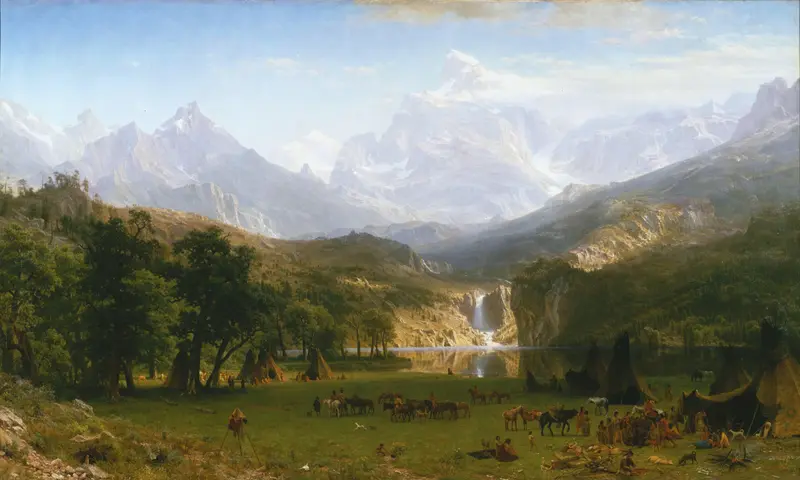
The Rocky Mountains, Lander's Peak
Albert Bierstadt
Niagara from the American Side
Albert Bierstadt
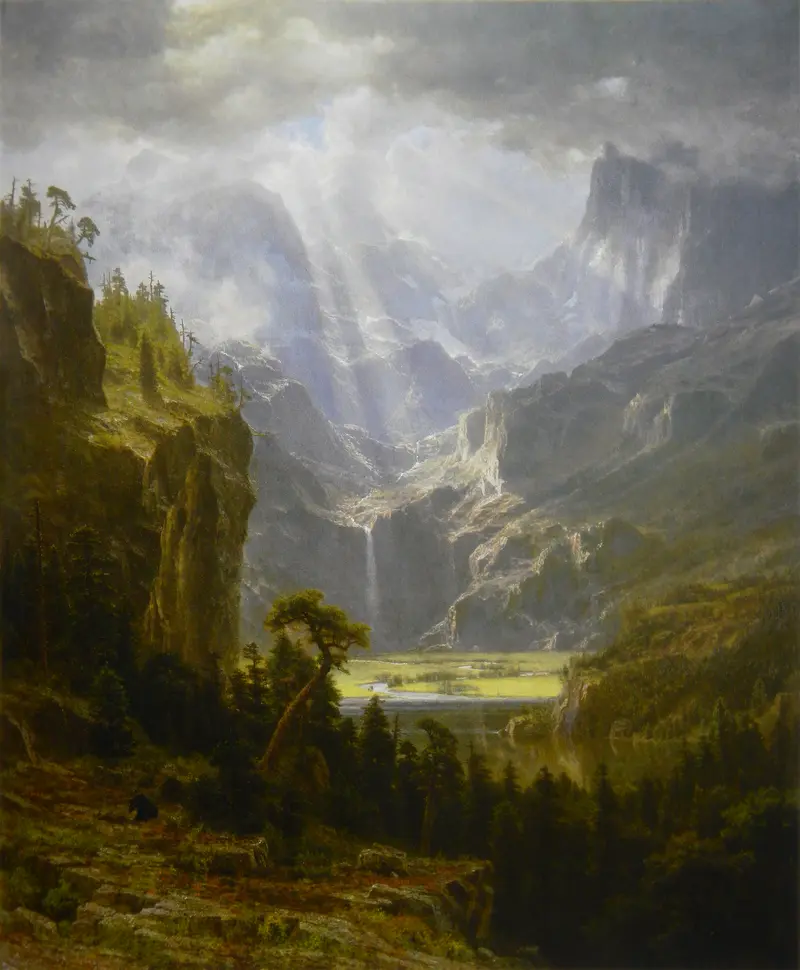
Rocky Mountains, Lander’s Peak
Albert Bierstadt

Valley of the Yosemite
Albert Bierstadt
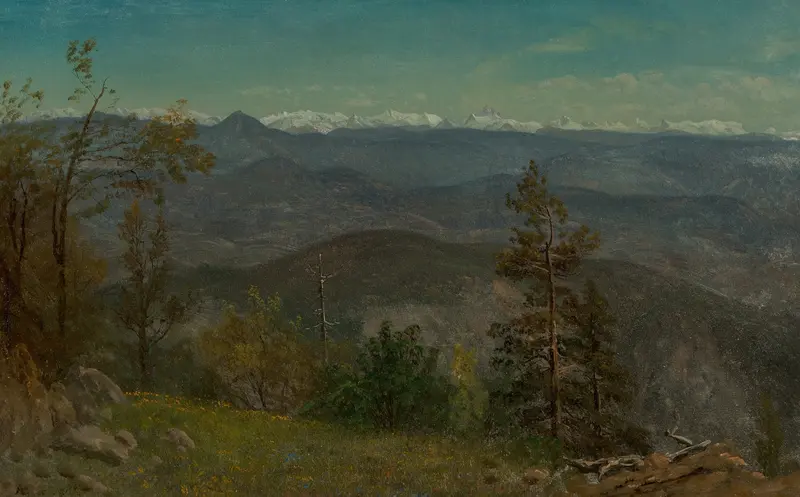
Yosemite Valley, California
Albert Bierstadt
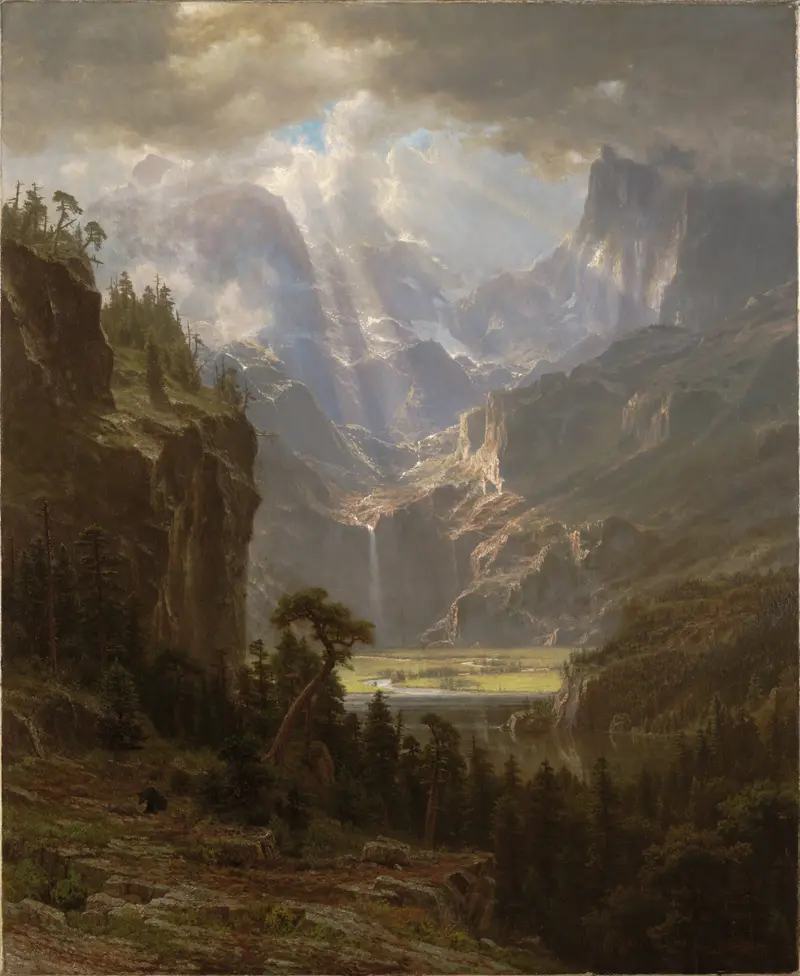
Rocky Mountains, "Lander's Peak"
Albert Bierstadt

Laramie Peak
Albert Bierstadt
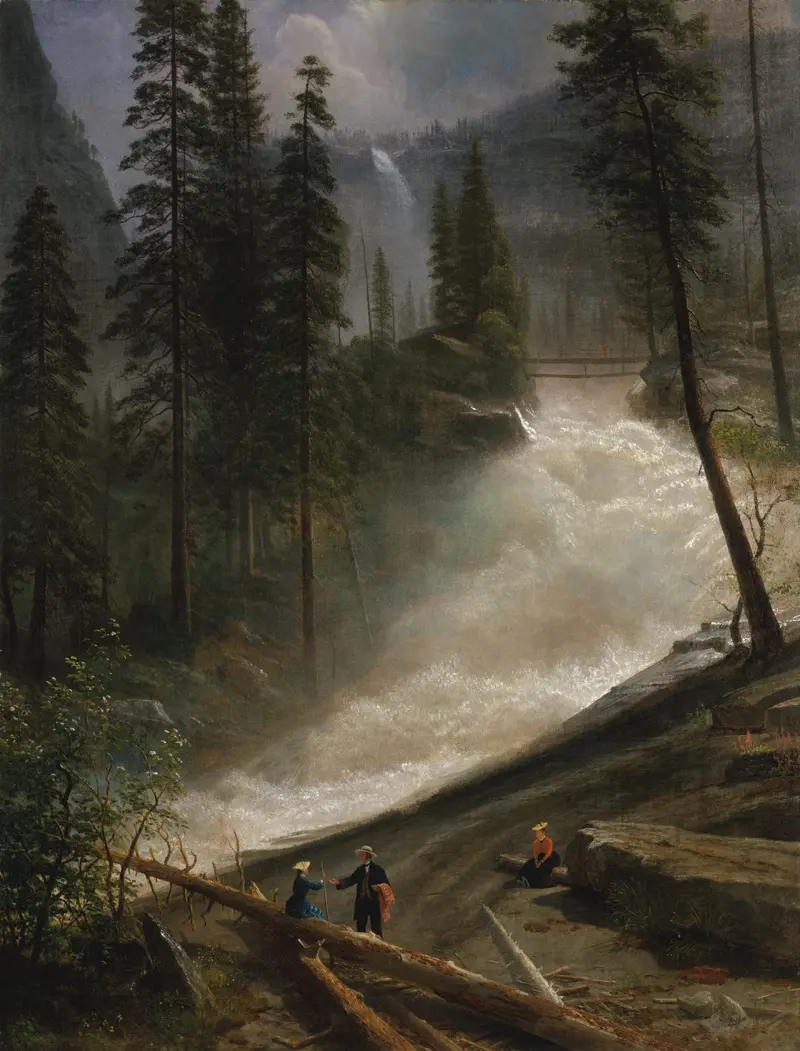
Nevada Falls, Yosemite
Albert Bierstadt
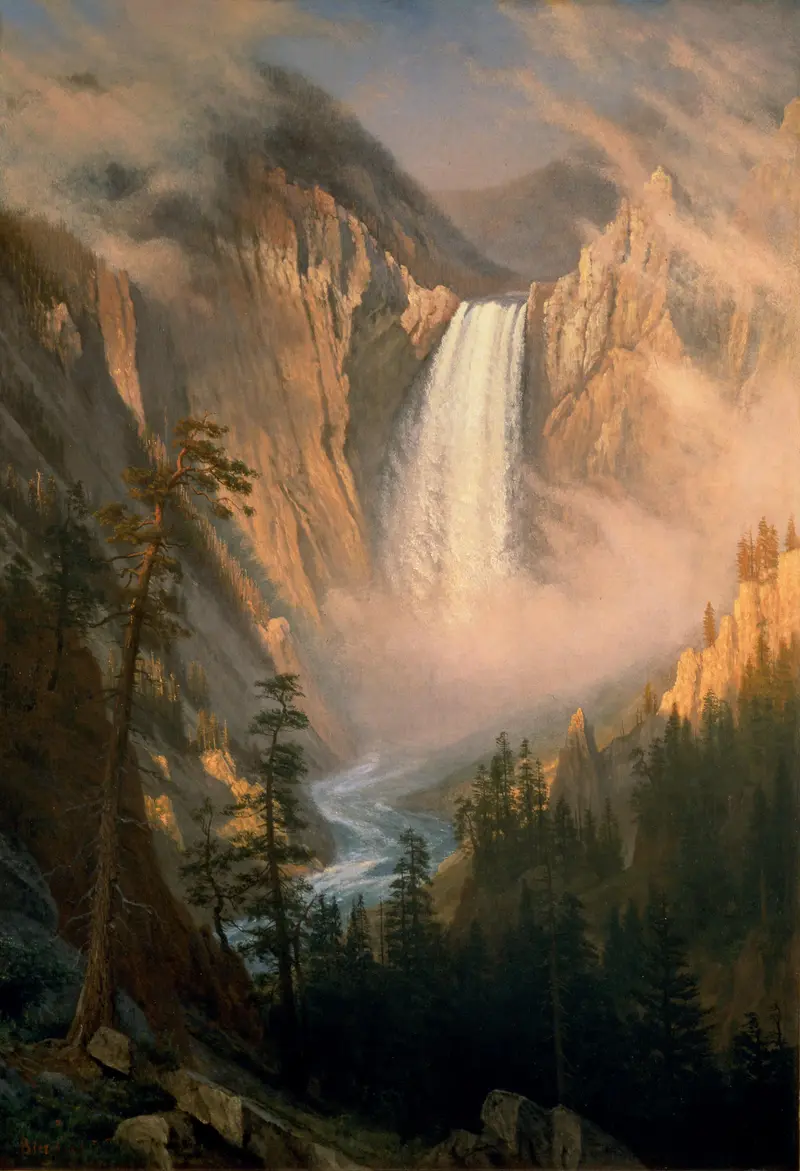
Yellowstone Falls
Albert Bierstadt
More Landscape Art

The Starry Night
Vincent van Gogh

View of Delft
Johannes Vermeer

Water Lilies
Claude Monet

The Grand Canal, Venice, looking north-west from the Ca' Corner to the Ca' Contarini degli Scrigni, with the campanile of Santa Maria della Carità
Canaletto

Windsor Castle
Canaletto

The Grand Canal looking North-East from the Palazzo Dolfin-Manin to the Rialto Bridge
Canaletto