
Lamentation of Christ with Saint Wolfgang and Saint Helen and Unidentified Donors — History & Facts
What immediately draws the eye in Lamentation of Christ with Saint Wolfgang and Saint Helen and Unidentified Donors is the way the figures crowd around Christ’s lifeless body, their gestures forming a web of grief and devotion. The pale, almost luminescent skin of Christ pulls the viewer into the center, his limp arms stretching outward as if to gather the mourners, saints, and donors into a single moment of sorrow. Each figure’s posture tells its own story: the bishop, likely Saint Wolfgang, steadies Christ’s hand with reverence, while Saint Helen, crowned and richly dressed, stands apart, her gaze lowered in contemplation.
The mourners’ faces are rendered with a startling individuality, their hands guiding the viewer’s attention from Christ’s wounds to the tools of the Passion—cross, nails, and ladder—arranged in the background. Above, the thieves still hang on their crosses, a stark reminder that the drama has not yet fully ended. Created between circa 1515 and 1516, this work belongs to a world where paintings like this served as both private devotion and public display of piety. In the early sixteenth century, altarpieces and panel paintings often included contemporary donors alongside sacred history, rooting eternal mysteries in the everyday lives of their patrons.
The inclusion of saints with local or personal significance—here, Wolfgang and Helen—signals the blending of universal and local devotion typical of the period. While little is recorded about the specific commission or journey of this panel, its presence today in the Museum of Fine Arts, Budapest, speaks to the enduring power of such images to connect viewers across centuries. Look again at the faces in the lower register: the donors, forever present at the threshold of the sacred drama, invite us to join them in witness.
More Artworks by Lucas Cranach the Elder

Martin Luther
Lucas Cranach the Elder
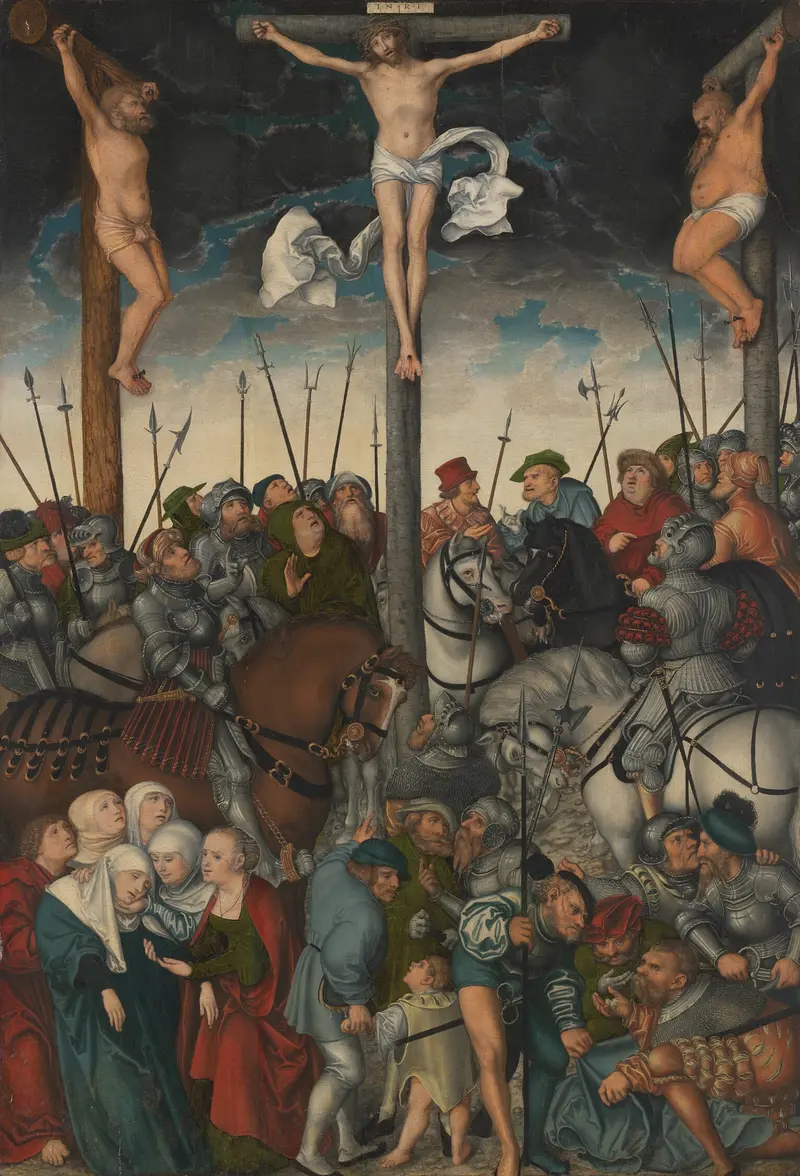
The Crucifixion
Lucas Cranach the Elder
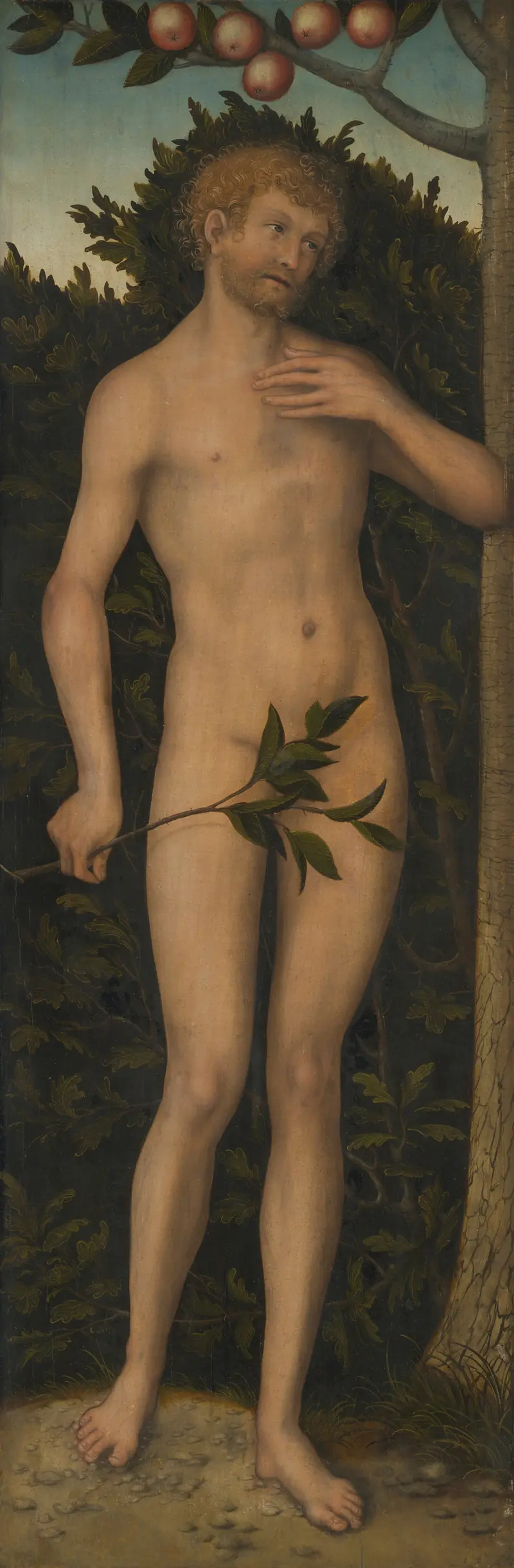
Adam
Lucas Cranach the Elder
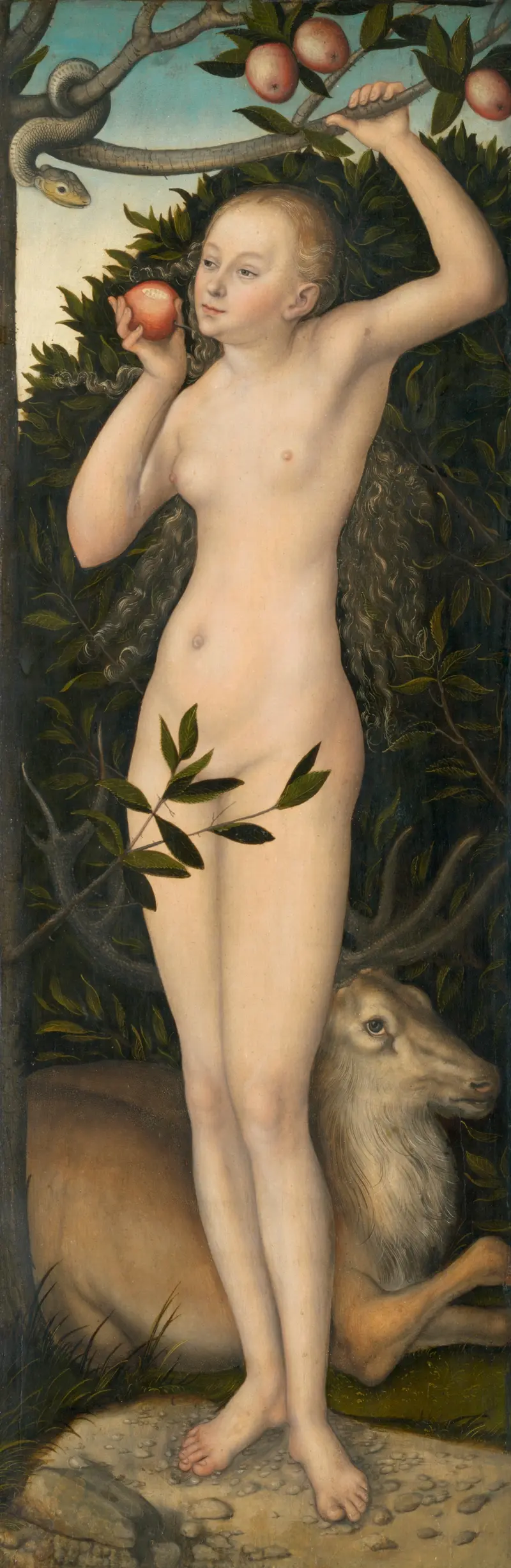
Eve
Lucas Cranach the Elder
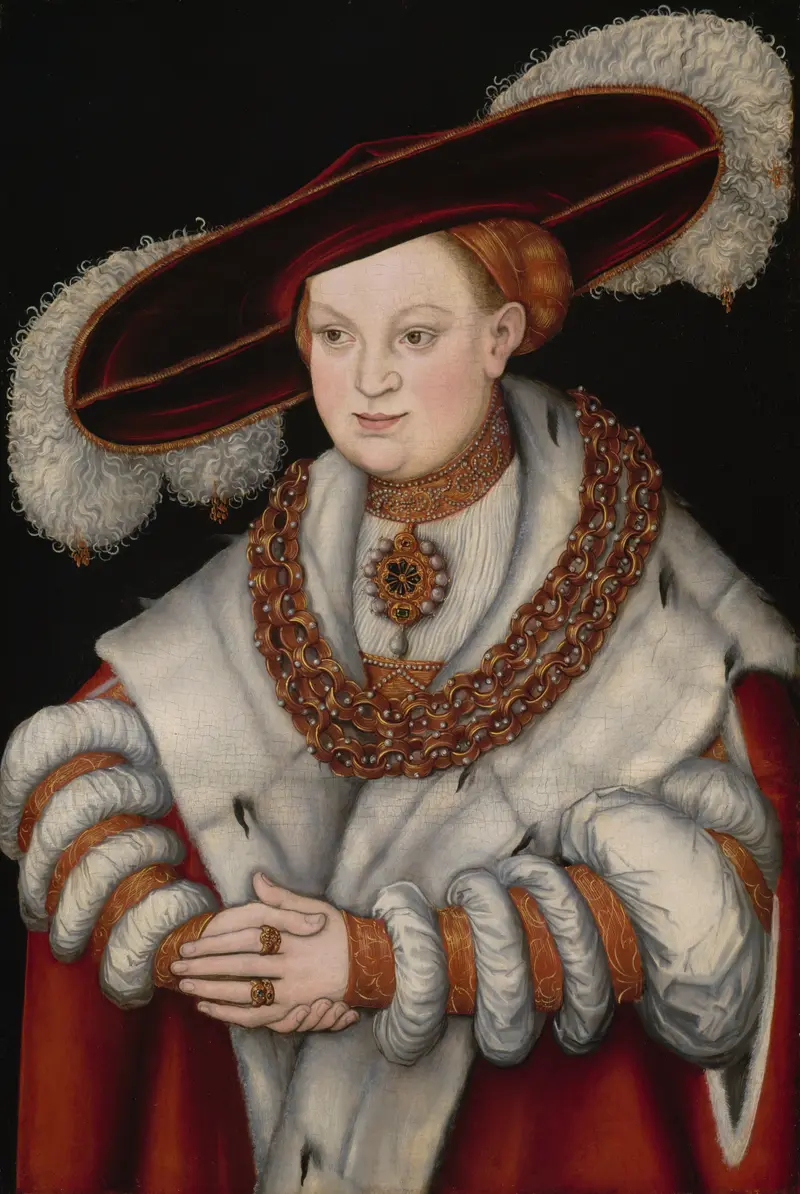
Portrait of Magdalena of Saxony, Wife of Elector Joachim II of Brandenburg
Lucas Cranach the Elder
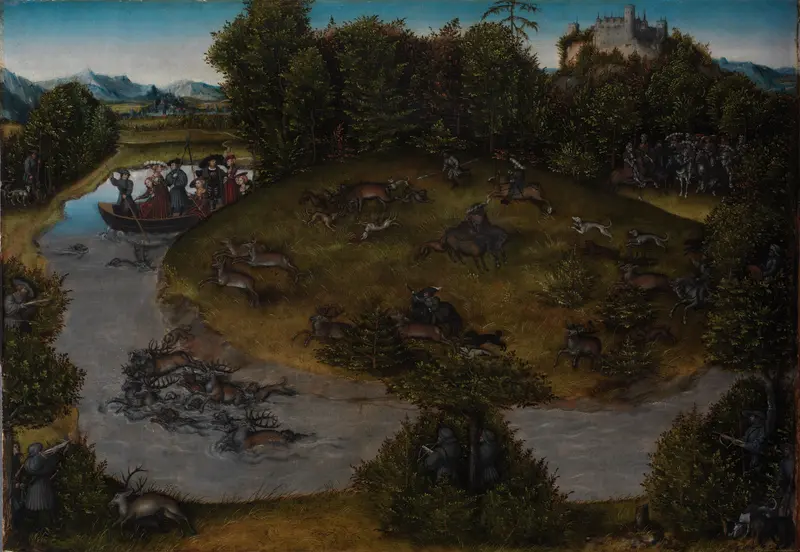
The Stag Hunt of the Elector Frederic the Wise (1463-1525) of Saxony
Lucas Cranach the Elder
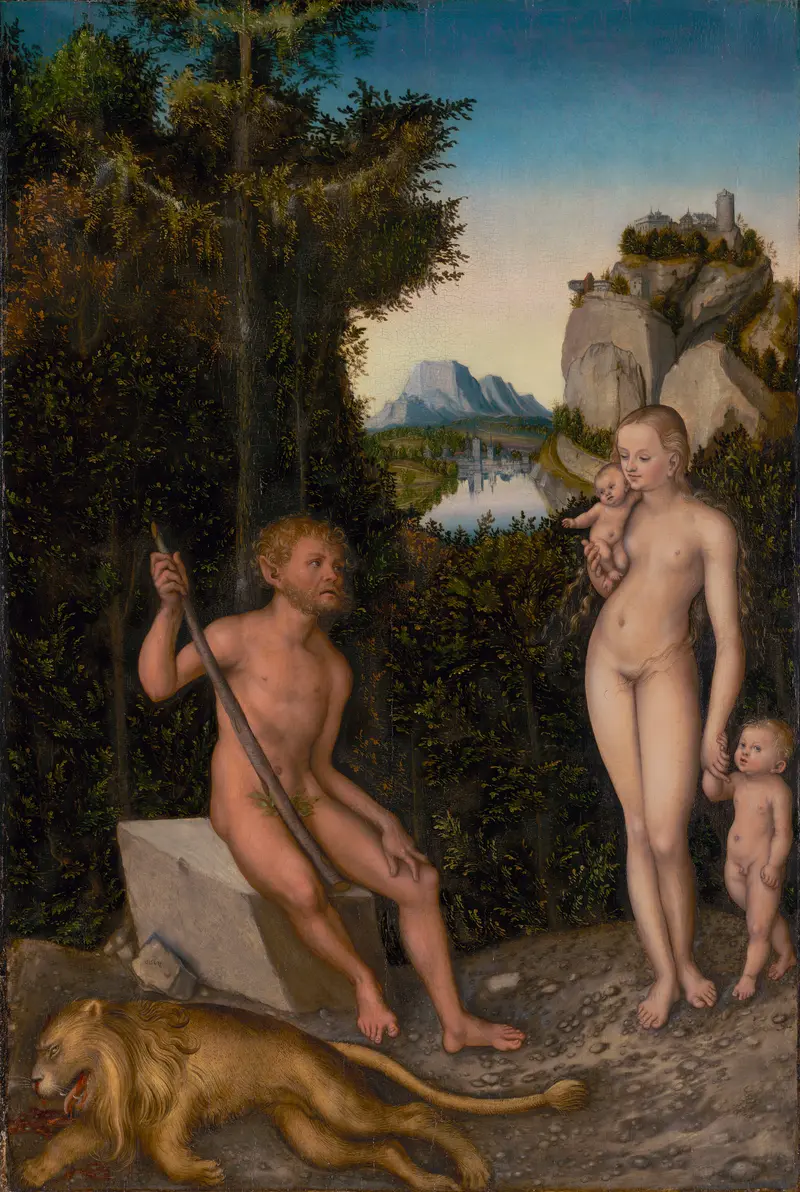
A Faun and His Family with a Slain Lion
Lucas Cranach the Elder
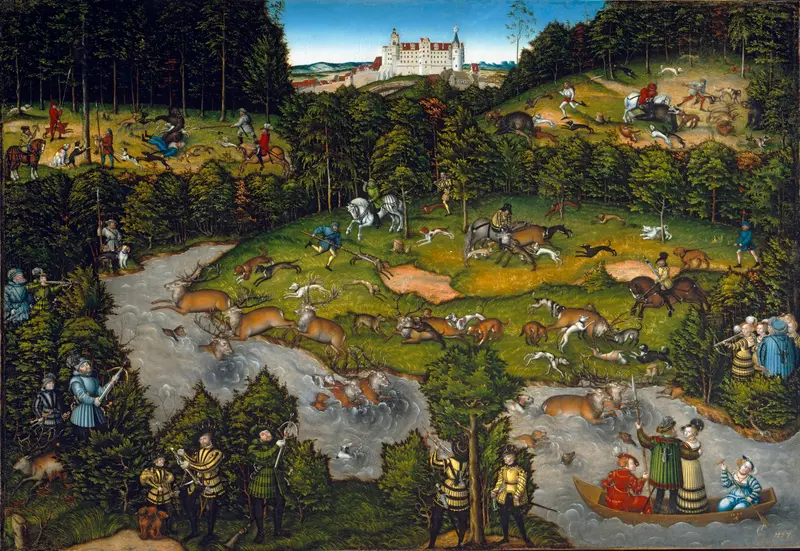
Hunting near Hartenfels Castle
Lucas Cranach the Elder
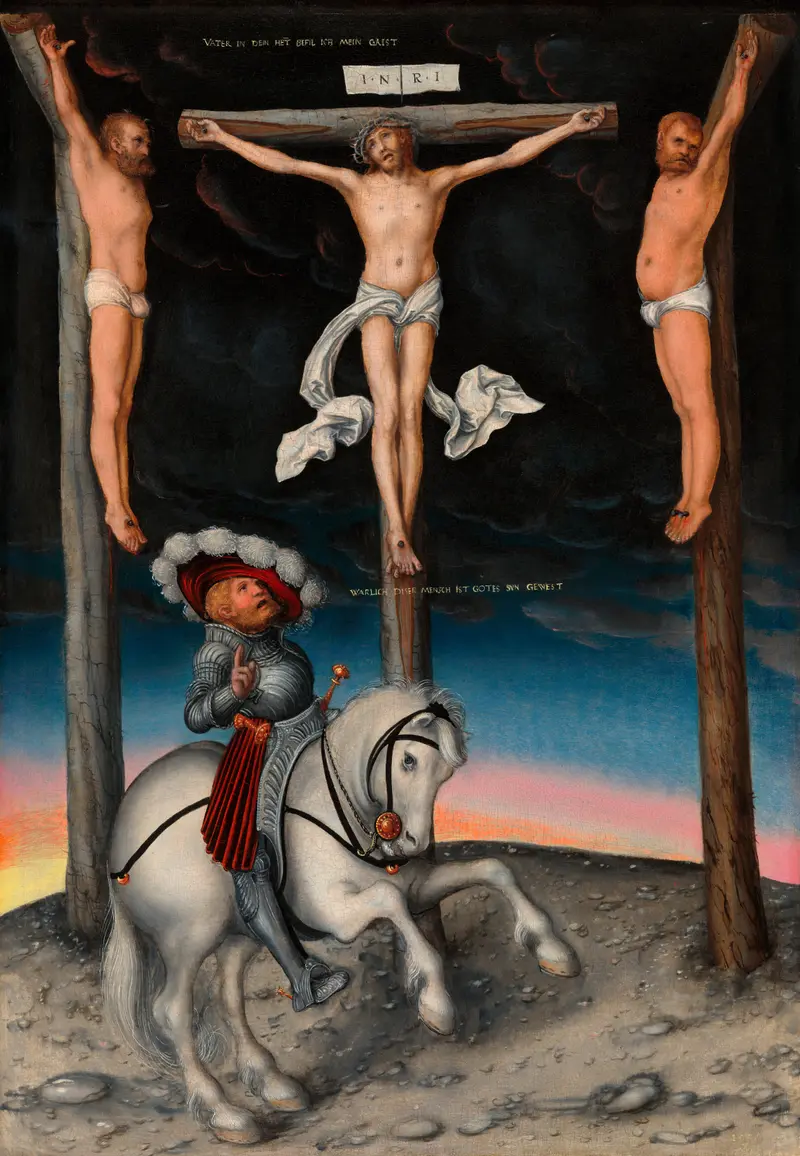
The Crucifixion with the Converted Centurion
Lucas Cranach the Elder
The Fable of the Mouth of Truth
Lucas Cranach the Elder





