
Landelijke brug — History & Facts
Is this a mirror — or a memory? In Landelijke brug, the reflection of a serene landscape unfolds as a haunting reminder of a past betrayal, evoking emotions that linger like shadows beneath the surface. Focus on the bridge that elegantly arches across the canvas, drawing your gaze toward the tranquil waters below. The soft, muted greens and browns of nature contrast sharply with the darker tones that frame the scene, creating an intimate yet unsettling atmosphere. Notice how light dances across the water’s surface, shimmering yet obscured, inviting contemplation while hinting at deeper layers of meaning hidden beneath the calm. As you explore further, examine the delicate brushwork that suggests a fleeting moment, capturing both beauty and sorrow.
The gentle undulations of the landscape speak to nostalgia, while the bridge stands as a symbol of connection that can just as easily imply distance and division—a precarious balance between unity and loss. This duality resonates throughout the composition, engendering a sense of longing mixed with unease. In 1889, the artist was immersed in a period of personal and professional introspection, grappling with the evolution of his style amid an art world shifting toward Impressionism. Working in Belgium, he was influenced by the changing perceptions of reality and memory, capturing a moment that reflected both external beauty and internal turmoil.
As he blended these elements, Ensor forged a path that would resonate with artists for generations to come.
More Artworks by James Ensor
Browse all →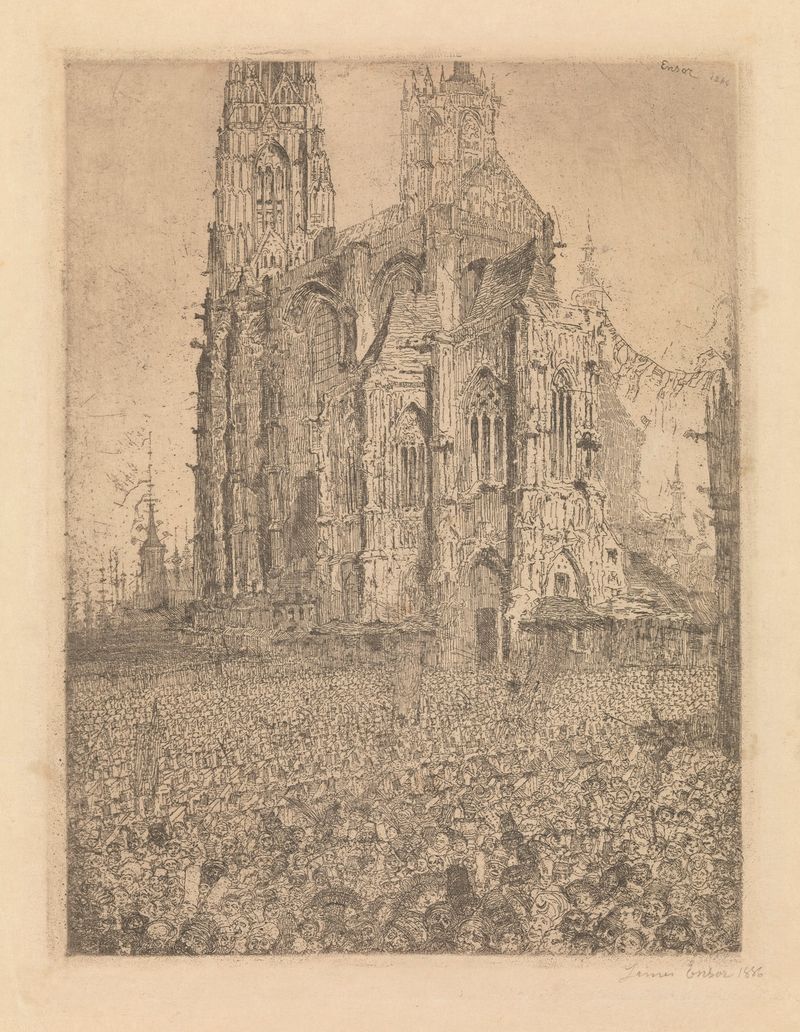
The Cathedral
James Ensor
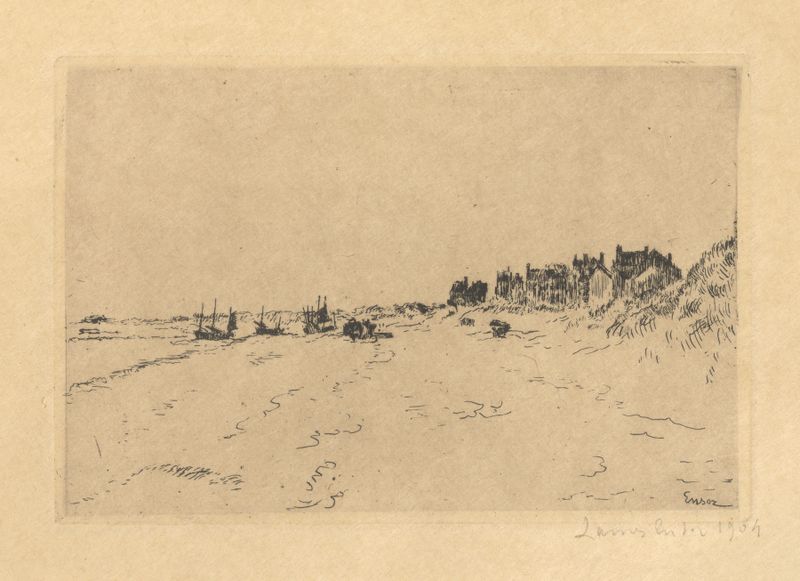
Het strand van De Panne
James Ensor
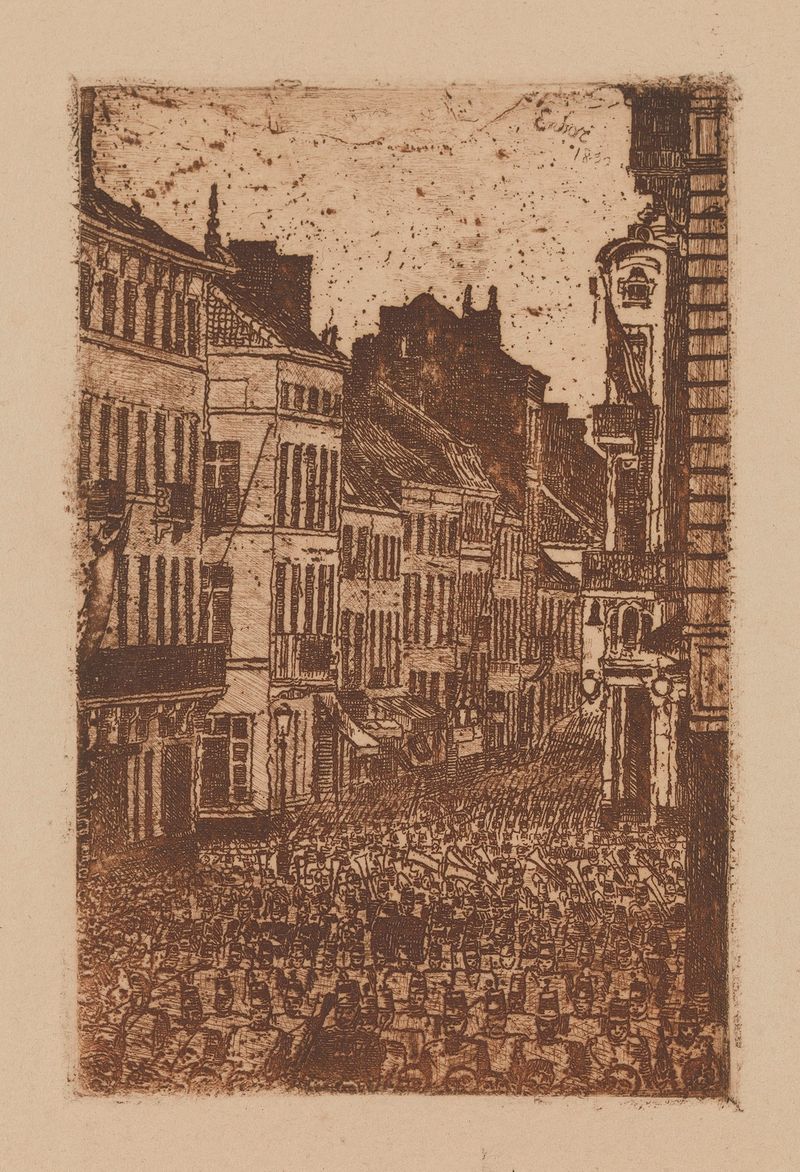
The Music in the rue de Flandre, Ostend
James Ensor
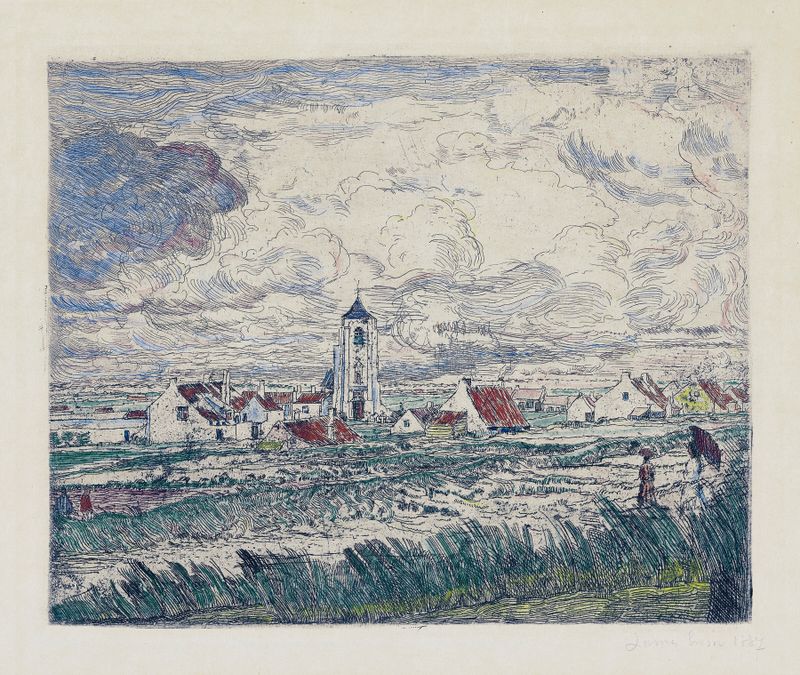
Grande vue de Mariakerke
James Ensor
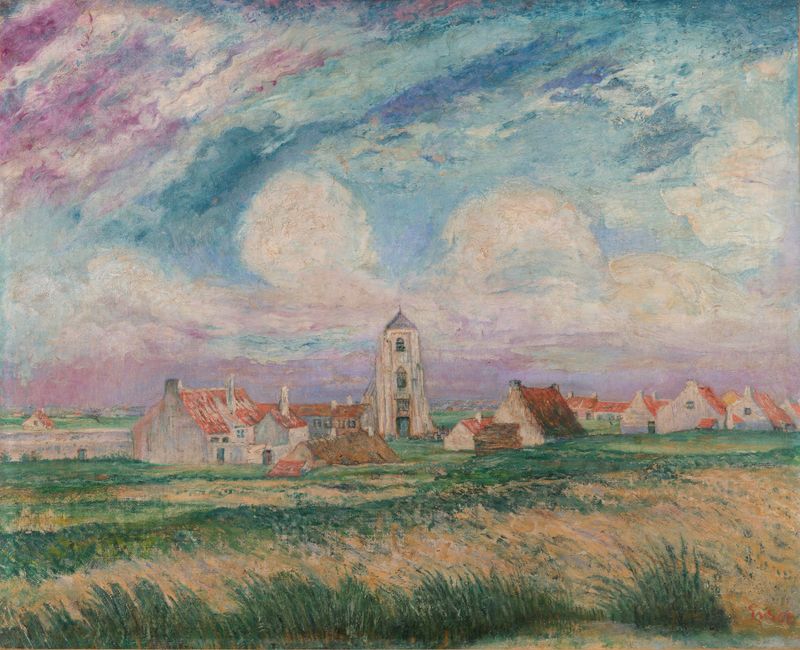
View of Mariakerke
James Ensor
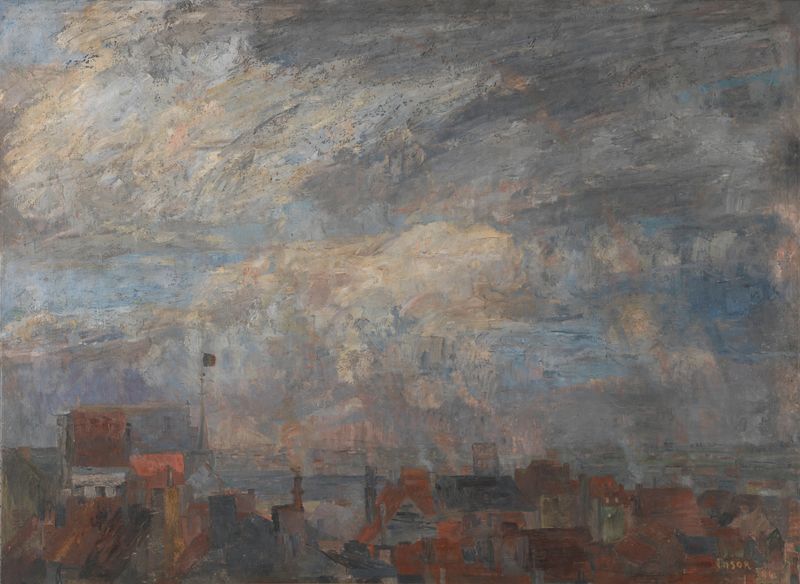
The Rooftops of Ostend
James Ensor
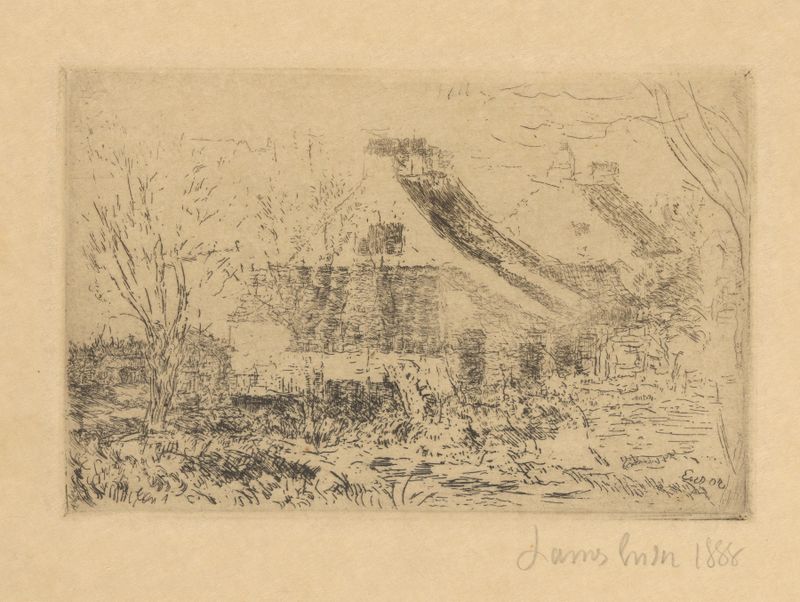
Huisjes in Mariakerke
James Ensor
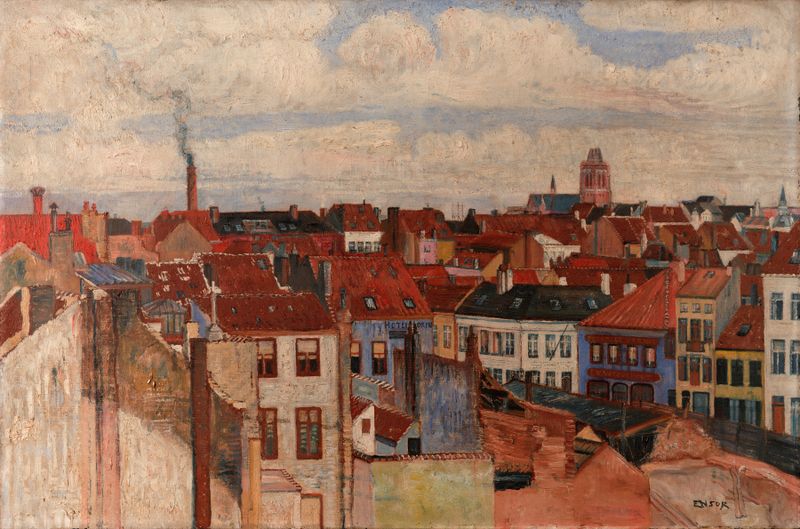
The rooftops of Ostend
James Ensor
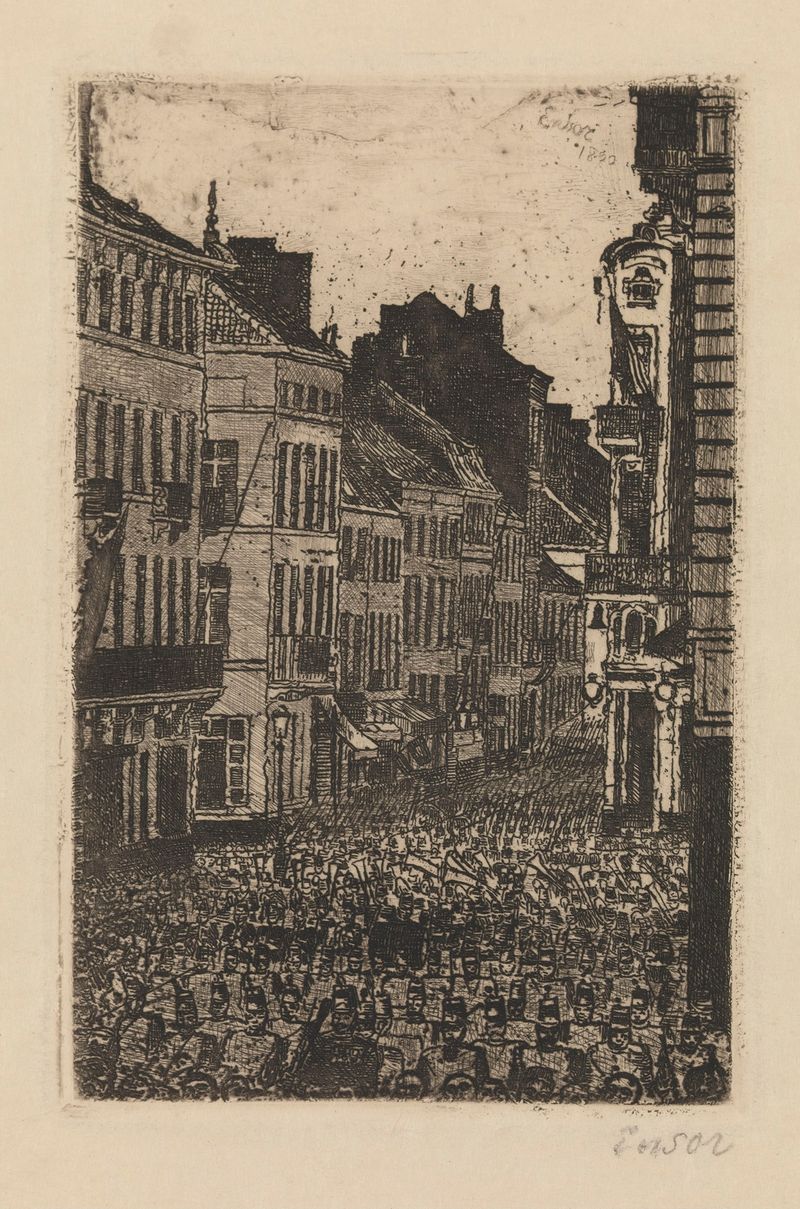
The Music in the rue de Flandre, Ostend
James Ensor
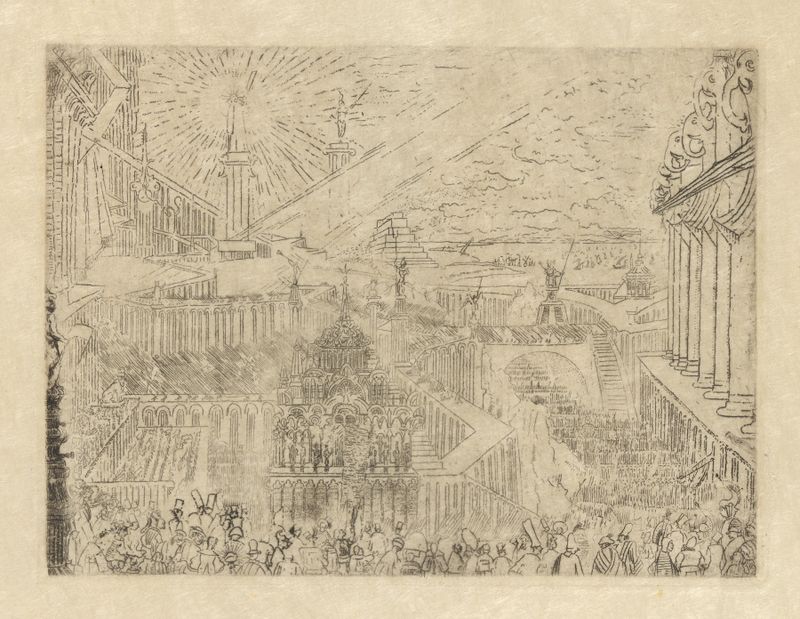
Verovering van een vreemde stad
James Ensor





