
Landscape — History & Facts
What secret hides in the quiet of the canvas? In the serene embrace of nature, chaos waits just beneath the surface, yearning to be discovered. First, look to the horizon, where soft hues of blue and gold converge. The delicate brushstrokes create a gentle interplay of light and shadow, drawing your gaze toward the sky’s expanse. Notice how the clouds, swirling and layered, hint at an impending storm—each stroke alive with movement, yet wrapped in tranquility.
The foreground invites you in with lush greens and muted earth tones, grounding the scene while suggesting the tumult of nature’s unpredictability. Yet, amidst this peaceful tableau lies a deeper tension. The contrast between the light-filled sky and the darkening earth hints at an unseen disturbance, an imbalance that whispers of chaos. This duality evokes a sense of unease, as if nature is both a sanctuary and a realm of disorder.
Subtle details, such as the bend of the trees and the restless water, add layers to the narrative, suggesting a struggle between calm and chaos that resonate beyond the canvas. Eugène Boudin painted this piece during the late 19th century, a time when Impressionism was gaining momentum and nature was becoming a focal point of artistic exploration. Working en plein air, he sought to capture the fleeting effects of light and atmosphere, reflecting his fascination with the coastal landscapes of Normandy. In a world shifting toward modernity, Boudin’s work stands as an homage to the natural world, revealing the beauty and turmoil intertwined within it.
More Artworks by Eugène Boudin
Browse all →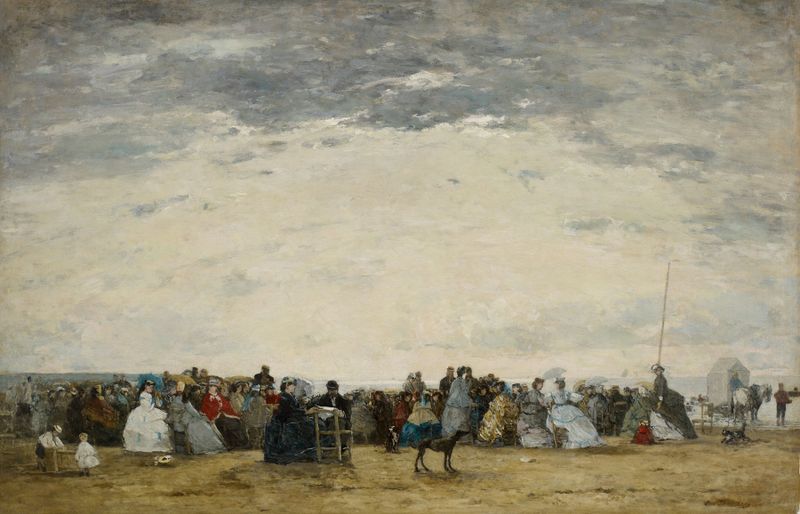
Vacationers on the Beach at Trouville
Eugène Boudin

Washerwoman near Trouville
Eugène Boudin
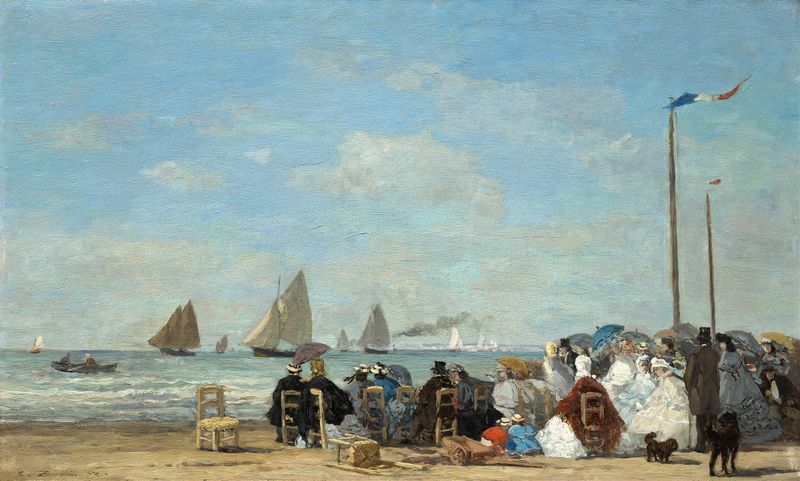
Beach Scene at Trouville
Eugène Boudin

Port aux environs d’Honfleur
Eugène Boudin

Le Faou, un coin du village
Eugène Boudin
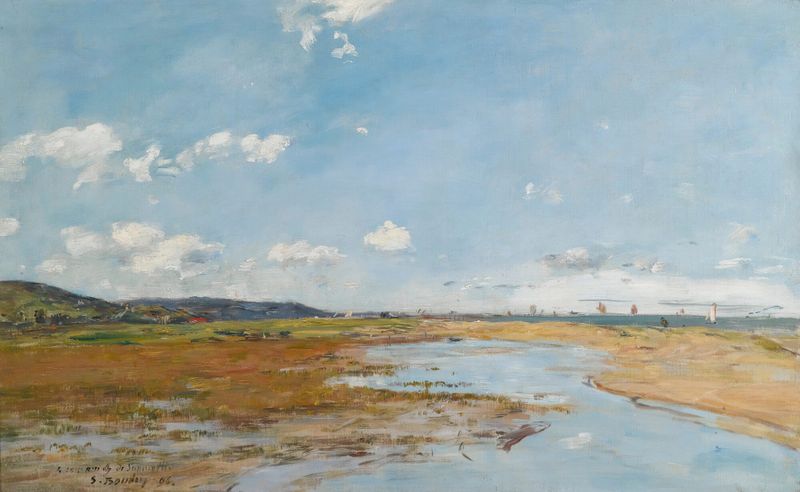
Deauville. Le Rivage
Eugène Boudin
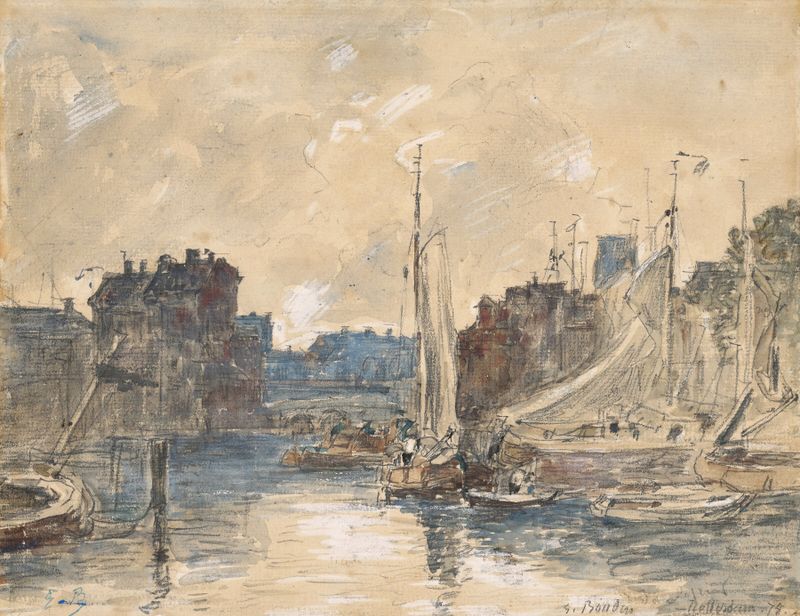
Port de Rotterdam
Eugène Boudin

View of Bordeaux, from the Quai des Chartrons
Eugène Boudin

Trouville, Scène De Plage
Eugène Boudin

Trouville, Le Port
Eugène Boudin





