
Landscape — History & Facts
Who listens when art speaks of silence? In a world often drowned in noise, this portrayal urges us to confront the profound solitude that resides within. Look to the foreground, where an expansive horizon stretches endlessly, an invitation to wander yet a reminder of isolation. The palette is dominated by muted earth tones, seamlessly blending greens and browns, evoking a landscape not just of physical space but of emotional terrain. Notice how the horizon line, low and distant, creates an overpowering sense of vastness, while the subtle brushstrokes impart a quiet stillness to the scene.
Each detail—from the solitary tree on the left to the gentle undulations of the land—whispers of a poignant solitude that is both haunting and beautiful. Among the soft transitions of color, a tension arises: while the landscape offers a sense of freedom, it simultaneously envelops the viewer in an eerie loneliness. The absence of human figures amplifies this feeling, suggesting that even in the presence of nature’s splendor, one can feel profoundly alone. Furthermore, the interplay between light and shadow contributes to this emotional depth, hinting at unseen stories and the weight of unexpressed thoughts.
Each element feels deliberate, as if the artist is pleading for recognition of the inner cries that often remain unheard. Created during a time of artistic exploration and transition, the work emerges from the life of Émile-René Ménard in the late 19th century—an era marked by shifts in perception and representation of reality. As he painted, the influence of symbolism loomed, encouraging artists to delve deeper into emotional landscapes rather than mere visual documentation. It is in this context that such a piece speaks to the human experience, mapping our internal struggles onto the vast canvas of existence.
More Artworks by Émile-René Ménard
Browse all →
Les Dryades
Émile-René Ménard
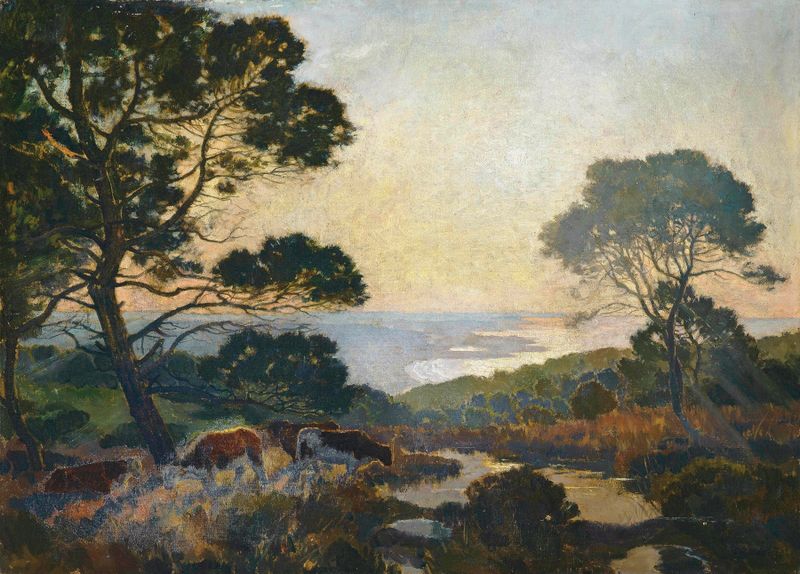
Cattle grazing above a bay at dusk
Émile-René Ménard

Solitude
Émile-René Ménard

Pastoral Scene
Émile-René Ménard

Terre antique, le temple
Émile-René Ménard
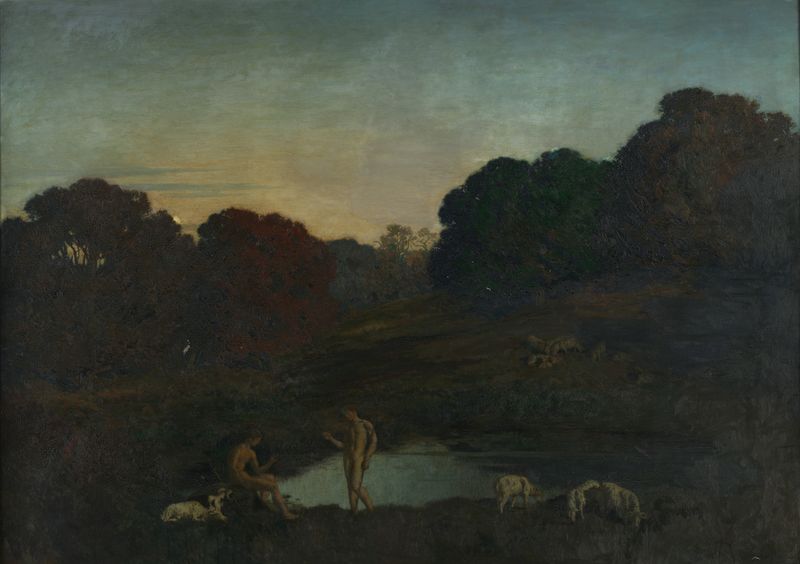
Pastoral Scene
Émile-René Ménard

Cavaliers antiques dans un paysage de montagne
Émile-René Ménard
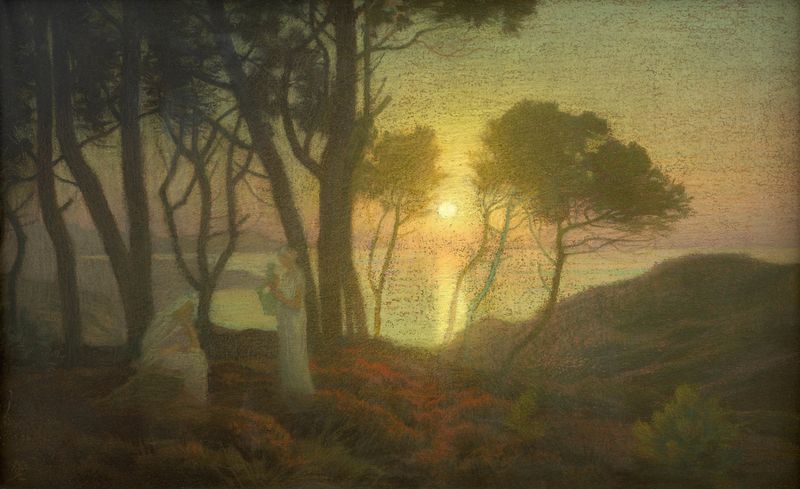
The lute player at dusk
Émile-René Ménard

L’Estuaire
Émile-René Ménard
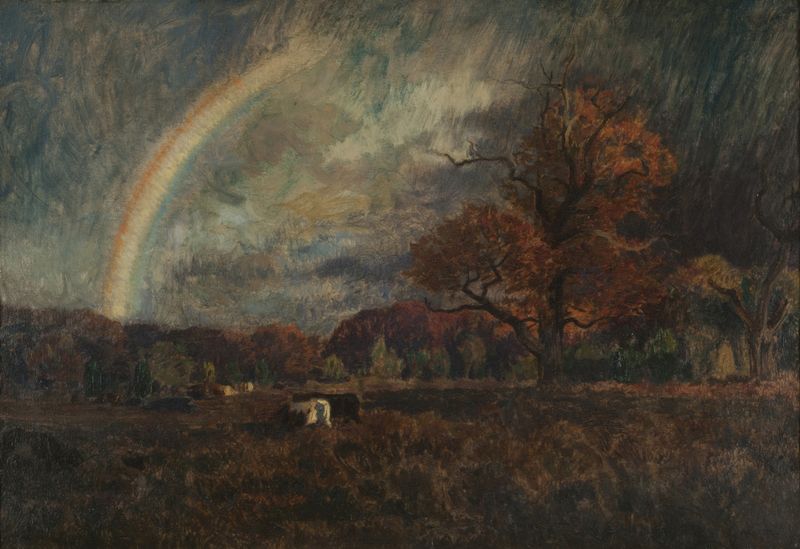
Arco Iris
Émile-René Ménard





