
Pastoral Scene — History & Facts
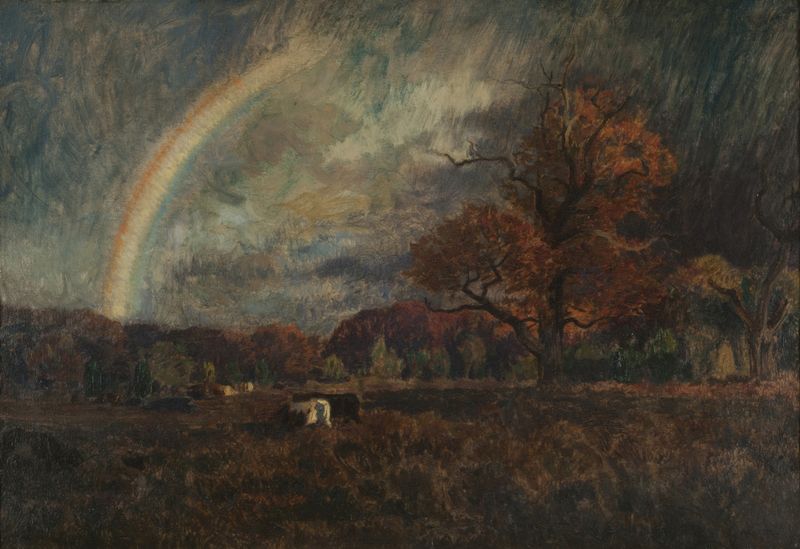
Where does light end, and longing begin? Émile-René Ménard’s Pastoral Scene invites us to explore this delicate boundary, a visual meditation on nature and emotion intertwined. Look to the left, where a soft glow bathes a serene landscape, highlighting the gentle curves of rolling hills and blooming meadows. The pastel palette, punctuated by vibrant greens and soft yellows, evokes a sense of tranquility. Notice how the light dances along the water's surface, creating shimmering reflections that draw the eye deeper into the scene.
The careful brushwork adds a tactile quality, inviting you to step into this luminous world, while the figures nestled within the landscape seem almost like whispers, faint yet profoundly present. Beyond its idyllic surface, the painting suggests a deeper narrative, exploring themes of nostalgia and connection to the earth. The interplay of light and shadow symbolizes the fleeting nature of moments spent in nature, where time seems to stand still yet evades our grasp. The distant figures, perhaps lovers or kindred spirits, underscore a yearning for intimacy that resonates within the viewer’s heart, creating a poignant contrast between solitude and togetherness. Created in 1911, during a period of profound artistic evolution, Ménard was deeply influenced by the Symbolist movement, which sought to convey feelings through landscapes and the relationship between humanity and nature.
Working in France, he expressed a longing for a simpler, more harmonious existence. This painting reflects not only his personal beliefs but also the broader cultural shift towards introspection and appreciation for the natural world, capturing a moment that resonates across time.
More Artworks by Émile-René Ménard
Browse all →
Les Dryades
Émile-René Ménard
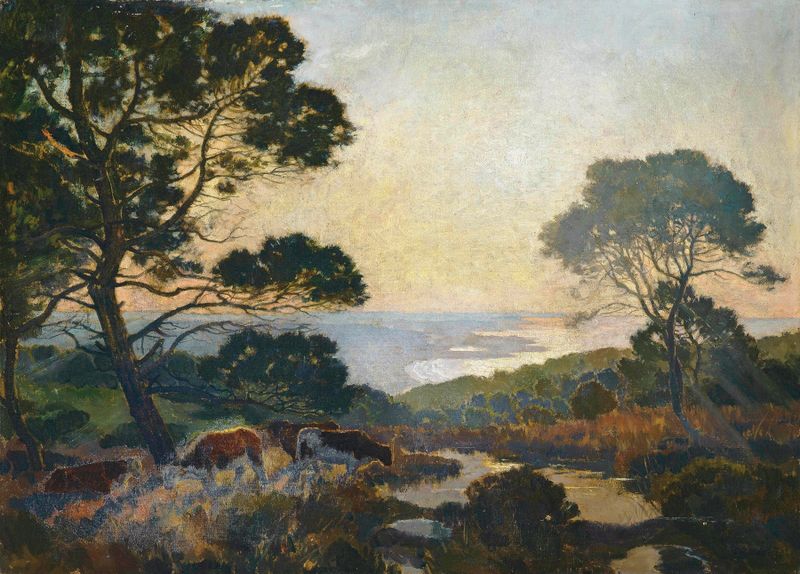
Cattle grazing above a bay at dusk
Émile-René Ménard

Solitude
Émile-René Ménard

Terre antique, le temple
Émile-René Ménard
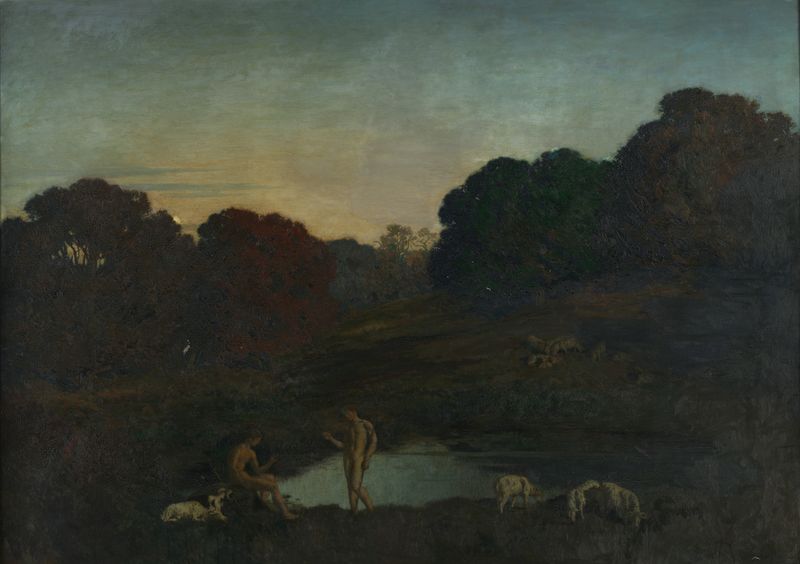
Pastoral Scene
Émile-René Ménard

Cavaliers antiques dans un paysage de montagne
Émile-René Ménard
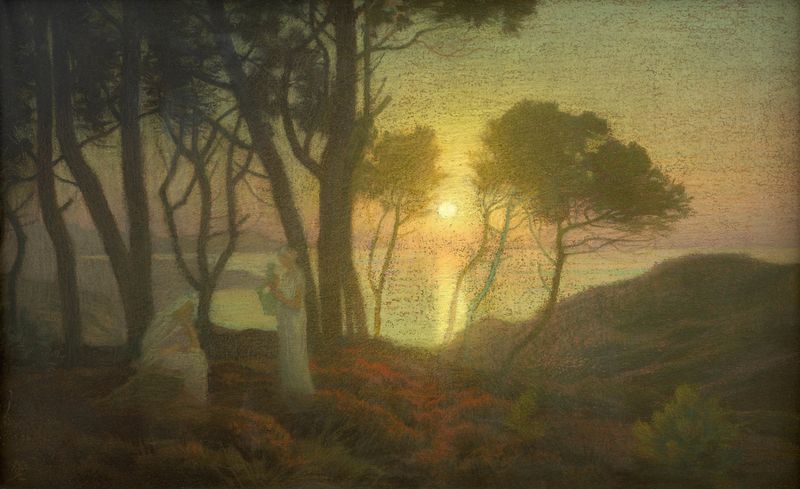
The lute player at dusk
Émile-René Ménard

L’Estuaire
Émile-René Ménard
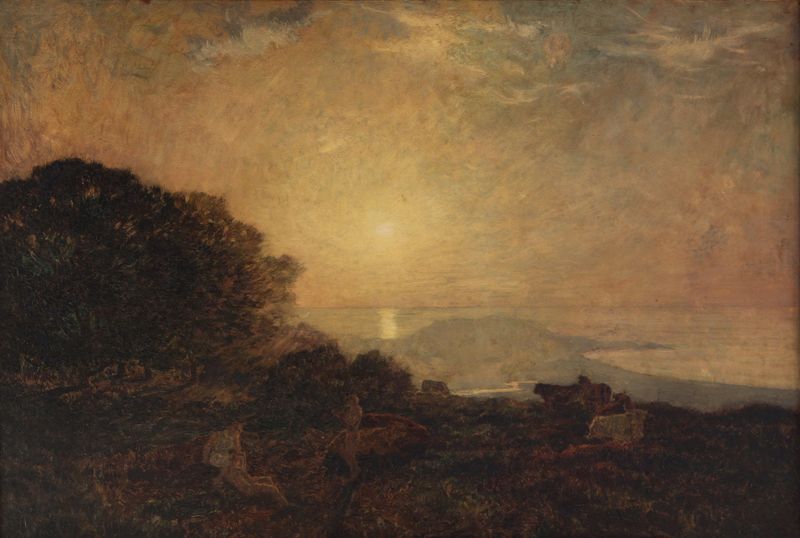
Landscape
Émile-René Ménard
Arco Iris
Émile-René Ménard





