
Pastoral Scene — History & Facts
In the stillness of Pastoral Scene, a symphony of movement unfolds, inviting the viewer to immerse themselves in a world where each brushstroke echoes a gentle rhythm of life. Look to the foreground, where soft hues of green blend seamlessly with delicate strokes of warm earth tones. The figures, lost in their serene activities, draw the eye with their graceful postures, as if caught in a fleeting moment of everyday beauty. Notice how the light cascades through the canopy of trees, creating dappled patterns on the ground that playfully interact with the scene, enhancing the sense of tranquility and pastoral charm. Beneath its idyllic surface, the painting speaks to deeper themes of connection and nostalgia.
The juxtaposition of the figures against the natural landscape suggests a harmonious relationship between humanity and nature, yet hints at a fleetingness, as if this serene moment is both cherished and ephemeral. The soft lines and muted palette evoke a sense of yearning, drawing out feelings of longing for simplicity in a rapidly changing world. Ménard created Pastoral Scene in 1911, during a time marked by industrialization and social transformation in Europe. Living in France, he found inspiration in the rural landscapes around him, capturing the essence of a simpler life at a moment when such scenes were becoming rare.
His work reflects not just a personal vision, but also a broader commentary on the lost connection between humanity and the natural world, making this piece resonant in its historical context.
More Artworks by Émile-René Ménard
Browse all →
Les Dryades
Émile-René Ménard
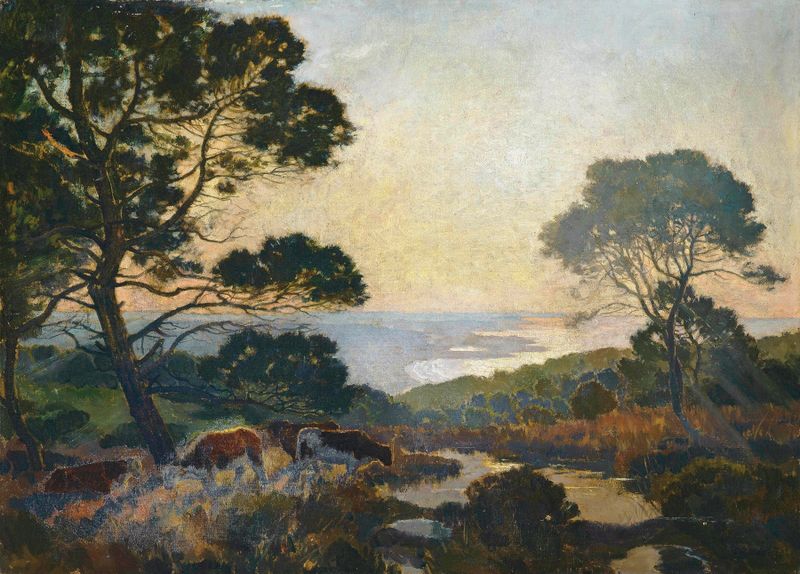
Cattle grazing above a bay at dusk
Émile-René Ménard

Solitude
Émile-René Ménard

Pastoral Scene
Émile-René Ménard

Terre antique, le temple
Émile-René Ménard

Cavaliers antiques dans un paysage de montagne
Émile-René Ménard
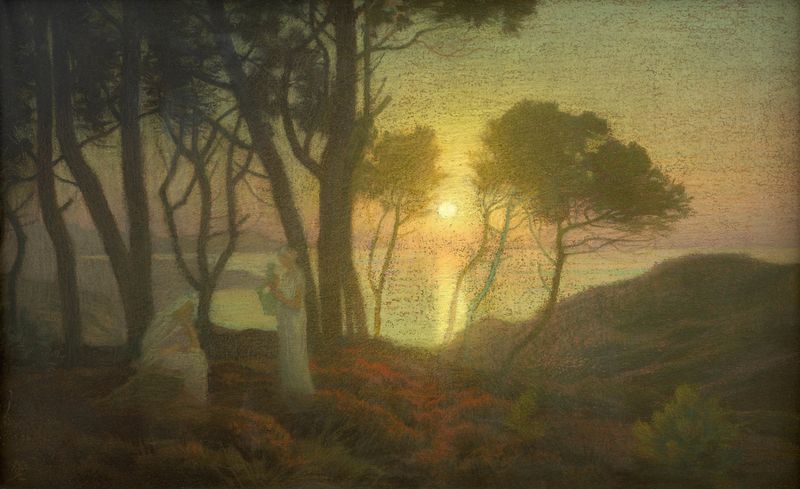
The lute player at dusk
Émile-René Ménard

L’Estuaire
Émile-René Ménard
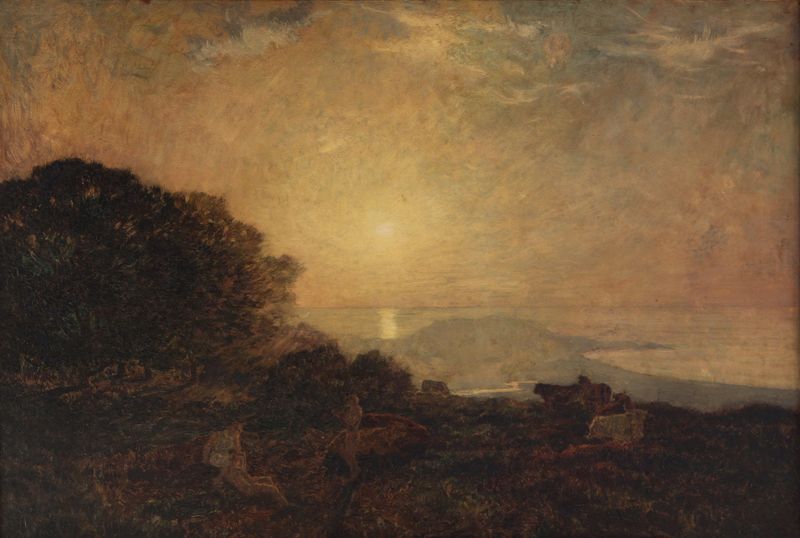
Landscape
Émile-René Ménard
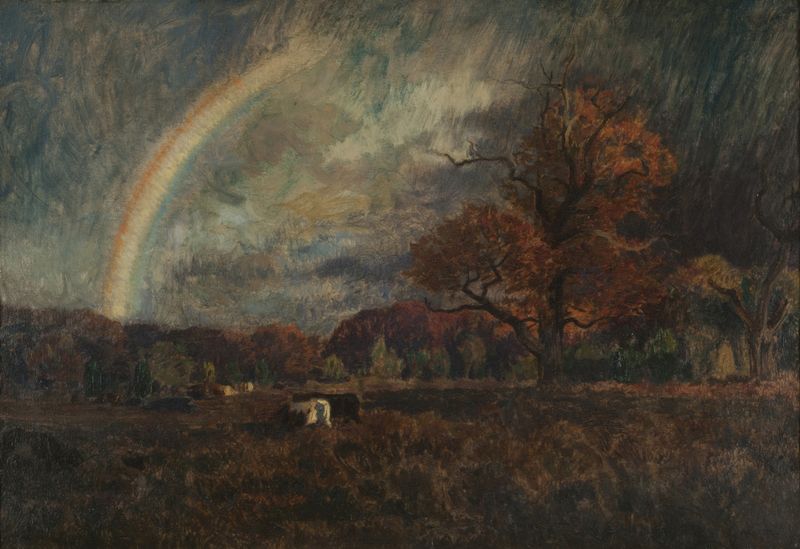
Arco Iris
Émile-René Ménard





