Arco Iris — History & Facts
In a world where ecstasy often feels elusive, a moment infused with vivid hues invites us to reflect on deep emotions. Focus on the rich spectrum that arcs across the canvas, where each color vibrates with a unique pulse. The swirling forms reach towards one another, creating a dialogue that dances between joy and melancholy. Notice how the vibrant reds and yellows emerge like sparks of life amidst softer blues and greens, suggesting a balance between chaos and serenity.
The juxtaposition of color amplifies the emotional intensity, drawing the viewer into the depths of the artist’s vision. Delve into the layers of meaning that unfold within the strokes. The rainbow, a universal symbol of promise and hope, contrasts with the muted tones that hint at introspection and longing. This duality speaks to the complexity of human experience—how moments of jubilation can coexist with shadows of despair.
It compels us to seek the ecstasy hidden within our own existence, urging a celebration of life’s multifaceted nature. Ménard created this piece during a transitional period in his artistic journey, likely around the late 19th to early 20th century. As movements like Symbolism and Impressionism were evolving, he sought to merge emotional depth with innovative color theory. This exploration resonated within a broader context, as artists of the time began to challenge traditional conventions, paving the way for modern interpretations of emotion through abstract forms.
More Artworks by Émile-René Ménard
Browse all →
Les Dryades
Émile-René Ménard
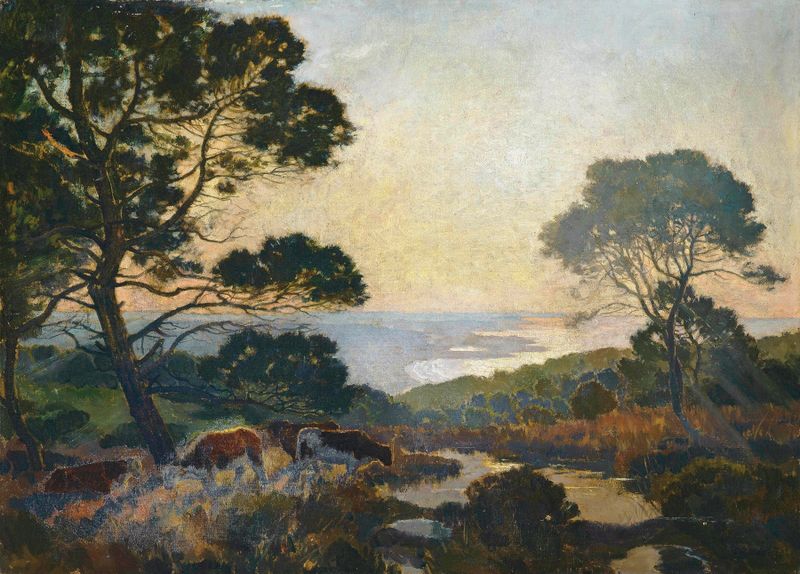
Cattle grazing above a bay at dusk
Émile-René Ménard

Solitude
Émile-René Ménard

Pastoral Scene
Émile-René Ménard

Terre antique, le temple
Émile-René Ménard
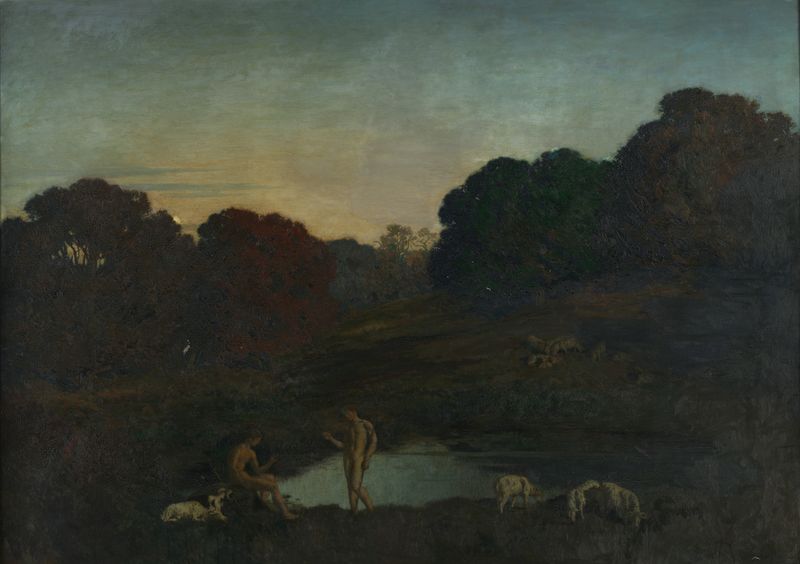
Pastoral Scene
Émile-René Ménard

Cavaliers antiques dans un paysage de montagne
Émile-René Ménard
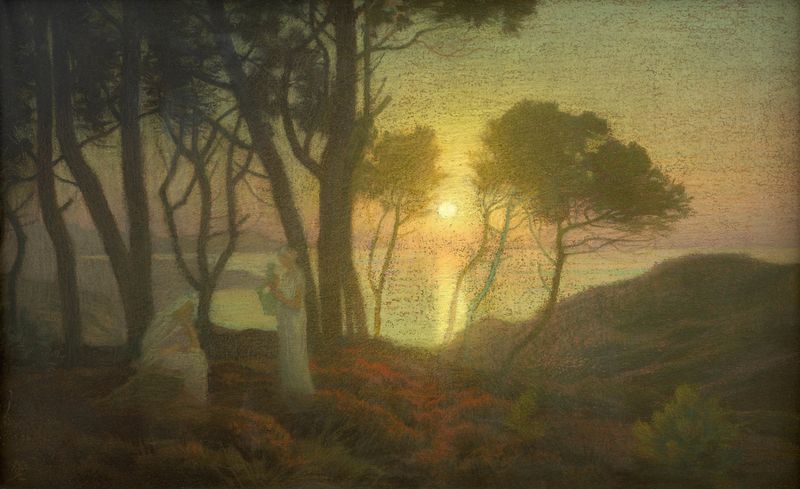
The lute player at dusk
Émile-René Ménard

L’Estuaire
Émile-René Ménard
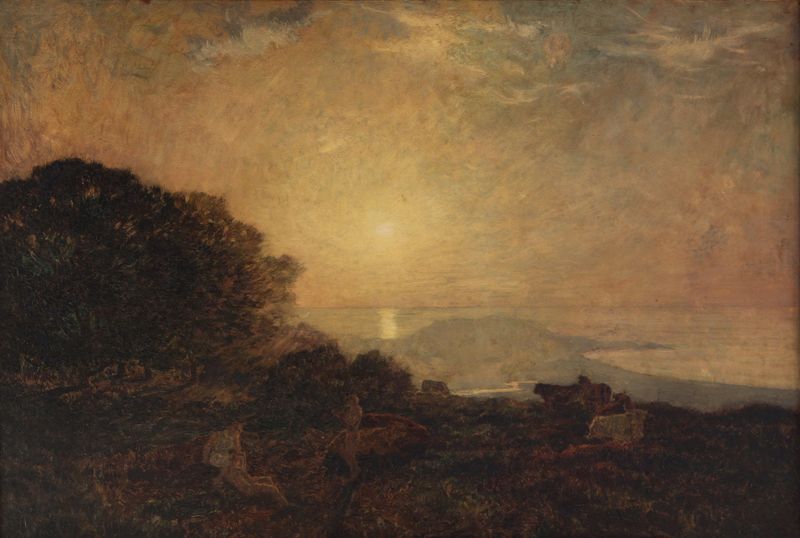
Landscape
Émile-René Ménard