
L’Estuaire — History & Facts
In the quiet elegance of L’Estuaire, a landscape emerges that intertwines sorrow with sublime beauty, capturing a moment that feels both transient and eternal. Look to the horizon, where muted tones of dusk reflect against the water's surface, creating a serene but melancholic atmosphere. Notice how the artist employs soft brush strokes to blend the sky and water, harmonizing blues and golds that evoke a sense of longing. The composition leads your eye toward the distant shore, drawing you into its depths, while the gentle ripples of the estuary invite contemplation and introspection. In this work, the interplay between light and shadow becomes a poignant metaphor for emotional complexity.
The seemingly placid waters mask the undercurrents of grief and nostalgia that flow beneath. Small details, such as the silhouettes of trees on the banks and the delicate play of light, suggest the fleeting nature of beauty and memory. This landscape is more than just a depiction of a place; it embodies the weight of unspoken emotions, rendering the viewer both captivated and wistful. Painted before 1900, L’Estuaire reflects Émile-René Ménard’s engagement with Symbolism, a movement striving to convey deeper truths through visual art.
At this time, Ménard was immersed in a vibrant Parisian art scene, influenced by the emerging Modernist tendencies and the exploration of emotional depth in nature. His works often sought to transcend mere representation, and this piece stands as a testament to that ambition, balancing the ethereal with the profoundly human.
More Artworks by Émile-René Ménard
Browse all →
Les Dryades
Émile-René Ménard
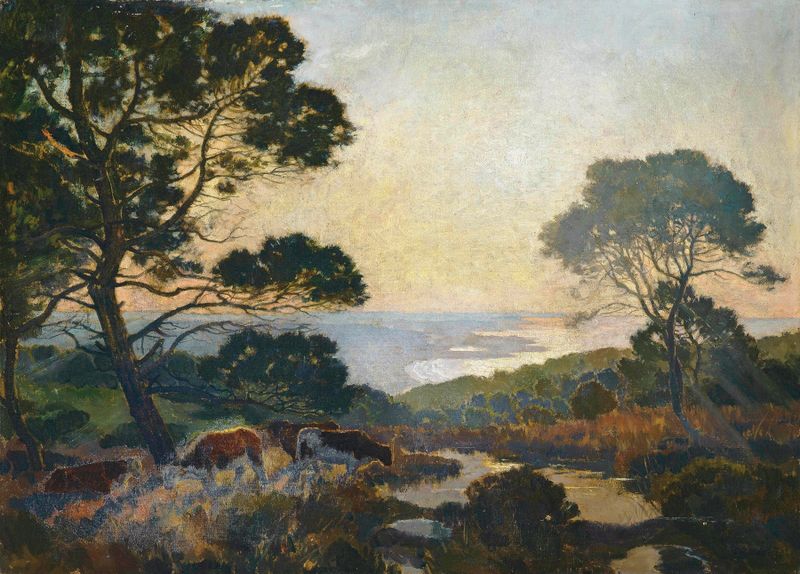
Cattle grazing above a bay at dusk
Émile-René Ménard

Solitude
Émile-René Ménard

Pastoral Scene
Émile-René Ménard

Terre antique, le temple
Émile-René Ménard
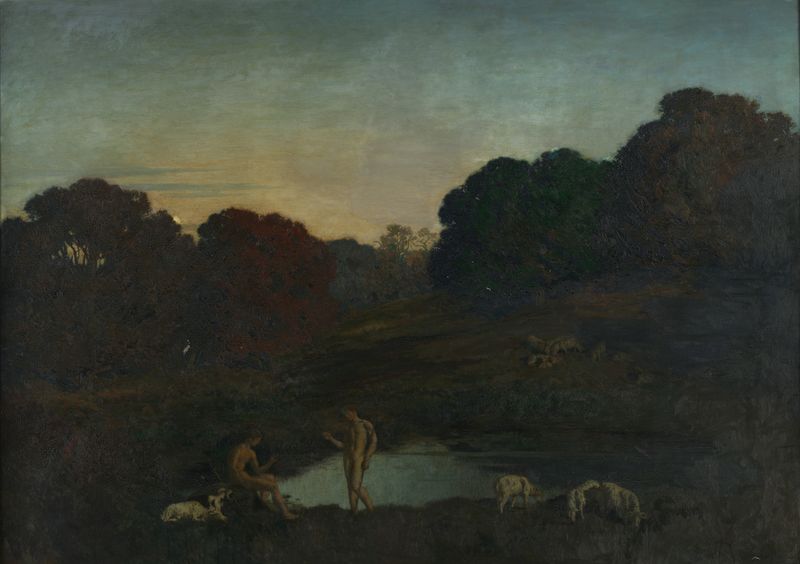
Pastoral Scene
Émile-René Ménard

Cavaliers antiques dans un paysage de montagne
Émile-René Ménard
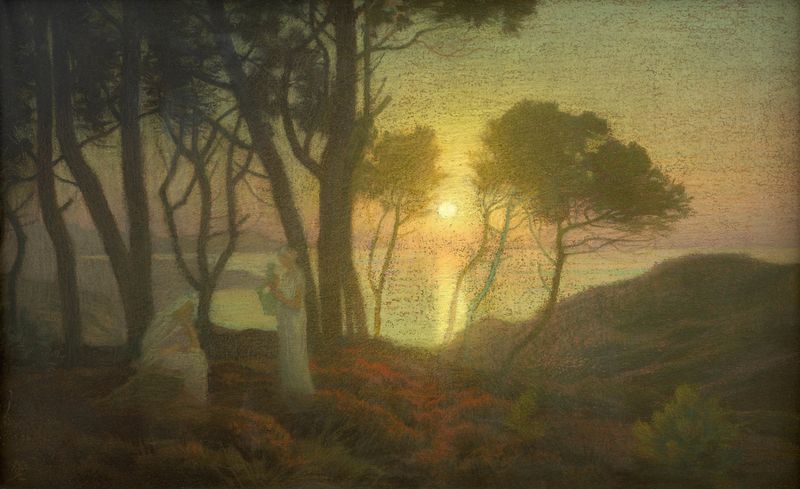
The lute player at dusk
Émile-René Ménard
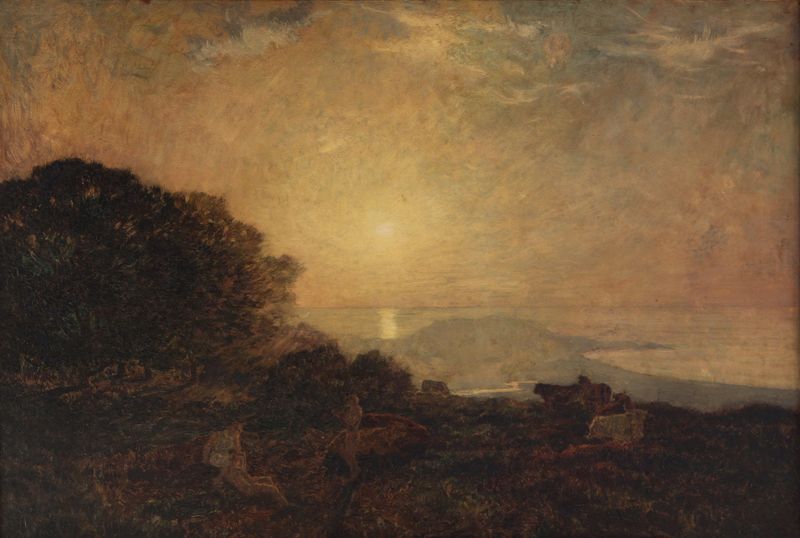
Landscape
Émile-René Ménard
Arco Iris
Émile-René Ménard





