
Solitude — History & Facts
Is this a mirror — or a memory? The delicate interplay of light and shadow in the painting draws us into a world that feels both hauntingly familiar and exquisitely distant, prompting a reflection on the essence of solitude. Focus on the soft hues that envelop the figure at the canvas's center, draped in muted tones that blend seamlessly with the background. Notice how the light gently caresses her face, illuminating a serene expression while shadowy tendrils encapsulate her in a cocoon of introspective silence. The composition is masterfully balanced, with elegant lines guiding our gaze to the solitary figure, evoking a sense of both peace and isolation. Delve deeper into the emotional undercurrents of the piece: the juxtaposition of warmth and coldness in color suggests the duality of solitude — a refuge for the soul yet a reminder of loneliness.
The figure's gaze, directed away from us, hints at a world outside the canvas, a reflection of thoughts and memories that remain unspoken and unseen. This tension between presence and absence invites viewers to consider their own experiences of isolation and introspection. Émile-René Ménard created this evocative work during a period marked by artistic exploration and personal introspection in late 19th-century France, when the Symbolist movement was gaining momentum. His focus on the inner emotional depths of human experience resonated with audiences seeking meaning beyond the physical realm, as he navigated his own journey through life's complexities, leaving behind an indelible mark on the art world.
More Artworks by Émile-René Ménard
Browse all →
Les Dryades
Émile-René Ménard
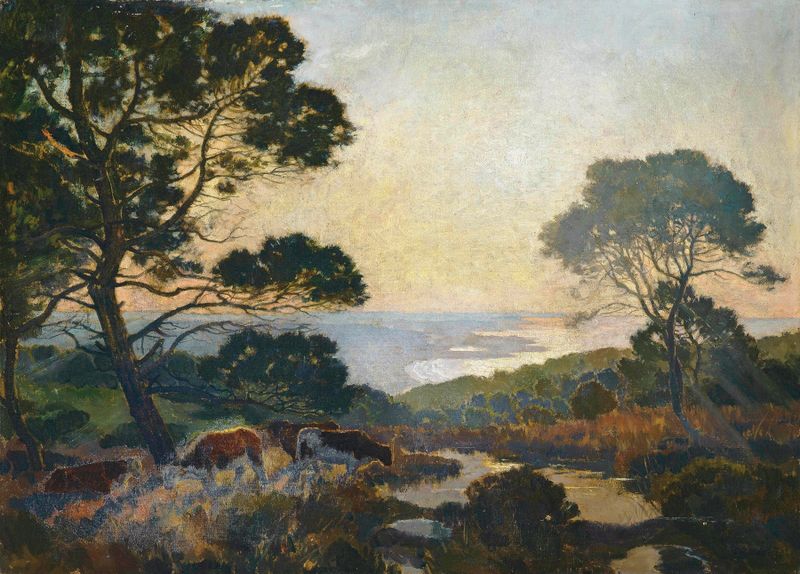
Cattle grazing above a bay at dusk
Émile-René Ménard

Pastoral Scene
Émile-René Ménard

Terre antique, le temple
Émile-René Ménard
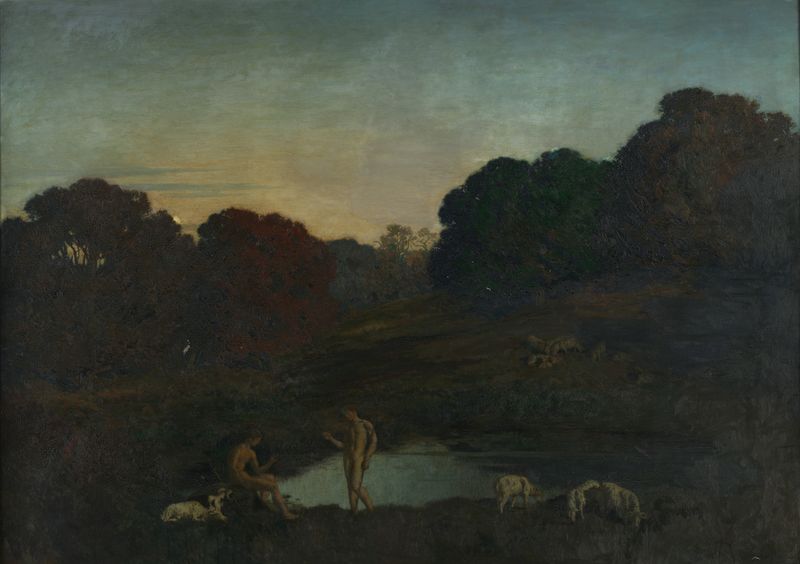
Pastoral Scene
Émile-René Ménard

Cavaliers antiques dans un paysage de montagne
Émile-René Ménard
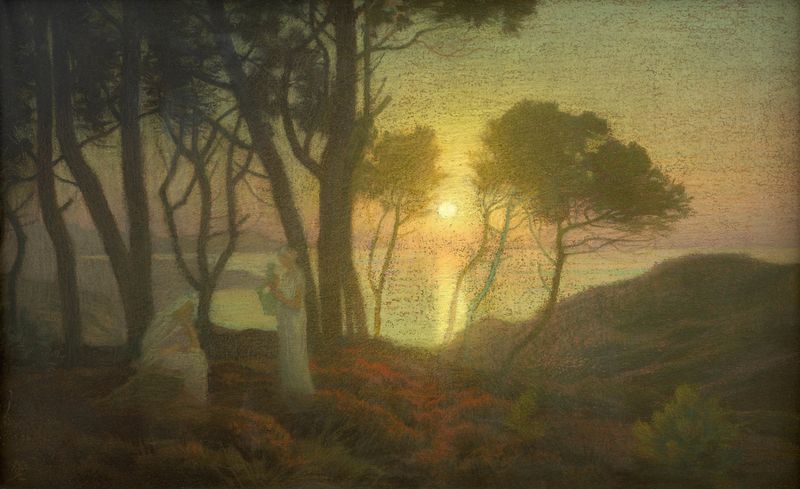
The lute player at dusk
Émile-René Ménard

L’Estuaire
Émile-René Ménard
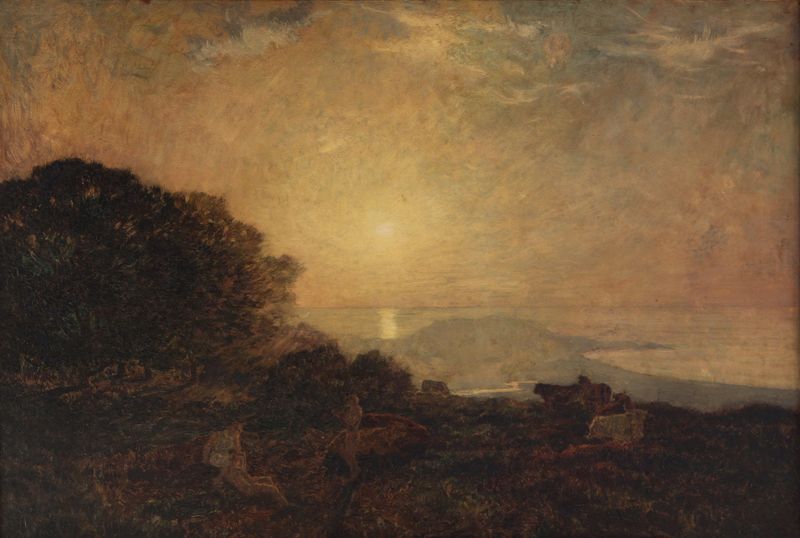
Landscape
Émile-René Ménard
Arco Iris
Émile-René Ménard





