
Landscape at Pont-Aven — History & Facts
Can beauty exist without sorrow? In Landscape at Pont-Aven, the answer lies hidden within the gentle folds of the scenery and the vibrant colors that vibrate with life yet whisper of solitude. Here, the lush greenery meets the soft ripples of the water, inviting contemplation as it beckons an audience both drawn in and distanced by the weight of its own reflection. Look to the foreground, where the verdant grass brushes against the shimmering stream. Notice how the brushstrokes blend seamlessly, creating a dynamic rhythm that captures the essence of nature's pulse.
The light dances across the surface of the water, revealing a shimmering spectrum of blues and greens, while the sky overhead, painted in soft pastels, cradles an ethereal quality. The composition masterfully guides the eye towards the horizon, suggesting an infinite expanse yet emphasizing an underlying loneliness that permeates the landscape. Delicate contrasts abound here; the vibrancy of nature clashes gently with the stillness of the scene. The absence of human presence amplifies a sense of isolation, as if the beauty surrounding us is marred by an unspoken longing.
This emotional tension is underscored by the juxtaposition of bright colors against the more muted tones that invoke introspection and melancholy. Each element, from the solitary trees to the reflective water, encapsulates the artist's exploration of loneliness wrapped in beauty. In 1892, Renoir painted this tranquil scene while in Pont-Aven, a quaint village in Brittany, France, known for its artistic community. At this time, he was transitioning from Impressionism towards a more vibrant palette and deliberate brushwork, influenced by the emerging techniques of other artists.
The world of art was evolving rapidly, and amid these changes, he sought to capture not just visual beauty but the emotional undercurrents that lay beneath the surface.
More Artworks by Pierre-Auguste Renoir
Browse all →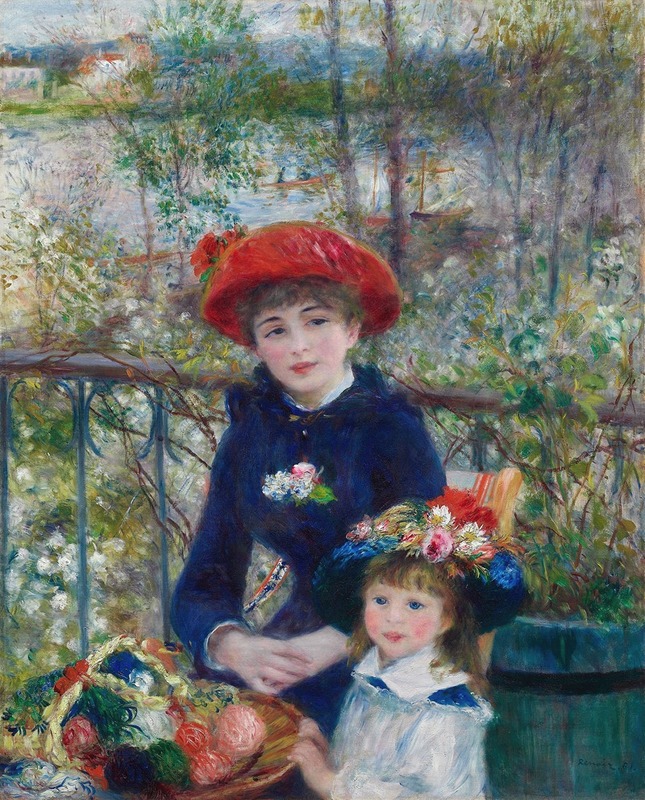
Two Sisters (On the Terrace)
Pierre-Auguste Renoir
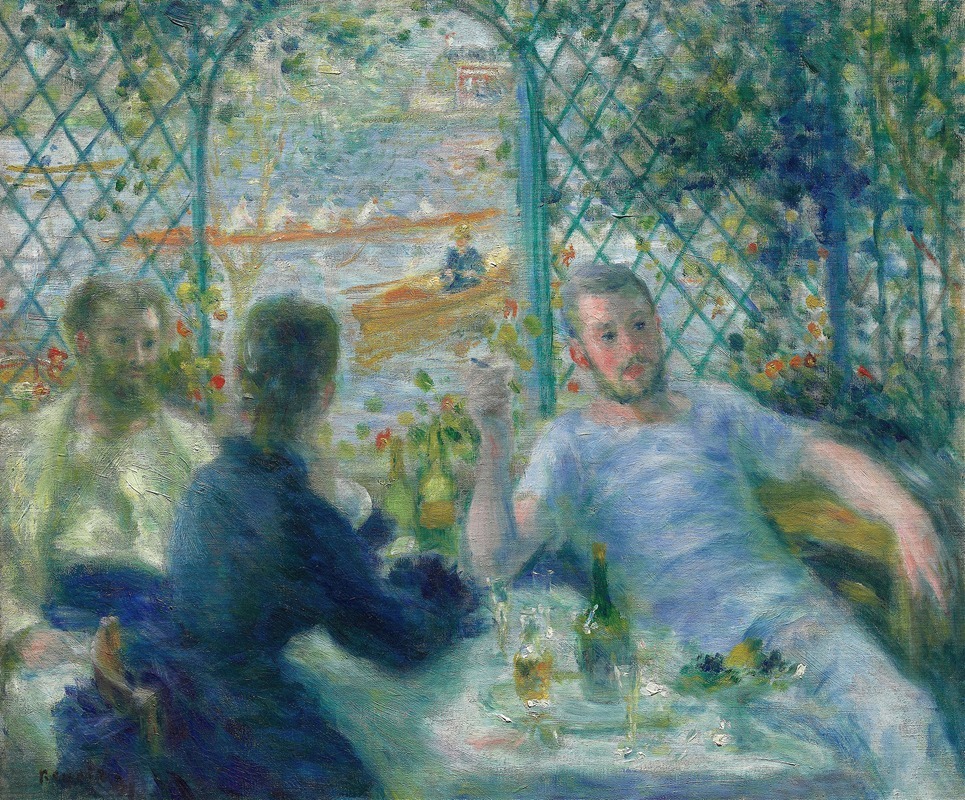
Lunch at the Restaurant Fournaise (The Rowers' Lunch)
Pierre-Auguste Renoir
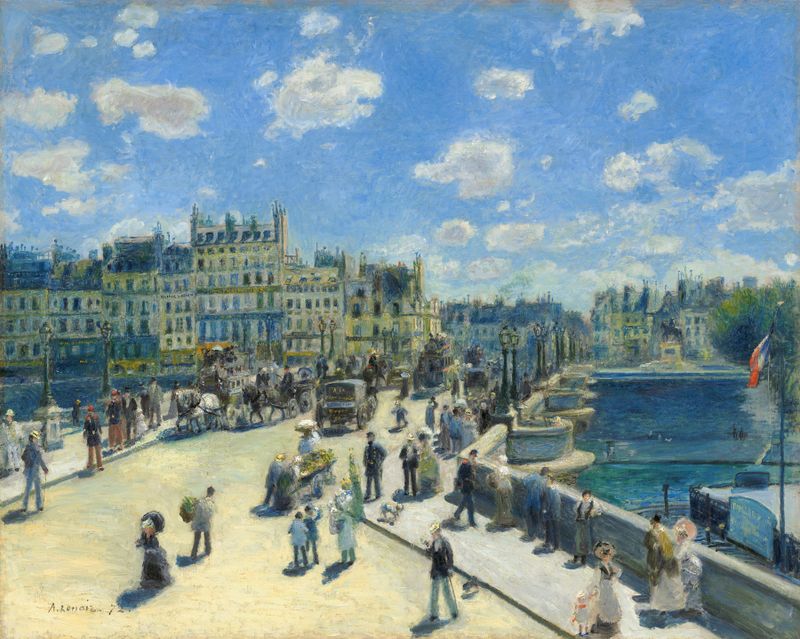
Pont Neuf, Paris
Pierre-Auguste Renoir
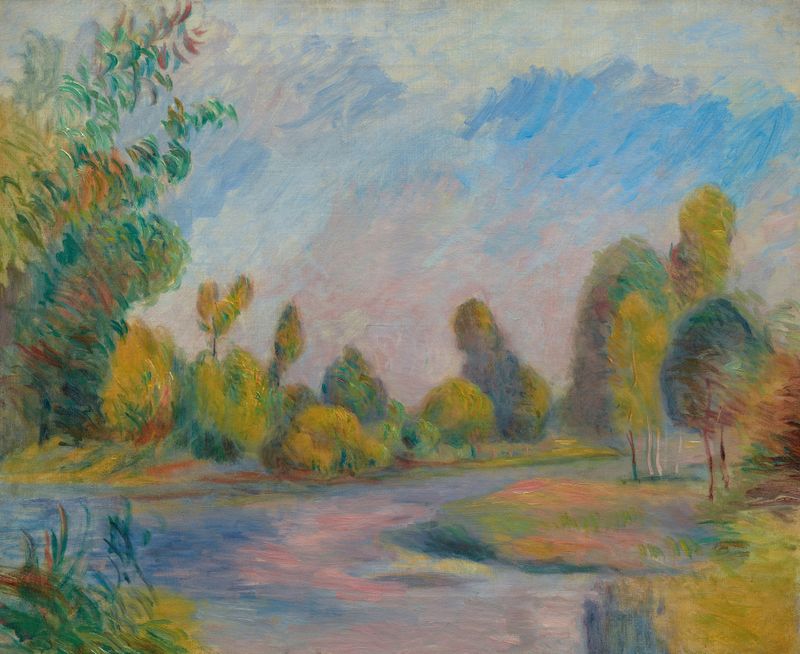
Au bord de la rivière
Pierre-Auguste Renoir

Near the Lake
Pierre-Auguste Renoir
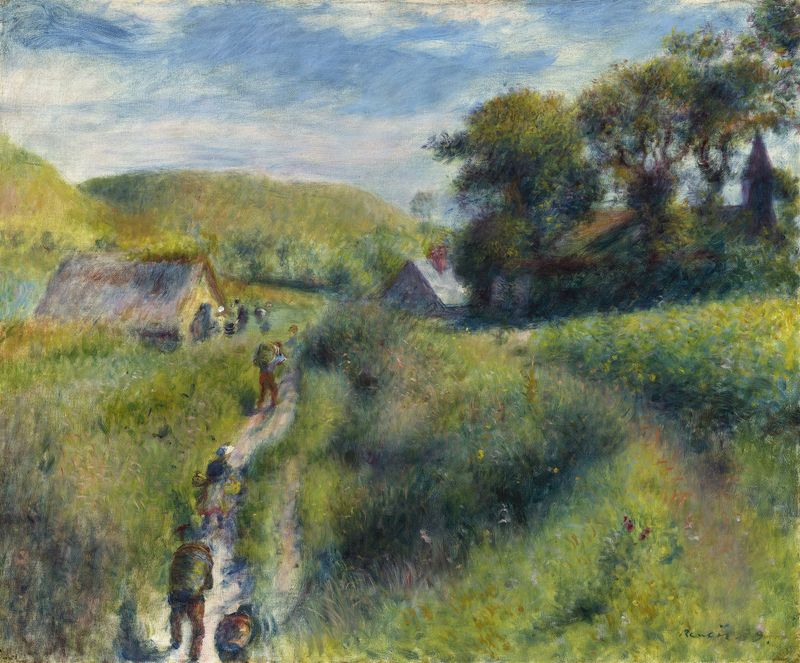
The Mussel Harvest
Pierre-Auguste Renoir

The Seine at Chatou
Pierre-Auguste Renoir
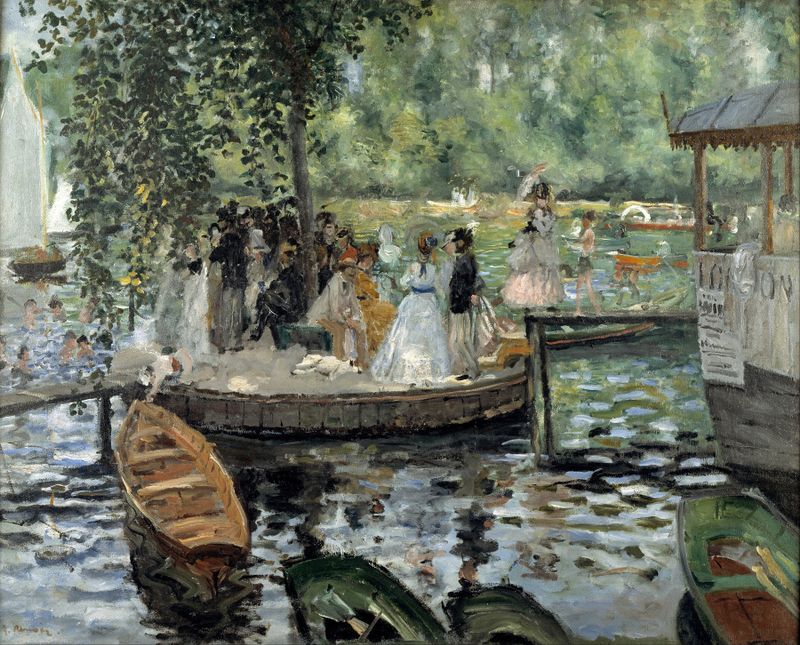
La Grenouillère
Pierre-Auguste Renoir
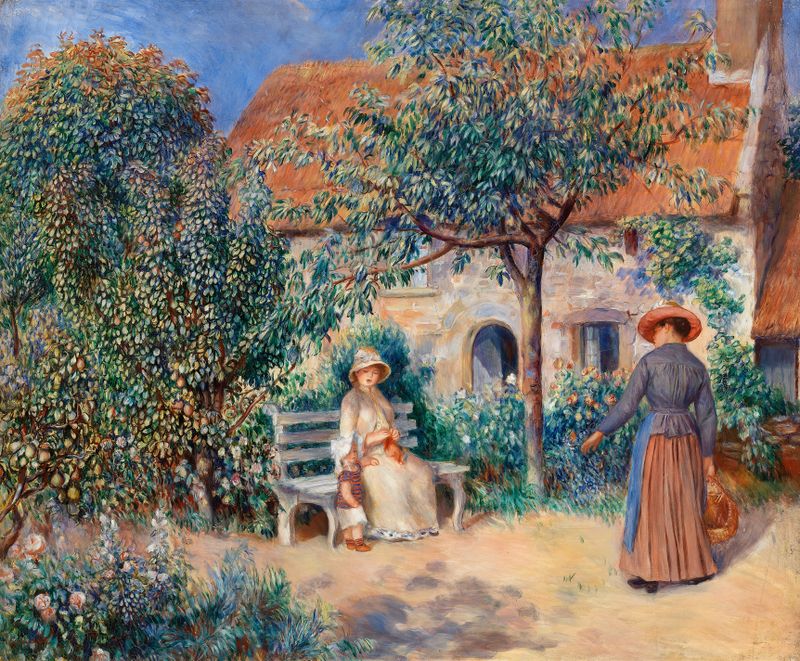
In Brittany (En Bretagne)
Pierre-Auguste Renoir
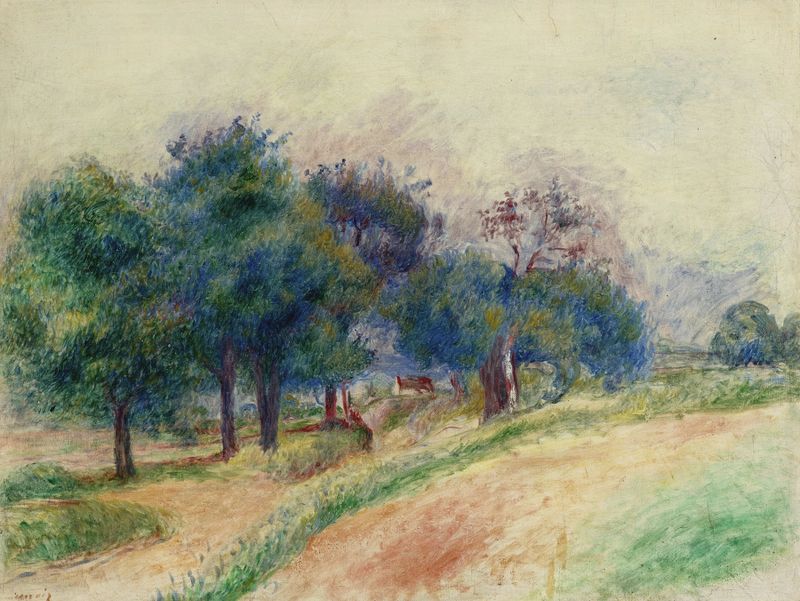
Paysage d’Essoyes
Pierre-Auguste Renoir





