
Landscape (Paysage) — History & Facts
Is this a mirror — or a memory? In Pierre-Auguste Renoir's Landscape, the essence of emptiness resonates not as a void, but as a serene landscape holding untold stories. Look to the left where gentle hills roll softly against a pale sky; the brushstrokes meld seamlessly, creating a sense of tranquility. The warm palette of greens, yellows, and browns conveys a peacefulness, inviting your gaze to wander through the lush depths of the scene. Notice how the light dances upon the foliage, casting delicate shadows that suggest both presence and absence—each stroke a whisper of life that once thrived there. The emotional tension lies in the contrast between stillness and the echoes of what was.
The empty expanse—so inviting, yet haunting—captures a longing that transcends time. Perhaps the artist hints at the fleeting nature of beauty, where the landscape itself tells a story of solitude. Each edge, each color, is imbued with a sense of nostalgia, evoking reflections on what memories might linger in such a quiet space. Created in 1916, Landscape was painted during a tumultuous period in Renoir's life.
Struggling with health issues and feeling the weight of a world at war, he sought solace in nature, using his brushes to translate the complexities of his inner landscape onto canvas. This work reflects not only his artistic evolution but also the emotional landscape of an artist grappling with both personal and societal upheaval.
More Artworks by Pierre-Auguste Renoir
Browse all →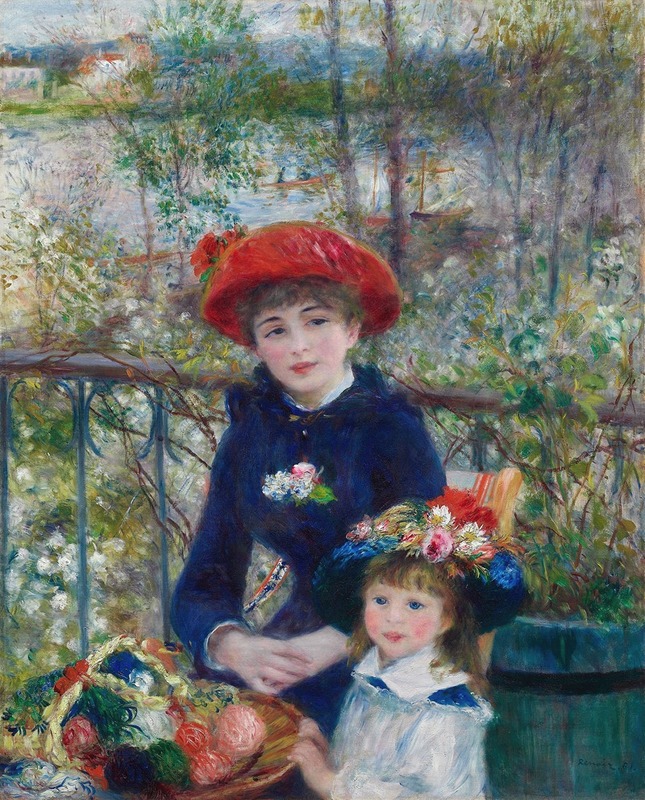
Two Sisters (On the Terrace)
Pierre-Auguste Renoir
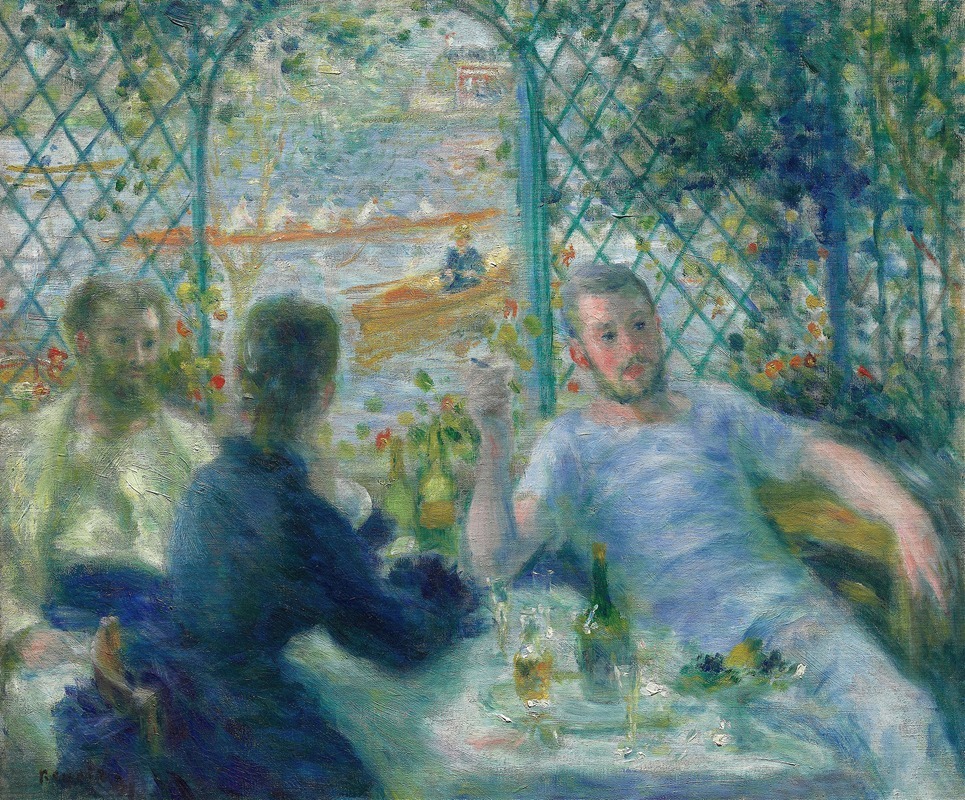
Lunch at the Restaurant Fournaise (The Rowers' Lunch)
Pierre-Auguste Renoir
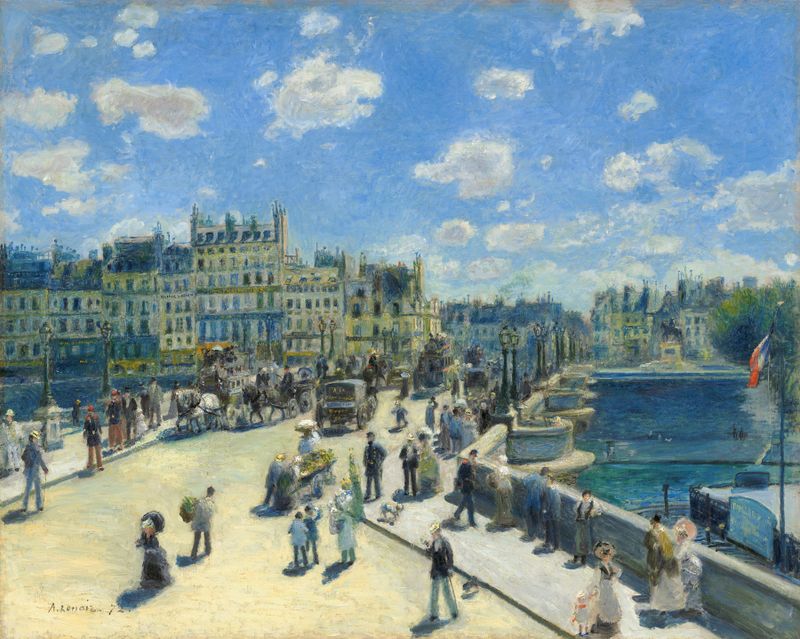
Pont Neuf, Paris
Pierre-Auguste Renoir
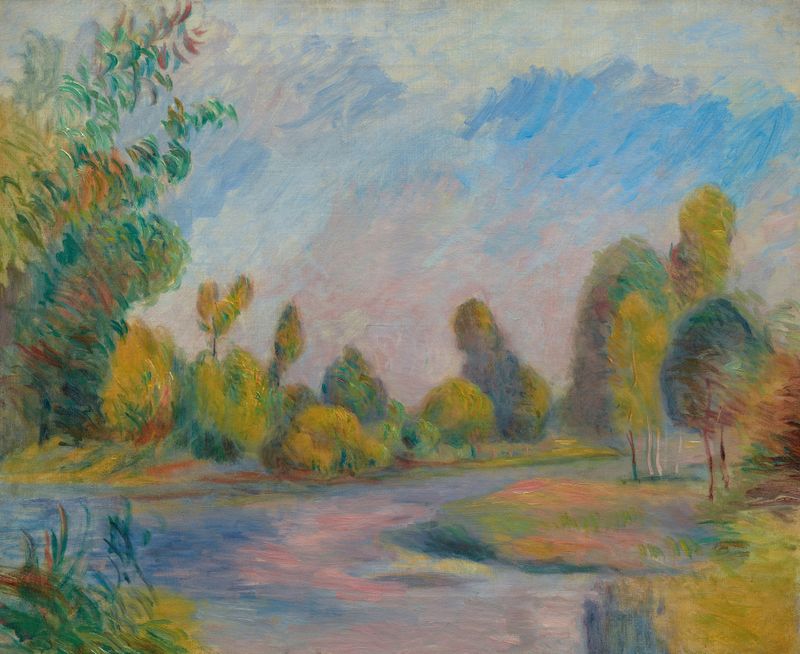
Au bord de la rivière
Pierre-Auguste Renoir

Near the Lake
Pierre-Auguste Renoir
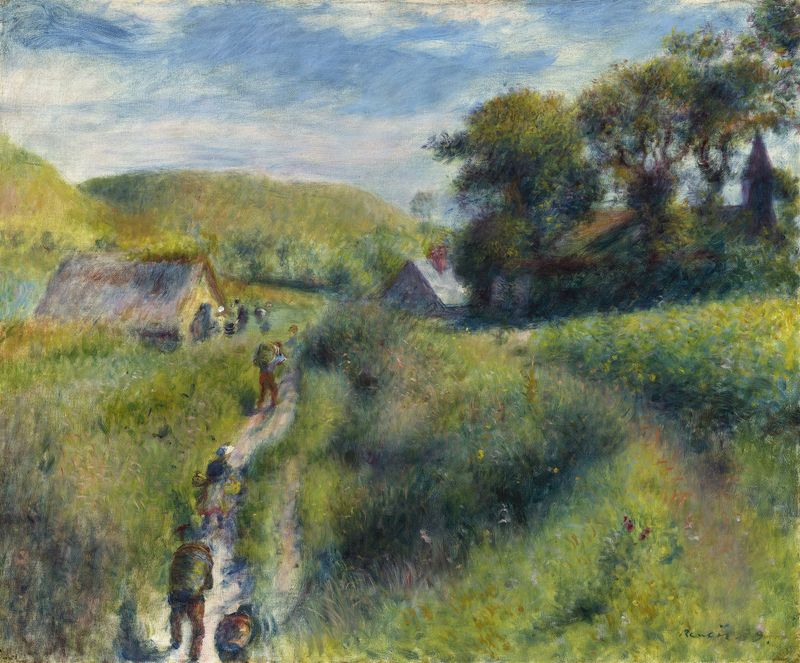
The Mussel Harvest
Pierre-Auguste Renoir

The Seine at Chatou
Pierre-Auguste Renoir
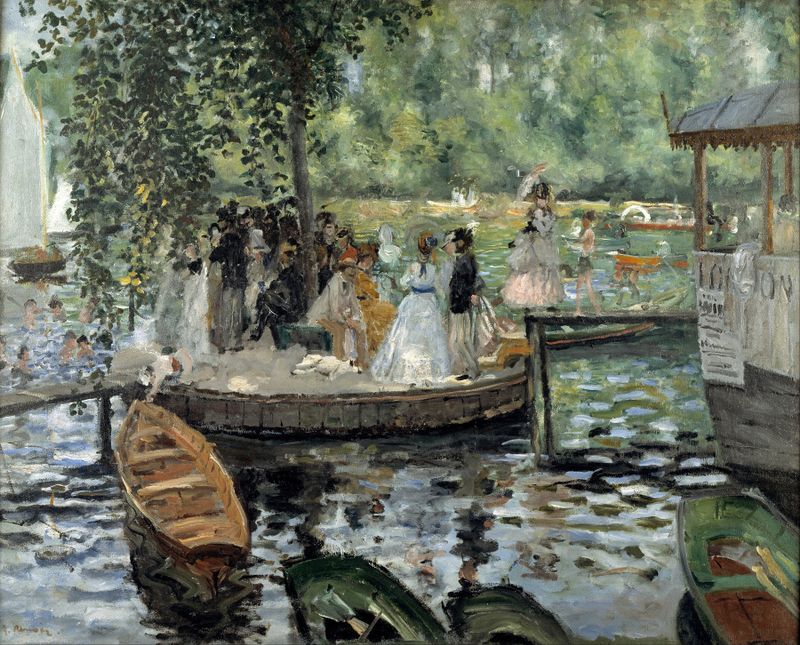
La Grenouillère
Pierre-Auguste Renoir
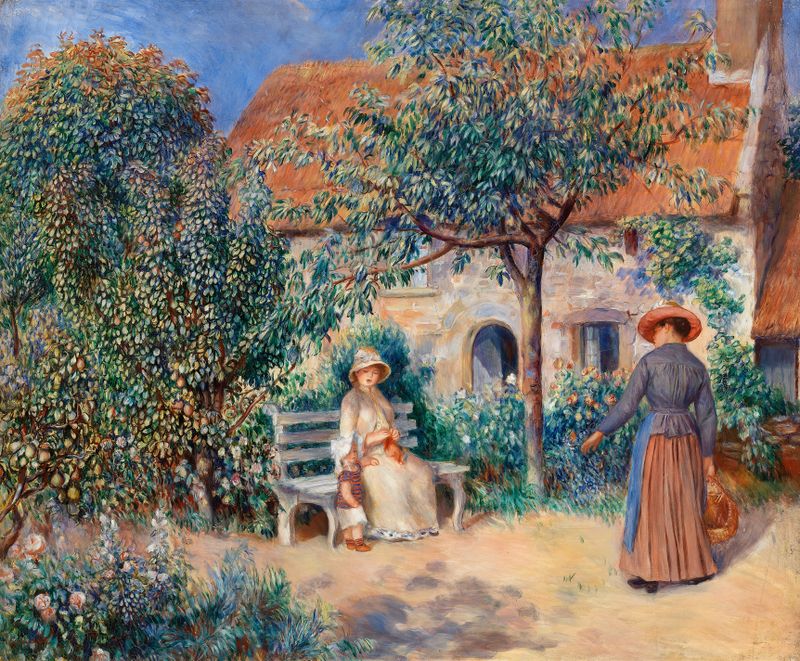
In Brittany (En Bretagne)
Pierre-Auguste Renoir
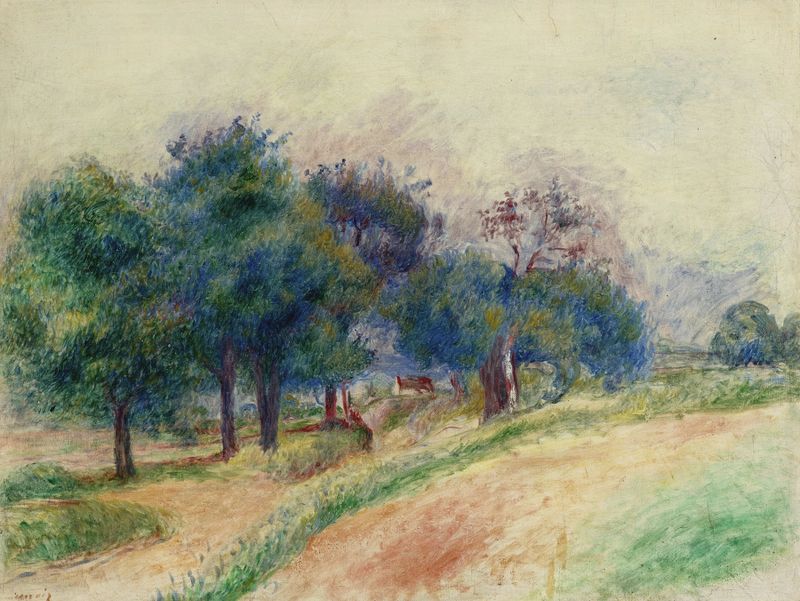
Paysage d’Essoyes
Pierre-Auguste Renoir





