
Landscape (Paysage) II — History & Facts
In the stillness of Landscape (Paysage) II, a delicate balance emerges between the vibrant and the fragile. Each brushstroke whispers to us the transience of nature, capturing a moment that teeters on the edge of permanence. Look to the left, where a verdant expanse unfurls beneath an expansive sky. Notice how the soft greens and warm yellows appear to dance under the gentle caress of sunlight, a testament to Renoir's masterful technique.
The dappled light not only enhances the textures of the foliage but also leads the eye toward the horizon, where the blue meets the gold of the earth in a harmonious embrace. The layered colors evoke a sense of depth, inviting contemplation of nature’s quiet wonders. Yet, amid this beauty lies an underlying tension. The interplay of light and shadow suggests an impending change, a season's shift that serves as a reminder of life's fleeting nature.
The softness of the landscape reflects not only the physical fragility of the environment but also a deeper emotional resonance, evoking memories of past summers filled with warmth and laughter, moments that slip away like the light itself. Each detail, from the delicate flowers to the billowing clouds, speaks to a world poised between growth and decay. During the years between 1900 and 1905, Renoir was deeply immersed in exploring outdoor scenes, balancing his evolving style with the Impressionist movement's legacies. Living in the south of France, he found inspiration in the natural beauty surrounding him, amidst personal challenges and the complexities of an art world rapidly changing.
In this period, he sought to capture not just the essence of landscapes, but their fleeting beauty — a challenge that resonates powerfully in this work.
More Artworks by Pierre-Auguste Renoir
Browse all →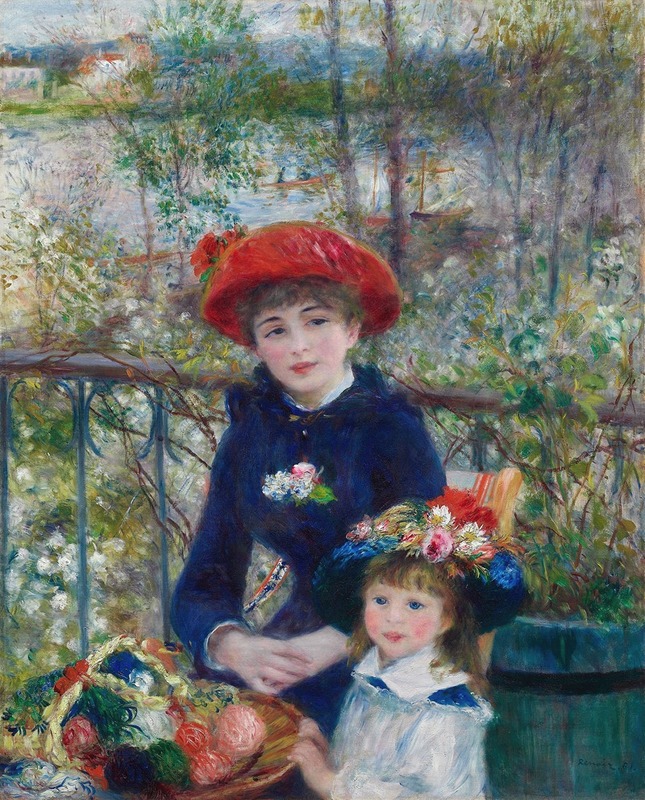
Two Sisters (On the Terrace)
Pierre-Auguste Renoir
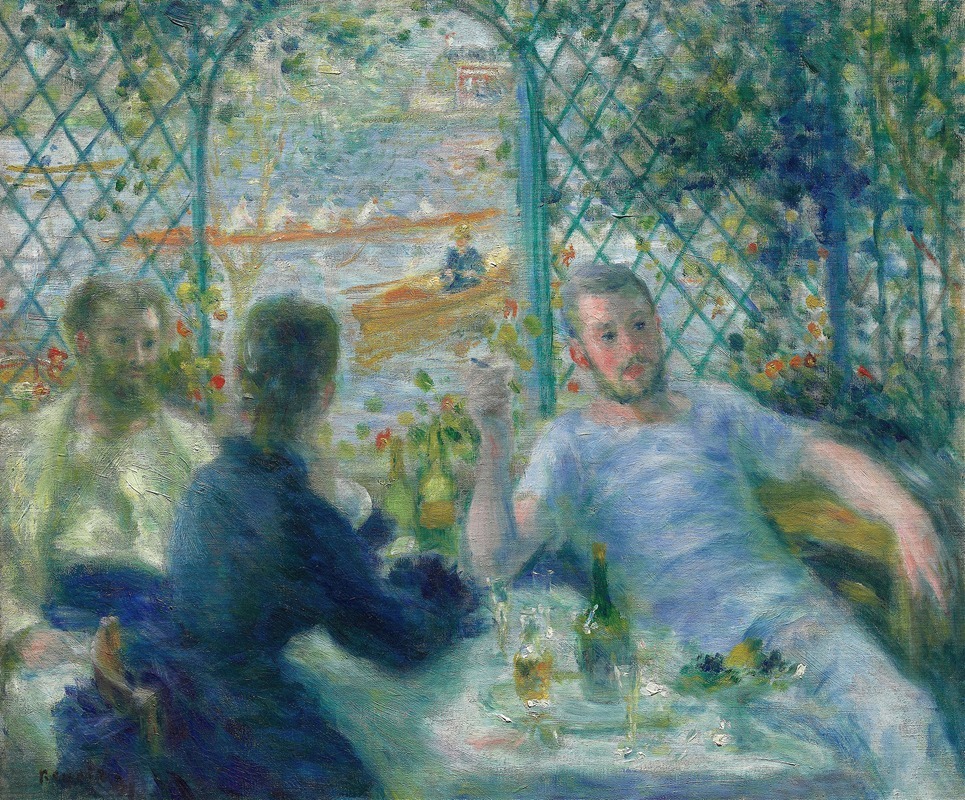
Lunch at the Restaurant Fournaise (The Rowers' Lunch)
Pierre-Auguste Renoir
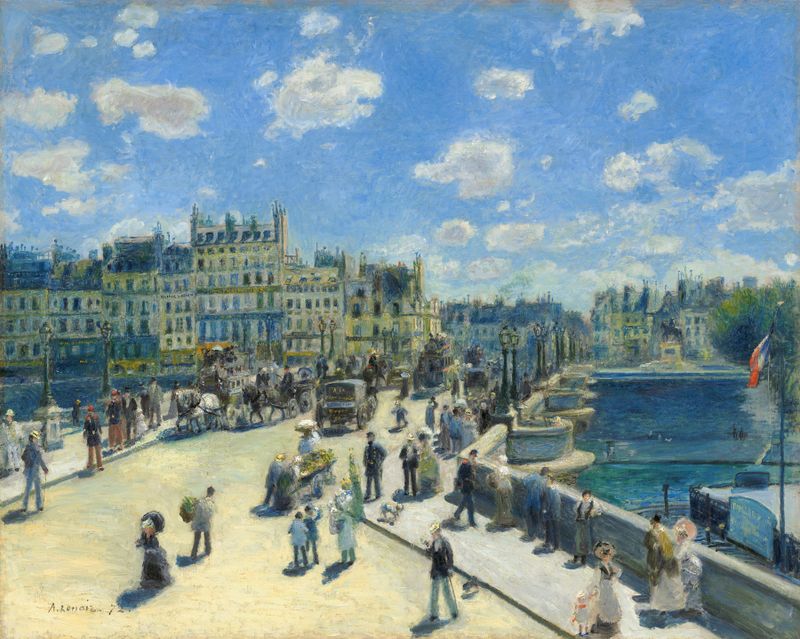
Pont Neuf, Paris
Pierre-Auguste Renoir
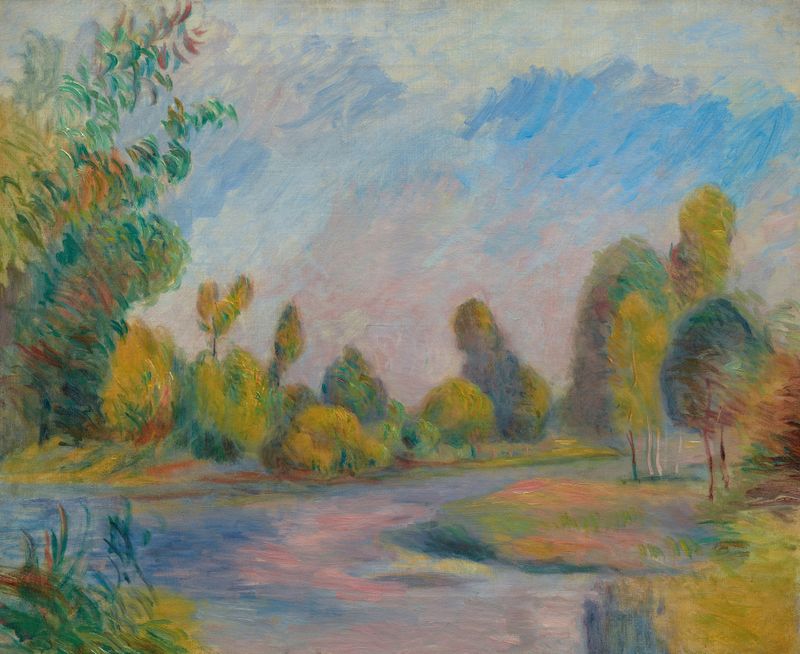
Au bord de la rivière
Pierre-Auguste Renoir

Near the Lake
Pierre-Auguste Renoir
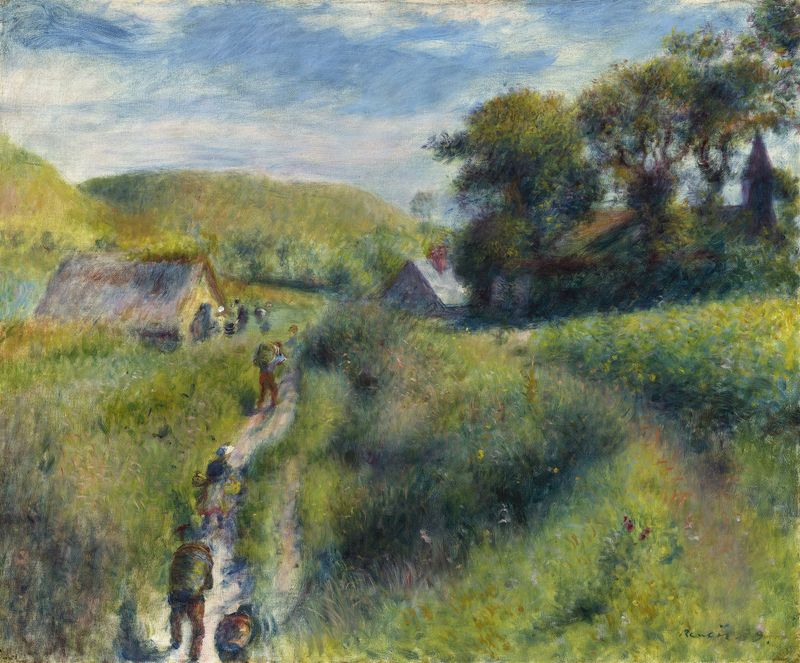
The Mussel Harvest
Pierre-Auguste Renoir

The Seine at Chatou
Pierre-Auguste Renoir
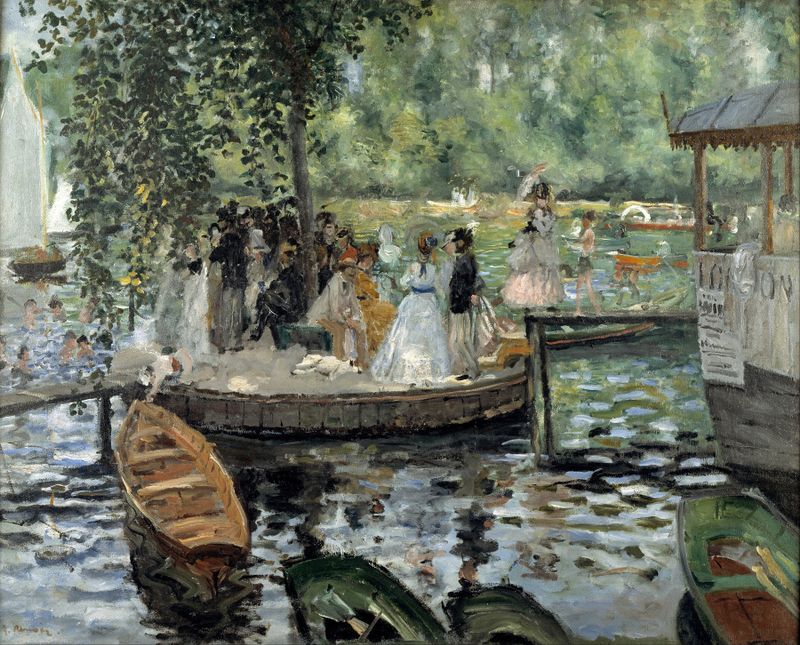
La Grenouillère
Pierre-Auguste Renoir
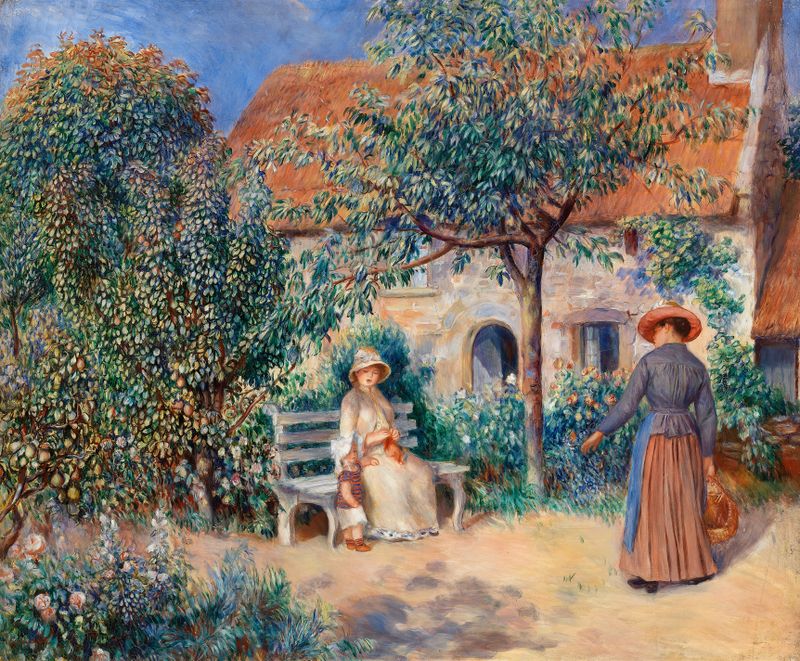
In Brittany (En Bretagne)
Pierre-Auguste Renoir
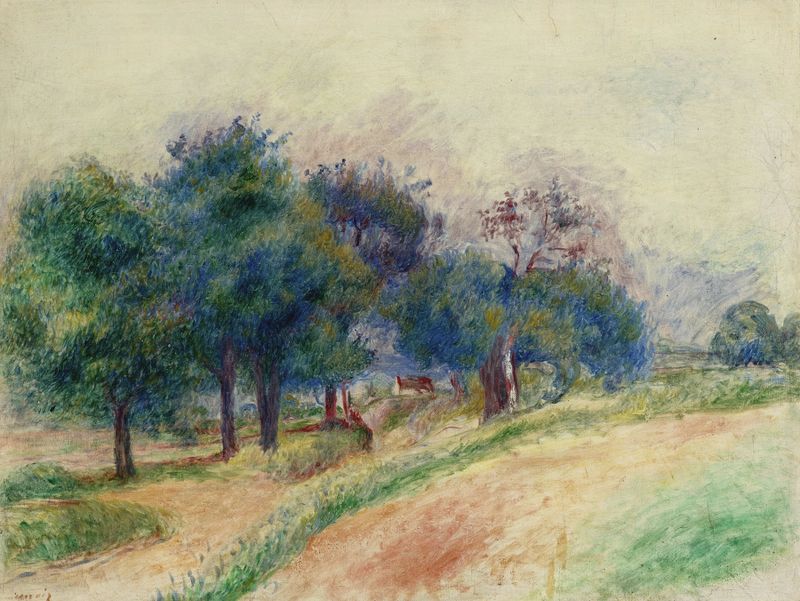
Paysage d’Essoyes
Pierre-Auguste Renoir





