
Landscape with a river and angler — History & Facts
A single figure steps quietly along the riverbank, net slung over his shoulder, dwarfed by the sweep of water and sky. The eye is drawn first to the broad, luminous expanse of sky, where clouds drift in gentle formation, their softness echoed in the mirrored surface of the river below. The landscape unfolds in layers: a wooded bluff rises to the left, its trees casting cool shadows, while the river bends away into the distance, catching the light in a ribbon of blue.
The angler, almost incidental in scale, becomes a point of entry for the viewer—a humble presence in a vast, breathing world. The palette is earthy and restrained, with greens and ochres grounding the scene and the play of sunlight lending a quiet clarity. Painted in 1859 by Alexei Kondratievich Savrasov, this work belongs to a moment in Russian art when landscape painting began to claim a new significance. Artists like Savrasov, working in the mid-nineteenth century, turned their attention to the familiar rivers and forests of their homeland, seeking not grand spectacle but a sense of place and mood.
Such paintings were often collected by the rising urban middle class, eager for images that spoke to national identity and the poetry of ordinary life. While history has kept few traces of this specific canvas beyond its date and presence in the Google Arts & Culture collection, its quiet drama invites us to linger, tracing the river’s course and the slow passage of clouds.
More Artworks by Alexei Kondratievich Savrasov
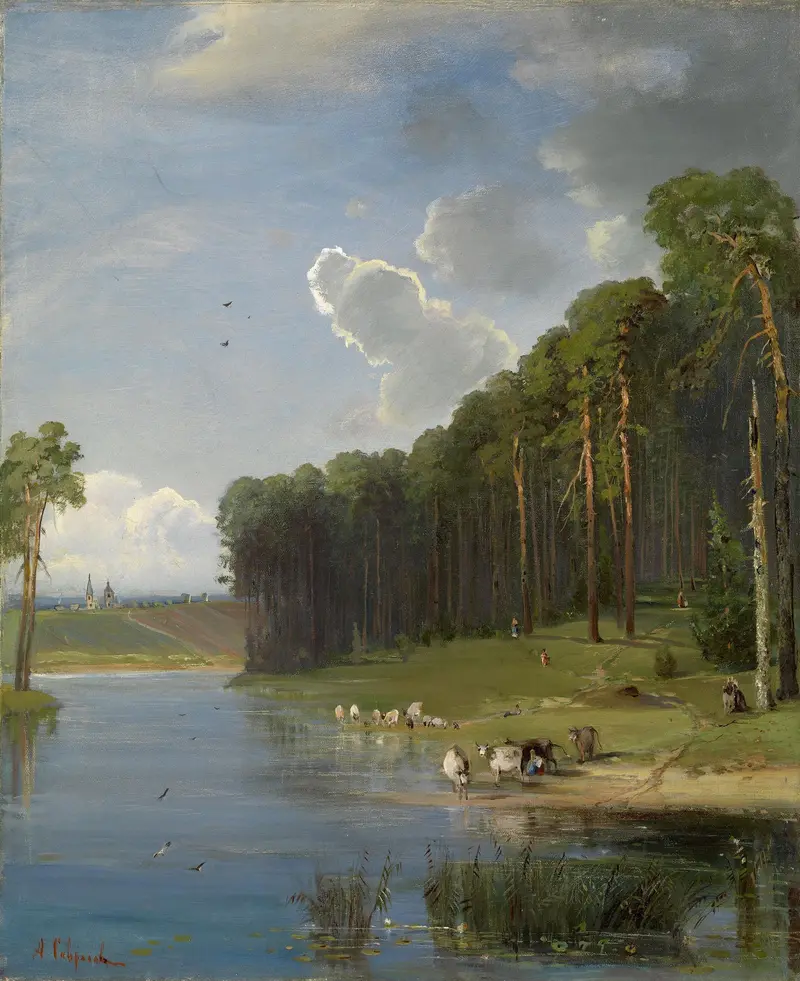
Pastoral scene
Alexei Kondratievich Savrasov
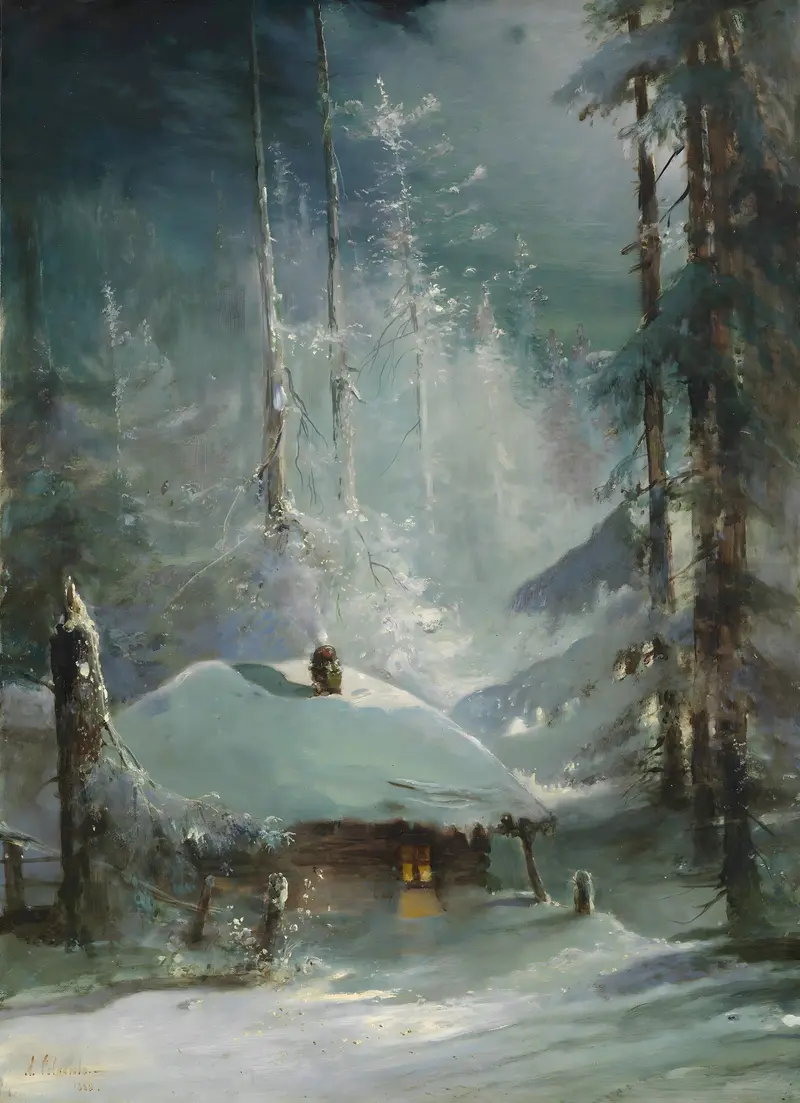
Hut in a wintry forest Object type painting
Alexei Kondratievich Savrasov
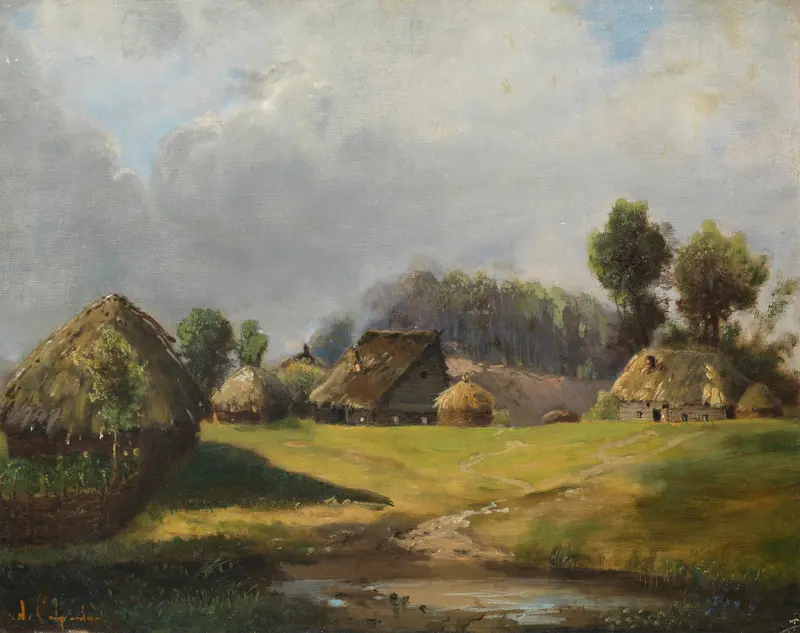
Village by the forest
Alexei Kondratievich Savrasov
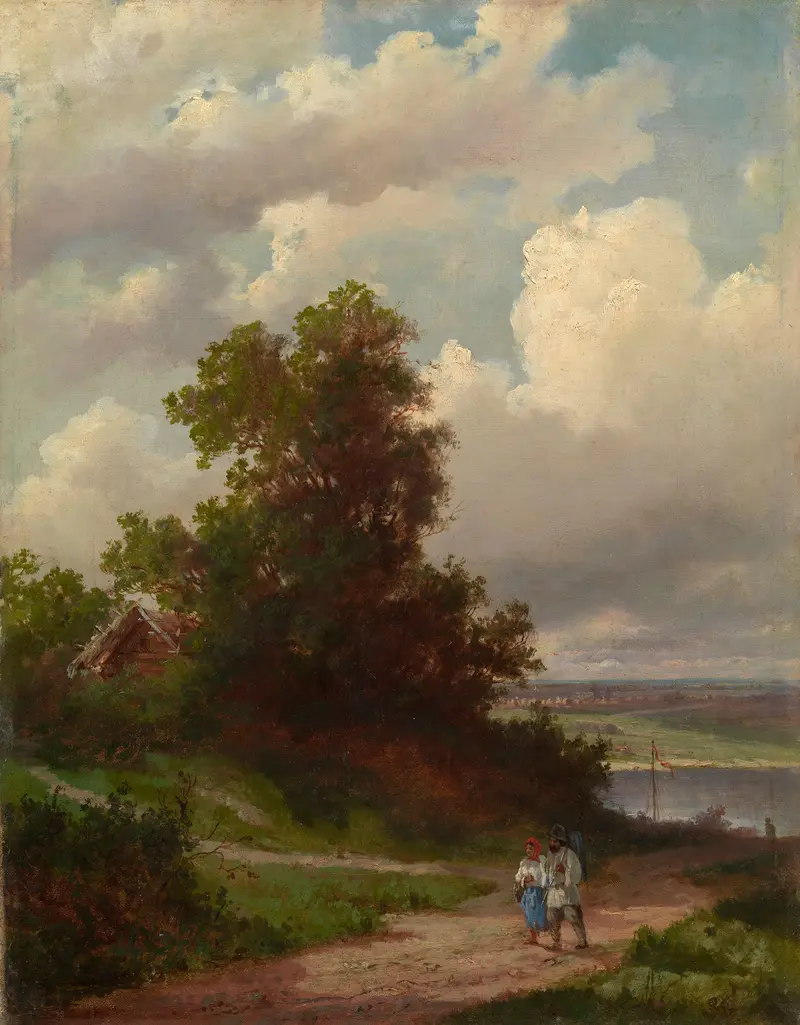
Road by the Volga river
Alexei Kondratievich Savrasov
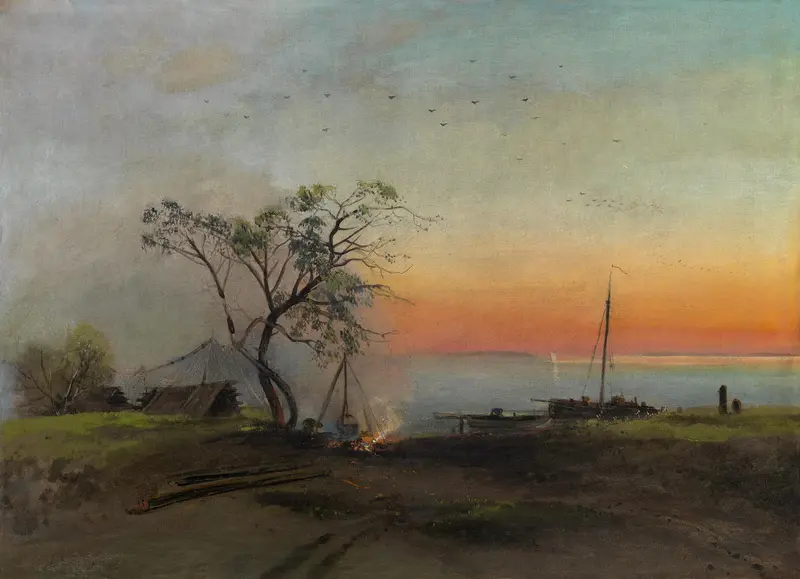
Fishermen on the Volga
Alexei Kondratievich Savrasov
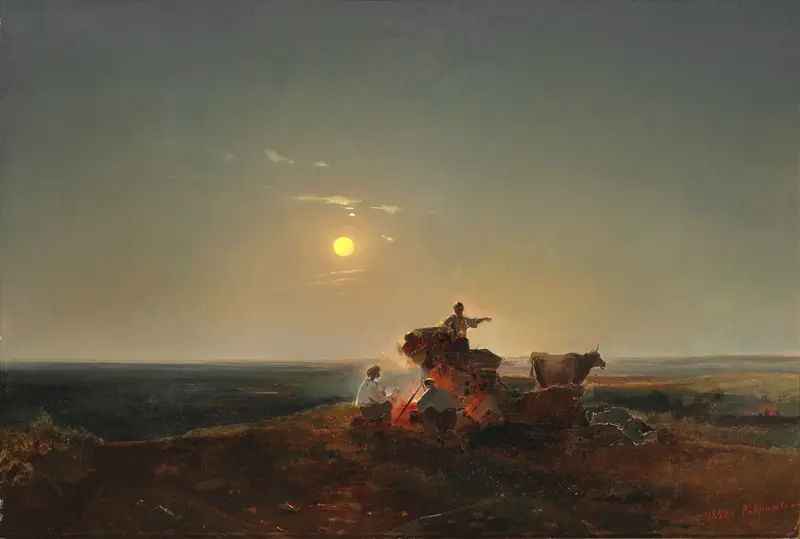
Nomads around a fire on the plain in moonlight
Alexei Kondratievich Savrasov
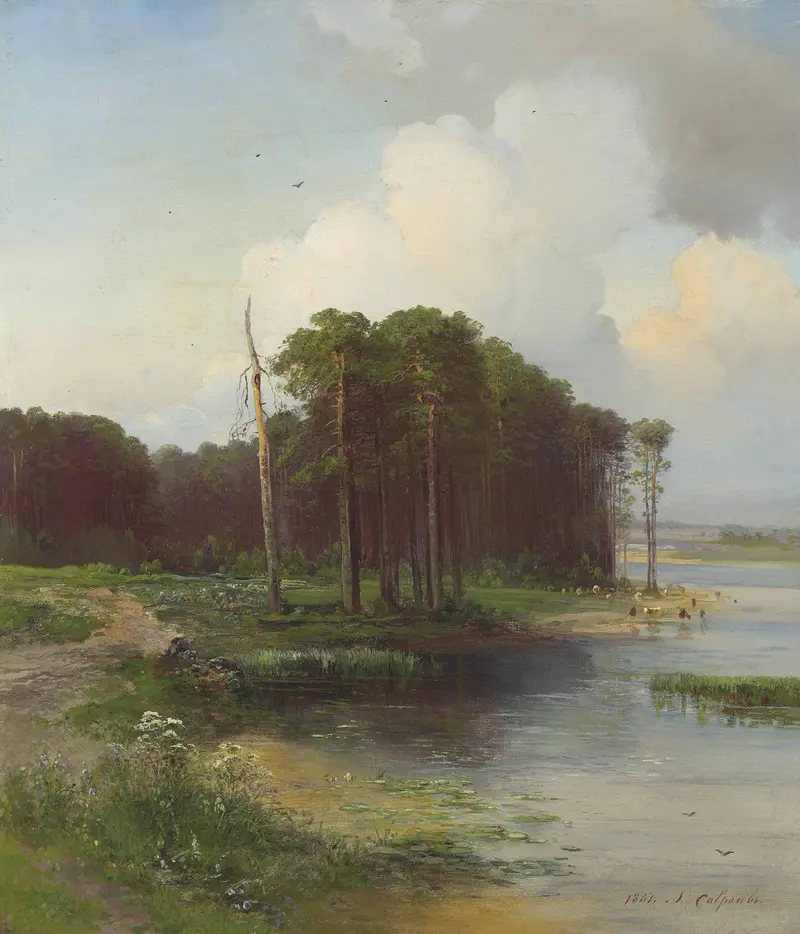
Losiny ostrov (Moose island)
Alexei Kondratievich Savrasov
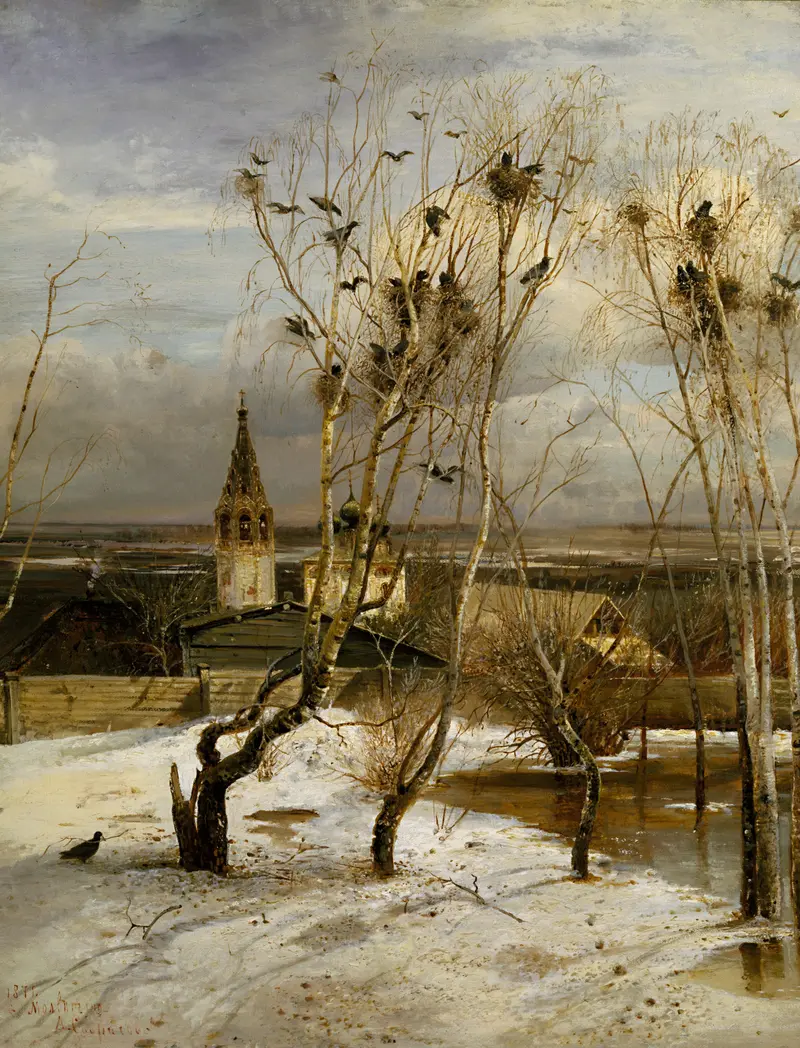
The Rooks Have Returned
Alexei Kondratievich Savrasov
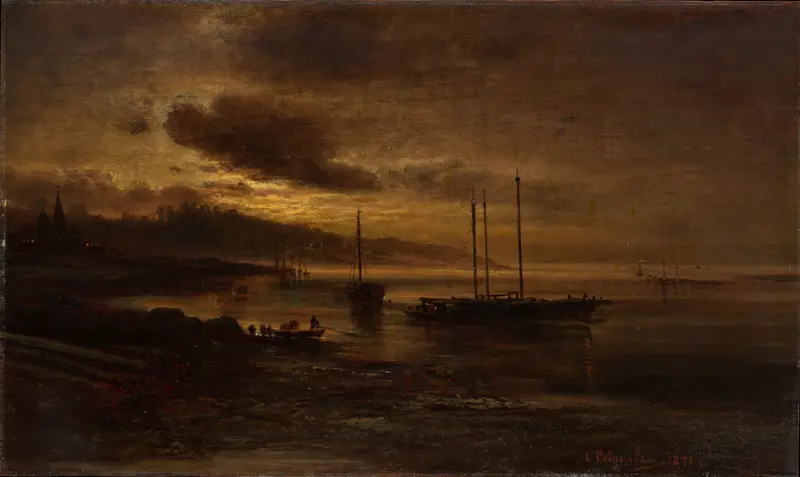
Night Scene on the Volga
Alexei Kondratievich Savrasov
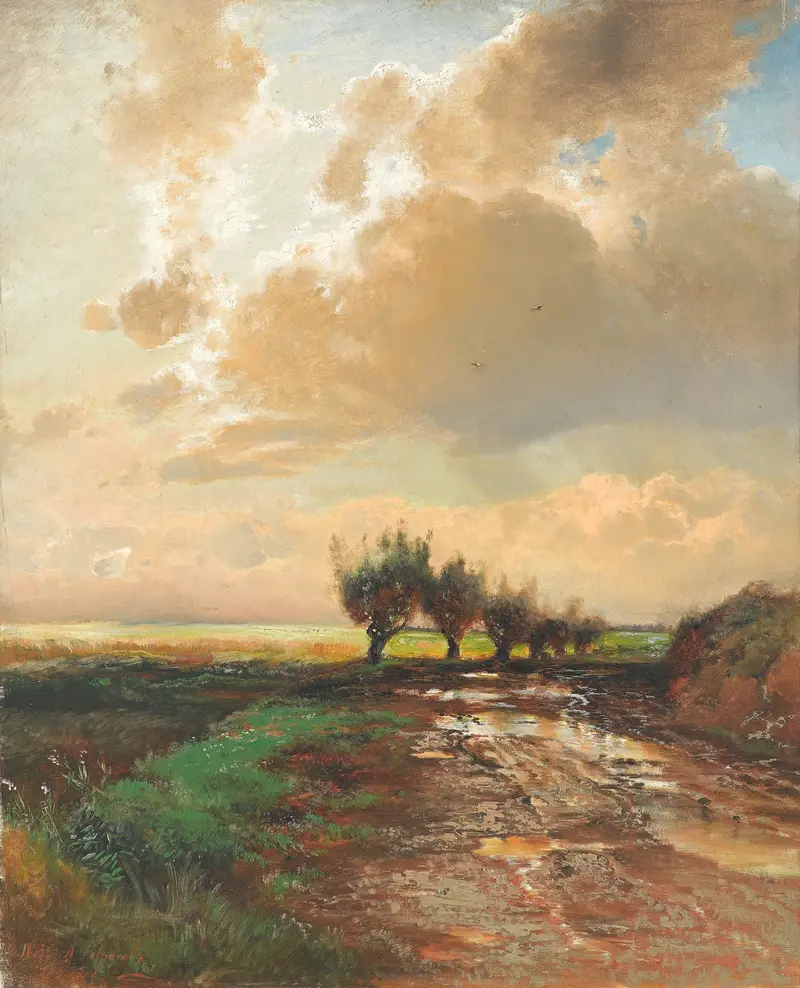
Country road
Alexei Kondratievich Savrasov
More Landscape Art

The Starry Night
Vincent van Gogh

View of Delft
Johannes Vermeer

Water Lilies
Claude Monet

The Grand Canal, Venice, looking north-west from the Ca' Corner to the Ca' Contarini degli Scrigni, with the campanile of Santa Maria della Carità
Canaletto

Windsor Castle
Canaletto

The Grand Canal looking North-East from the Palazzo Dolfin-Manin to the Rialto Bridge
Canaletto