
Landscape with fortress — History & Facts
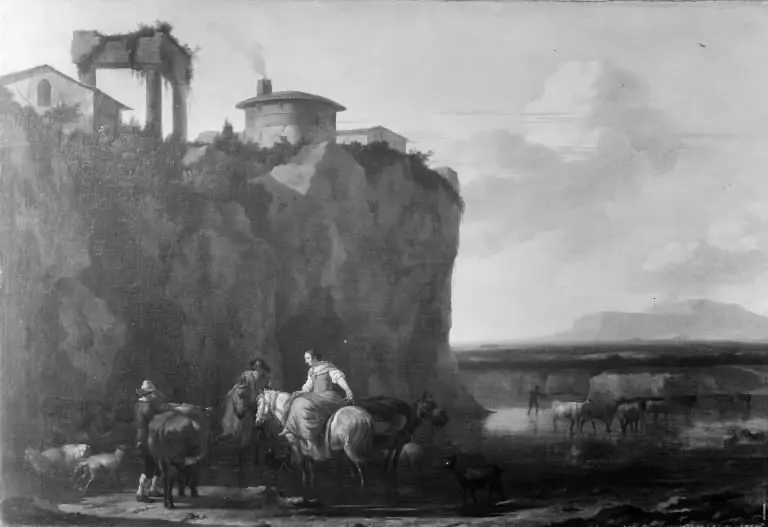
A fortress rises from the heart of the landscape, its battered tower catching the last warmth of the sun as daily life unfolds in its shadow. The eye is drawn first to the play of light on rough stone, then to the bustle of figures below: women bend over water, men lead donkeys laden with baskets, children dart between chores. The castle’s dominance is softened by the sheer ordinariness of the scene—laundry flutters from a pole, a sign creaks above a darkened archway, and the land stretches away in gentle, hazy hills.
Every gesture here is purposeful: a woman wringing out linen, a man gesturing to a companion, a child crouched in concentration by the stream. The palette is earthy and sunlit, anchoring the fortress in a world of labor and routine rather than legend or siege. Painted between 1640 and 1659 by Abraham Jansz. Begeyn, this work belongs to a period when Dutch and Flemish artists looked south, captivated by the Italianate landscape and its promise of ancient ruins and golden light.
Such scenes were prized by collectors eager for a taste of the Mediterranean, even as the realities of rural life remained close to home. The genre thrived on this blend of the exotic and the familiar: a fortress that could be Roman or Spanish, peasants who might be neighbors or ancestors. Little is recorded about the specific journey of this painting, now held in a Dutch collection, but its quiet drama invites us to linger—imagining the fortress not as a symbol of war, but as the backdrop to a day’s honest work.
More Artworks by Abraham Jansz. Begeyn

Landscape with people and cattle
Abraham Jansz. Begeyn
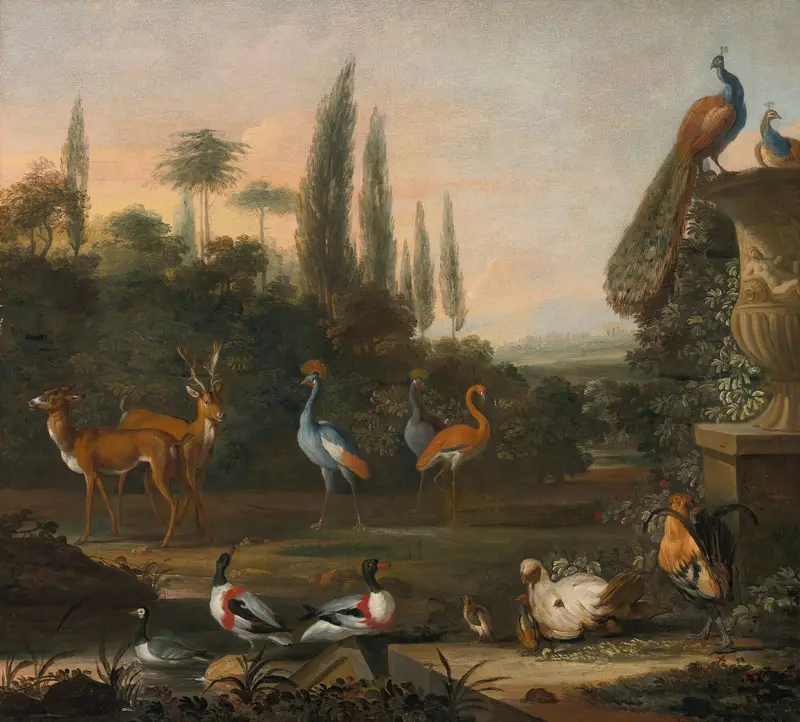
Landscape with deer and exotic birds
Abraham Jansz. Begeyn
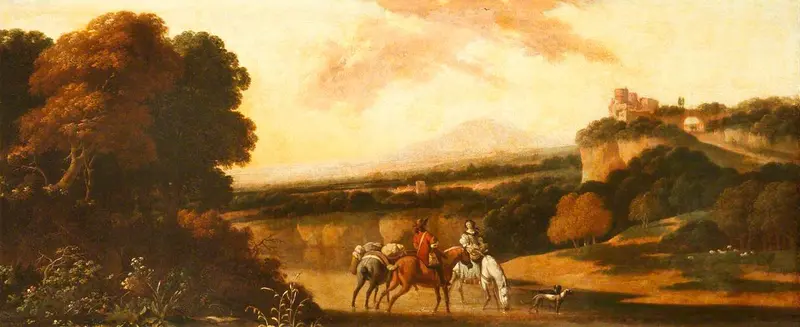
Landscape with Travellers
Abraham Jansz. Begeyn
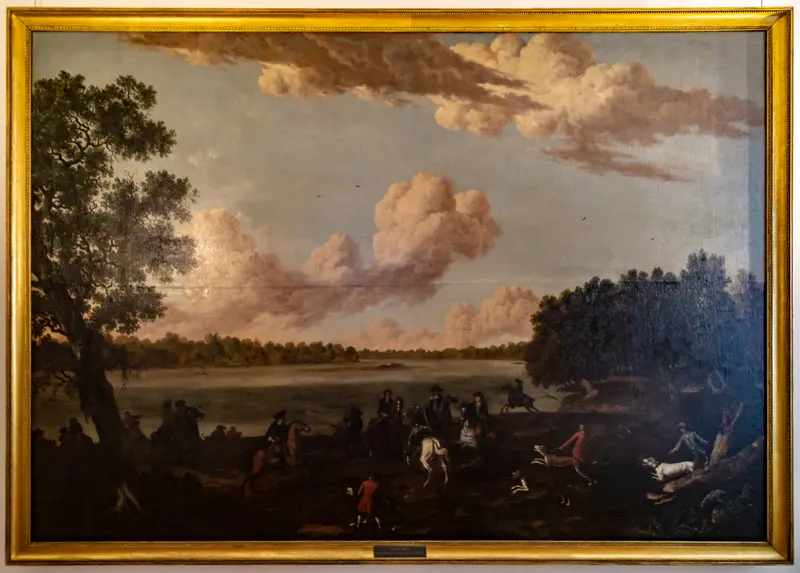
Prince Elector Frederick III of Prussia hunting at the Havel
Abraham Jansz. Begeyn
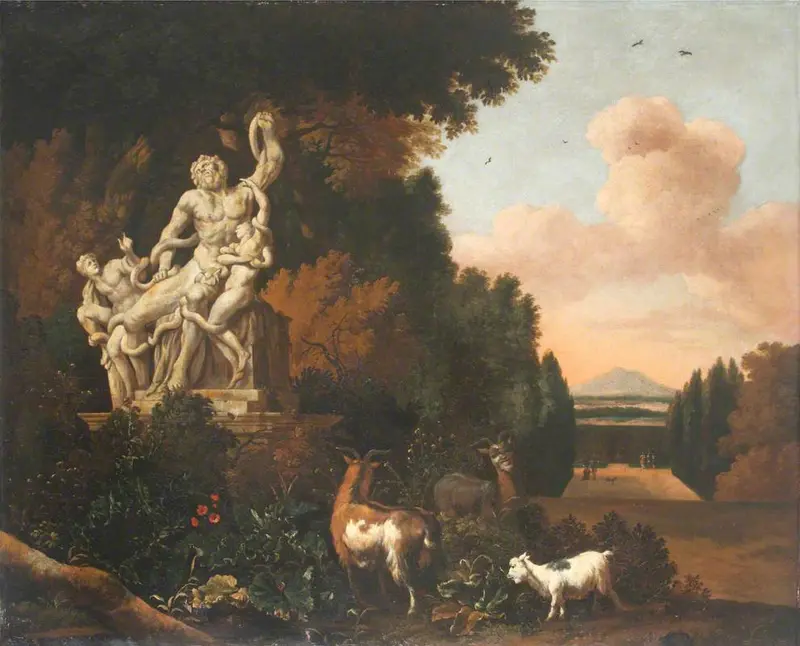
Landscape with Goats and a Statue of Laocoön
Abraham Jansz. Begeyn
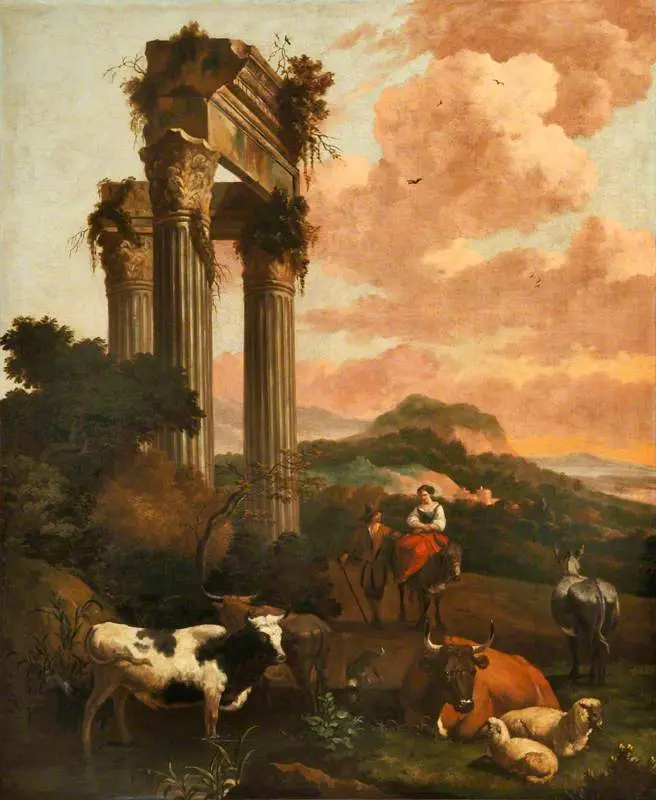
Landscape with Figures, Cattle and Sheep among Classical Ruins
Abraham Jansz. Begeyn
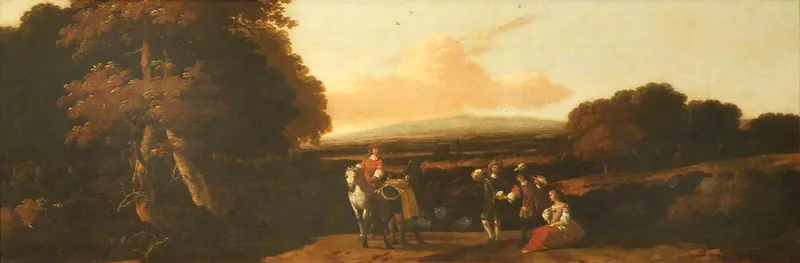
Landscape with Figures on a Road
Abraham Jansz. Begeyn
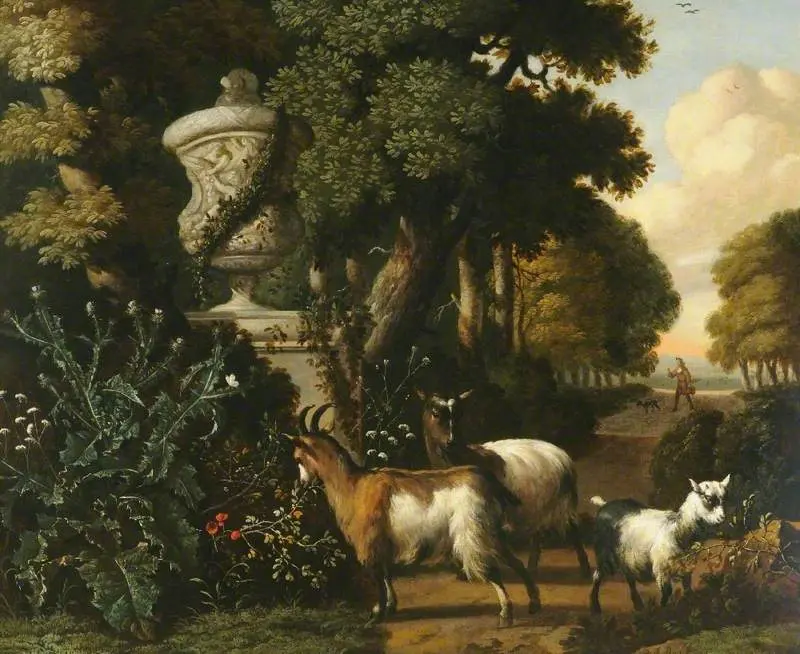
Landscape with Goats
Abraham Jansz. Begeyn
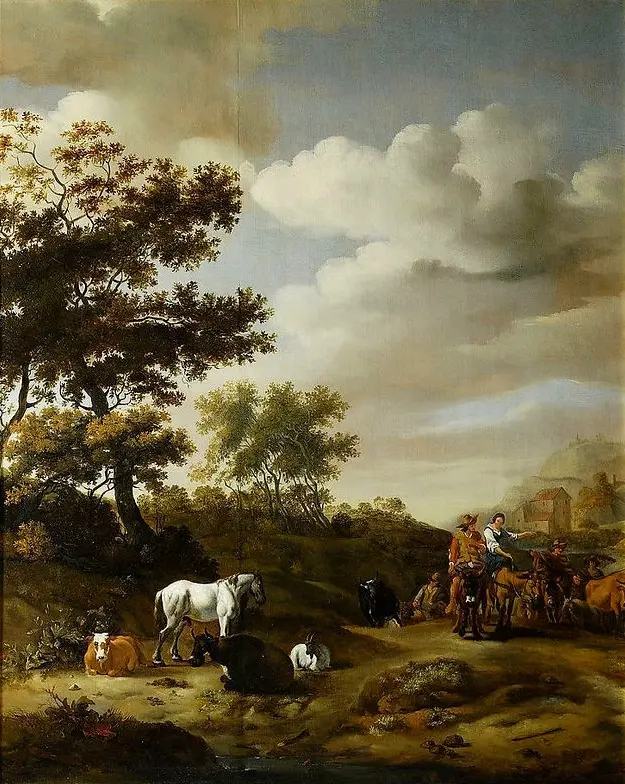
Landscape with travelers and cattle.
Abraham Jansz. Begeyn
The Ford
Abraham Jansz. Begeyn
More Landscape Art

The Starry Night
Vincent van Gogh

View of Delft
Johannes Vermeer

Water Lilies
Claude Monet

The Grand Canal, Venice, looking north-west from the Ca' Corner to the Ca' Contarini degli Scrigni, with the campanile of Santa Maria della Carità
Canaletto

Windsor Castle
Canaletto

The Grand Canal looking North-East from the Palazzo Dolfin-Manin to the Rialto Bridge
Canaletto