
Landscape with Limekiln — History & Facts
Who listens when art speaks of silence? In Landscape with Limekiln, the gentle hum of nature intertwines with the stillness of the human endeavor, capturing a quiet divinity that often goes unnoticed. Focus on the expansive horizon where the sky dips into blushing tones of dusk. The limekiln stands resolute in the foreground, its rugged texture contrasting beautifully against the soft, rolling hills layered in muted greens and browns. Notice how the warm light casts elongated shadows, creating a dialogue between the built environment and the vastness of the natural world, inviting contemplation of their coexistence. Delve deeper into the subtlety of the piece: the limekiln, a testament to human toil, exudes a sense of permanence, while the ephemeral clouds above shift with the moment.
The juxtaposition between the industrious silhouette and the ethereal sky symbolizes the tension between nature and humanity, suggesting a divine presence that observes but remains aloof. Each brushstroke evokes a sense of sacred stillness, as if time itself pauses to honor the landscape. Copley Fielding painted this work in 1809 during a period of significant transformation in England, marked by the Industrial Revolution. As burgeoning industry clashed with pastoral beauty, the artist sought to capture the intersection of these worlds, reflecting his fascination with the sublime quality of nature amidst the encroachments of human activity.
This piece stands as a quiet witness to a time of change, revealing Fielding's mastery in blending the natural with the man-made.
More Artworks by Copley Fielding
Browse all →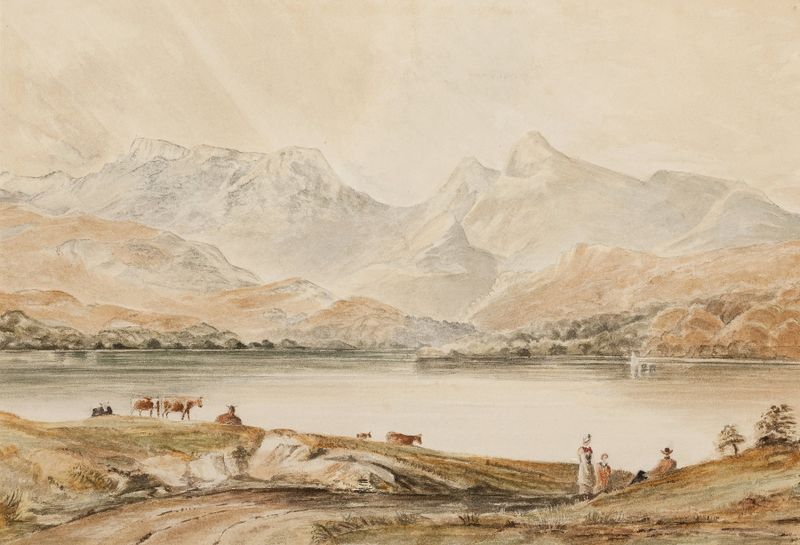
Loch Awe, Scotland
Copley Fielding
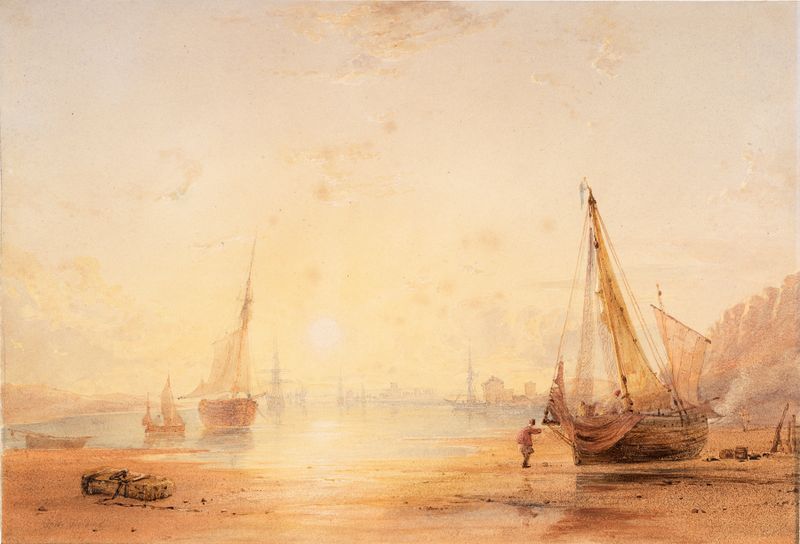
Shoreham Harbour, Sussex
Copley Fielding

Crowborough Hill
Copley Fielding
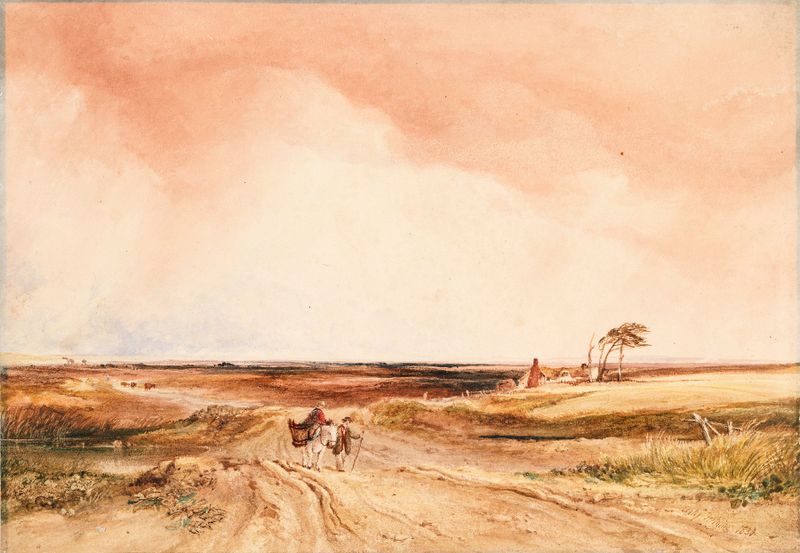
The Wash of Cumberland (Cumbria)
Copley Fielding
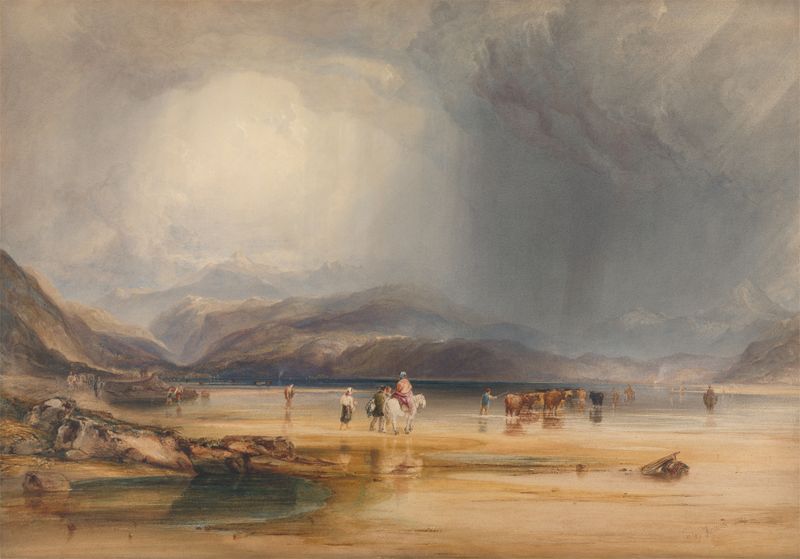
A View of Snowdon from the Sands of Traeth Mawr, taken at the Ford Between Pont Aberglaslyn and Tremadoc
Copley Fielding
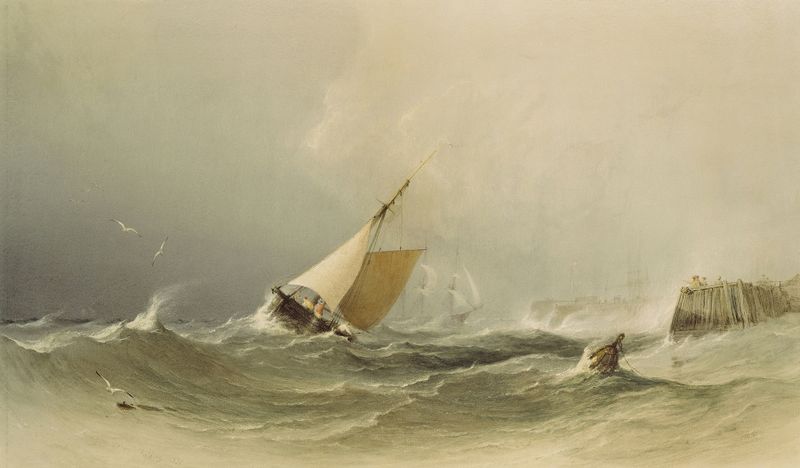
Bridlington Harbour
Copley Fielding
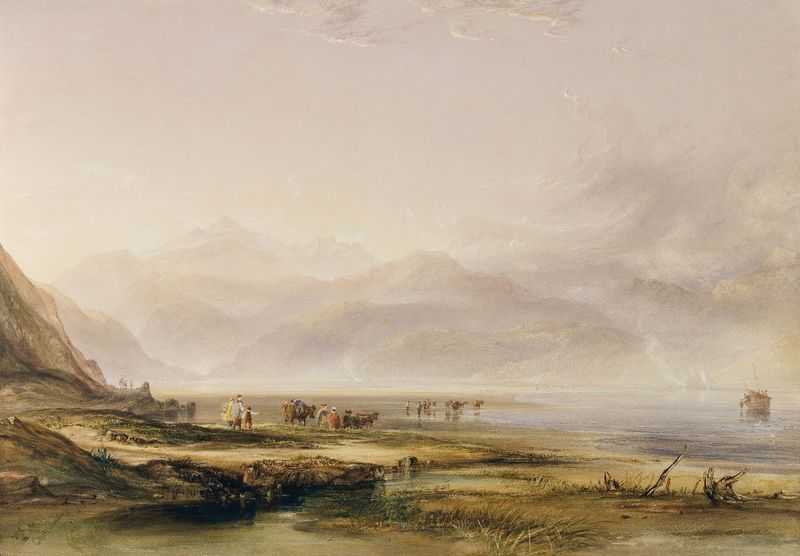
Traeth Mawr
Copley Fielding

The Head of Glencoe, North Argyll, Scotland
Copley Fielding
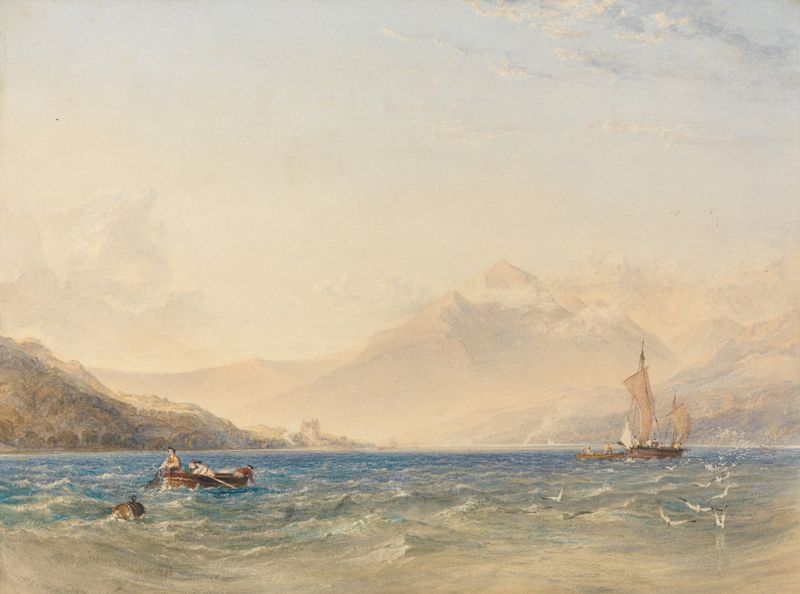
The Head of Loch Fyne, with Dindarra Castle
Copley Fielding
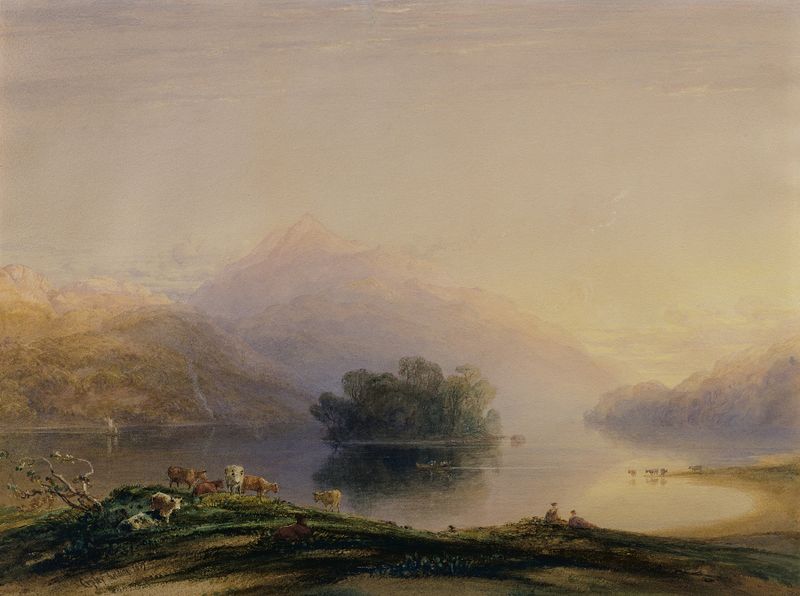
Loch Katrine
Copley Fielding





