
Landscape with Ruth and Boaz — History & Facts
The first thing to catch the eye is not the figures, but the sweep of landscape that seems to stretch out forever, as if the world itself is pausing to witness a quiet exchange beneath the trees. The figures—one standing, one kneeling—are gathered in a hush of shadow at the painting’s edge, while the fields and distant hills roll away under a luminous sky. The artist draws us in with this contrast: intimacy set against immensity, the human story almost swallowed by the land, yet gently spotlighted by the play of light.
The kneeling woman’s gesture, hands held together as if in gratitude or entreaty, draws our gaze to her, while the standing man’s outstretched arm answers her with a gesture of recognition or command. This is not a scene of spectacle, but of encounter—one that rewards a slow, attentive look. Painted between 1665 and 1727, Landscape with Ruth and Boaz belongs to a world where biblical stories were woven into the fabric of daily life, their lessons and dramas made familiar through art. In the Dutch Golden Age, such works were often commissioned for private homes, where they offered both moral reflection and a display of taste.
The artist, Aert de Gelder, was known for his narrative sensitivity, and here he places the sacred story within a landscape that feels at once ancient and recognizably Dutch. Now held in the Staatliche Museen zu Berlin, this painting is a reminder of how artists of the era balanced the universal and the particular, setting timeless moments within the fields and skies of their own world. Look again at the horizon: the story may be biblical, but the land belongs to the painter’s own time.
More Artworks by Aert de Gelder

Portrait of a Young Woman
Aert de Gelder

Hermanus Boerhaave (1668-1738), Professor of Medicine at the University of Leiden, with his Wife Maria Drolenvaux (1686-1746) and their Daughter Johanna Maria (1712-91)
Aert de Gelder
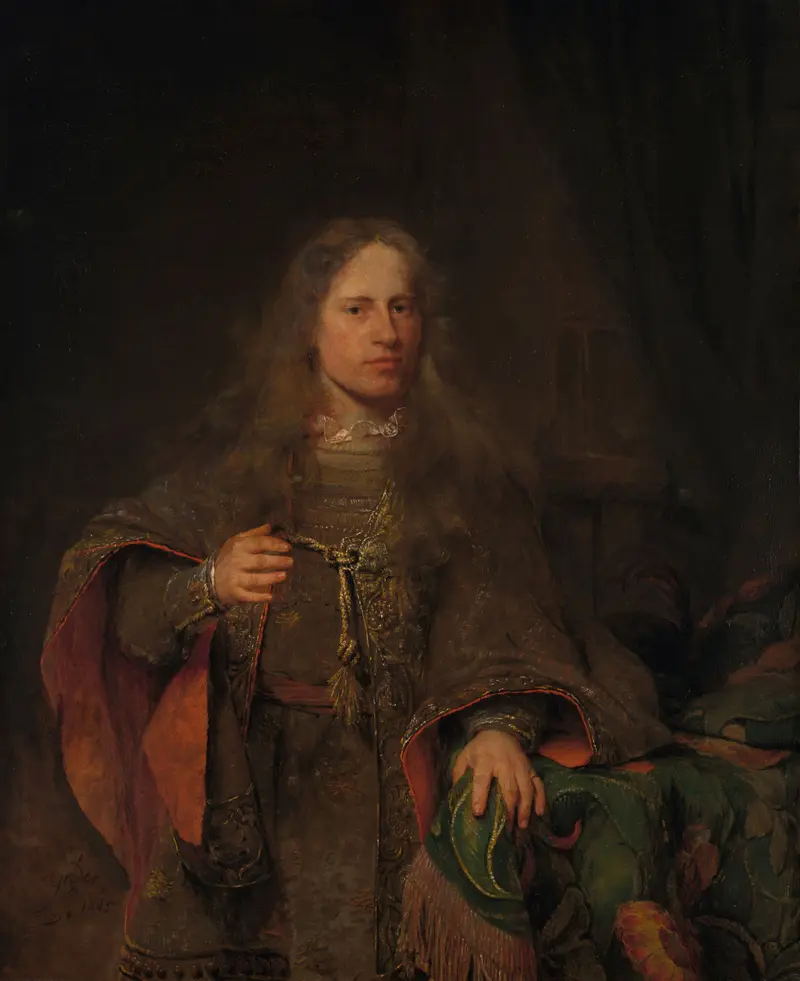
Portrait of Ernest de Beveren, Lord of West-IJsselmonde and De Lindt
Aert de Gelder
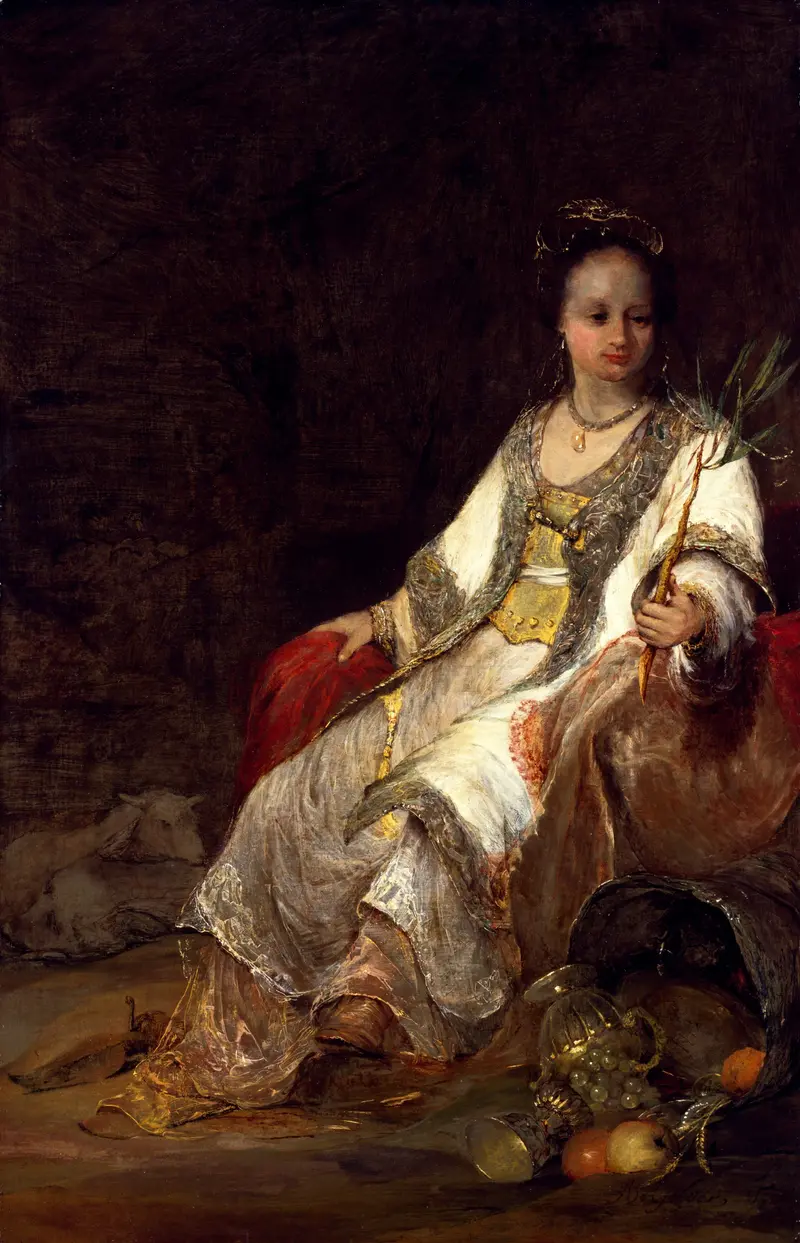
Allegory on Peace
Aert de Gelder
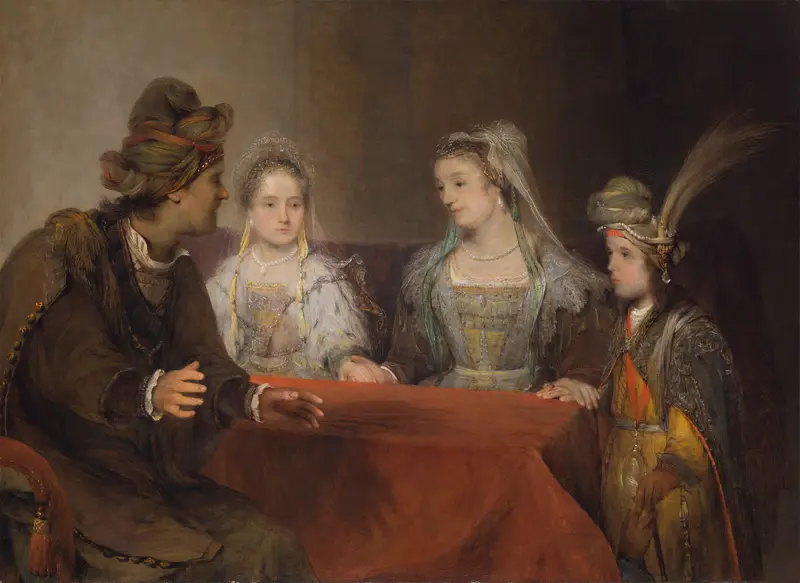
Edna Entrusting Tobias with Sarah
Aert de Gelder
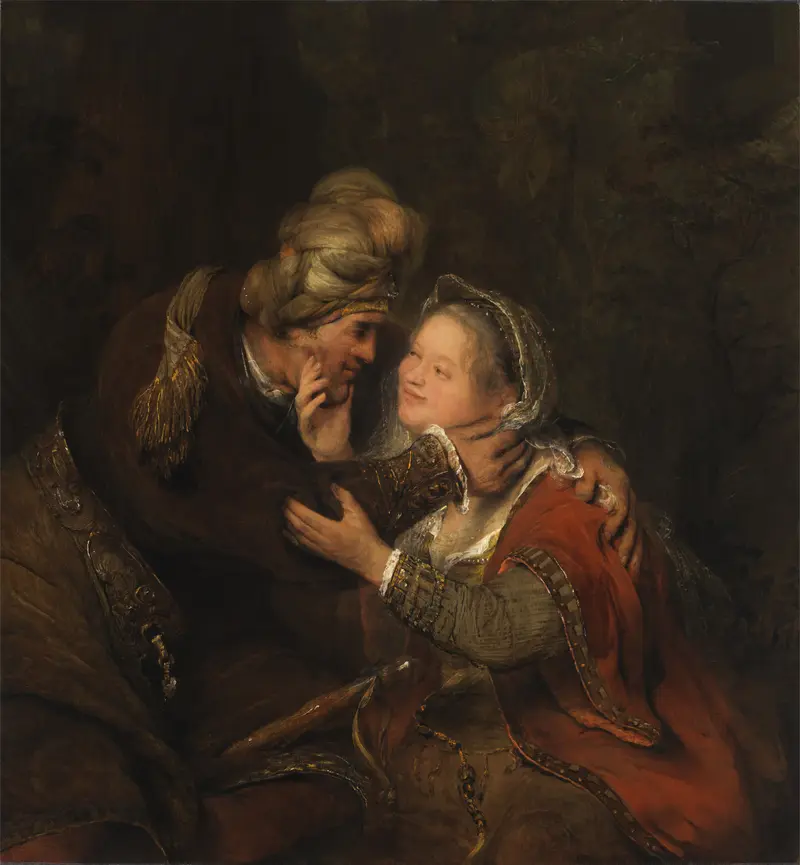
Judah and Tamar
Aert de Gelder
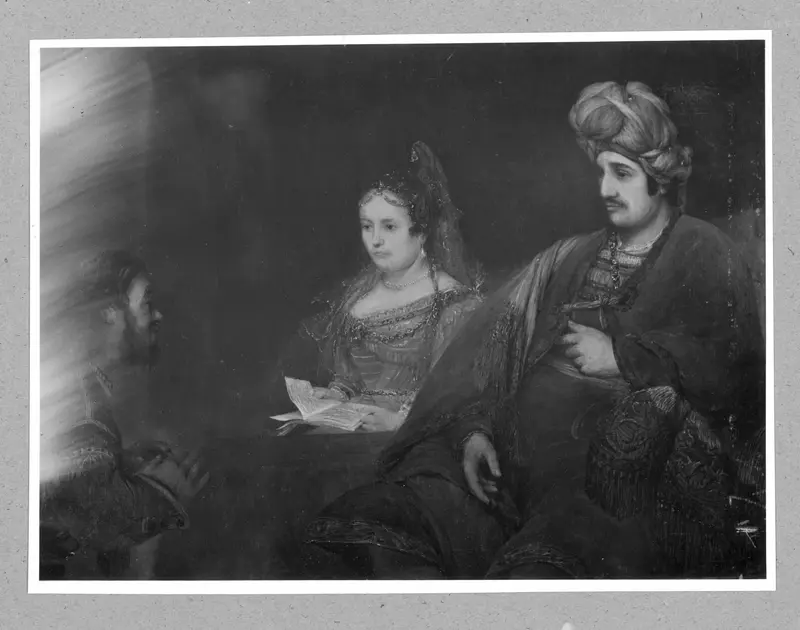
Hamas before Ahasver
Aert de Gelder
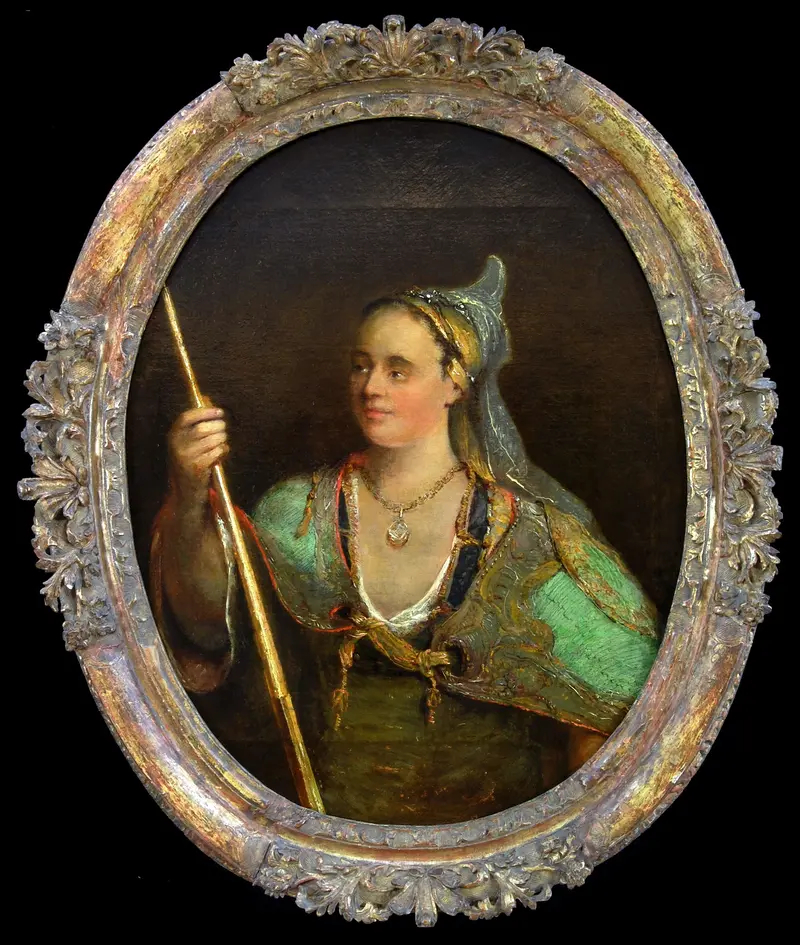
A female allegorical figure
Aert de Gelder
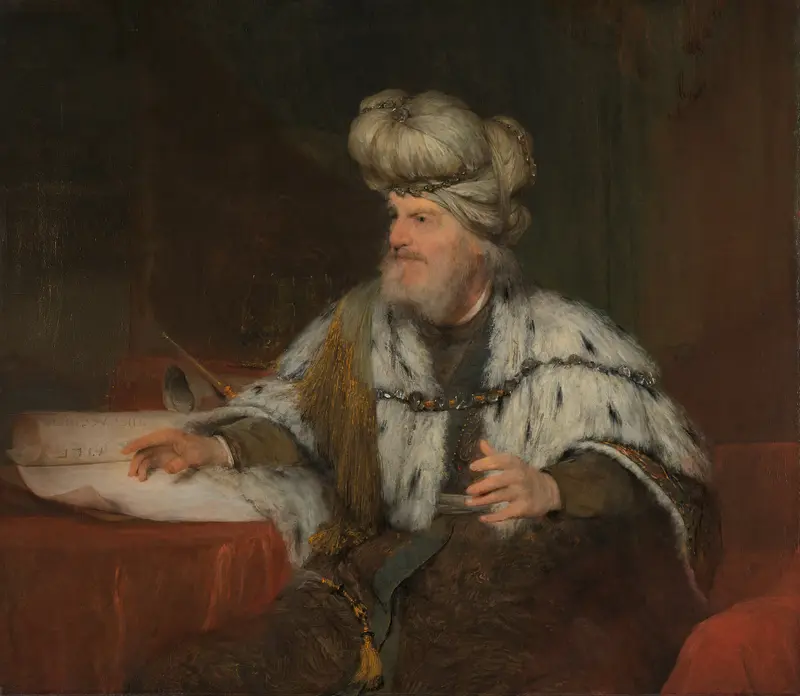
King David
Aert de Gelder
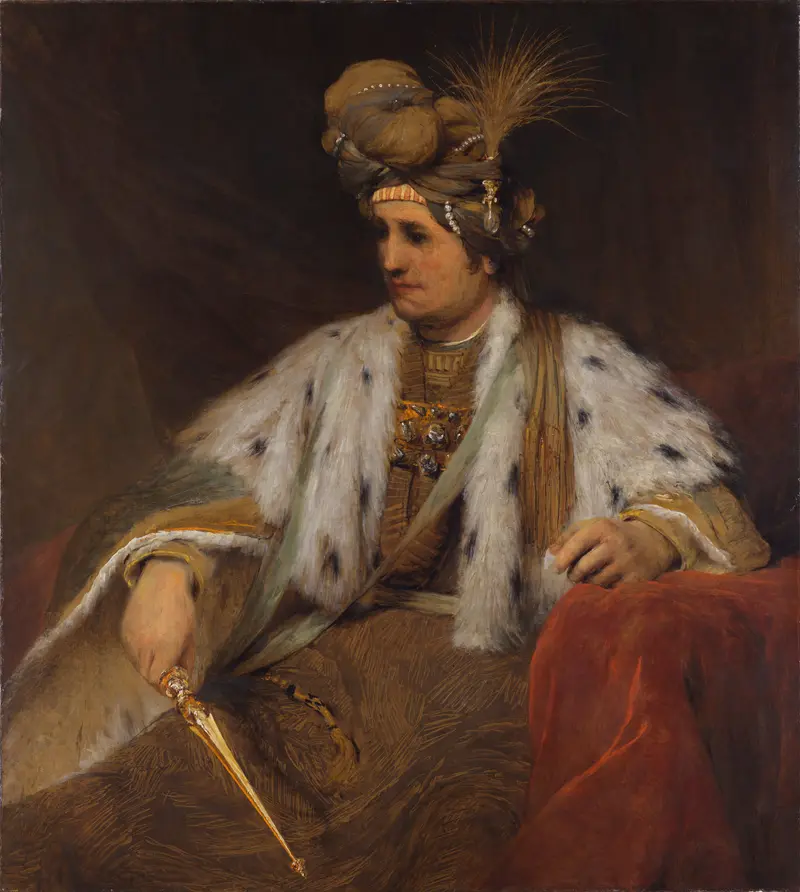
Old Testament Figure, Probably King Solomon
Aert de Gelder
More Landscape Art

The Starry Night
Vincent van Gogh

View of Delft
Johannes Vermeer

Water Lilies
Claude Monet

The Grand Canal, Venice, looking north-west from the Ca' Corner to the Ca' Contarini degli Scrigni, with the campanile of Santa Maria della Carità
Canaletto

Windsor Castle
Canaletto

The Grand Canal looking North-East from the Palazzo Dolfin-Manin to the Rialto Bridge
Canaletto