
Landscape with Travellers some of them in Oriental Costume — History & Facts
A hush falls over the rocky path, where travelers—some wrapped in what appear to be exotic, “Oriental” robes—pause beneath the looming cliff. The most striking detail is the way the group clusters at the edge of shadow, their figures half-swallowed by the sheer face of stone, while one lone figure reclines apart, gazing out into the open landscape. The painter draws your eye from the solitary man and his dog, across the burdened animals and their keepers, to the richly dressed woman who stands at the threshold between darkness and light.
Every gesture seems to weigh with purpose: a hand steadying a mule, a staff planted firmly in the earth, the careful drape of patterned cloth. The palette is earthy and subdued, the light low and uncertain, as if the day itself is pausing with the travelers, caught between journey and rest. Painted between 1722 and 1748 by Abraham de Haen the Younger, this scene belongs to a moment when European artists were fascinated by distant lands and the costumes of imagined travelers. Such landscapes, often collected by the rising merchant class or minor nobility, offered viewers a window onto worlds both real and invented—part travelogue, part fantasy.
The inclusion of “Oriental” dress reflects the period’s appetite for the exotic, a taste shaped by trade, diplomacy, and the circulation of prints and stories across borders. Today, this painting resides in the collection of the Statens Museum for Kunst, its quiet drama inviting us to imagine the lives and destinations of its silent figures. Let your eye linger on the uncertain horizon, and consider what journeys might have inspired both artist and audience nearly three centuries ago.
More Artworks by Abraham de Haen the Younger
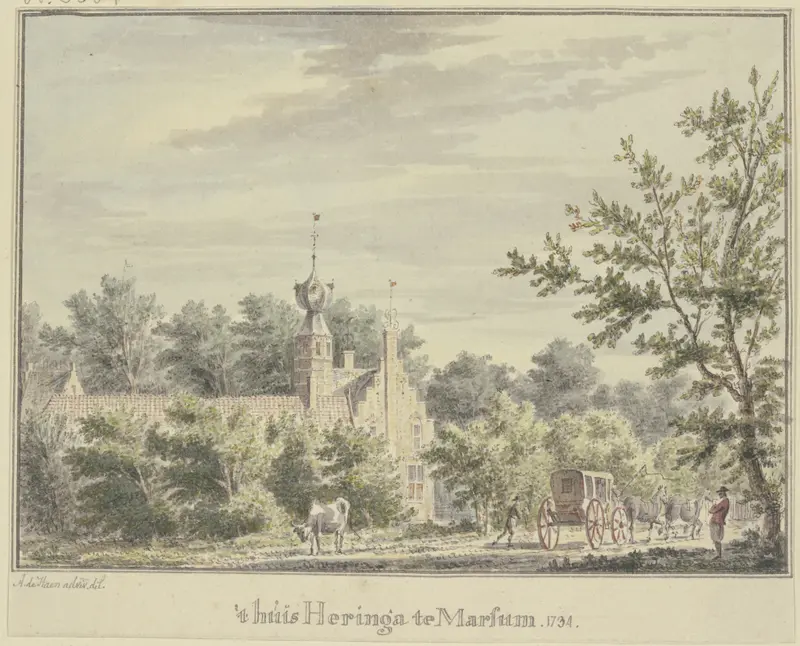
Huis Heringa te Marsum
Abraham de Haen the Younger
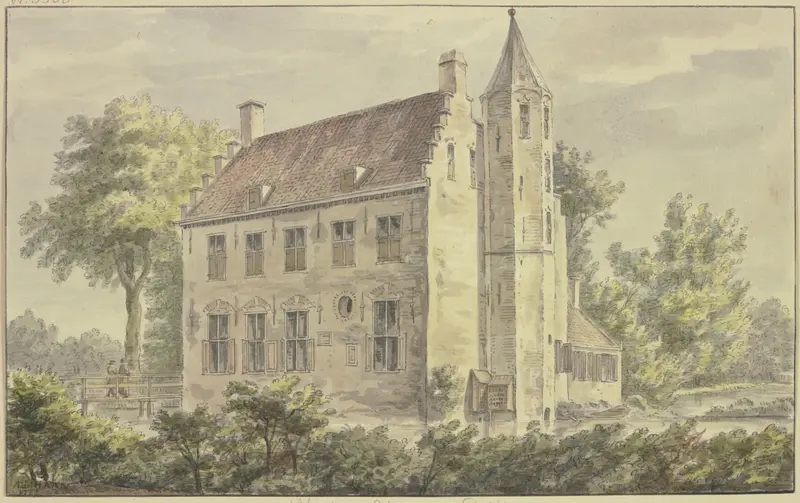
t’Huis te Altena by Delft
Abraham de Haen the Younger
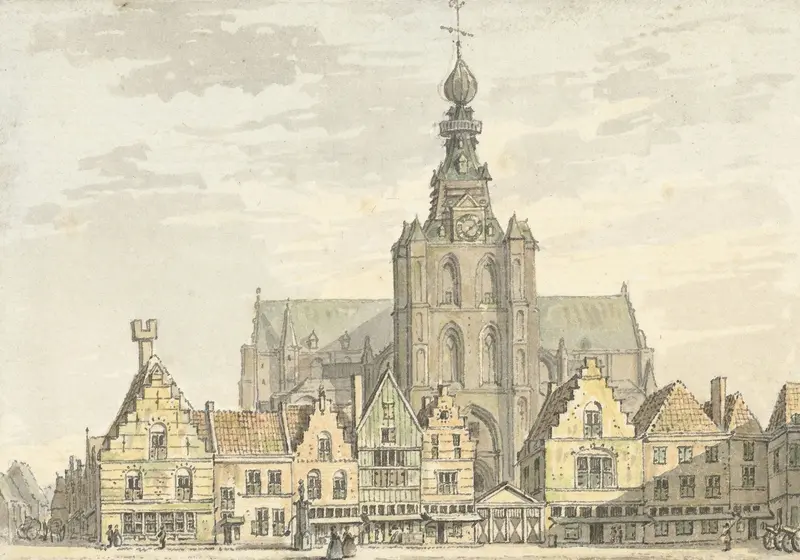
Kerk en Markt te Bergen op Zoom
Abraham de Haen the Younger
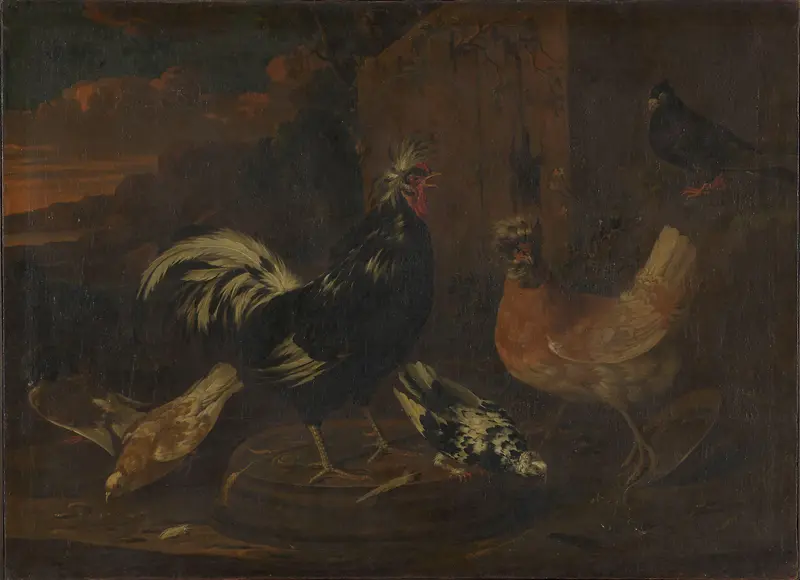
Høns og duer
Abraham de Haen the Younger
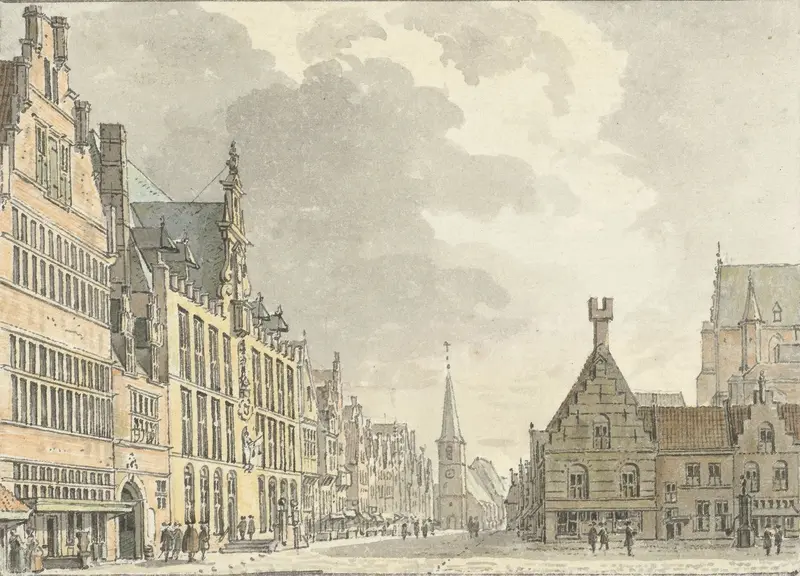
Stadhuis en Markt te Bergen op Zoom
Abraham de Haen the Younger
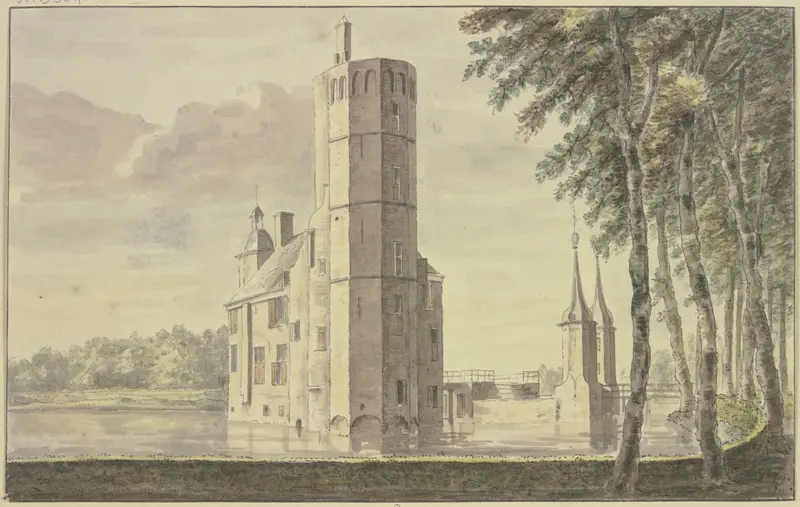
t’Huis te Persyn
Abraham de Haen the Younger
More Landscape Art

The Starry Night
Vincent van Gogh

View of Delft
Johannes Vermeer

Water Lilies
Claude Monet

The Grand Canal, Venice, looking north-west from the Ca' Corner to the Ca' Contarini degli Scrigni, with the campanile of Santa Maria della Carità
Canaletto

Windsor Castle
Canaletto

The Grand Canal looking North-East from the Palazzo Dolfin-Manin to the Rialto Bridge
Canaletto