
Høns og duer — History & Facts
The first thing to catch the eye in Høns og duer by Abraham de Haen the Younger is the proud, almost theatrical stance of the rooster, his black and white plumage catching the last traces of daylight. Around him, a gentle choreography unfolds: doves peck at the earth, a hen stands nearby, and another bird perches in shadow above. The painter leads us in a slow circle, from the rooster’s crowing beak to the pale feathers of the feeding dove, then upward to the quiet watcher on the ledge.
The palette is rich with dusk, the shadows deepening behind the birds and lending a sense of calm enclosure, as if the world holds its breath for a moment of barnyard peace. Painted sometime between 1730 and 1748, this work belongs to a tradition beloved in Northern Europe: the animal still life, a genre that flourished in the homes of merchants and landowners who prized images of abundance and domestic order. Such paintings were more than decoration—they were quiet celebrations of rural life, reminders of the natural cycles that underpinned prosperity. Though little is recorded about this specific canvas, its presence in the National Museum of Art, Architecture and Design connects it to a lineage of Dutch and Flemish artists who found meaning in the everyday.
Look again at the rooster’s lifted foot and the doves’ intent gaze—the scene is ordinary, yet the painter’s hand makes it quietly momentous.
More Artworks by Abraham de Haen the Younger
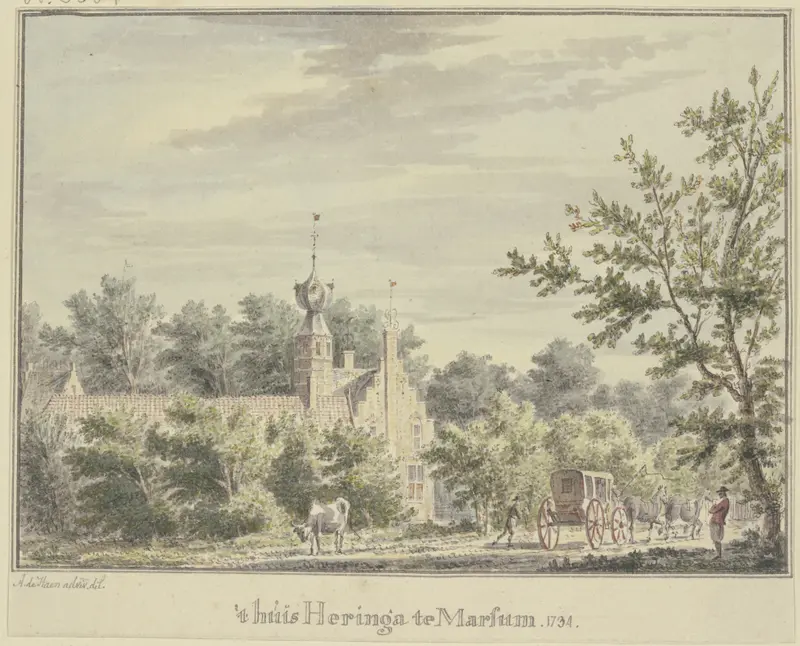
Huis Heringa te Marsum
Abraham de Haen the Younger
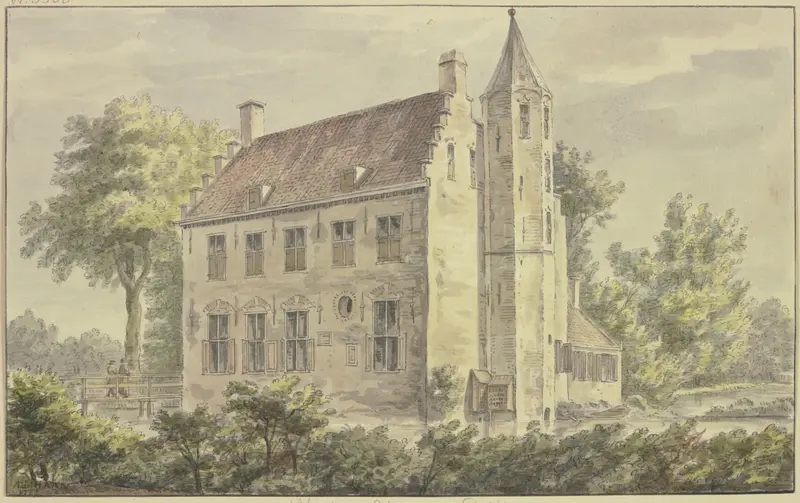
t’Huis te Altena by Delft
Abraham de Haen the Younger
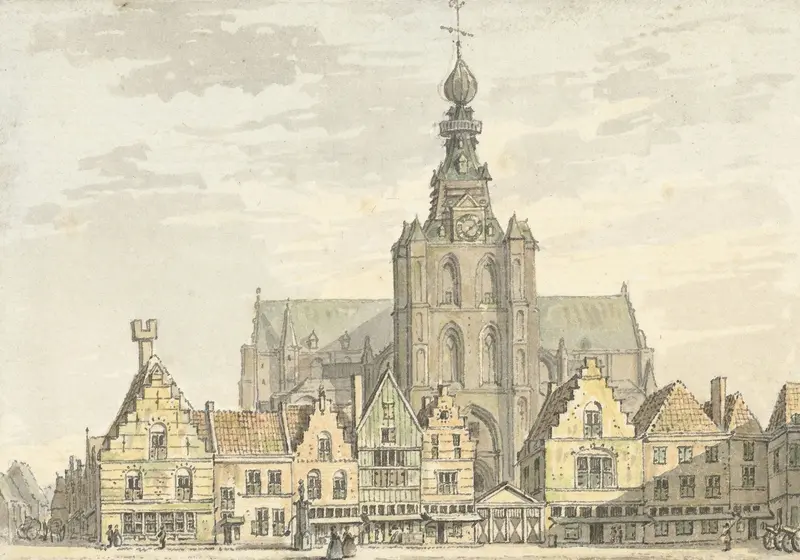
Kerk en Markt te Bergen op Zoom
Abraham de Haen the Younger
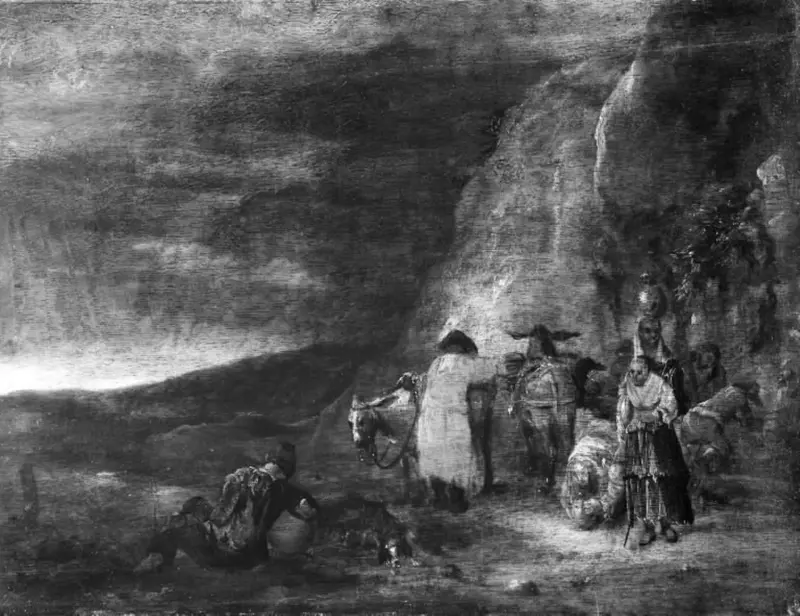
Landscape with Travellers some of them in Oriental Costume
Abraham de Haen the Younger
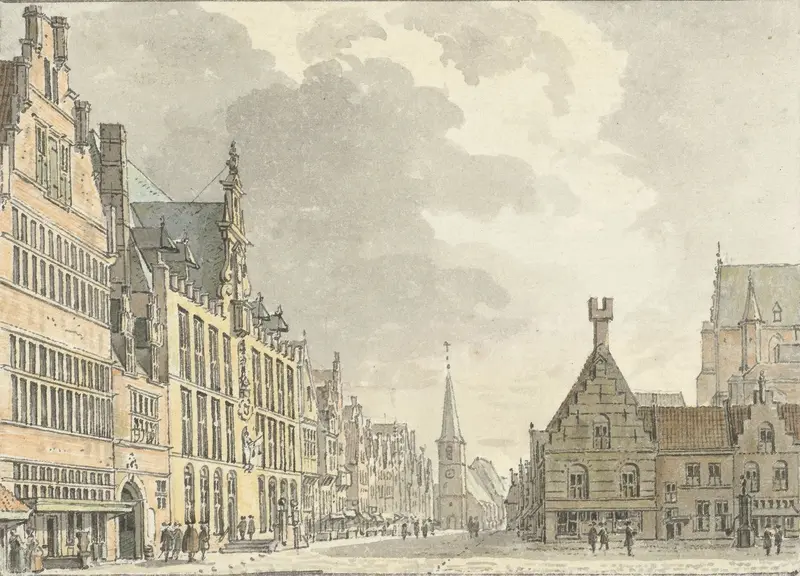
Stadhuis en Markt te Bergen op Zoom
Abraham de Haen the Younger
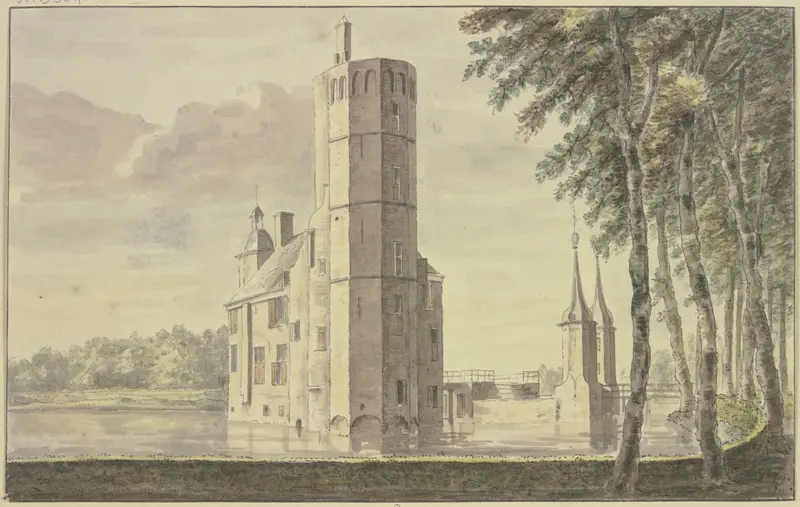
t’Huis te Persyn
Abraham de Haen the Younger





