
Landscape with Two Hunting Dogs — History & Facts
The eye is drawn first to the two hunting dogs, their bodies alert and poised at the edge of a shadowy forest. One stands, nose lifted as if scenting the air, while the other lies beside the spoils of the hunt—a brace of birds, their feathers vivid against the earth. The dense thicket of trees arches overhead, their twisted trunks and layered foliage creating a sense of depth and enclosure, as if the dogs have just emerged from the wild heart of the woods.
Large, almost theatrical leaves in the foreground anchor the scene, their size and detail inviting the viewer to linger over the painter’s careful observation of nature. The light, filtering in from the right, picks out the dogs’ coats and the undergrowth, setting a mood of late afternoon stillness and anticipation. Painted by Abraham Jansz. Begeyn between 1675 and 1677, this landscape belongs to a world where hunting was both sport and symbol—a privilege of the landed classes, and a favorite subject for artists of the Dutch Golden Age.
Such works were often commissioned to celebrate wealth, leisure, and mastery over nature, and they found a ready audience among collectors eager to display their estates and pursuits. The painting now forms part of the Art UK collection, a quiet testament to a period when the boundaries between the wild and the cultivated were as much a matter of art as of land. The careful balance of drama and calm in this scene rewards a second look: each detail, from the curling tree roots to the glint of a bird’s wing, is a reminder of the painter’s world and the pleasures it prized.
More Artworks by Abraham Jansz. Begeyn

Landscape with people and cattle
Abraham Jansz. Begeyn
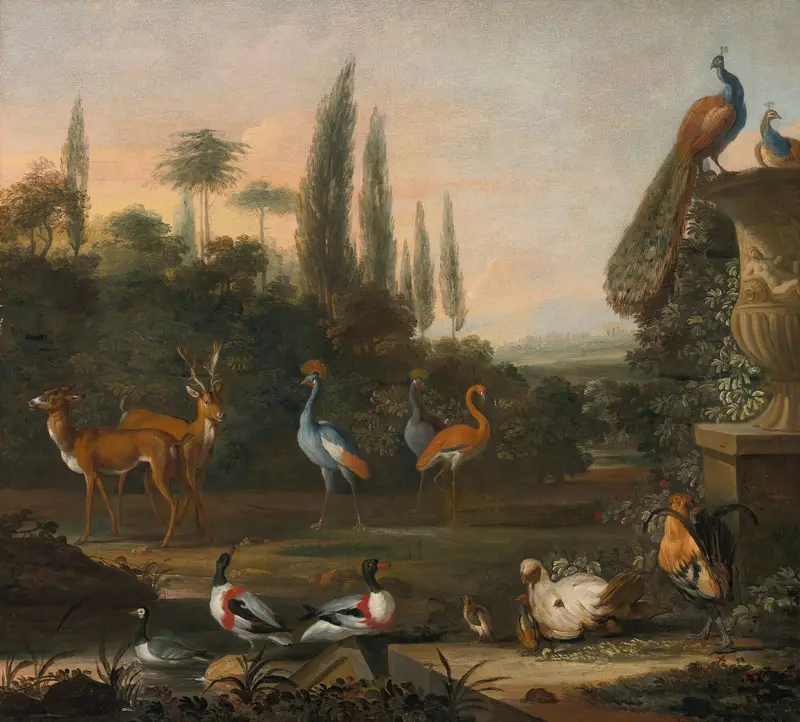
Landscape with deer and exotic birds
Abraham Jansz. Begeyn
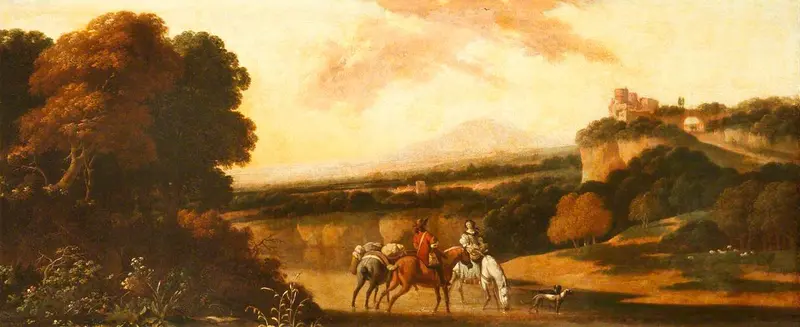
Landscape with Travellers
Abraham Jansz. Begeyn
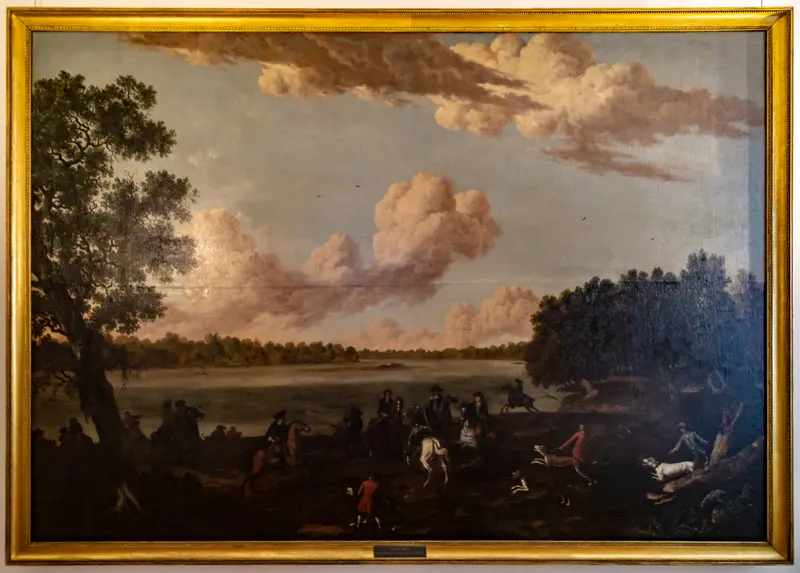
Prince Elector Frederick III of Prussia hunting at the Havel
Abraham Jansz. Begeyn
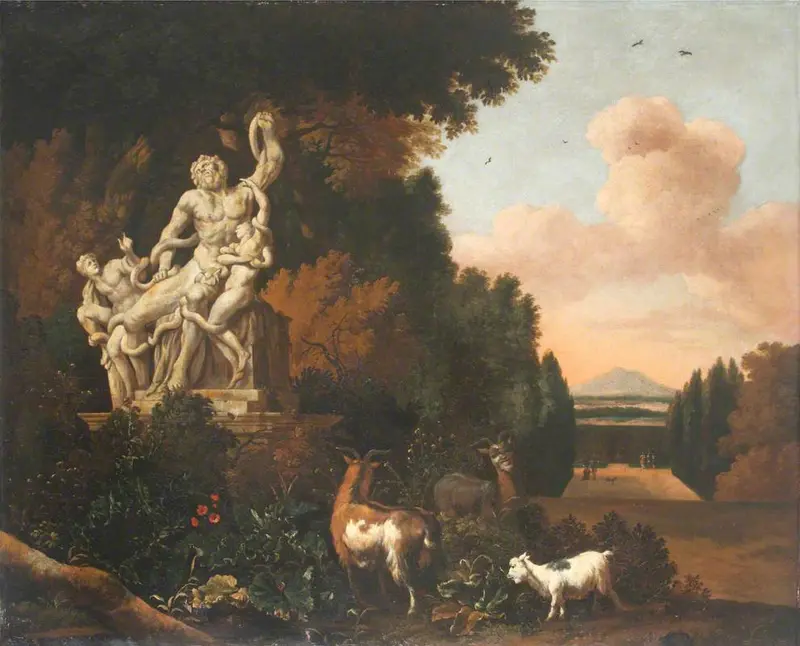
Landscape with Goats and a Statue of Laocoön
Abraham Jansz. Begeyn
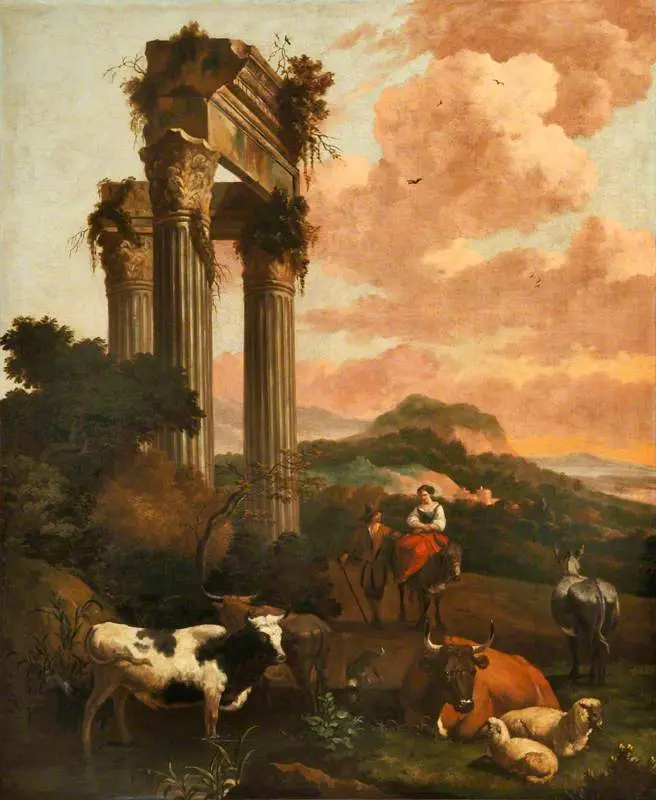
Landscape with Figures, Cattle and Sheep among Classical Ruins
Abraham Jansz. Begeyn
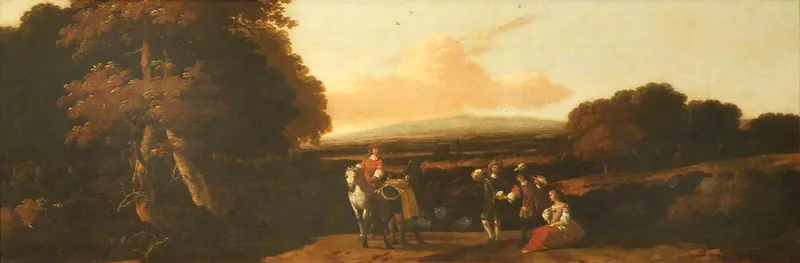
Landscape with Figures on a Road
Abraham Jansz. Begeyn
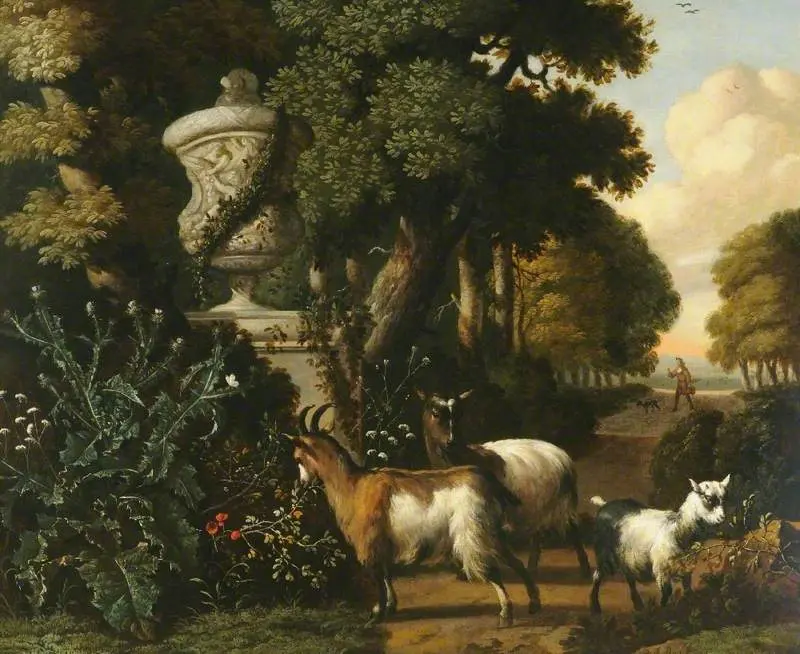
Landscape with Goats
Abraham Jansz. Begeyn
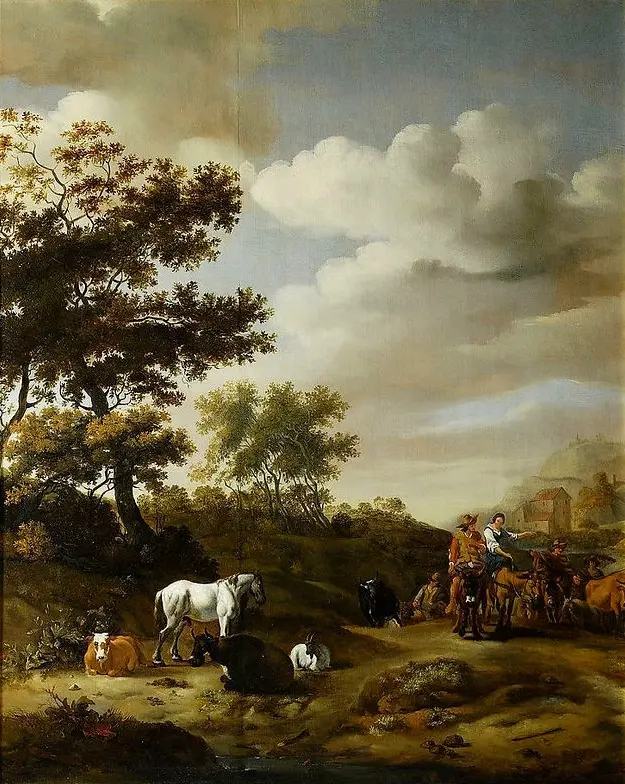
Landscape with travelers and cattle.
Abraham Jansz. Begeyn
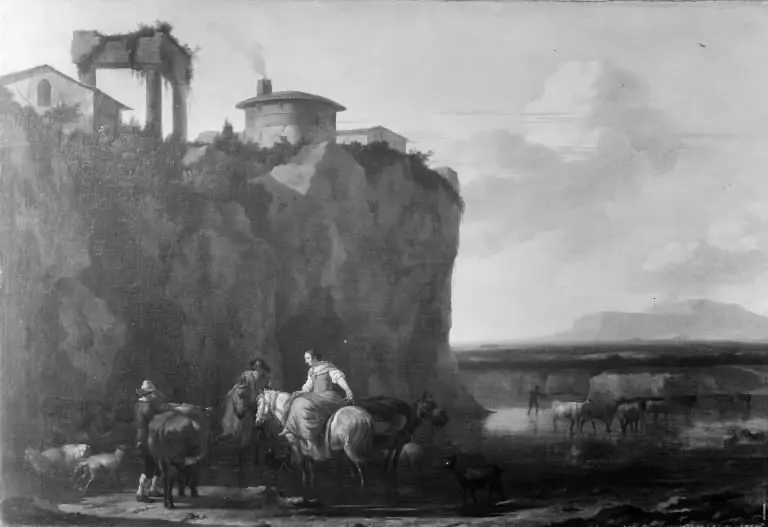
The Ford
Abraham Jansz. Begeyn
More Landscape Art

The Starry Night
Vincent van Gogh

View of Delft
Johannes Vermeer

Water Lilies
Claude Monet

The Grand Canal, Venice, looking north-west from the Ca' Corner to the Ca' Contarini degli Scrigni, with the campanile of Santa Maria della Carità
Canaletto

Windsor Castle
Canaletto

The Grand Canal looking North-East from the Palazzo Dolfin-Manin to the Rialto Bridge
Canaletto