
Laocoön — History & Facts
No other painting by El Greco takes on a classical myth—Laocoön stands alone in his oeuvre for its subject, and for its haunting vision of ancient tragedy. Painted around 1610, near the end of the artist’s life, it is also the only surviving mythological work by El Greco, who was otherwise devoted to religious themes. The story of Laocoön, the Trojan priest punished by the gods, had long fascinated Renaissance artists, but El Greco’s interpretation is uniquely personal and set apart by its stormy, otherworldly atmosphere. At the heart of the canvas, Laocoön and his sons writhe in agony as serpents sent by the gods coil around their limbs, punishing Laocoön for warning the Trojans against accepting the Greek horse.
The figures’ elongated bodies twist in unnatural poses, their faces contorted with fear and pain, echoing the marble Laocoön Group unearthed in Rome in 1506, yet filtered through El Greco’s unmistakable vision. The city in the background is not Troy but Toledo, the artist’s adopted home, suggesting a warning for his own time. The unnatural light, jagged clouds, and ghostly palette heighten the sense of doom, while the onlookers’ indifference underscores the isolation of the doomed family. The precise circumstances of the painting’s commission remain uncertain, and no contemporary records mention its early history.
It is likely that Laocoön was painted for a private patron in Toledo, reflecting the intellectual circles that surrounded El Greco in his final years. The work remained little known for centuries, overshadowed by his religious paintings, until it was acquired by the National Gallery of Art in Washington, D.C., where it now hangs. Today, Laocoön is seen as a bold, late experiment, revealing El Greco’s fascination with human suffering and his willingness to break with tradition at the end of his career.
More Artworks by El Greco
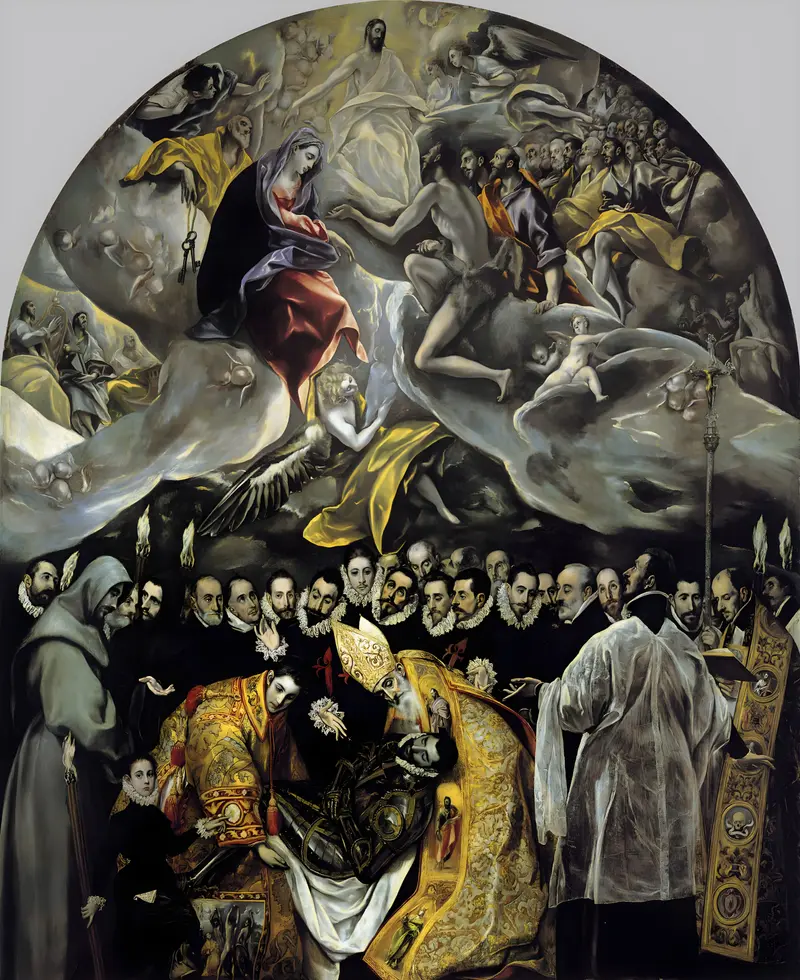
The Burial of the Count of Orgaz
El Greco

Portrait of an Apostle (Saint Philip)
El Greco

Saint Luke the Evangelist
El Greco

The Immaculate Conception
El Greco

The Feast in the House of Simon
El Greco

View of Toledo
El Greco

Saint Ildefonso
El Greco

The Disrobing of Christ
El Greco

The Vision of Saint John
El Greco

The Marriage of the Virgin
El Greco





