
Last Flowers — History & Facts
When Last Flowers debuted in 1890, critics immediately recognized it as a turning point for Jules Breton, whose earlier works had already cemented his reputation as a leading voice of rural France. What set this painting apart was not only its subject—a scene of harvest’s end—but the way it quietly challenged the era’s prevailing images of peasant labor. Rather than monumentalizing toil, as in his earlier The Gleaners, Breton here offered a meditation on the season’s close, focusing on the dignity and quiet resignation of his figures.
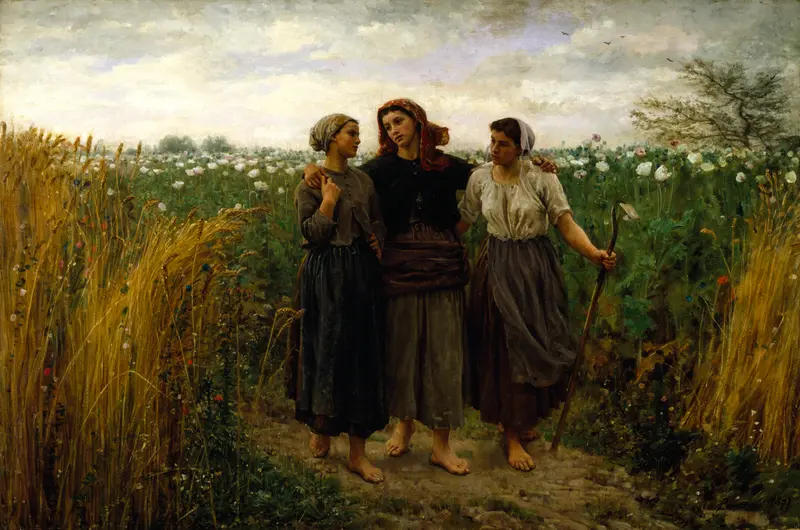
The painting’s title, Last Flowers, was noted in contemporary reviews as a metaphor for both the literal end of summer and the passing of rural traditions in a rapidly industrializing world. At the center of the composition, a young woman stands in a stubbled field, her arms cradling a modest bouquet of wildflowers—what remains after the harvesters have moved on. The light is low and golden, suggesting the waning hours of both day and season. Her downcast eyes and the gentle tilt of her head evoke a sense of reflection, perhaps mourning the fleeting beauty she holds.
Around her, the land is stripped bare, yet the flowers in her grasp become a symbol of resilience and memory. Unlike Jean-François Millet, whose peasants often bear the weight of hardship, Breton’s figure is marked by a quiet grace, her gesture a private farewell to the land. The precise journey of Last Flowers as an object is not fully documented, though it is known to have remained in private collections for much of the twentieth century. Its medium, likely oil on canvas, is typical of Breton’s mature period, when he favored rich, earthy palettes and careful, luminous brushwork.
Today, the work is recognized as a late-career reflection by Jules Breton, capturing both the beauty and the melancholy of rural life at a time of great change. Whether hanging in a museum or viewed online, Last Flowers continues to invite viewers into its quiet world, standing as a testament to Breton’s enduring engagement with the rhythms of the countryside.
More Artworks by Jules Breton

The Song of the Lark
Jules Breton
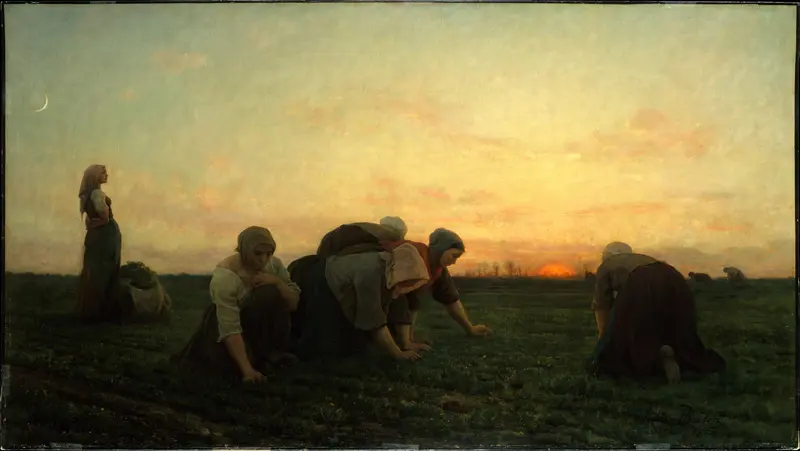
The Weeders
Jules Breton
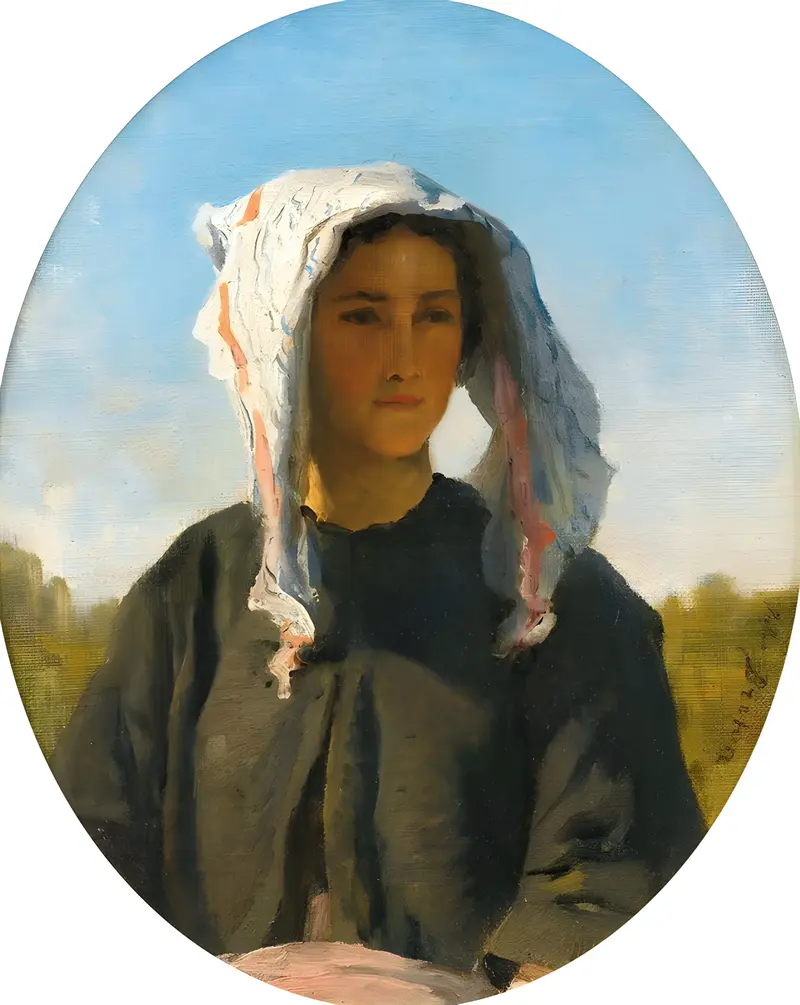
Portrait de jeune Paysanne Bordelaise
Jules Breton
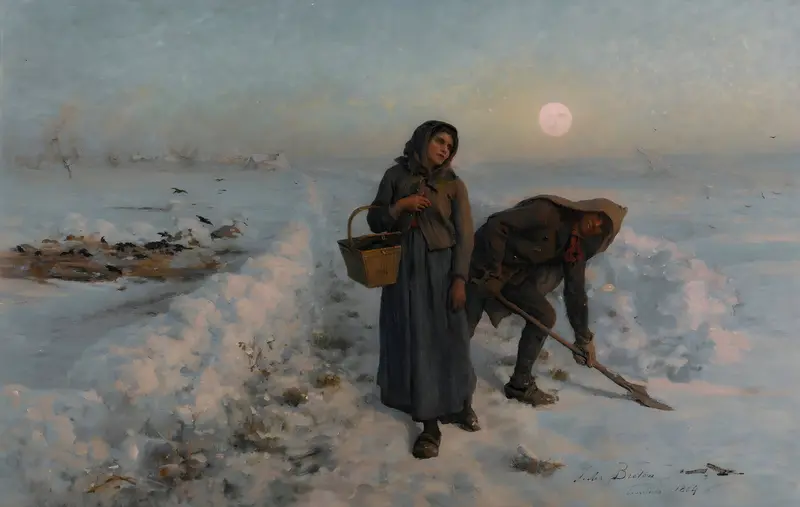
Sur la route en hiver; artois
Jules Breton
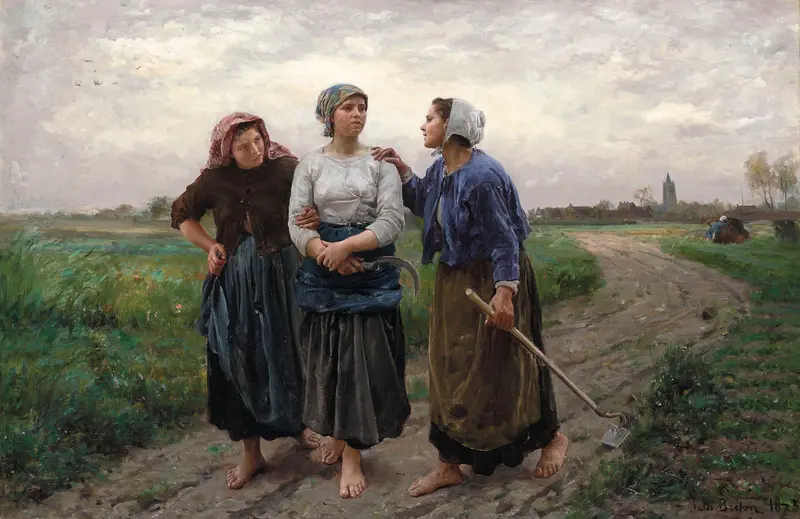
Les amies
Jules Breton
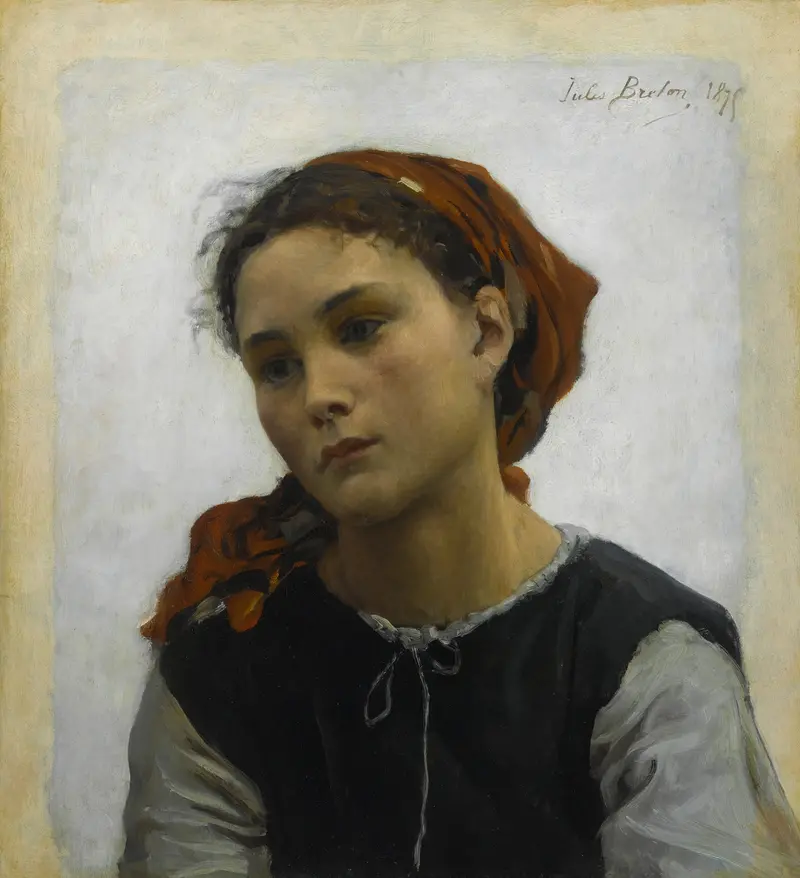
Innocente
Jules Breton
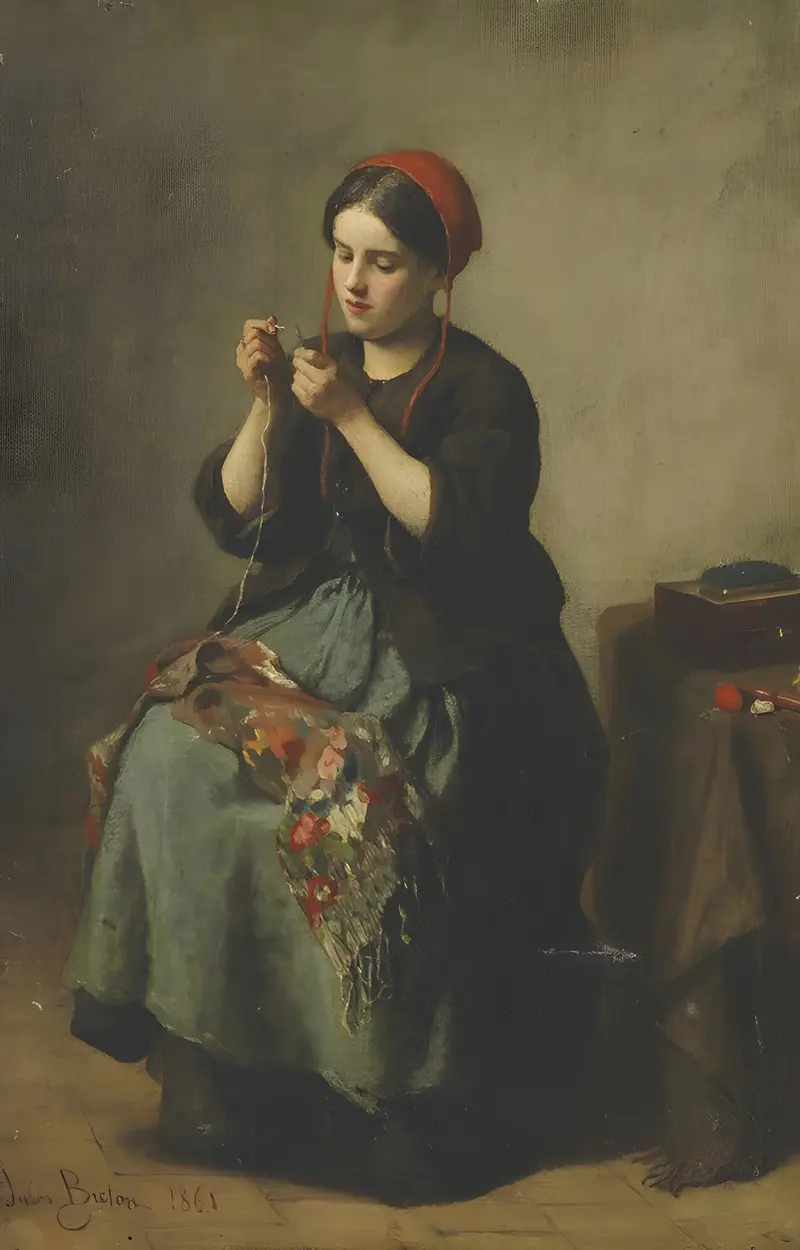
Peasant woman threading a needle
Jules Breton
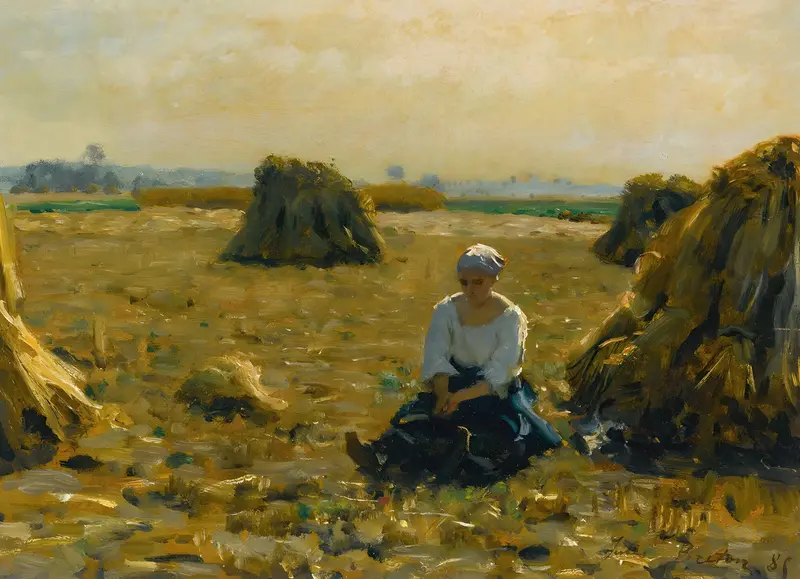
Jeune femme dans les champs
Jules Breton
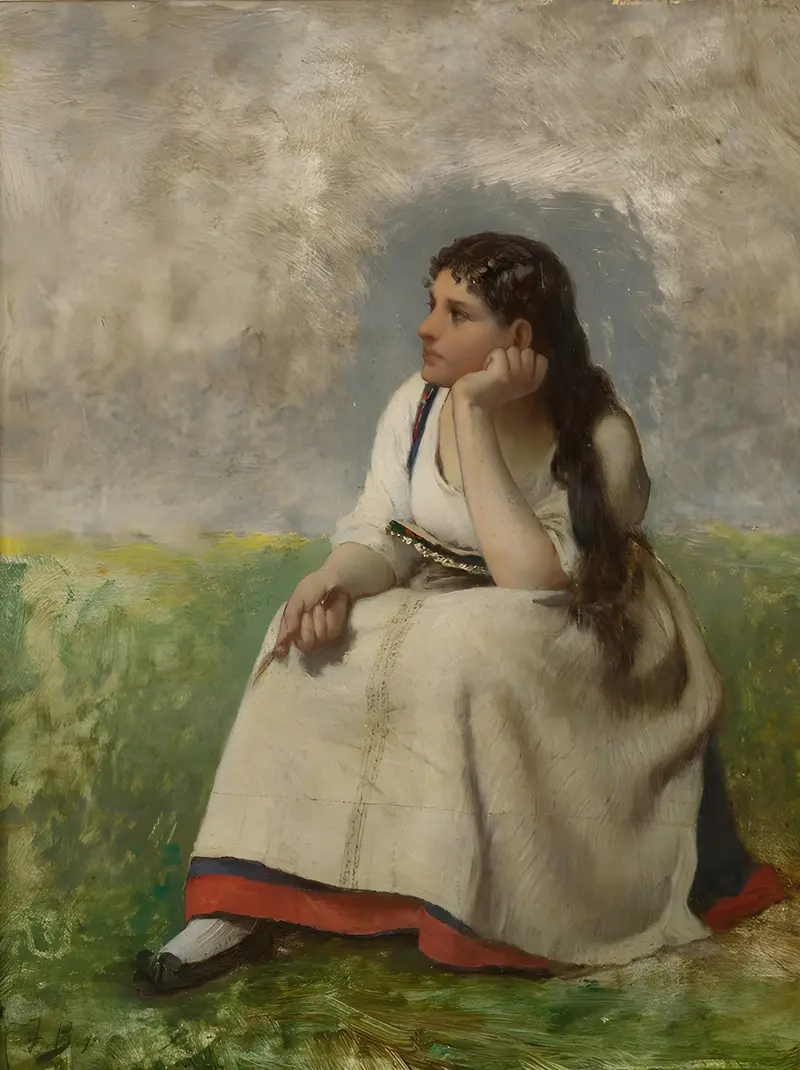
Jeune Fille Pensive
Jules Breton
Returning from the Fields
Jules Breton
More Genre Scene Art

Banquet of the Officers of the St George Civic Guard
Frans Hals

Rembrandt and Saskia in the Scene of the Prodigal Son
Rembrandt van Rijn

Bal du moulin de la Galette
Pierre-Auguste Renoir

Quadrille at the Moulin Rouge
Henri de Toulouse-Lautrec

A Burial at Ornans
Gustave Courbet

When Will You Marry?
Paul Gauguin