
Le Molard — History & Facts
Could beauty survive in a century of chaos? The question lingers like a specter, haunting the corners of our mind as we gaze upon the delicate strokes and muted hues of this work. Focus first on the serene waters nestled within the composition, where gentle waves ripple delicately, capturing the light's embrace. The soft blues and greens harmonize with whispers of sunlight, reflecting a world that feels both calm and disquieting. Notice how the crumbling architecture on the banks frames this tranquil scene, a stark reminder of the fragility beneath the surface—beauty caught between decay and serenity. What lies beneath the surface of this idyllic landscape is a palpable tension.
The juxtaposition of the idyllic waterway against the aged structures hints at a history laden with neglect and loss, evoking fears of impermanence. Each brushstroke speaks of an unseen narrative, where moments of beauty wrestle with the inevitability of time's passage, and the viewer is left questioning whether harmony can endure amid the inevitable chaos of existence. Samuel Prout painted this evocative scene during a period marked by significant societal and artistic change in the early to mid-19th century. While exploring the enchanting landscapes of England and Wales, he was deeply influenced by the Romantic movement's emphasis on emotion and nature.
The world was shifting—industrialization loomed large, threatening the very essence of pastoral beauty, and Prout’s artwork served as both a reflection and a refuge from the tumult surrounding him.
More Artworks by Samuel Prout
Browse all →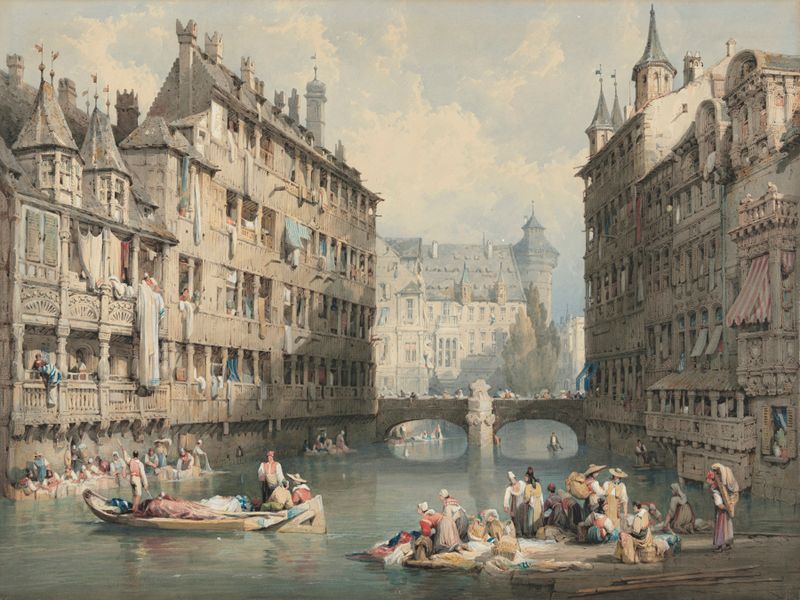
View of Nuremberg
Samuel Prout

The Doge’s Palace and the Grand Canal, Venice, looking west
Samuel Prout
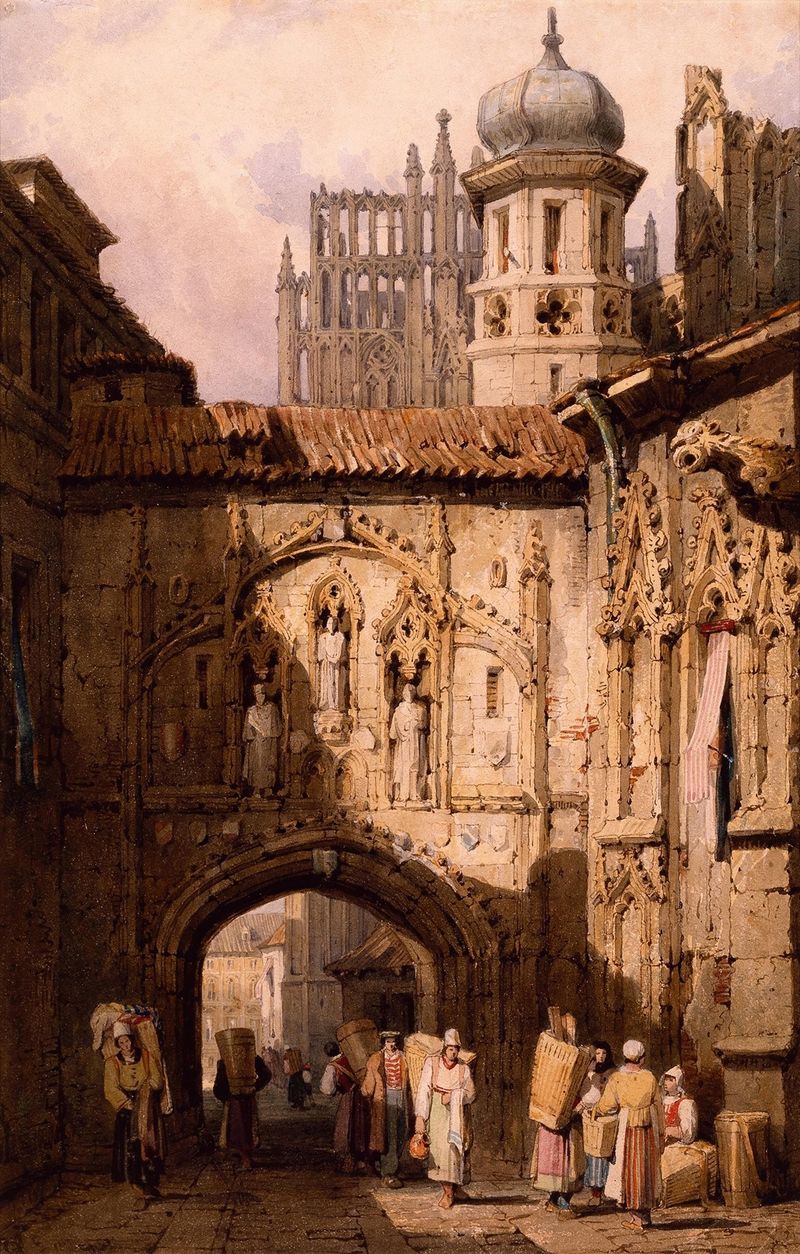
A View in Nuremberg.
Samuel Prout
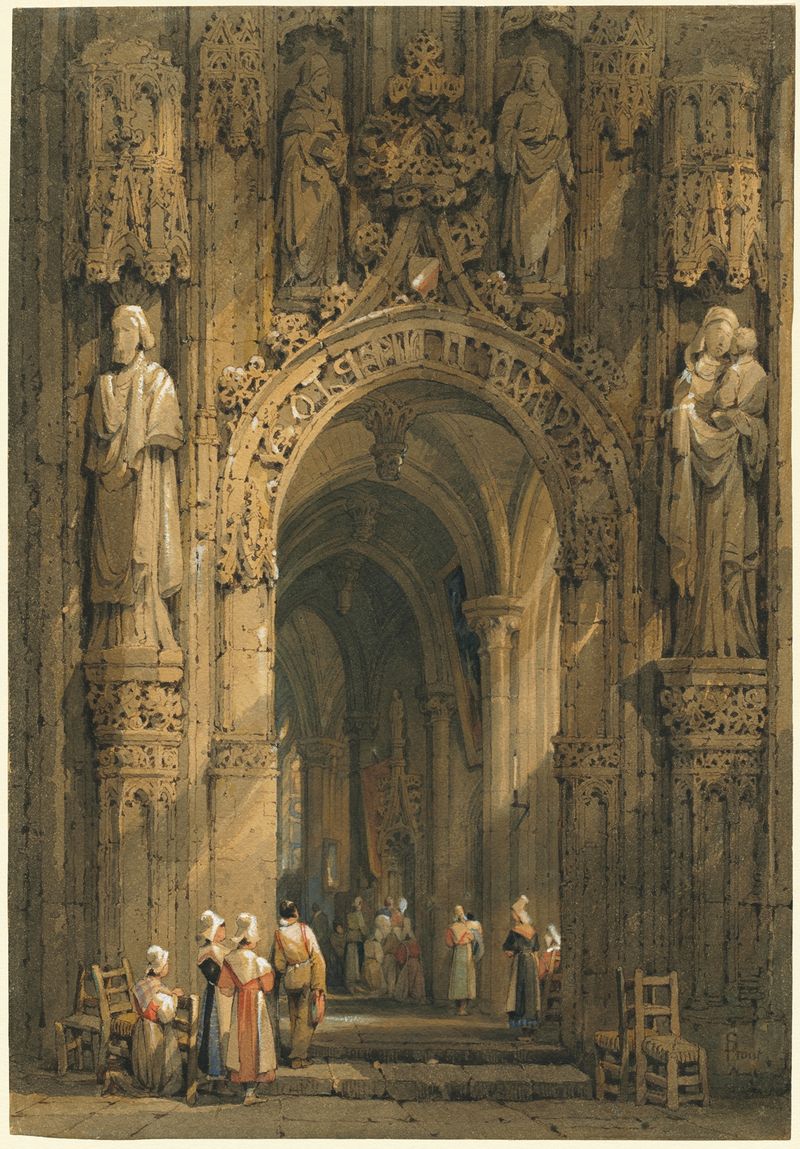
Interior of a Cathedral
Samuel Prout

San Giorgio dei Greci, Seen from an Arcade
Samuel Prout
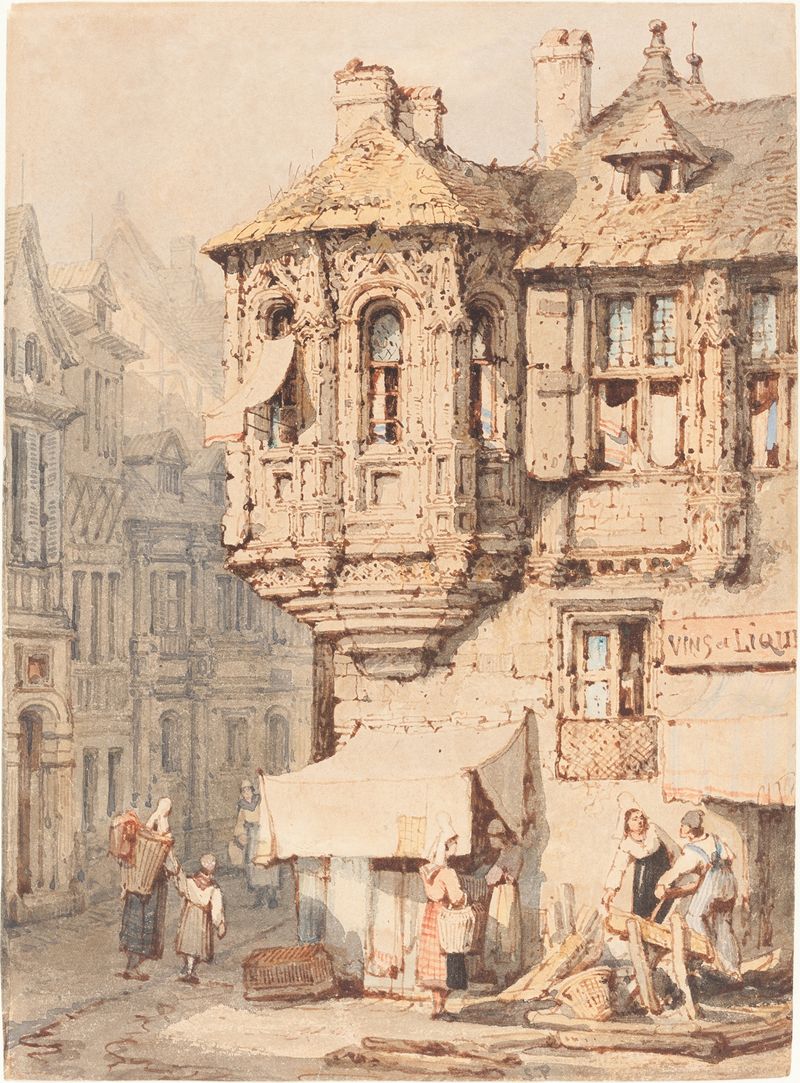
French Street Scene with a Medieval Turret
Samuel Prout
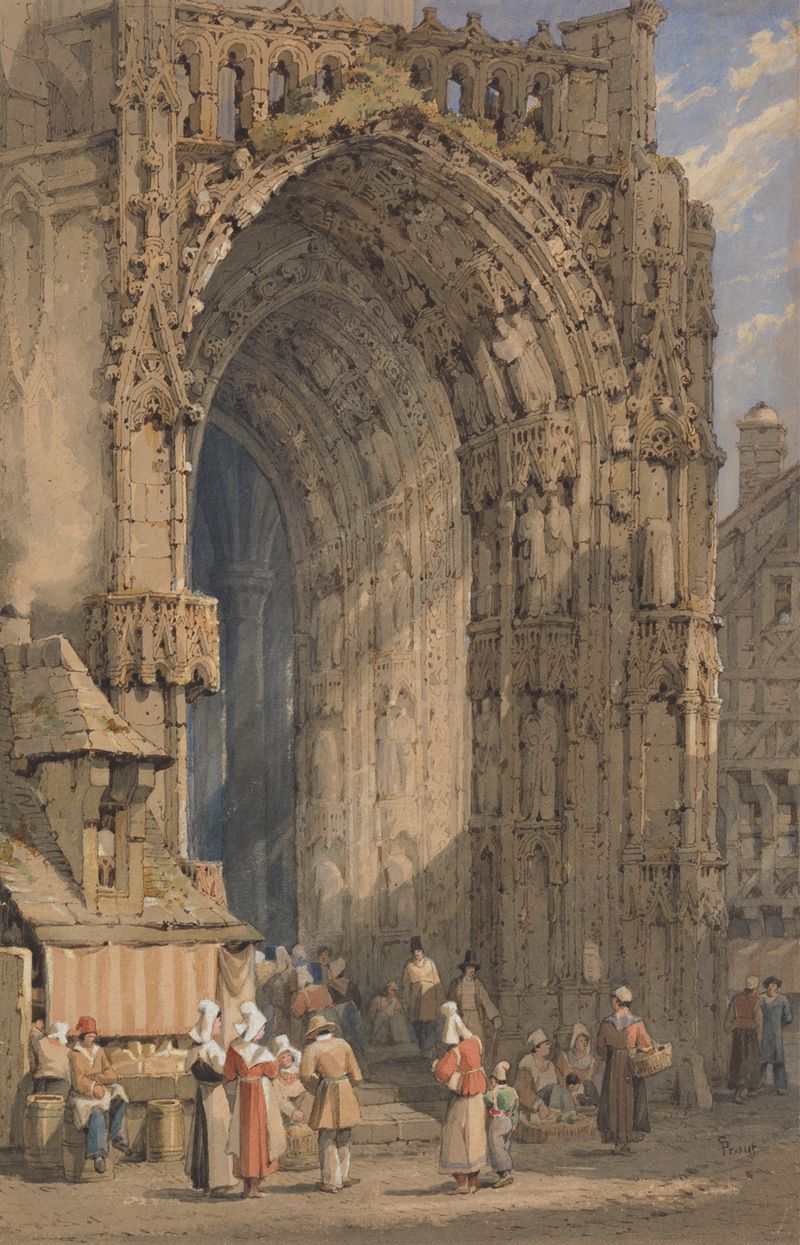
The Porch, Reims Cathedral
Samuel Prout
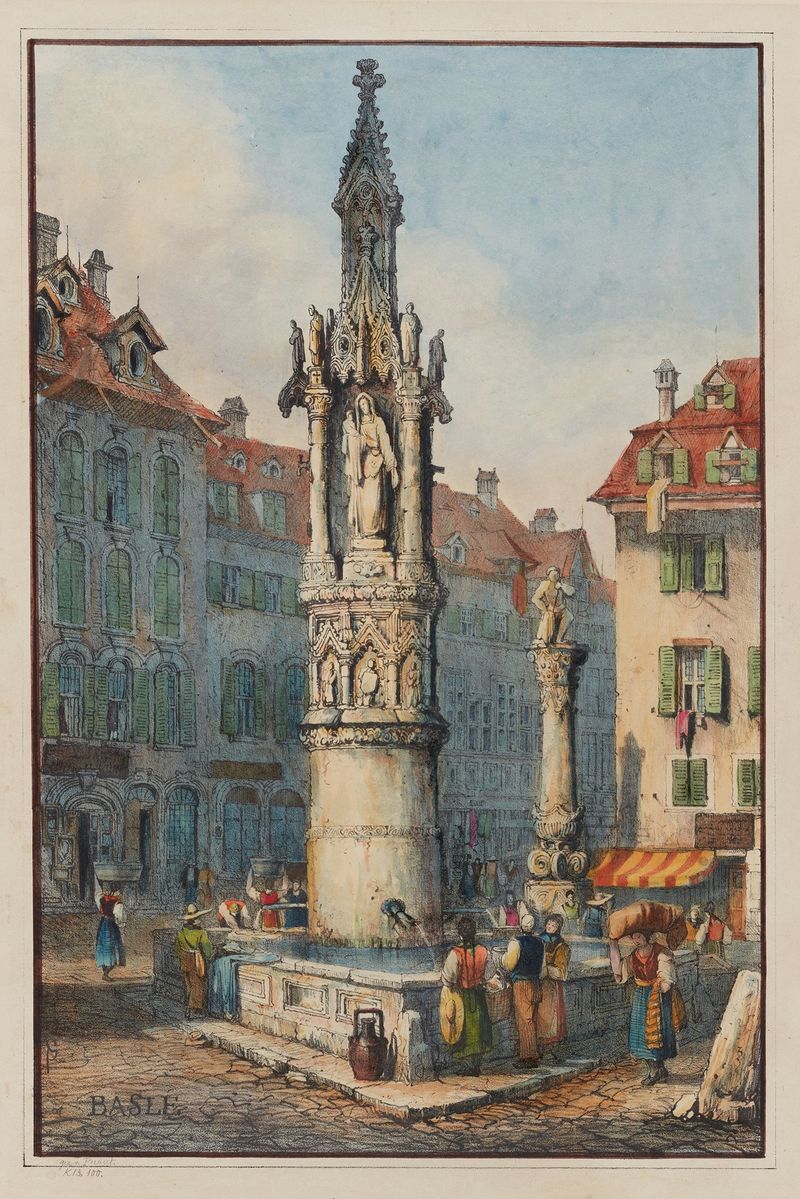
Basle
Samuel Prout

Marketplace at Bruges
Samuel Prout

Coastal Scene with Beached Boats in Foreground
Samuel Prout





