
Le Parc de Montsouris et le palais du bey de Tunis, vu de l’entrée par la rue Nansouty — History & Facts
The quiet beauty of perception often escapes us, yet in moments of stillness, it reveals itself in layers. Look closely at the intricate interplay of greens and blues in the foreground, where the lush foliage of Montsouris Park invites your gaze. Notice how the dappled light dances across the leaves, creating a mosaic of shadows and highlights that breathe life into the canvas. The warm sun bathes the palace of the Bey with a golden hue, framing it as the focal point amidst nature's embrace.
The composition captures a harmonious balance between the organic and the architectural, drawing you deeper into the scene. Beyond the surface, a narrative unfolds through contrasts of nature and civilization. The vibrant greenery symbolizes vitality and freedom, while the palace, with its stately presence, represents authority and history. The juxtaposition prompts a reflection on the relationship between human structures and the natural world, suggesting that truth exists in the tension between these realms.
Elements like the distant figures, rendered minuscule against the grand landscape, evoke themes of solitude and introspection, allowing viewers to ponder their place within this serene yet complex tableau. Jules-Adolphe Chauvet painted this work in 1888 during a time when Paris was vibrant with artistic innovation. The Impressionist movement was flourishing, challenging traditional forms and embracing new ways of seeing. Chauvet, inspired by these changes, sought to capture the beauty of urban landscapes infused with natural light, reflecting the evolving relationship between people and their environments.
More Artworks by Jules-Adolphe Chauvet
Browse all →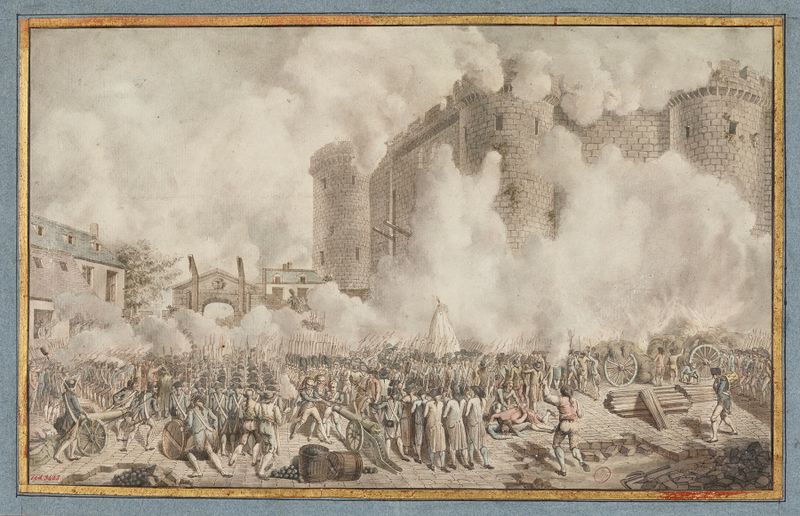
La prise de la Bastille, 14 juillet 1789
Jules-Adolphe Chauvet
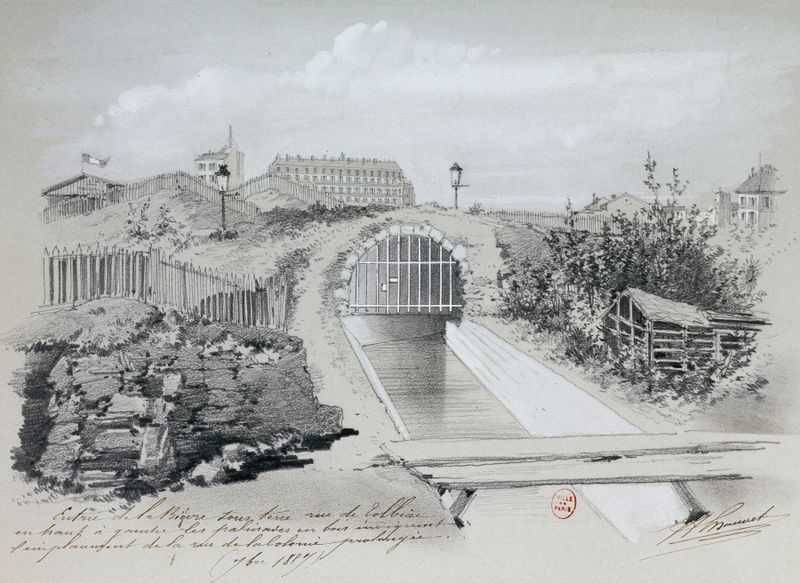
L’entrée de la Bièvre dans Paris rue de Tolbiac, 13ème arrondissement
Jules-Adolphe Chauvet
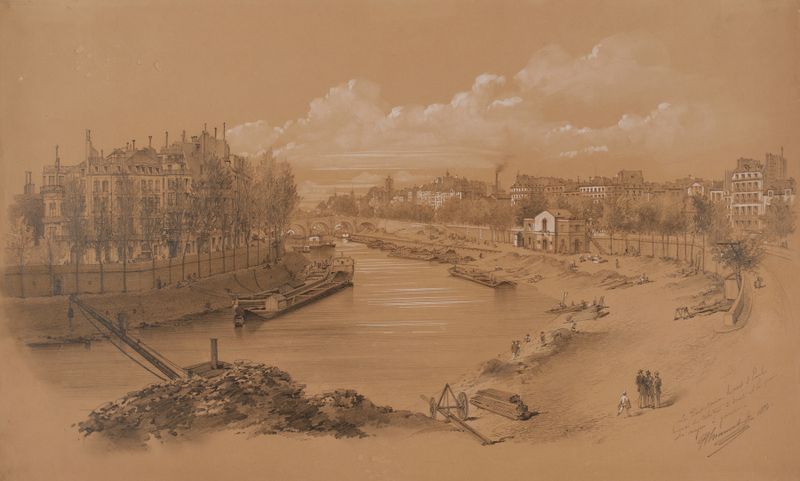
Le port Saint-Paul (absorbé par le port des Célestins en 1905), le Pont-Marie, le quai des Célestins à droite et le quai
Jules-Adolphe Chauvet
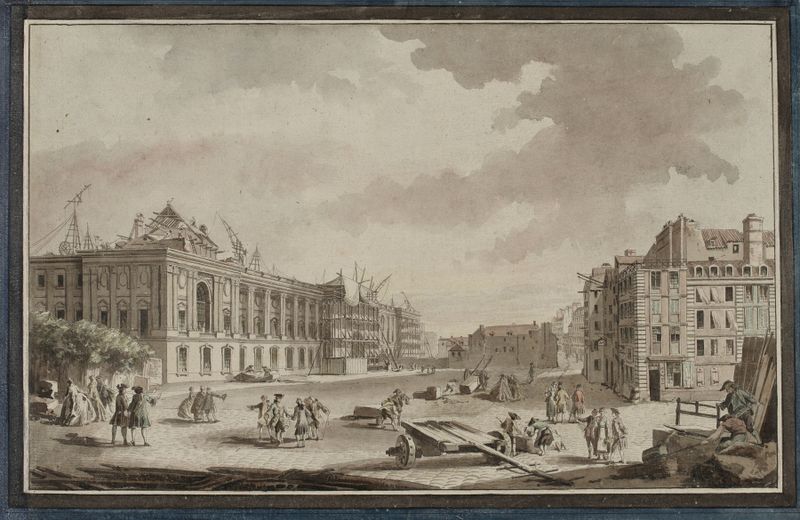
Dégagement de la colonnade du Louvre vers 1770.
Jules-Adolphe Chauvet
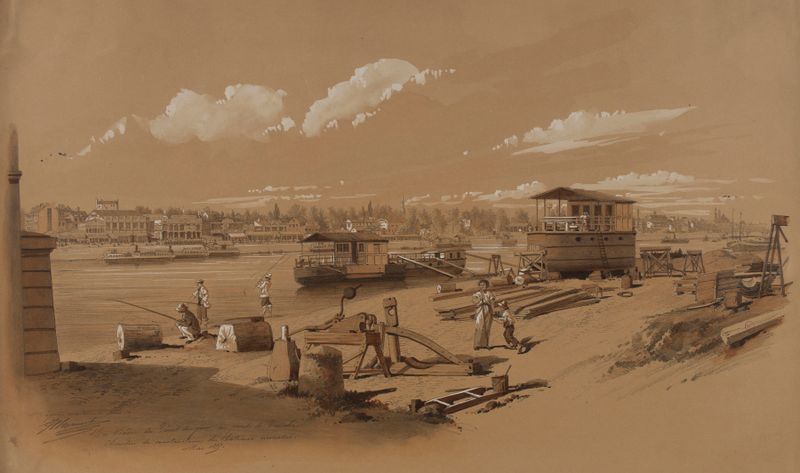
Du Viaduc du Point du jour au pont de Grenelle, chantier de construction des bateaux mouches
Jules-Adolphe Chauvet
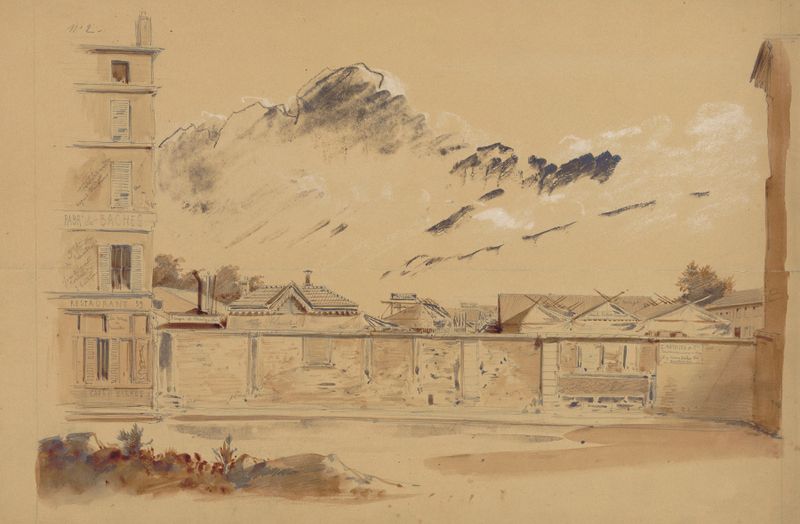
Vieux Bercy, N° 2
Jules-Adolphe Chauvet
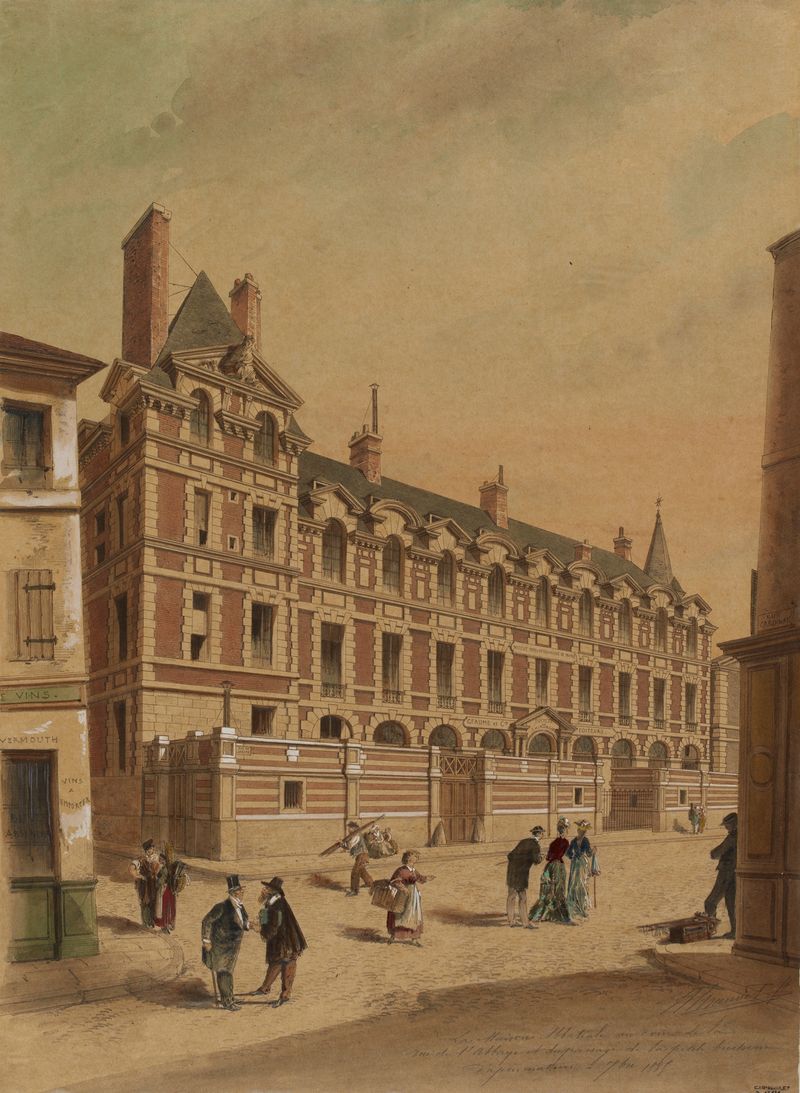
Maison Abbatiale à l’angle de la rue de l’Abbaye, de la rue Cardinale et du passage de la Petite-Boucherie, 6ème arrondi
Jules-Adolphe Chauvet
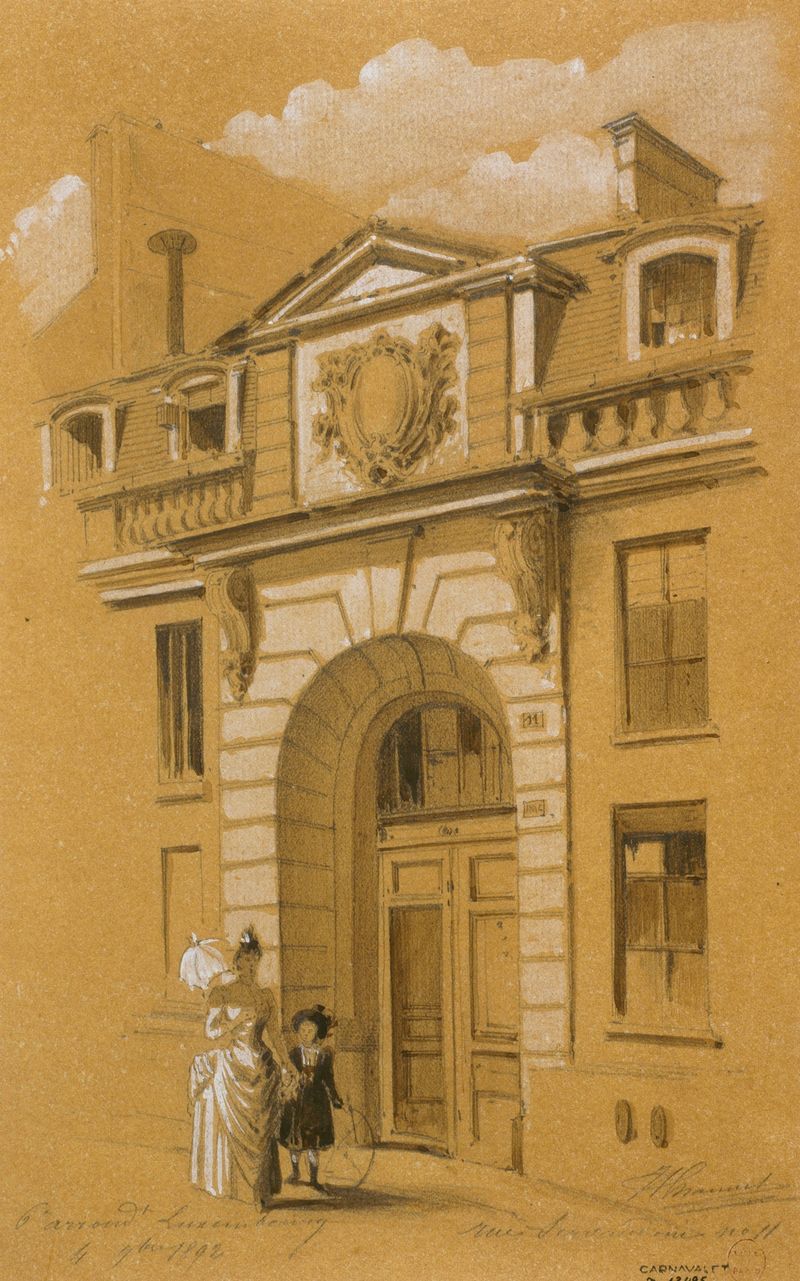
Porte d’entrée du 11 rue Servandoni, 6ème arrondissement
Jules-Adolphe Chauvet
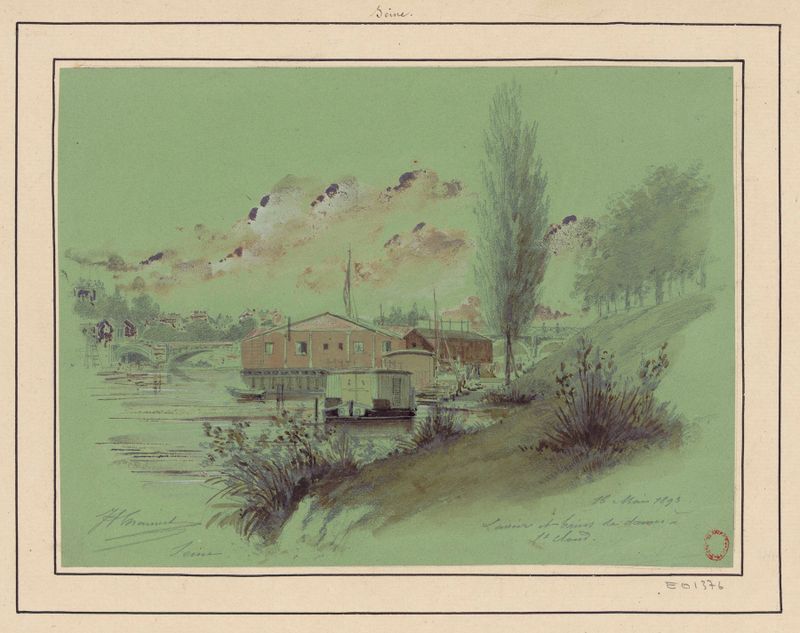
Lavoir et bains de dames à St Cloud – (Département de la) Seine
Jules-Adolphe Chauvet
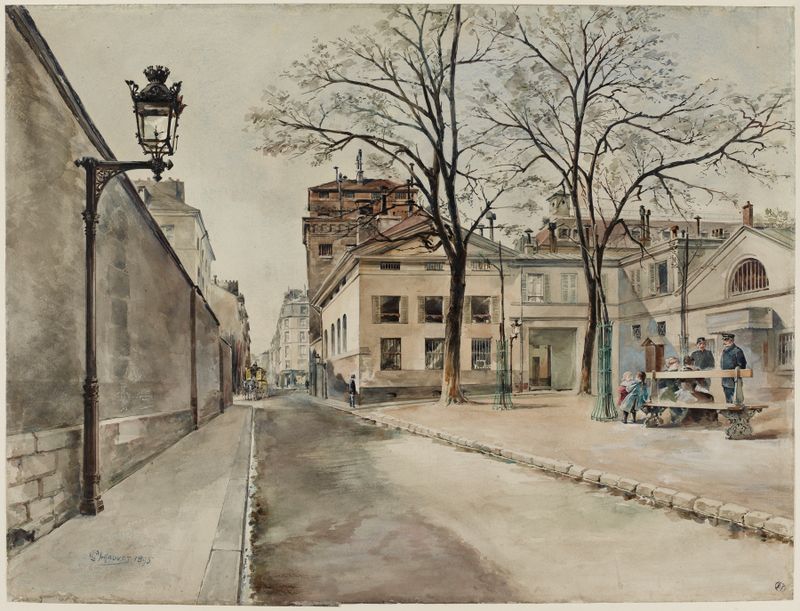
Prison Sainte-Pélagie rue de la Clef en 1895, 5ème arrondissement
Jules-Adolphe Chauvet





