
L’entrée de la Bièvre dans Paris rue de Tolbiac, 13ème arrondissement — History & Facts
What if beauty was never meant to be finished? In L’entrée de la Bièvre dans Paris rue de Tolbiac, 13ème arrondissement, the artist invites us to ponder this while capturing a moment where nature's wildness still whispers through the gritty fabric of urban life. Look to the left at the gentle curve of the Bièvre river, flanked by overhanging willows that seem to embrace the water. The brushstrokes are soft yet deliberate, creating a contrast between the lively greenery and the stoic architecture of the Parisian landscape. Notice how the sunlight dapples the water's surface, reflecting a dance of light that beckons the viewer into this serene escape, while the muted tones of the buildings remind us of the encroaching city. Within this tranquil scene lies a poignant tension: the balance between nature and civilization.
The river, a symbol of freedom, flows steadily, hinting at the resilience of beauty amidst urban expansion. The trees stand as silent guardians, their vibrant life force juxtaposed against the stillness of the structures around them. This dialogue between the organic and the man-made invites contemplation on the fleeting nature of beauty and creation itself. In 1887, when this artwork was completed, Jules-Adolphe Chauvet was deeply engaged with the Impressionist movement, which emphasized the transient effects of light and color.
Living in Paris, he witnessed rapid urban development, a stark contrast to the serene landscapes he often portrayed. The canvas reflects the artist's desire to capture the essence of a disappearing world, where the rhythms of nature still held dominion before being swallowed by modernity.
More Artworks by Jules-Adolphe Chauvet
Browse all →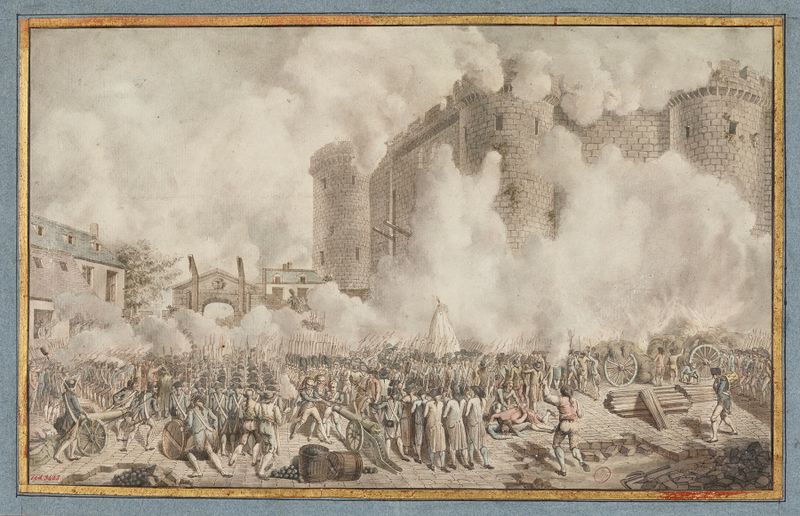
La prise de la Bastille, 14 juillet 1789
Jules-Adolphe Chauvet
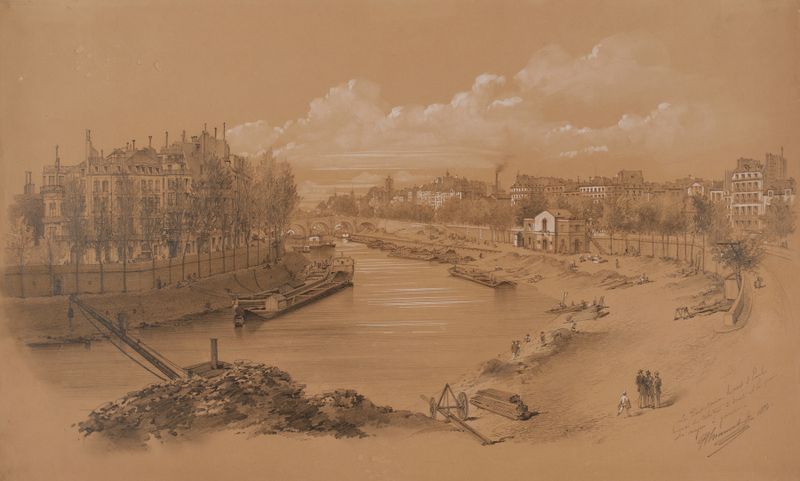
Le port Saint-Paul (absorbé par le port des Célestins en 1905), le Pont-Marie, le quai des Célestins à droite et le quai
Jules-Adolphe Chauvet
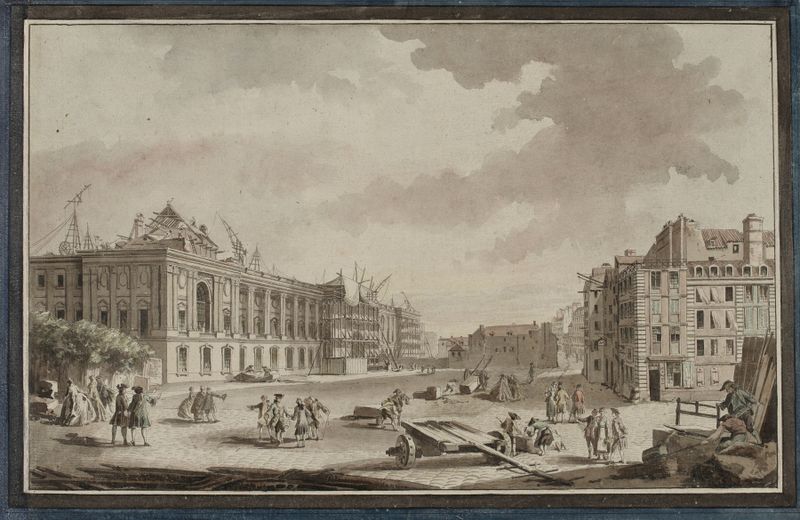
Dégagement de la colonnade du Louvre vers 1770.
Jules-Adolphe Chauvet
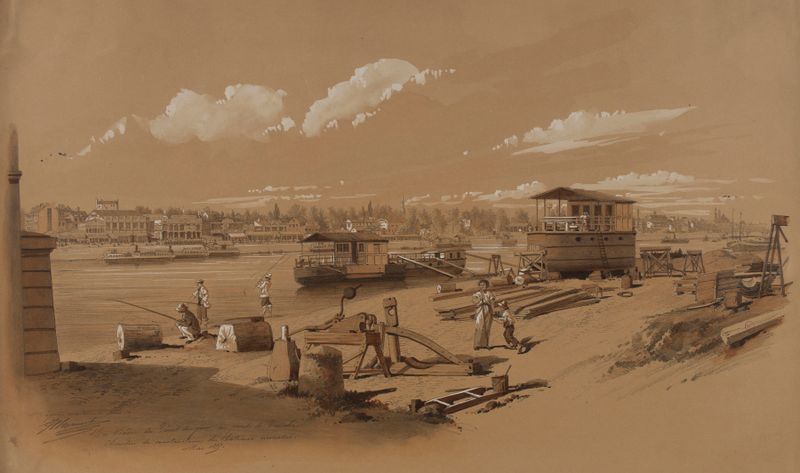
Du Viaduc du Point du jour au pont de Grenelle, chantier de construction des bateaux mouches
Jules-Adolphe Chauvet
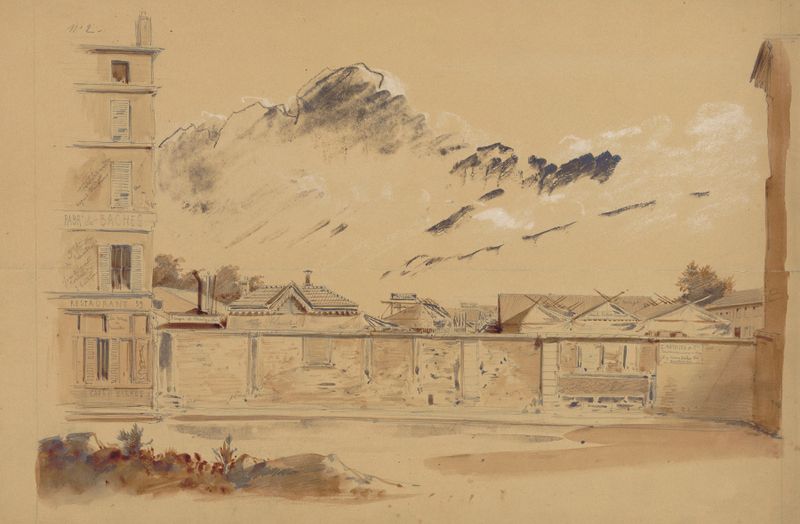
Vieux Bercy, N° 2
Jules-Adolphe Chauvet
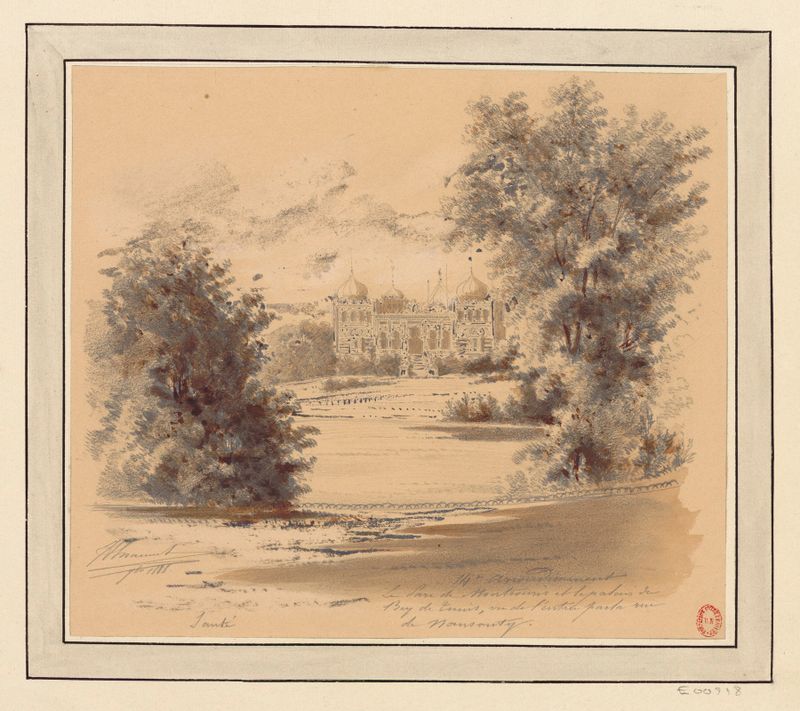
Le Parc de Montsouris et le palais du bey de Tunis, vu de l’entrée par la rue Nansouty
Jules-Adolphe Chauvet
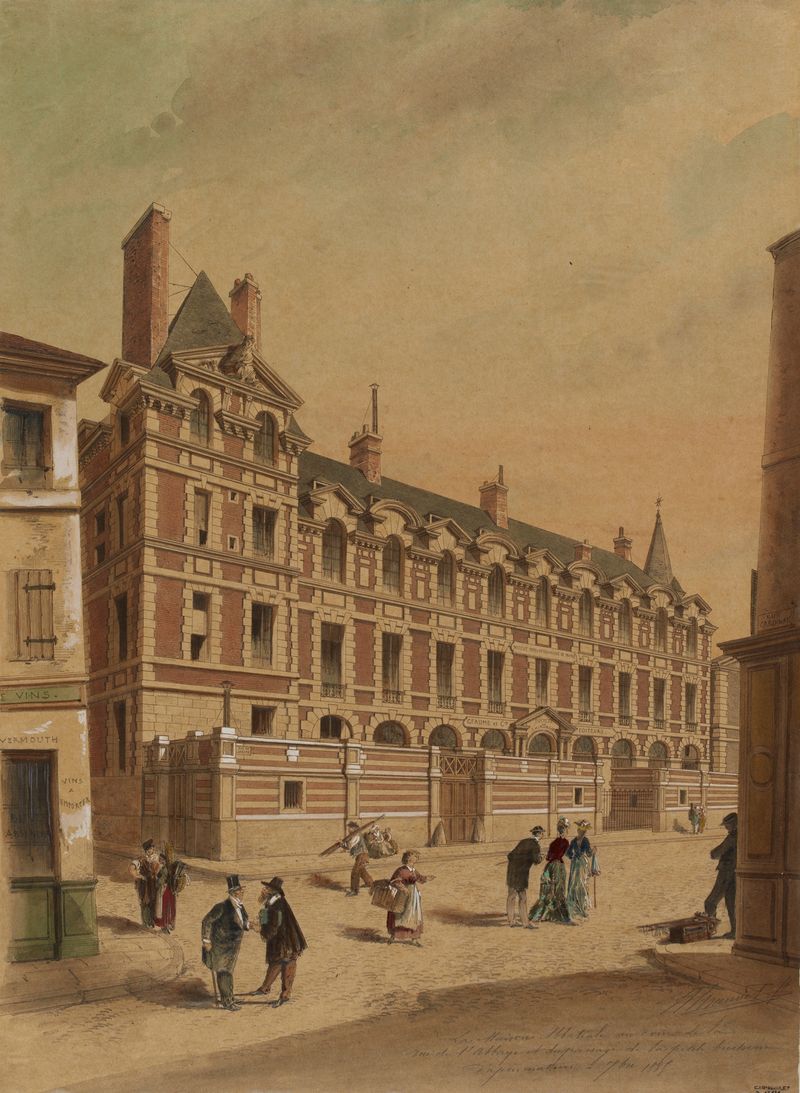
Maison Abbatiale à l’angle de la rue de l’Abbaye, de la rue Cardinale et du passage de la Petite-Boucherie, 6ème arrondi
Jules-Adolphe Chauvet
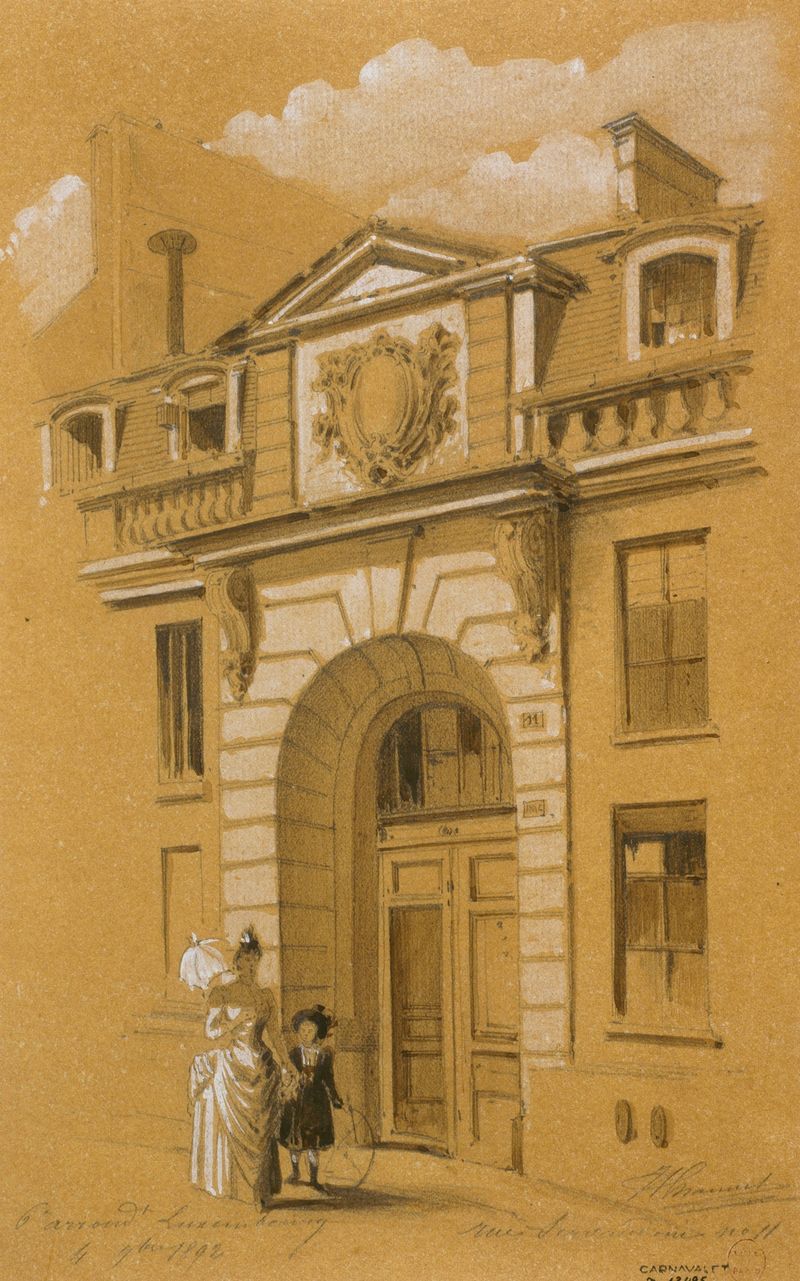
Porte d’entrée du 11 rue Servandoni, 6ème arrondissement
Jules-Adolphe Chauvet
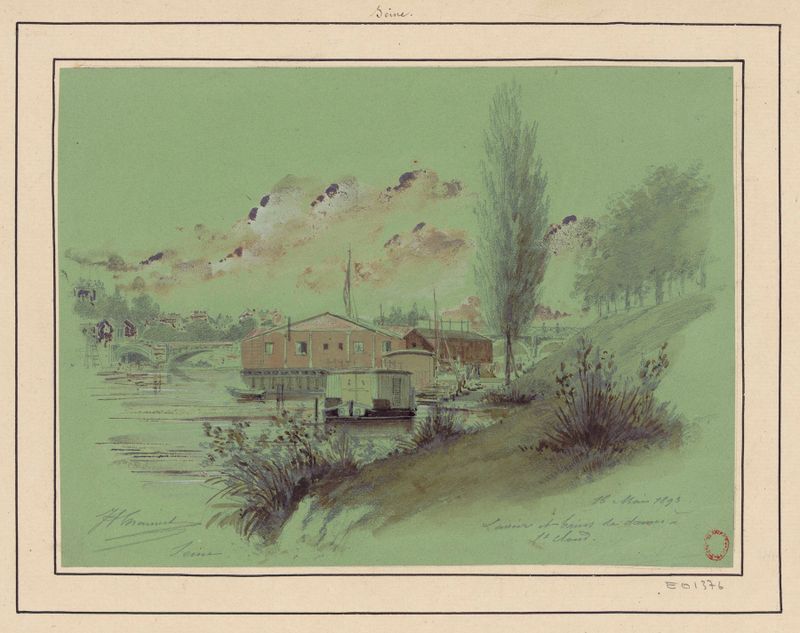
Lavoir et bains de dames à St Cloud – (Département de la) Seine
Jules-Adolphe Chauvet
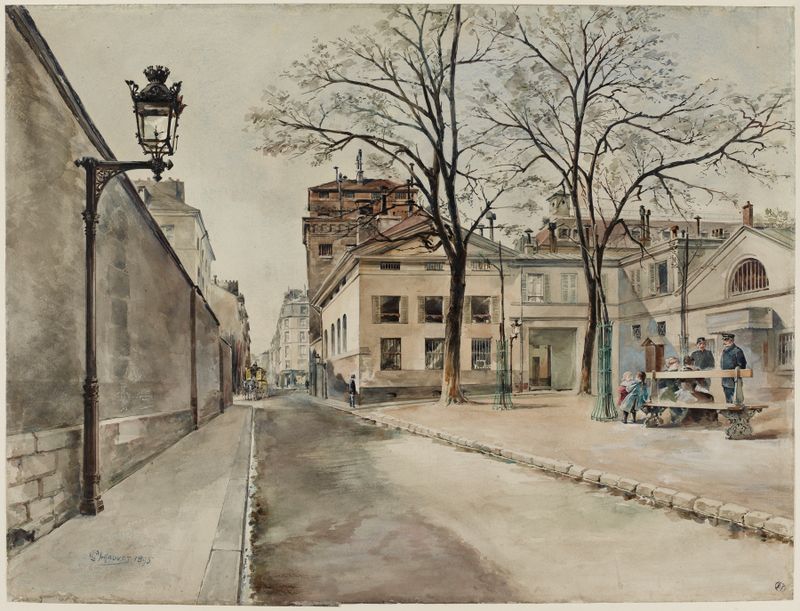
Prison Sainte-Pélagie rue de la Clef en 1895, 5ème arrondissement
Jules-Adolphe Chauvet





