Le parc et le bassin du château de Gressy — History & Facts
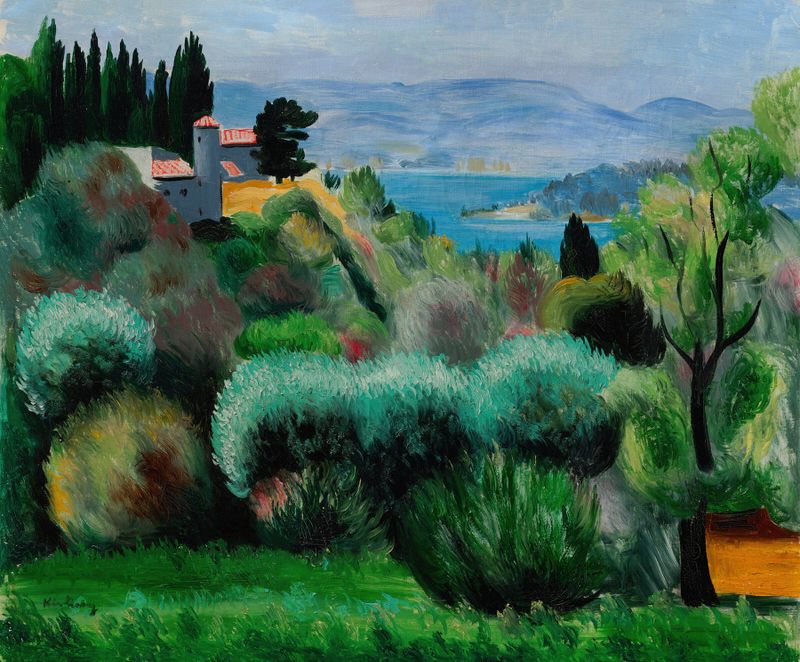
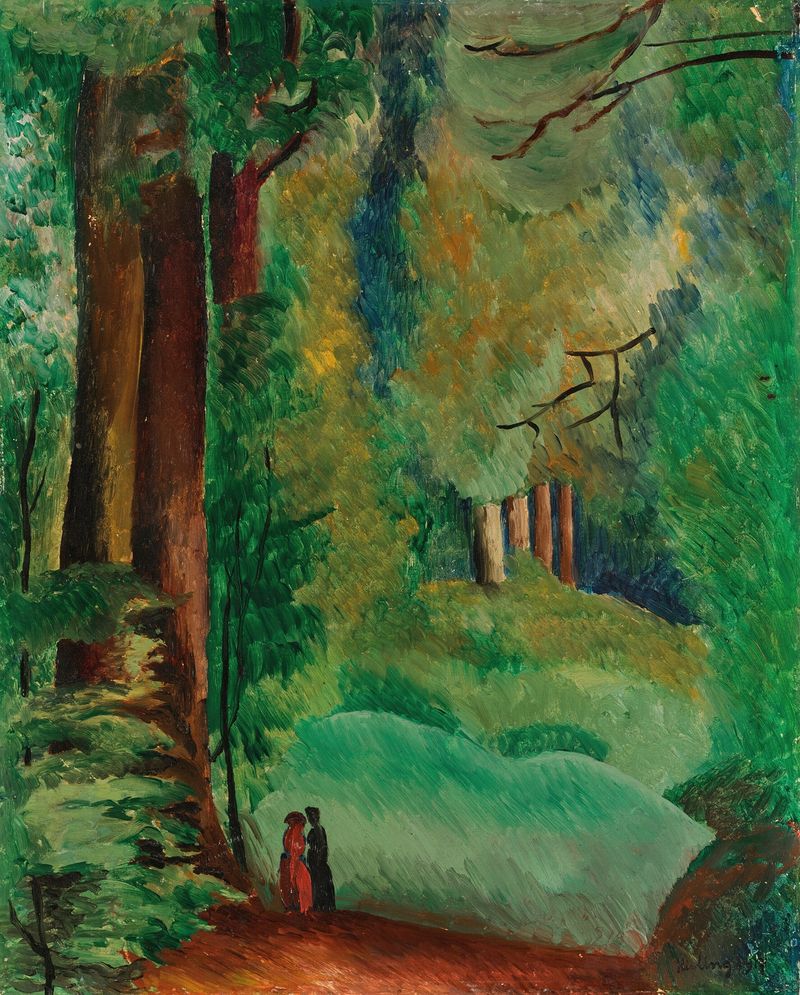
What secret hides in the quiet of the canvas? Beneath the serene surface of Moïse Kisling's work lies a tempest of unspoken emotions, where tranquility dances with madness. Look to the foreground, where a placid lake reflects the vibrant greens and golds of the surrounding park. The trees, lush and full, frame the scene with a sense of enclosure, inviting the viewer into a world that feels almost dreamlike. Notice how the light falls upon the water, creating shimmering ripples that disrupt the stillness, suggesting both beauty and the fragility of peace.
The composition draws us toward the horizon, where the interplay of shadow and light hints at an unseen tension that lies just beneath the surface. As you examine the painting closer, consider the subtle brushstrokes that evoke a sense of unease. The vivid colors contrast sharply with the stillness of the scene, suggesting an underlying madness that lurks in the idyllic setting. The distorted reflections in the water reveal the complexities of perception, blurring the line between reality and illusion.
In this quiet park, the harmony of nature embraces an unsettling discord, inviting viewers to confront the duality of existence. In 1949, Kisling painted this piece during a time of introspection and reflection after World War II, as artists sought to explore deeper truths in their work. Living in Paris, he was surrounded by a community grappling with the lingering shadows of conflict, which influenced his creative approach. This painting emerges from a moment of profound transformation in both his life and the art world, where the quest for beauty often entwined with the exploration of human fragility.