
Le Pont de Pierres — History & Facts
What secret hides in the quiet of the canvas? Beneath the surface of serenity lies a lingering madness, whispering of nature’s raw power and human fragility. Look to the center of the composition, where the bridge arches gracefully over the water. Notice how the muted palette of blues and earth tones creates a soothing backdrop against which the intricate details of the stonework stand out. The brushstrokes, though delicate, pulse with an underlying tension, evoking a sense of both stability and decay.
To the left, the trees rise like sentinels, their dark shapes contrasting with the glimmering surface of the water, reflecting the sky's soft light in a dance of serenity and unease. Dig deeper into the nuances of this piece, and you’ll uncover a dichotomy between the man-made and the natural world. The bridge, a symbol of human ingenuity, seems precarious against the vastness of the landscape, hinting at a relationship fraught with struggle. The distant figures on the walkway, though minuscule, suggest a journey through both physical space and mental chaos, invoking questions about purpose and direction.
Each element vibrates with the subtle madness of existence, a reminder that beauty often coexists with turmoil. In 1896, Auguste Louis Lepère painted this scene while living in France, amidst an artistic climate that was increasingly embracing Impressionism and Post-Impressionism. During this time, Lepère was exploring printmaking and the interplay of light and shadow, reflecting the broader movements in art that sought to capture transient moments. His work stands as a quiet testament to the era's innovative spirit, blending traditional techniques with a modern sensibility in this evocative piece.
More Artworks by Auguste Louis Lepère
Browse all →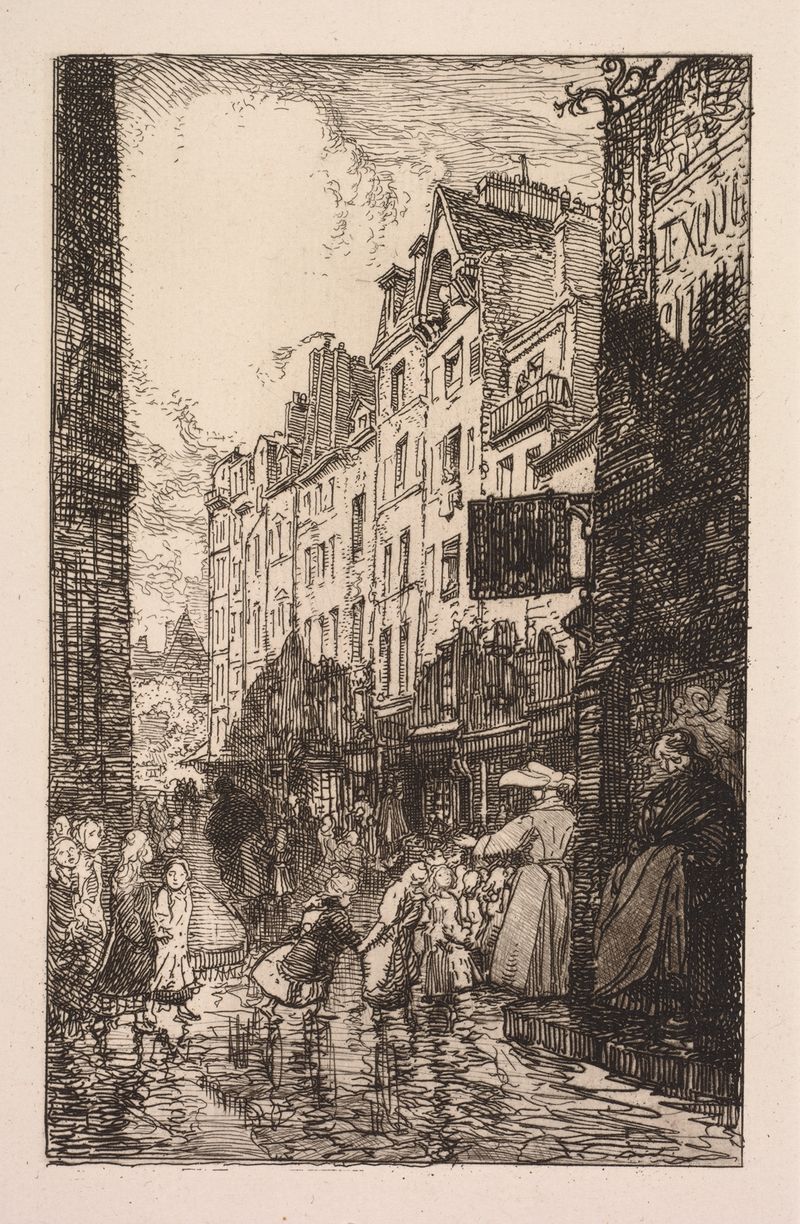
La Rue des Prêtres Saint-Séverin
Auguste Louis Lepère
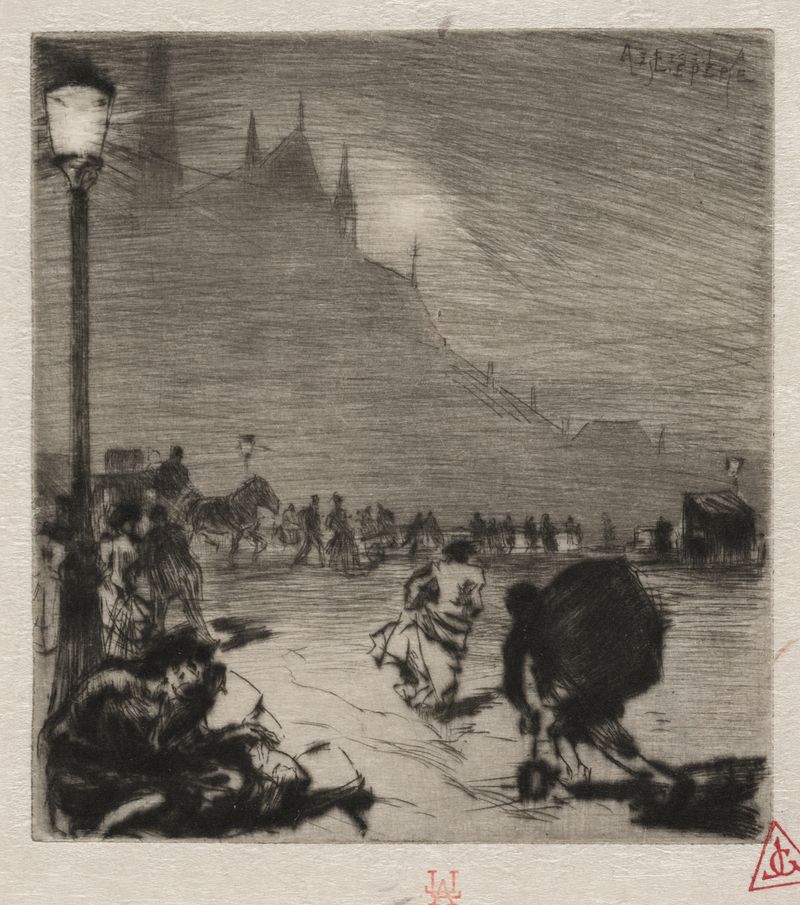
Au Coin du Pont-aux-Doubles
Auguste Louis Lepère
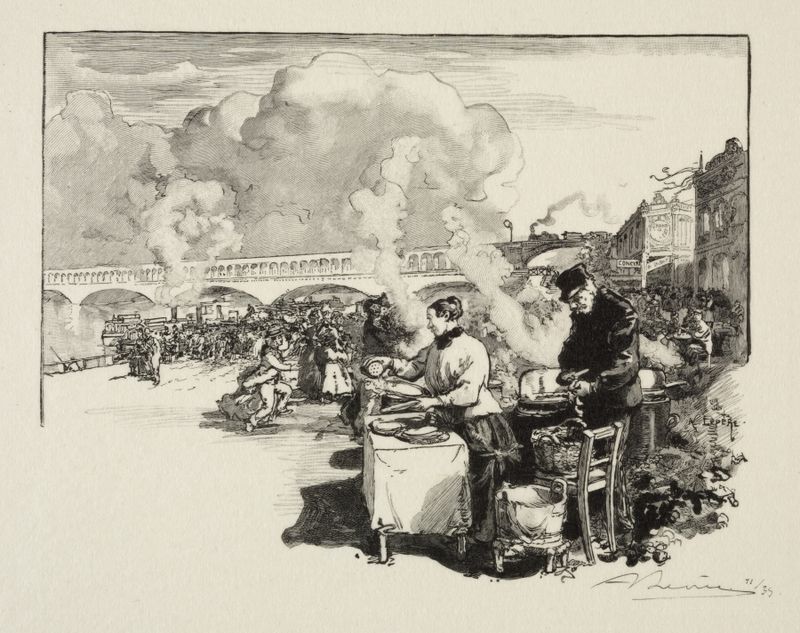
Debarcadère des bateaux-omnibus
Auguste Louis Lepère

La Seine, au quai de la Rapée
Auguste Louis Lepère
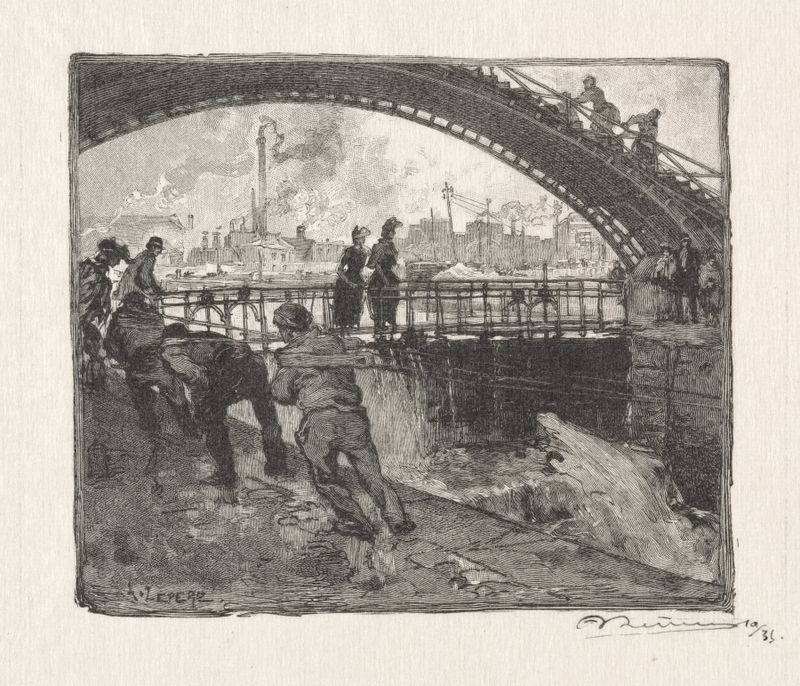
L’Ecluse du Canal St. Martin
Auguste Louis Lepère

Le Boulevard Montmartre, le Soir
Auguste Louis Lepère

Une Chasse au Mont Gérard
Auguste Louis Lepère
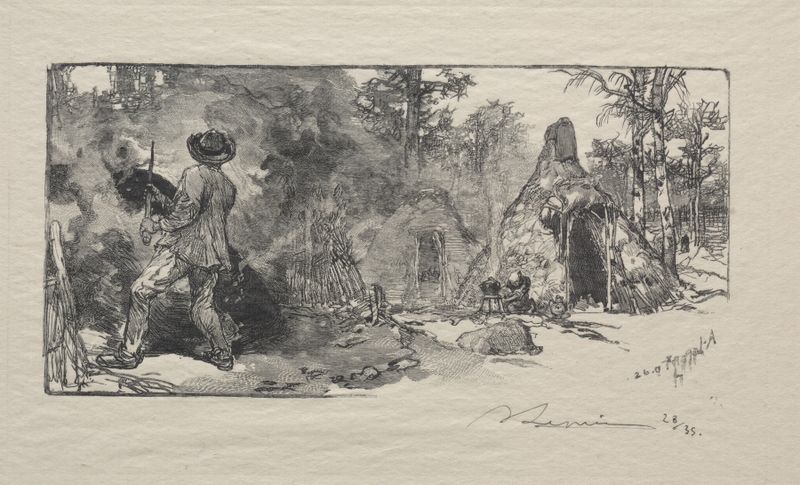
Les Charbonniere
Auguste Louis Lepère
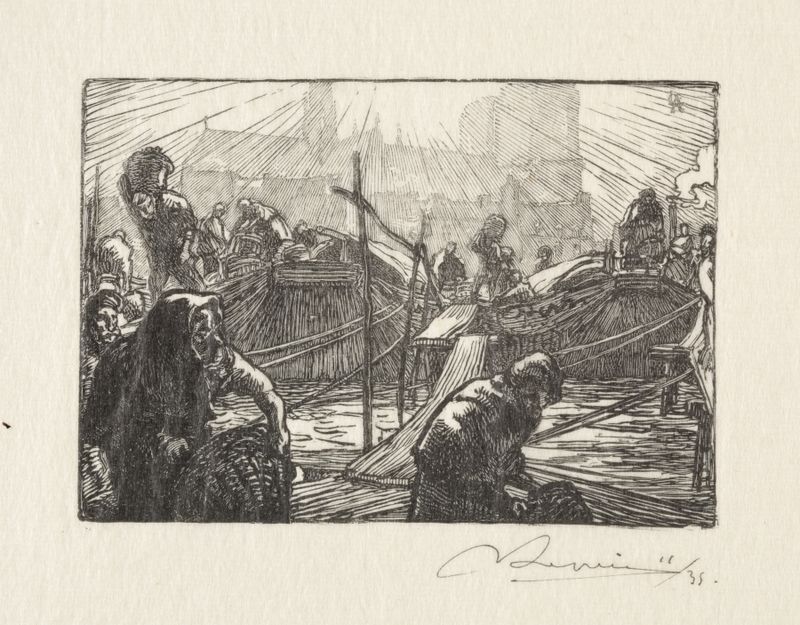
Notre Dame vue du Marché aux pommes
Auguste Louis Lepère

Le Palais des Arts Liberaux, Intèrieur
Auguste Louis Lepère





