
Le village de Georgenborn — History & Facts
The delicate balance between joy and sorrow coexists in the vivid hues of Le village de Georgenborn. The painting invites you to explore the duality of life, where every enticing color veils a deeper truth, urging contemplation of what lies beneath the surface. Look to the center of the canvas, where the charming village emerges amidst rolling hills. The interplay of warm yellows and deep greens creates a harmonious atmosphere, while the gentle brushstrokes evoke a sense of tranquility.
Notice how the light dances across the rooftops, illuminating the scene with a golden glow, yet casting shadows that hint at the complexities within. Each element, from the rustic cottages to the quiet pathways, invites you to appreciate the beauty that flourishes in simplicity. Yet, as you delve deeper, a tension unfolds. The vibrant colors might suggest serenity, but the stark lines and contrasting shades whisper of underlying struggles, mirroring the post-war landscape of Europe in 1946.
The charming facade may mask the fragility of existence, reflecting the resilience of communities trying to rebuild amidst the remnants of conflict. It’s an invitation to ponder how beauty can exist alongside hardship, balancing the spectrum of human experience. In 1946, Gustave Cariot painted Le village de Georgenborn during a period of profound change in Europe, as countries grappled with the aftermath of World War II. Living in France, he was immersed in a movement that sought to capture the spirit of recovery and renewal through art.
This work is a testament to his exploration of the interplay between vibrant life and the shadows of history, encapsulating the essence of a world striving for balance amidst chaos.
More Artworks by Gustave Cariot
Browse all →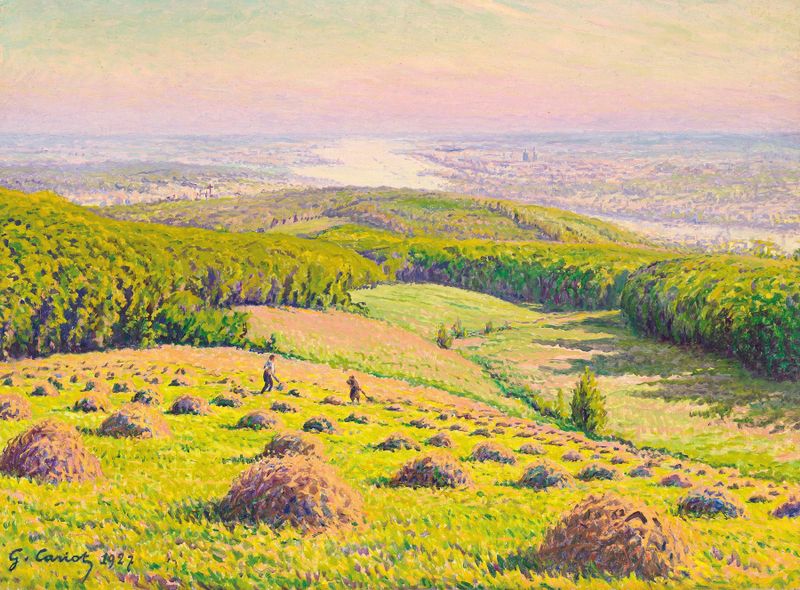
La vallée
Gustave Cariot

Le Jardin
Gustave Cariot

Les meules
Gustave Cariot
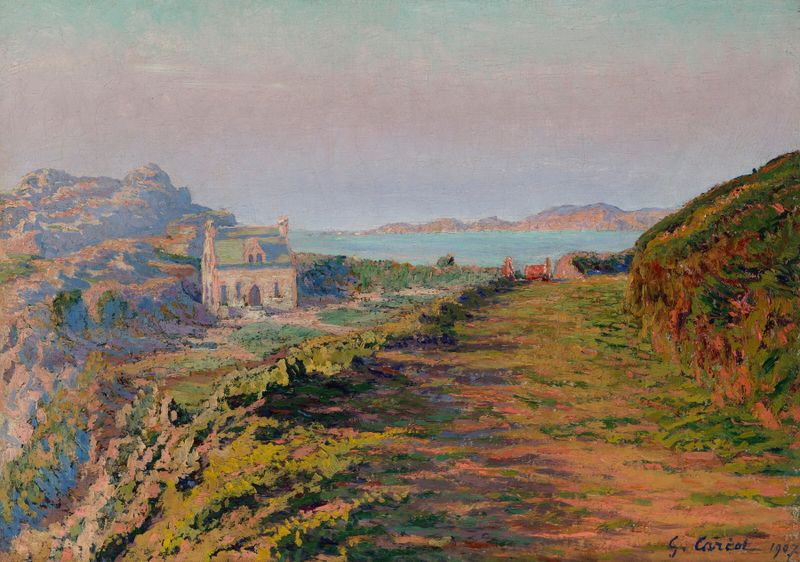
Maison Pen ar C’hastel à la pointe du Château, Perros-Guirrec
Gustave Cariot
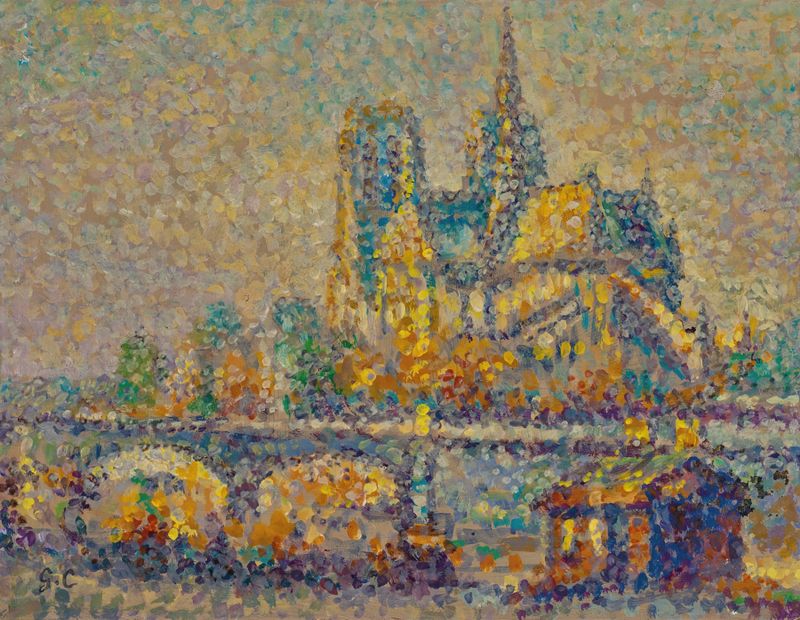
Notre-Dame de Paris
Gustave Cariot
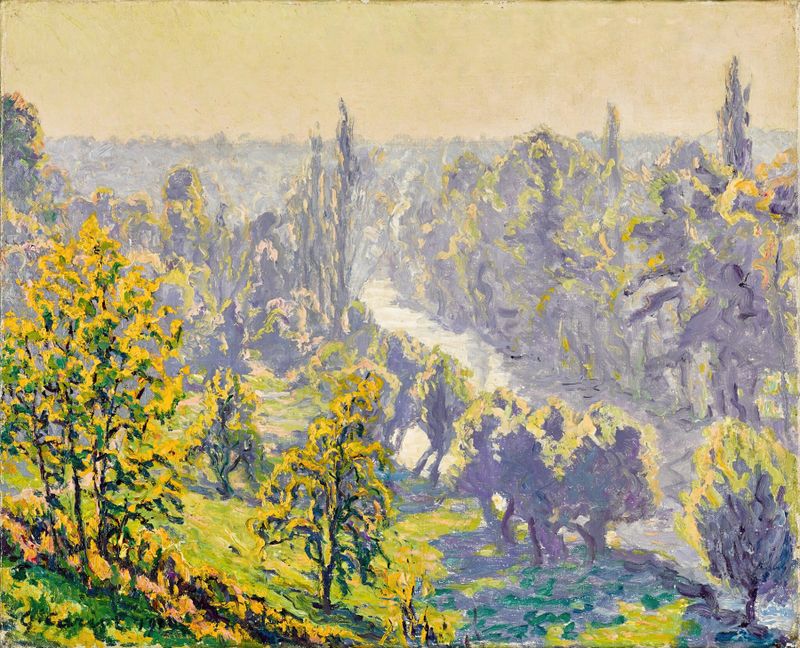
Périgny, automne, matinée sur l’Yerres
Gustave Cariot
Périgny, pont sur l’Yerres
Gustave Cariot
Le Pont-Neuf, eté, 20 heures
Gustave Cariot

Moulin de Périgny
Gustave Cariot

Le chemin à Mandres
Gustave Cariot





