Leather Fullers Hall — History & Facts
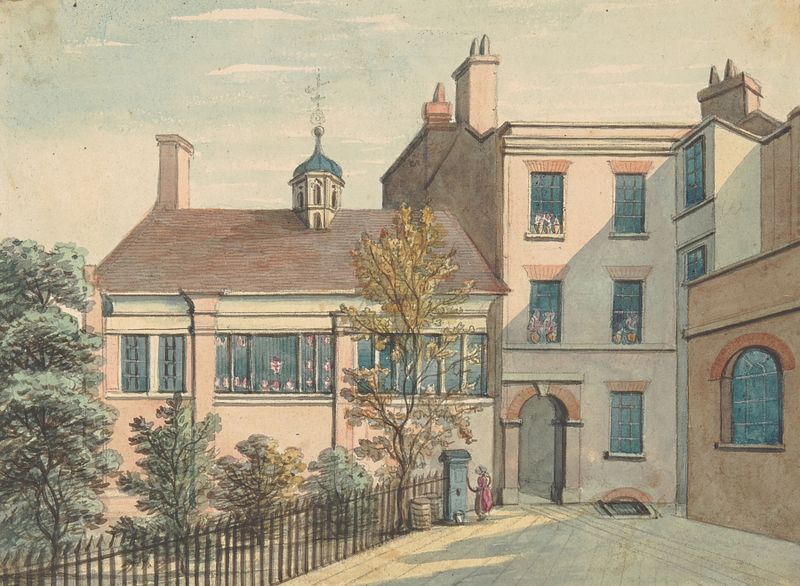
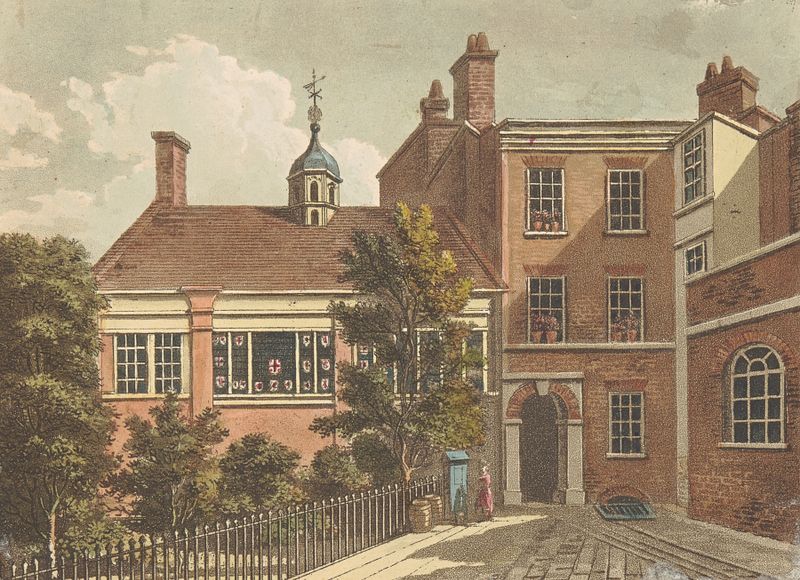
Where does light end, and longing begin? In the stillness of Leather Fullers Hall, a quiet fear thrums beneath the surface, a whisper echoing through the shadows of the past. Look to the left at the arching doorway that beckons the viewer into a world steeped in history. Notice the muted tones that Samuel Ireland employs, which evoke an atmosphere of both solemnity and intrigue. The warm light filtering through the open space creates contrasting pools of illumination and darkness, drawing attention to the textured surfaces of the walls and the weathered furnishings that hint at countless stories waiting to be told. Intriguingly, the contrast between light and shadow captures the tension between hope and despair.
The faint glimmer of sunlight dancing on the polished wood speaks of vitality, while the darker corners seem to harbor unspoken fears and secrets. The composition, with its deliberate focus on the architectural details, suggests a duality of presence and absence – a longing for connection amidst the isolation of the hall. Each element reinforces the emotional weight of the space, as if the very walls themselves resonate with unfulfilled aspirations. In 1800, Samuel Ireland created this work during a period when art was beginning to shift from the neoclassical to the romantic.
Living in England, he was influenced by the emerging conversations about nature and individualism in art. This was a time of significant change, both personally for Ireland and within the broader artistic landscape, marked by a growing fascination with the emotional realms that art could explore.
More Artworks by Samuel Ireland
Browse all →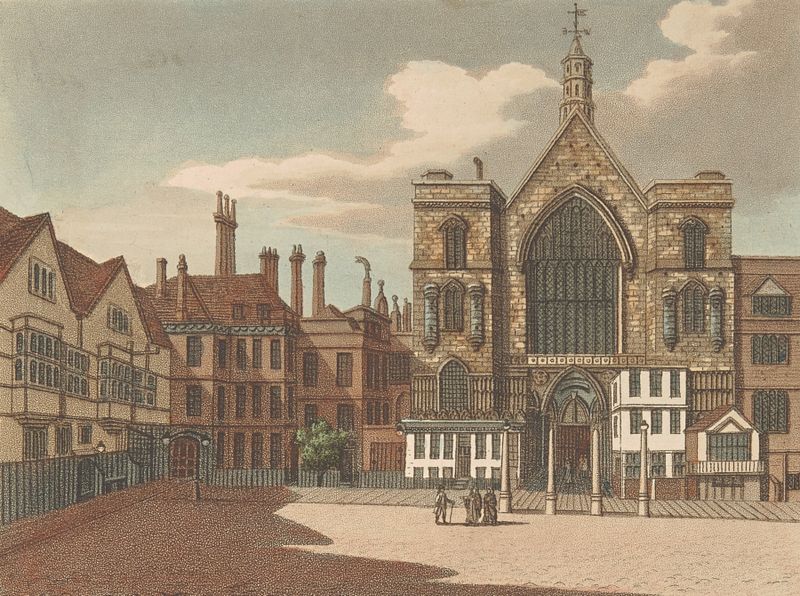
Westminster Hall
Samuel Ireland

Southwest View of Middle Temple
Samuel Ireland
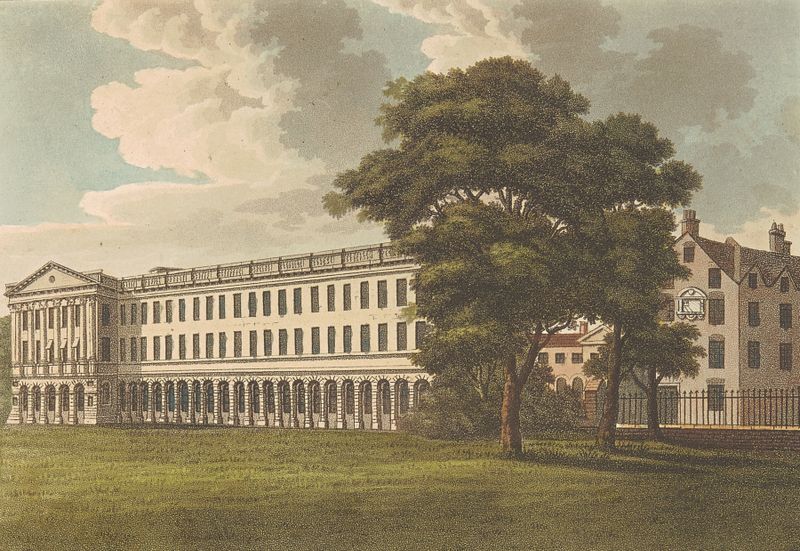
Stone Buildings, Lincoln’s Inn
Samuel Ireland
Barnard’s Inn
Samuel Ireland

Lincoln’s Inn Hall and Chapel
Samuel Ireland

Lion’s Inn
Samuel Ireland
Middle Temple Gate
Samuel Ireland
Barnard’s Inn
Samuel Ireland

Westminster Hall
Samuel Ireland
Lincoln’s Inn Gate
Samuel Ireland