
L’Ecluse de la Monnaie — History & Facts
In the quietude of a French riverscape, serenity breathes within each brushstroke, inviting a deeper exploration of existence and stillness. Look to the foreground where gentle ripples of water catch the light, reflecting hues of blue and gold. Notice how the artist masterfully contrasts the soft, flowing lines of the riverbank with the sharp verticals of the buildings beyond. The warm palette envelops the scene, evoking a sense of tranquility that seeps into the viewer's consciousness, urging them to linger in the moment. In the subtle play of light and shadow, there lies a profound emotional tension.
The juxtaposition of the lively, reflective water against the stillness of the architecture highlights the transient nature of life and memory. Each detail, from the distant figures to the passing boats, adds layers of narrative, suggesting a world that is both vibrant and momentarily frozen in time. This duality invites contemplation on the harmony between nature's grace and human presence. Painted during a period marked by social and artistic transformation, the artist created this work in France between 1870 and 1918, a time when Impressionism flourished and the world was on the cusp of modernity.
Amidst the shifting tides of artistic movements, he sought to capture the essence of everyday life, elevating the ordinary moments to speak of deeper truths, thus solidifying his place in the narrative of art history.
More Artworks by Auguste Louis Lepère
Browse all →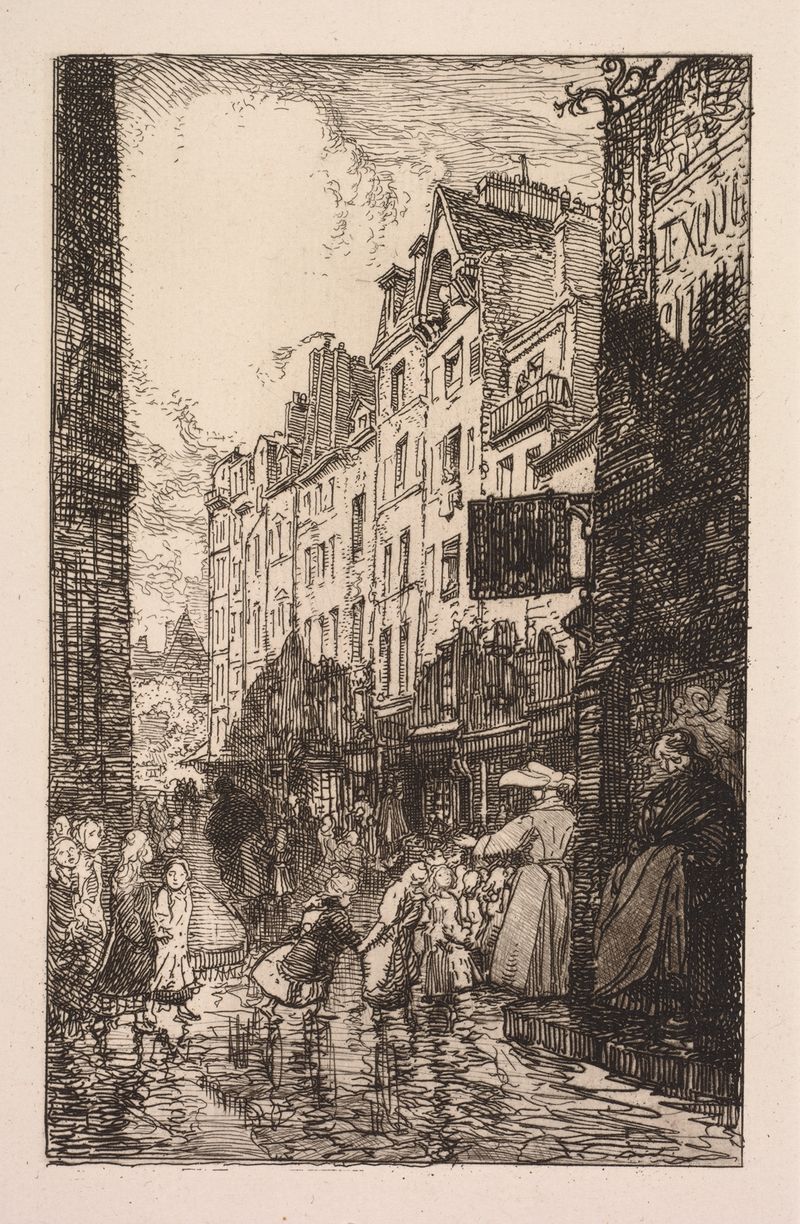
La Rue des Prêtres Saint-Séverin
Auguste Louis Lepère
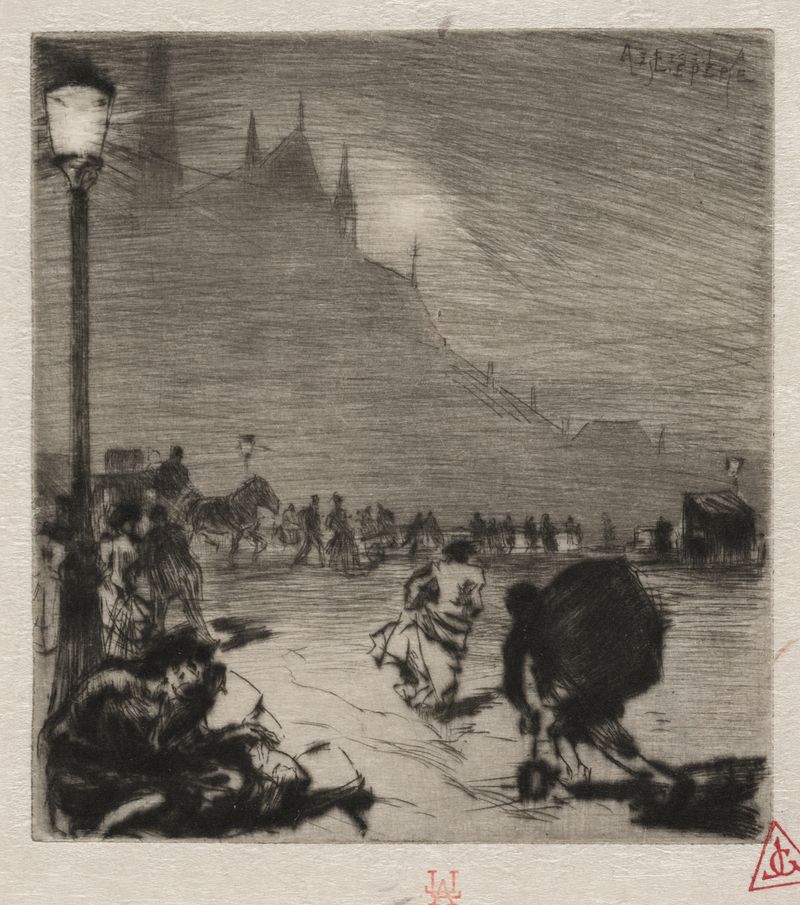
Au Coin du Pont-aux-Doubles
Auguste Louis Lepère
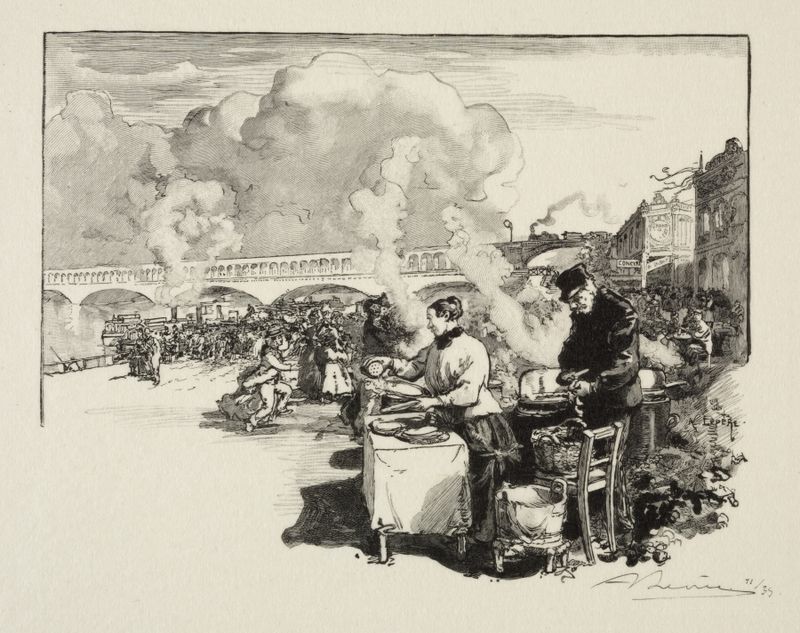
Debarcadère des bateaux-omnibus
Auguste Louis Lepère

La Seine, au quai de la Rapée
Auguste Louis Lepère
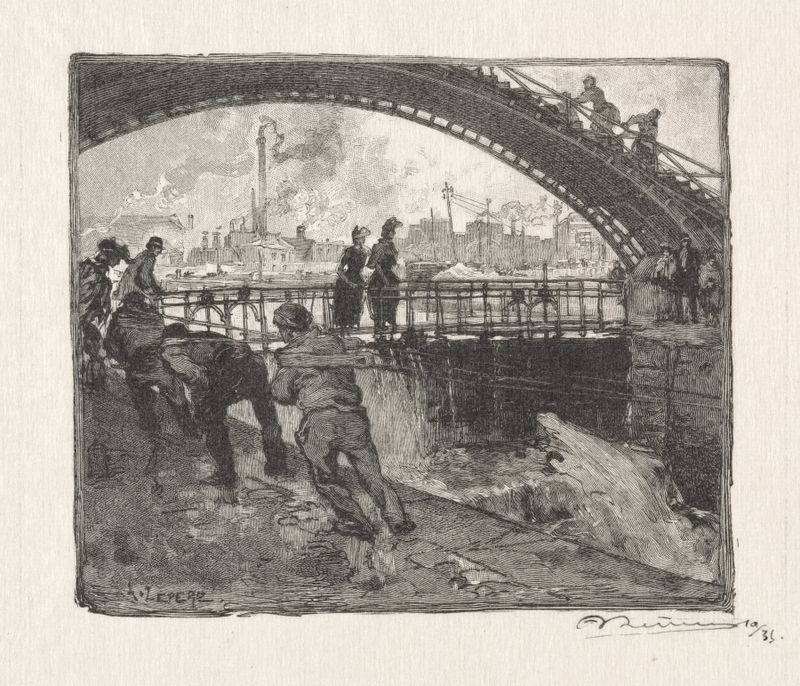
L’Ecluse du Canal St. Martin
Auguste Louis Lepère

Le Boulevard Montmartre, le Soir
Auguste Louis Lepère

Une Chasse au Mont Gérard
Auguste Louis Lepère
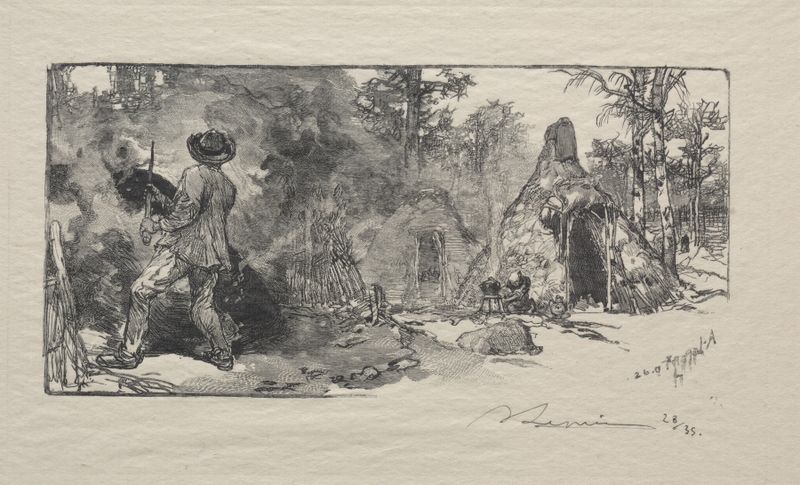
Les Charbonniere
Auguste Louis Lepère
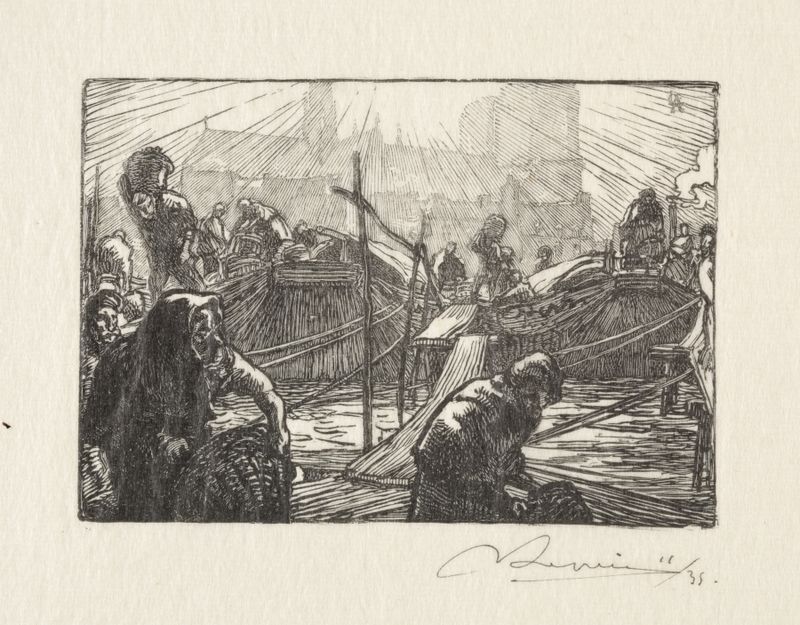
Notre Dame vue du Marché aux pommes
Auguste Louis Lepère

Le Palais des Arts Liberaux, Intèrieur
Auguste Louis Lepère





