
Lemminkäinen's Mother — History & Facts
What first grips the eye in Lemminkäinen's Mother is the stark intimacy of its composition: a lone woman, draped in white, bends over a lifeless figure at the edge of dark water, the moon’s reflection breaking the blackness with a trembling light. The woman’s posture is both protective and desperate, her hand clutching the shoulder of the fallen youth as if to anchor him to the world of the living. The shoreline curves around them like a shallow grave, and the earth is dotted with small, pale flowers—symbols of fragile hope or mourning.
In the lower corner, a skull and scattered bones are a chilling reminder of mortality, sharpening the sense of peril and love at the heart of the scene. Painted in watercolor sometime between 1890 and 1900, this work belongs to a moment when artists across northern Europe were reaching for national myths and ancient epics to forge a modern identity. Axeli Gallen-Kallela was among those who turned to the Finnish Kalevala, drawing on its stories of loss, magic, and maternal devotion. Watercolor allowed for a raw immediacy here: the rough paper, the quick, expressive lines, the limited palette—all speak to a time when artists were experimenting with new ways to capture emotion and legend.
Today, the piece is held by The Gallen-Kallela Museum, a quiet witness to a period when art and folklore were tools for shaping a nation’s soul. Look again at the moonlit water and the mother’s grip—everything in this small painting presses the question of what can be saved, and who will do the saving.
More Artworks by Axeli Gallen-Kallela
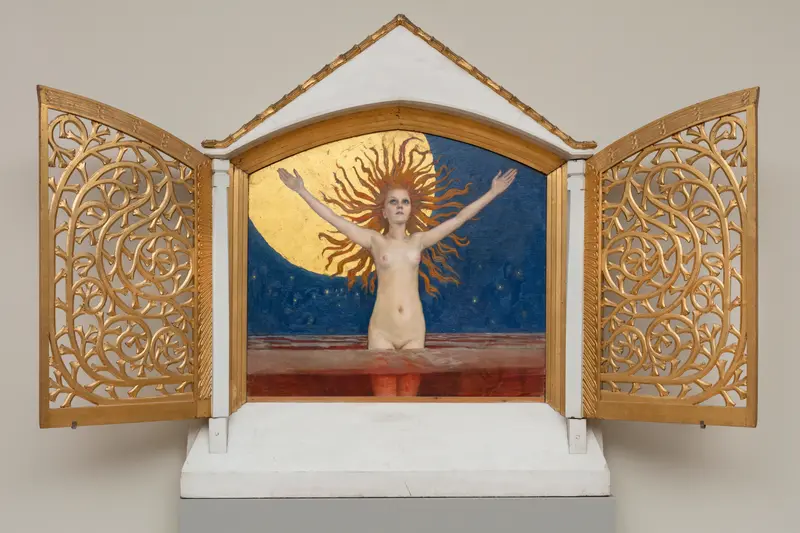
Ad Astra
Axeli Gallen-Kallela
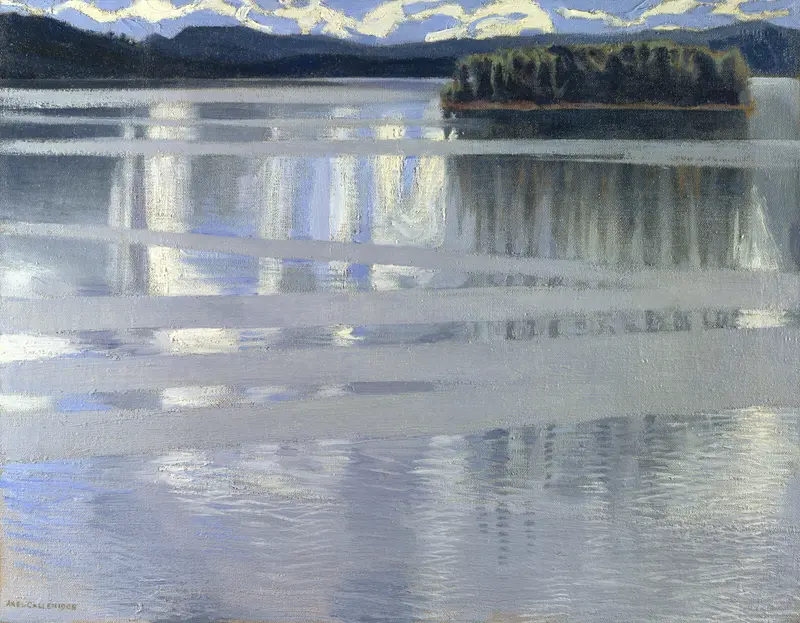
Lake Keitele
Axeli Gallen-Kallela
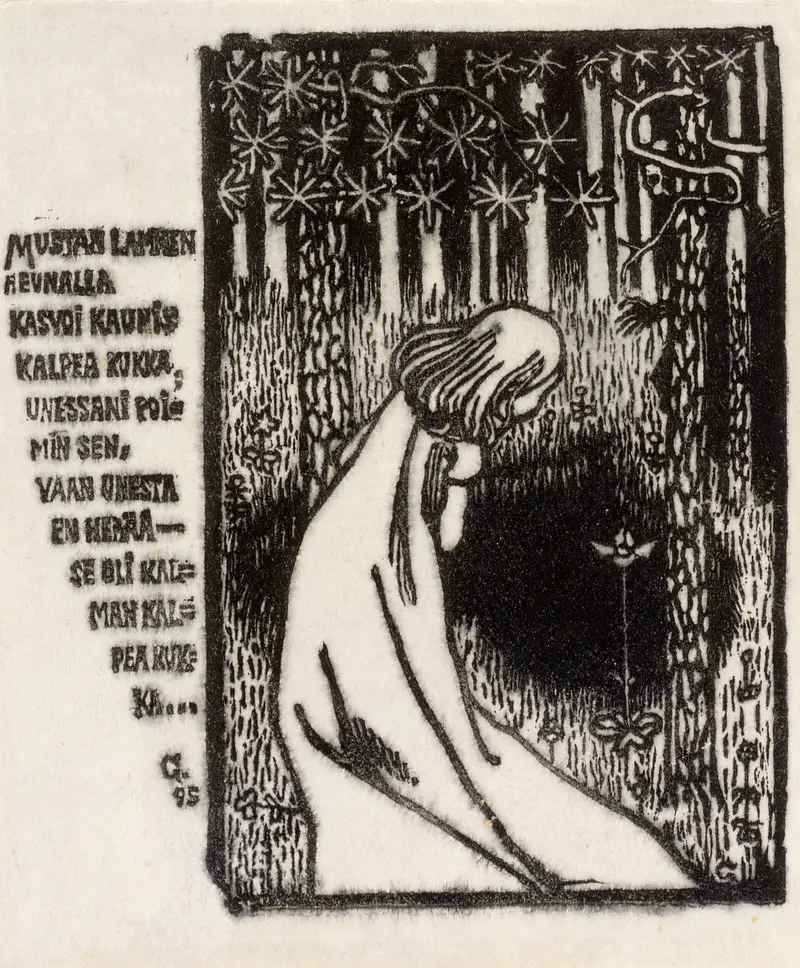
Flower of Death
Axeli Gallen-Kallela
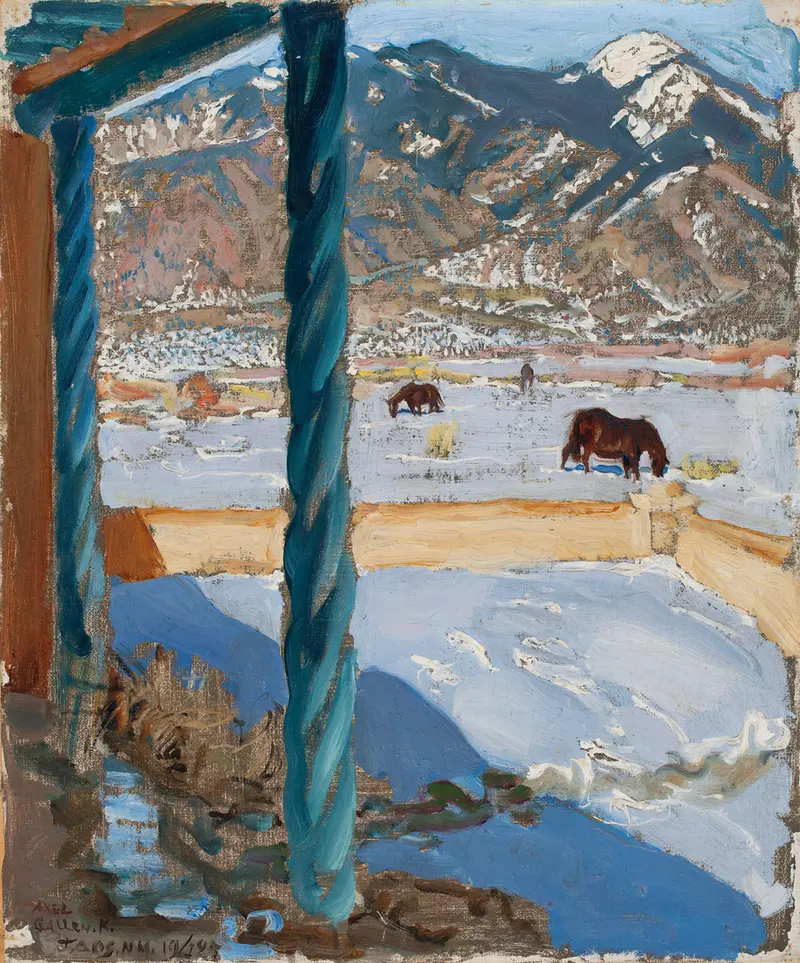
Taos Home in Sunlight
Axeli Gallen-Kallela
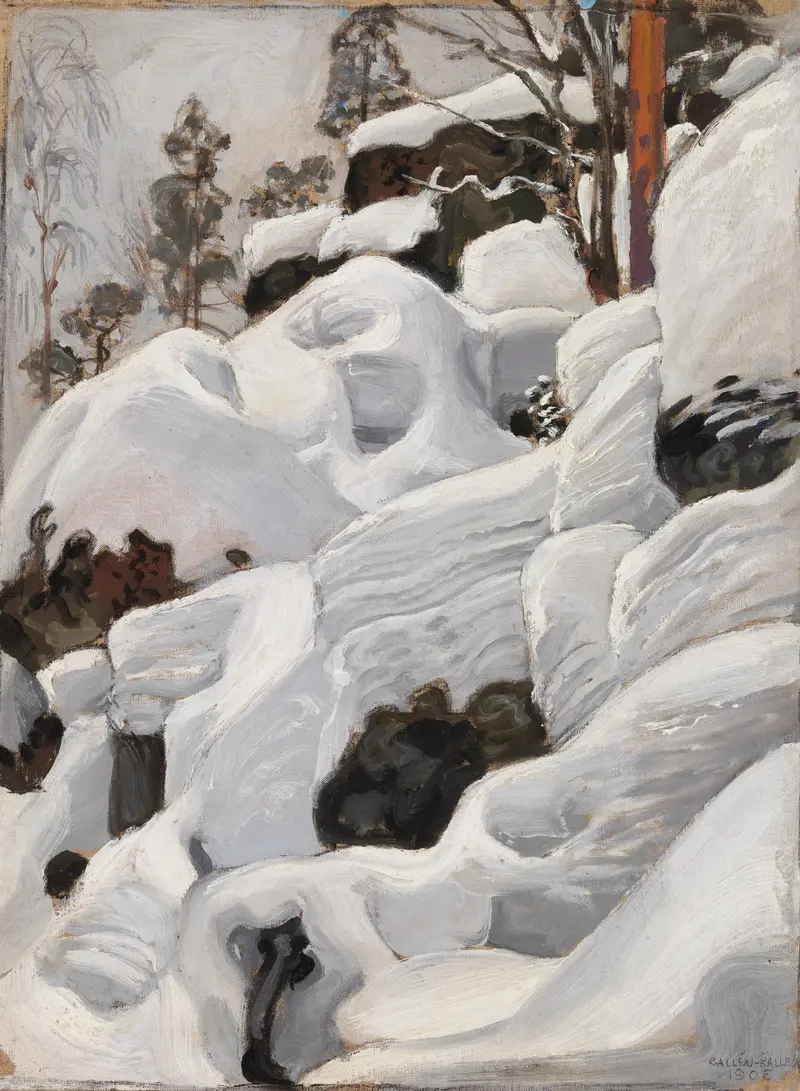
Lair of the Lynx
Axeli Gallen-Kallela
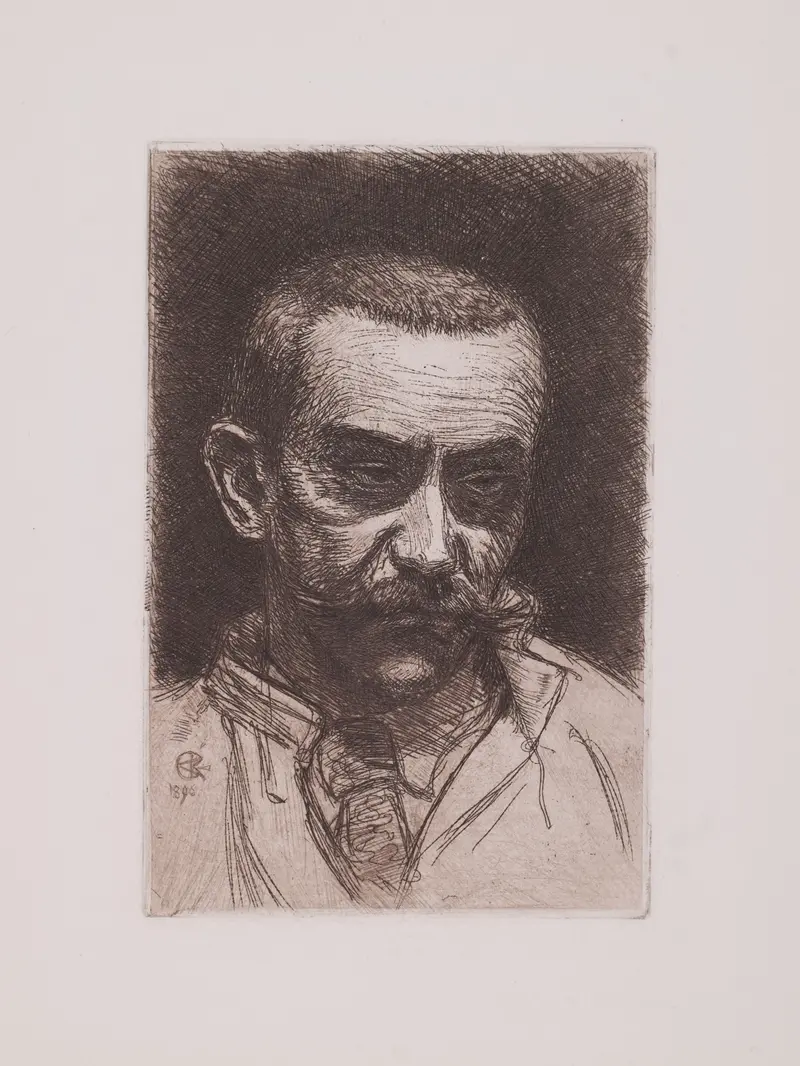
Louis Sparre
Axeli Gallen-Kallela
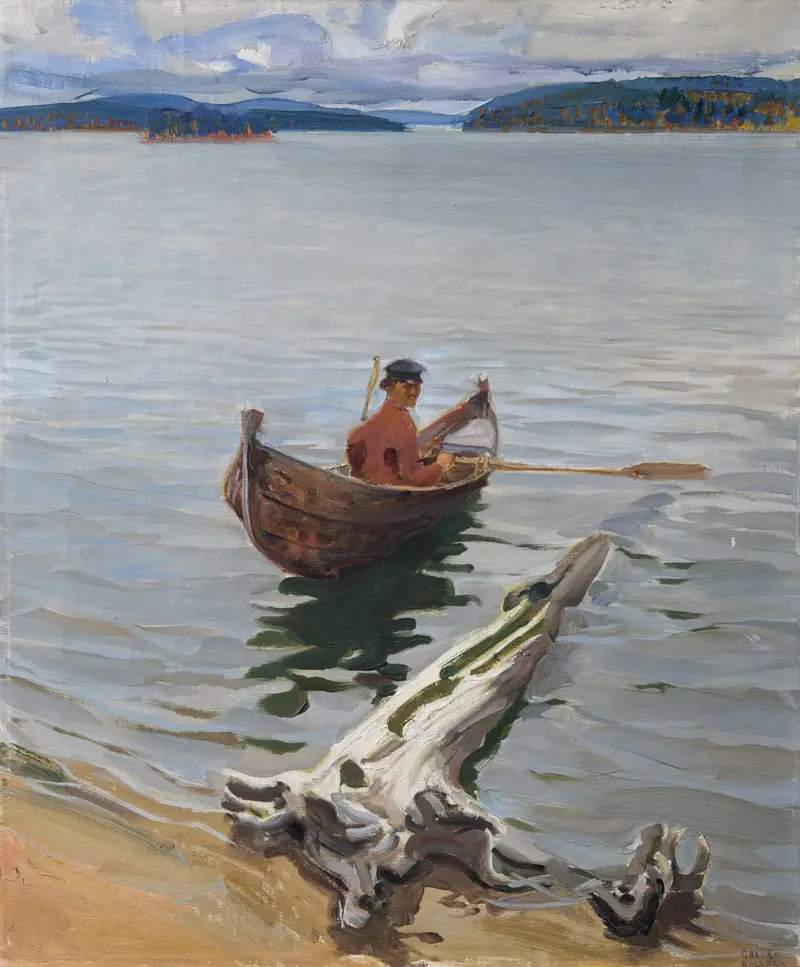
Rower on the Lake
Axeli Gallen-Kallela
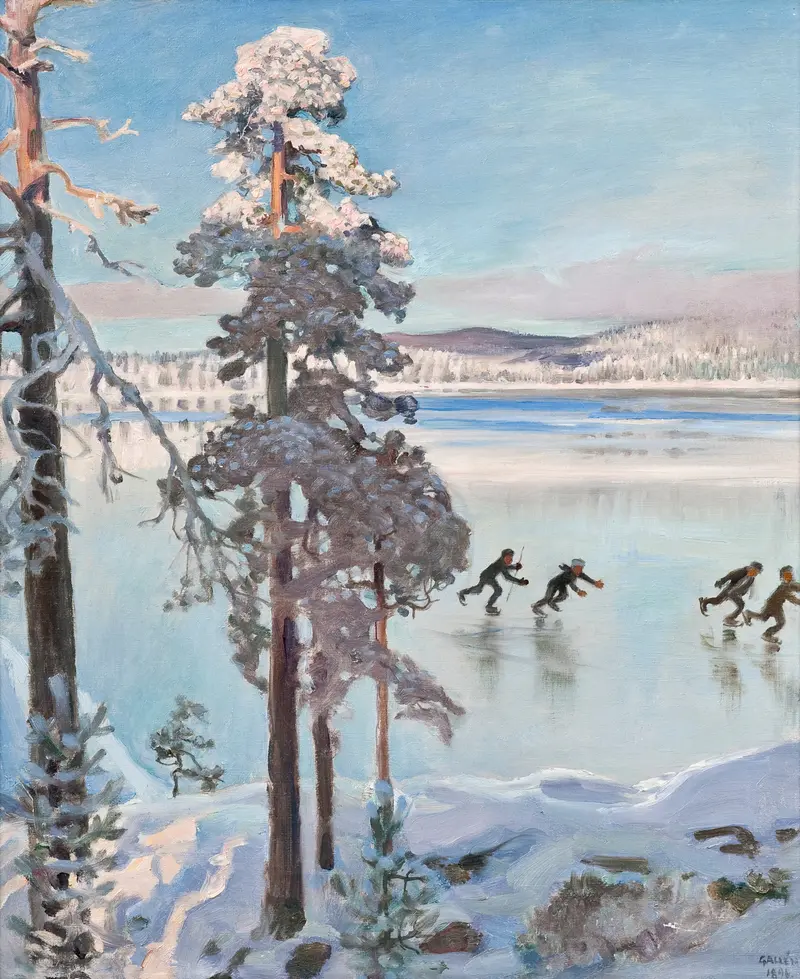
Skaters near the Shore of Kalela
Axeli Gallen-Kallela
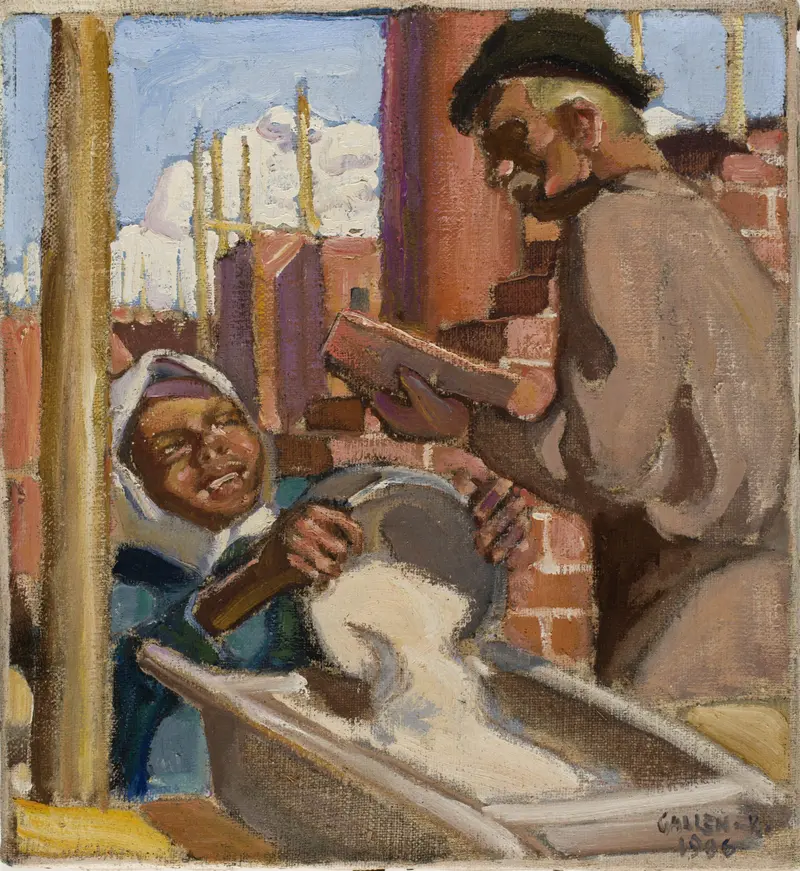
The Building
Axeli Gallen-Kallela
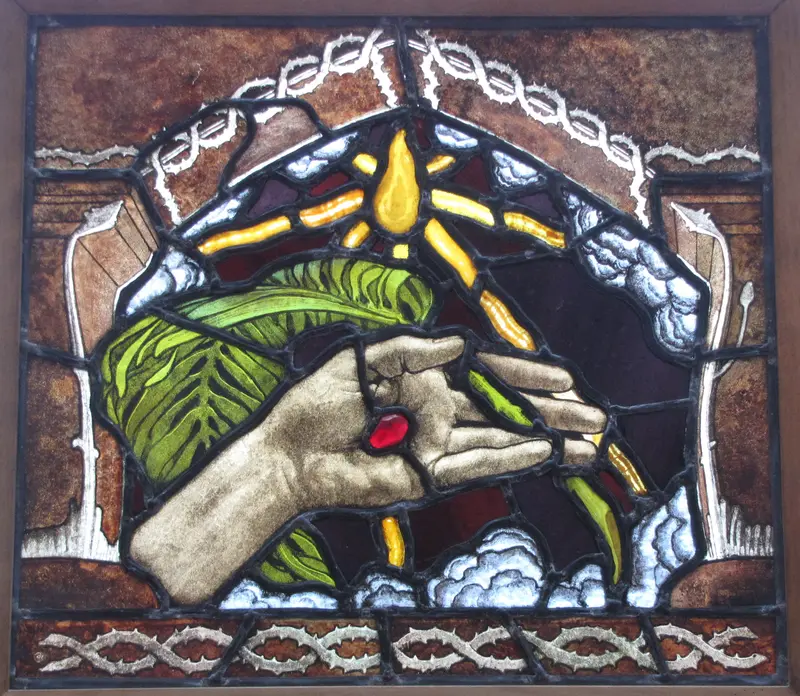
The Hand of Christ
Axeli Gallen-Kallela





