
Les Asiles de nuit L’asile du quai de Valmy, n°107 — History & Facts
Where does light end, and longing begin? This question resonates deeply within the intricate layers of Les Asiles de nuit L’asile du quai de Valmy, n°107, inviting the viewer into a world tinged with both despair and hope. Look to the left at the soft, muted glow of the streetlamp that casts a golden hue over the cobblestones, illuminating the solitary figures who traverse the night. Notice how the elongated shadows stretch out behind them, suggesting a sense of urgency or perhaps a fleeting escape. The brushwork is fluid yet precise, creating an ethereal quality that blurs the lines between reality and dream, while the cool blues and warm yellows evoke a poignant tension between solitude and connection. As you delve deeper, the subtle details emerge—a face turned away, the slight hunch of shoulders, and the restless gestures of hands.
Each element speaks to unfulfilled desires and the quiet desperation of urban life, where the movement of bodies contrasts sharply with the stillness of the night. The juxtaposition of light and shadow not only heightens the emotional stakes but also mirrors the internal struggles faced by those seeking solace in a world that often feels indifferent. F. Séguin painted this evocative scene in 1895, a time when Paris was grappling with rapid industrialization and social change.
The artist, influenced by the Impressionist movement, sought to capture the transient moments of human experience, reflecting both the vibrancy and isolation of city life. Amidst a backdrop of artistic experimentation, Séguin's work stands as a poignant exploration of the human condition.
More Artworks by F. Séguin
Browse all →
Rue Brantôme. (anciennement rue des Petits Champs donnant rue Saint Martin et rue Beaubourg)
F. Séguin
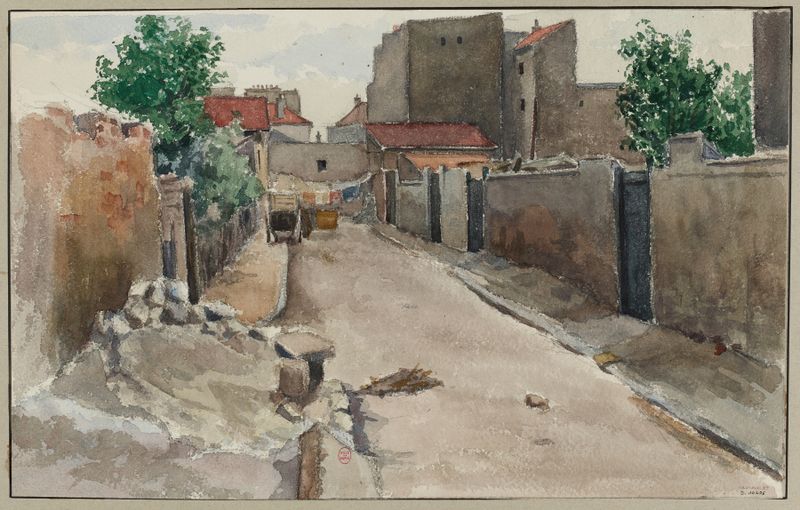
La rue de Chambéry, prise de la rue de Nice la Frontière
F. Séguin
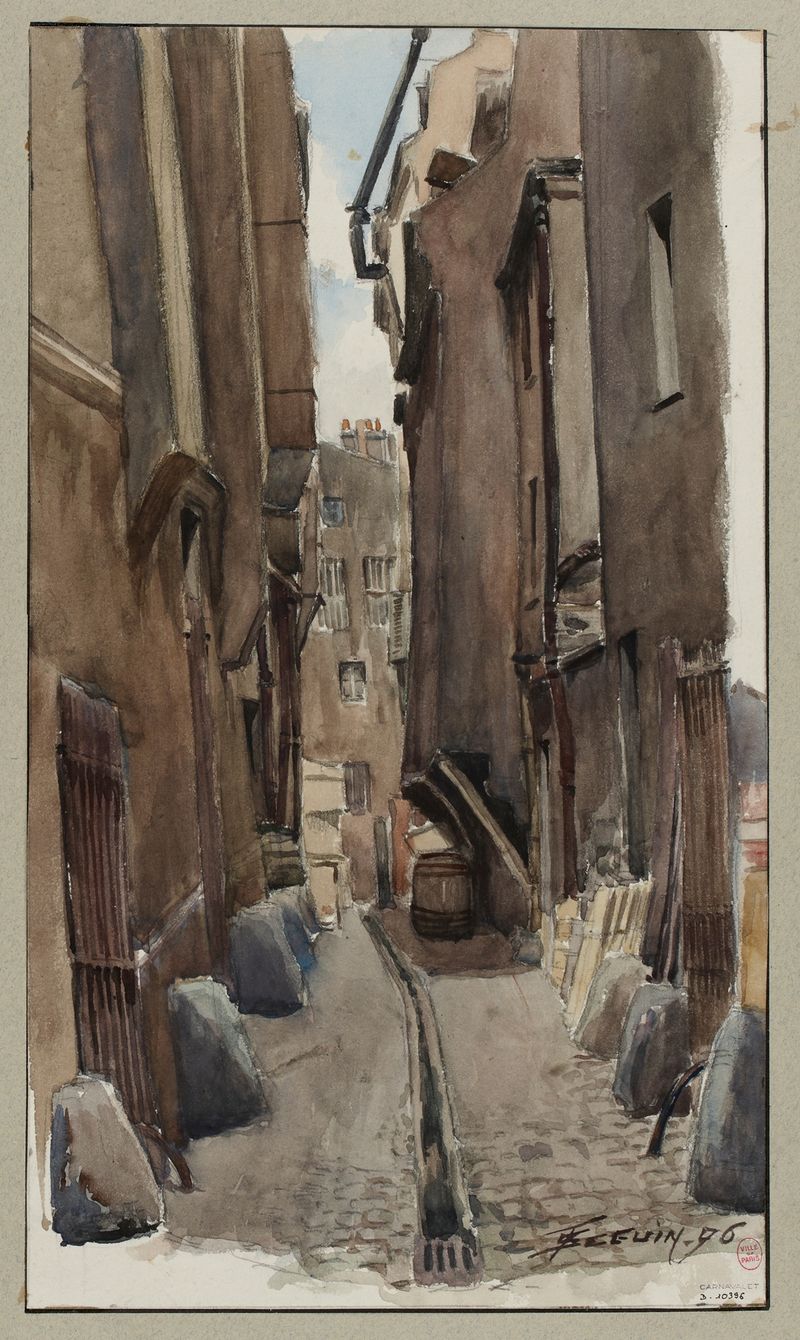
Le Cul de sac du Bœuf, (rue Saint Merri)
F. Séguin

Rue Descartes
F. Séguin
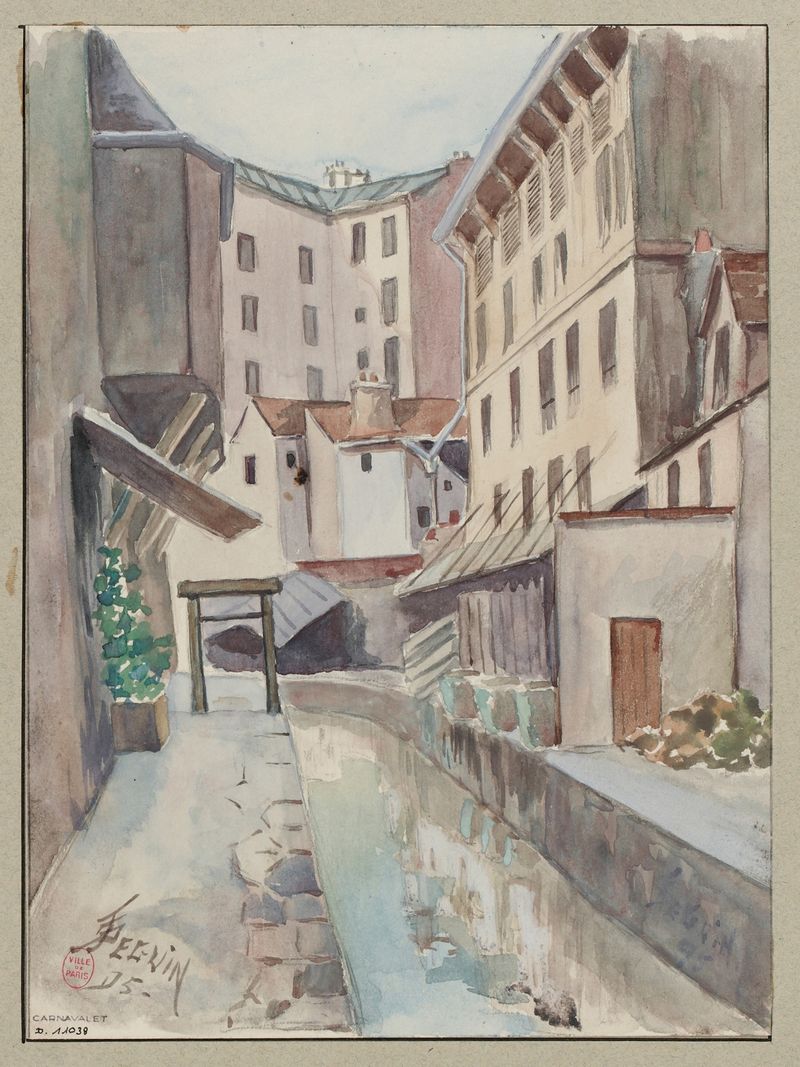
Le bord de la Bièvre à l’avenue des Gobelins
F. Séguin

Villa des Otages mur où furent fusillés les 52 derniers otages de la Commune, rue Haxo
F. Séguin
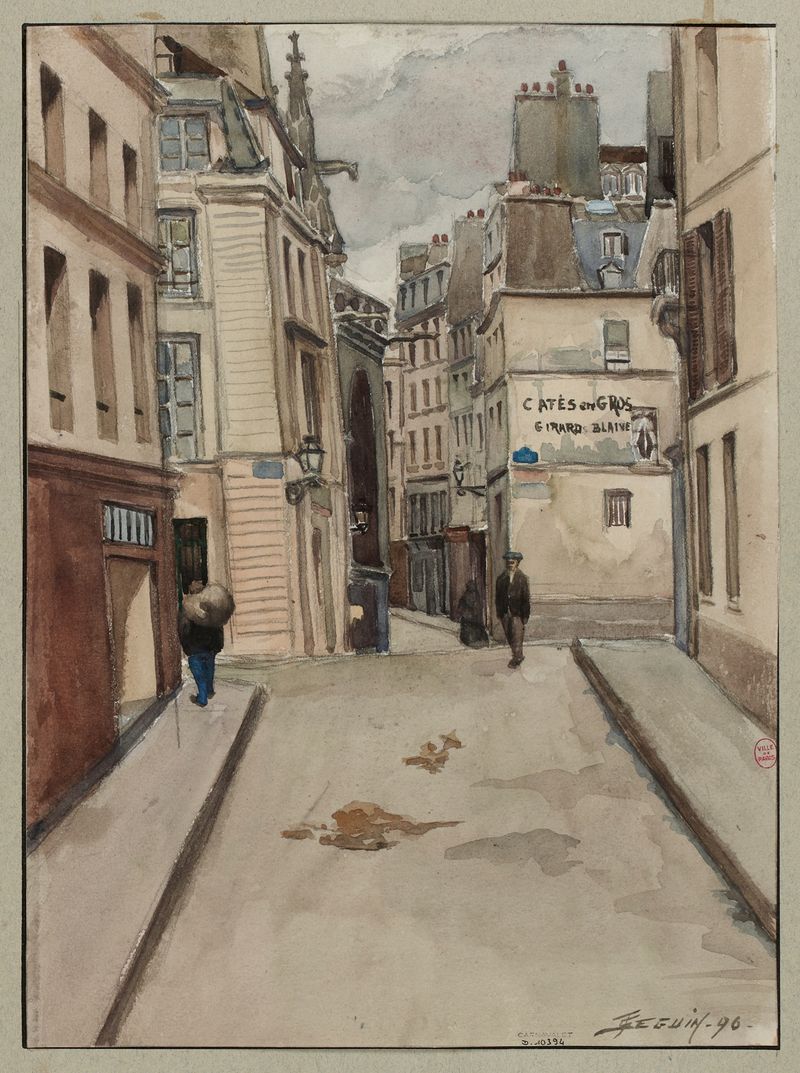
Rue du Cloître Saint Mérry, de la rue du Renard à la rue Saint Martin
F. Séguin
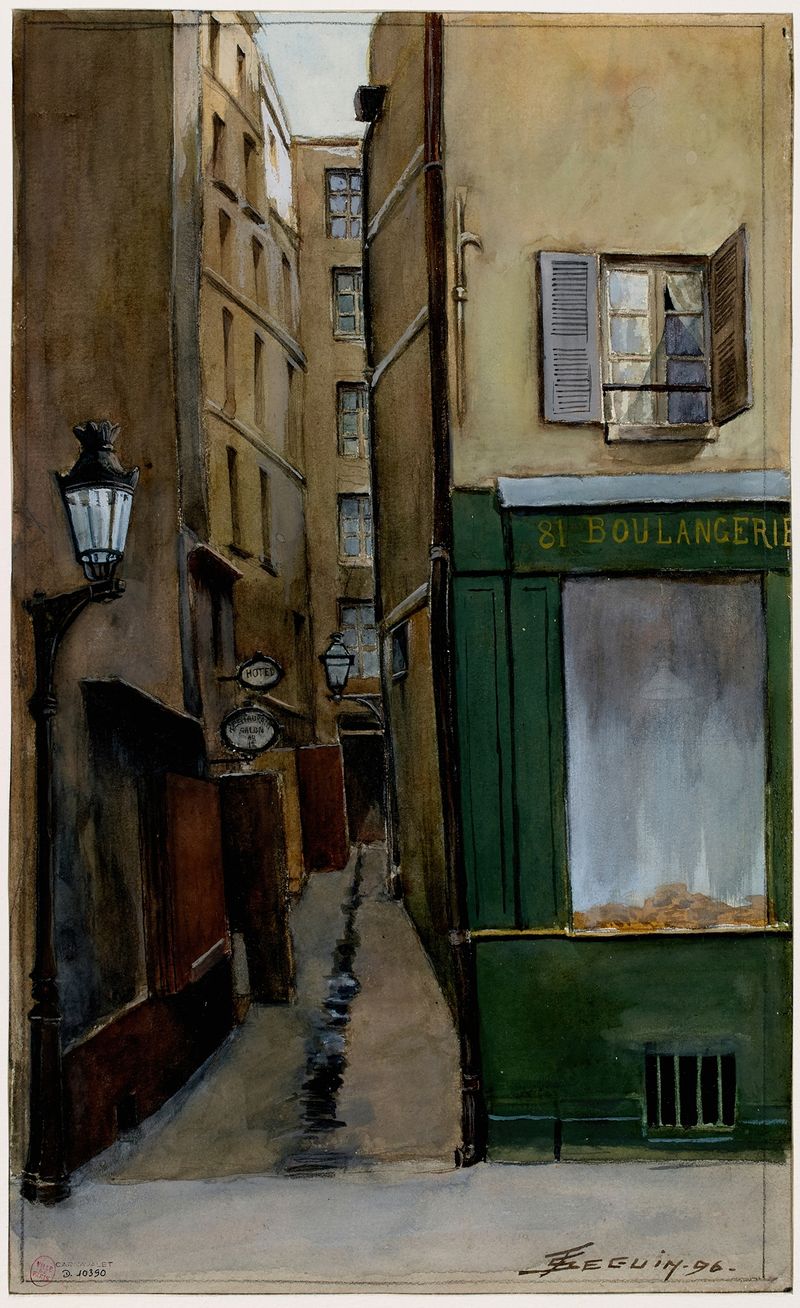
Cul de sac du Fiacre, 81 rue Saint Martin
F. Séguin
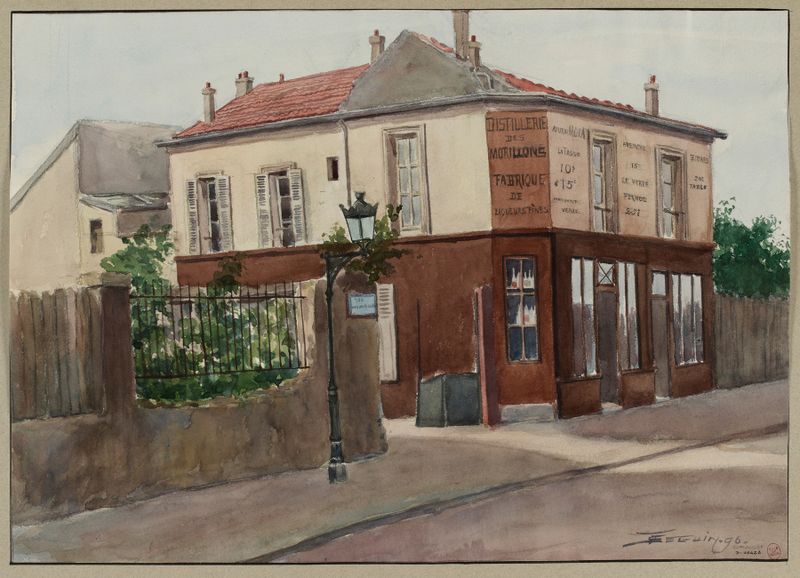
Angle de l’impasse Carlier et au 24 rue des Morillons, Vaugirard
F. Séguin
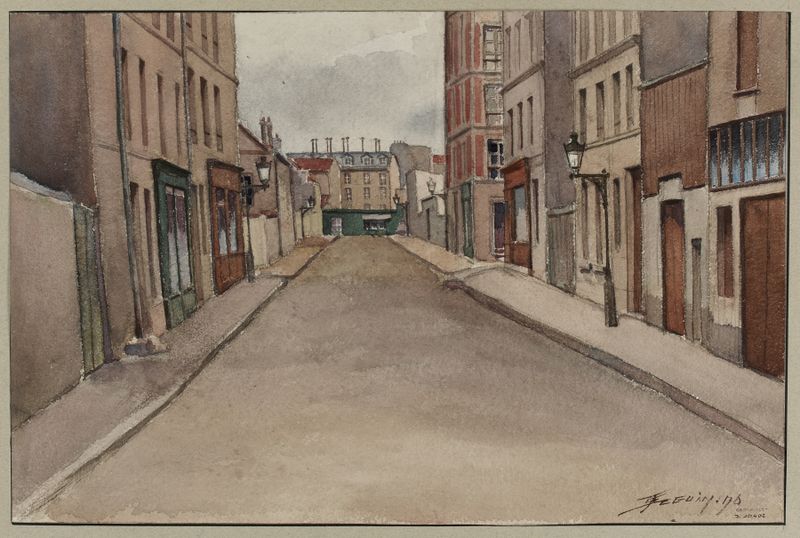
Rue Franquet
F. Séguin





