
Les Moulins — History & Facts
In the quiet expanse of a pastoral landscape, the reverberation of solitude hangs thick in the air, a melody both haunting and serene. Look to the center of the canvas where the windmills stand sentry against the vast sky. Their sails, caught in a gentle breeze, are rendered with such meticulous detail that you can almost hear them creak and sigh. Surrounding them, the lush, rolling fields are painted in verdant greens and muted browns, the interplay of light and shadow lending a sense of depth.
Notice how the light falls upon the water, reflecting the sky’s indigo hues, creating a shimmering path that draws the eye beyond the horizon, inviting viewers to ponder what lies just out of reach. Yet, amidst this bucolic beauty, a feeling of isolation permeates the scene. The solitary figures in the distance appear dwarfed by the enormity of their surroundings, emphasizing their disconnection from the world around them. Each element—the windmills, the trees, the still water—whispers a story of solitude, as if they are remnants of a forgotten time, standing watch over an empty landscape.
This duality of beauty and loneliness creates an emotional tension that lingers long after the viewer has stepped away. Meindert Hobbema painted this work between 1664 and 1668, during a period marked by the Dutch Golden Age's flourishing of landscape art. Residing in Amsterdam, Hobbema was influenced by his contemporaries, including Jacob van Ruisdael, and sought to capture the essence of nature while reflecting the human experience within it. At this time, the Netherlands was basking in economic prosperity, yet the artists of the era often grappled with themes of solitude—an exploration of inner life amid the splendor of the natural world.
More Artworks by Meindert Hobbema
Browse all →
The Water Mill (The Trevor Landscape)
Meindert Hobbema

Bewaldete Flusslandschaft mit Figuren auf einem Weg
Meindert Hobbema
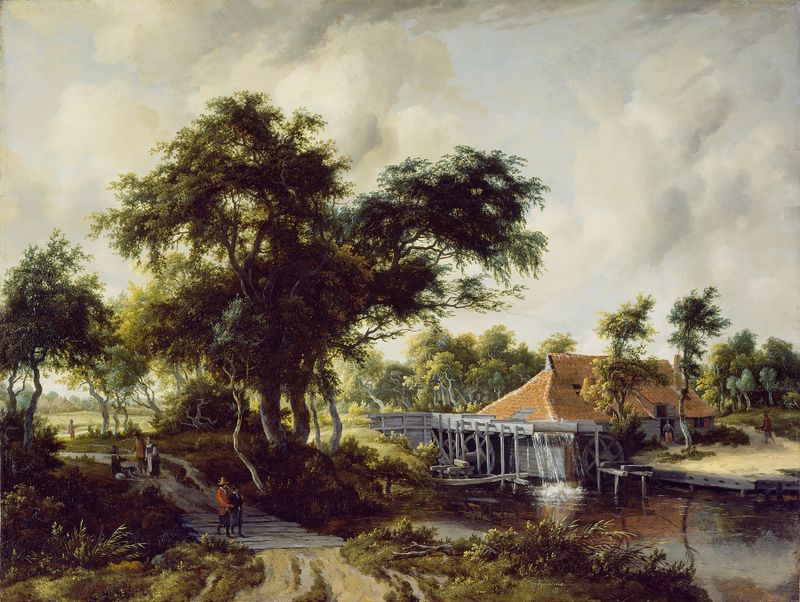
A Watermill
Meindert Hobbema
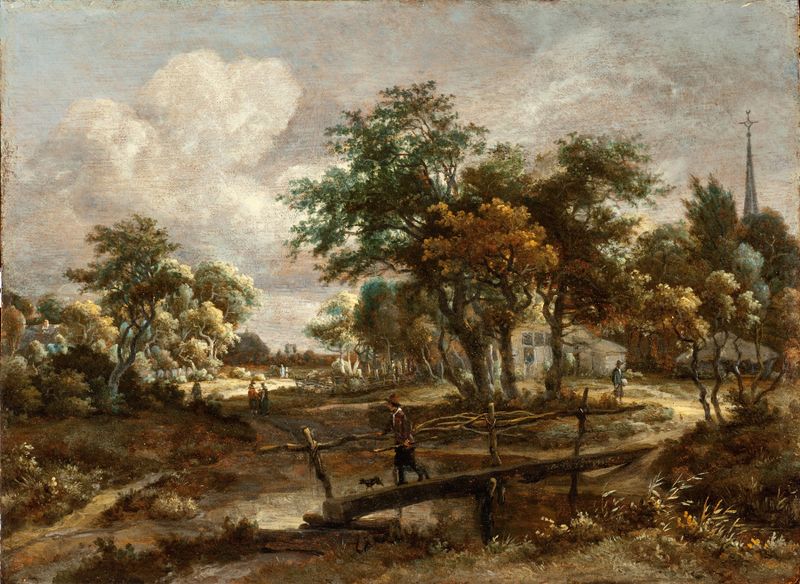
Landscape with a Footbridge
Meindert Hobbema

A Watermill
Meindert Hobbema
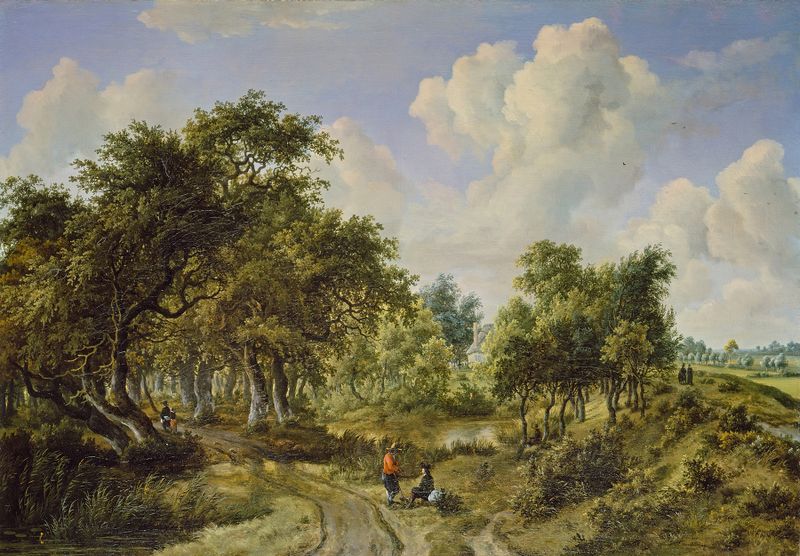
A Wooded Landscape
Meindert Hobbema

A Wooded Landscape
Meindert Hobbema
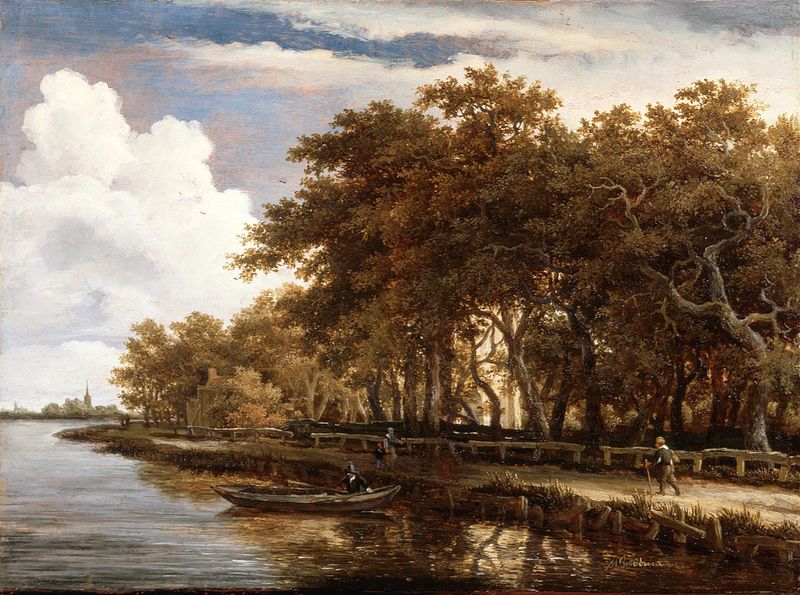
View Along the Amstel
Meindert Hobbema

The Watermill with the Great Red Roof
Meindert Hobbema

Water Mill
Meindert Hobbema





