
L’église à Essoyes — History & Facts
In the glow of light, Renoir invites us to capture fleeting moments, where the essence of a scene transcends permanence. Look closely at the soft interplay of sunlight and shadow in L’église à Essoyes. The church rises majestically in the background, its façade bathed in warm hues that shimmer with warmth, while the surrounding greenery dances in gentle strokes of vibrant greens and golds. Focus on how the light spills across the canvas, illuminating the textures of the stone while casting a serene atmosphere that envelops the figures and landscape alike. Beneath the surface, this painting reflects a deeper emotional narrative: the juxtaposition of man-made structures against the natural world.
The church, a symbol of faith and community, stands steadfast amid the ephemeral nature of life. The dappled sunlight evokes a sense of tranquility, yet hints at the passage of time, reminding viewers of their own mortality and the cherished memories tied to places of worship and gathering. In 1900, Renoir was immersed in the vibrant art scene of Paris, yet sought solace in the rural beauty of Essoyes, where he found inspiration amid the picturesque landscapes. As the Impressionist movement flourished, he continued to explore light and color, capturing both the ephemeral and the everlasting.
This period marked a transition in his work, as he delved into new techniques and themes, enriching his artistic legacy.
More Artworks by Pierre-Auguste Renoir
Browse all →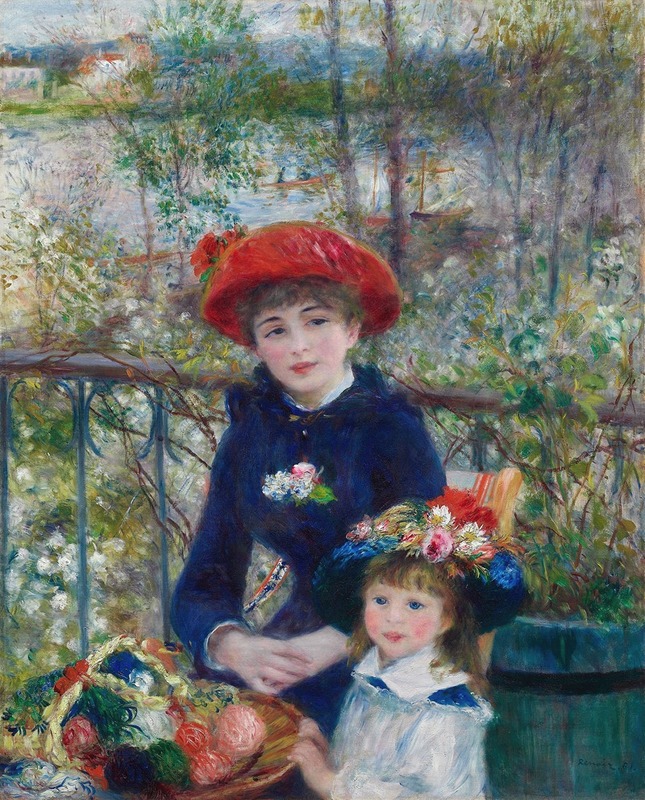
Two Sisters (On the Terrace)
Pierre-Auguste Renoir
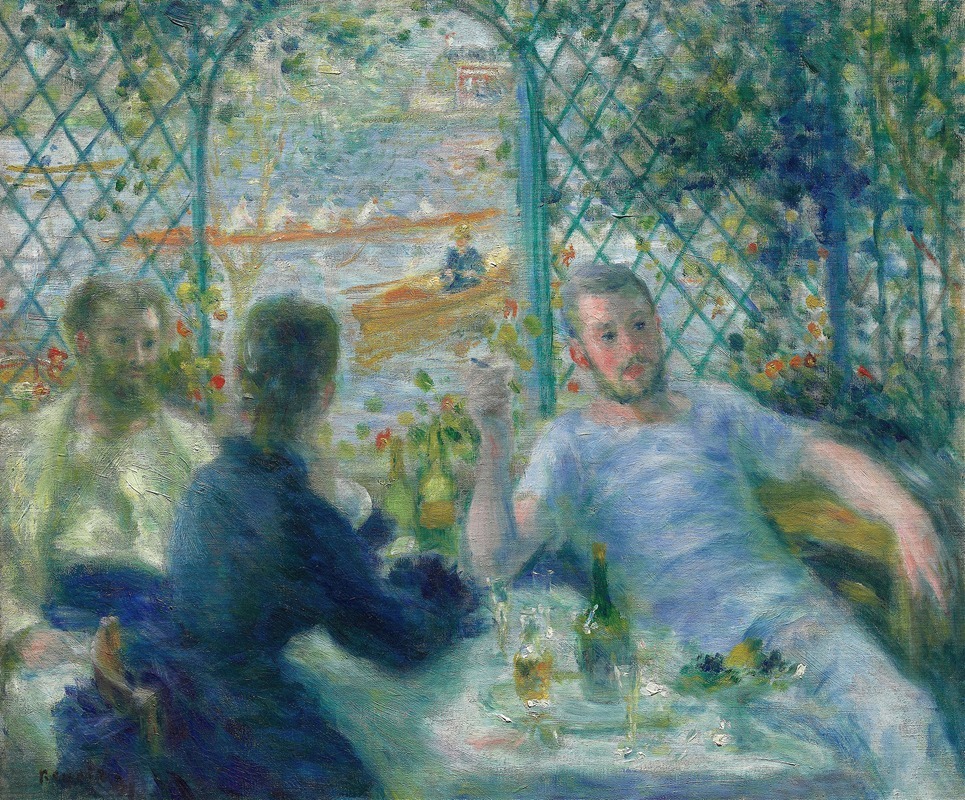
Lunch at the Restaurant Fournaise (The Rowers' Lunch)
Pierre-Auguste Renoir
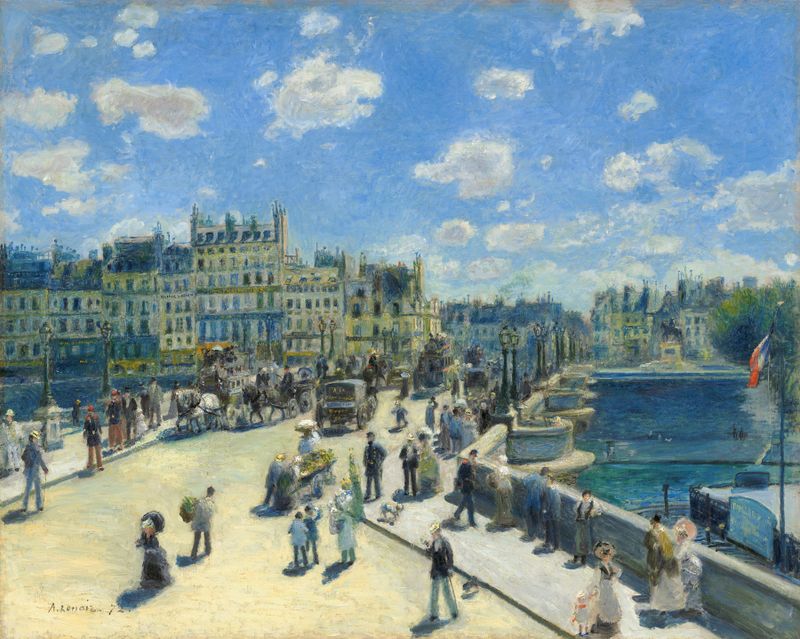
Pont Neuf, Paris
Pierre-Auguste Renoir
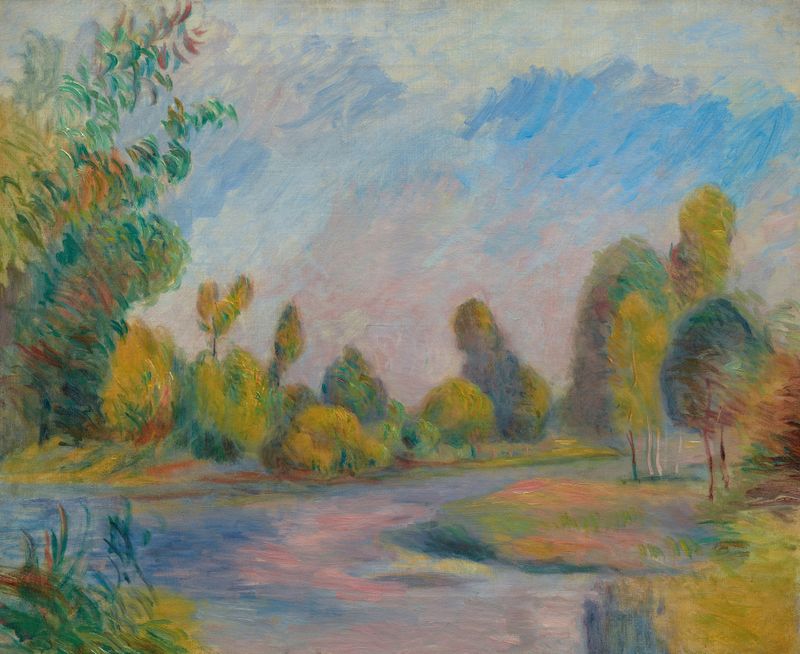
Au bord de la rivière
Pierre-Auguste Renoir

Near the Lake
Pierre-Auguste Renoir
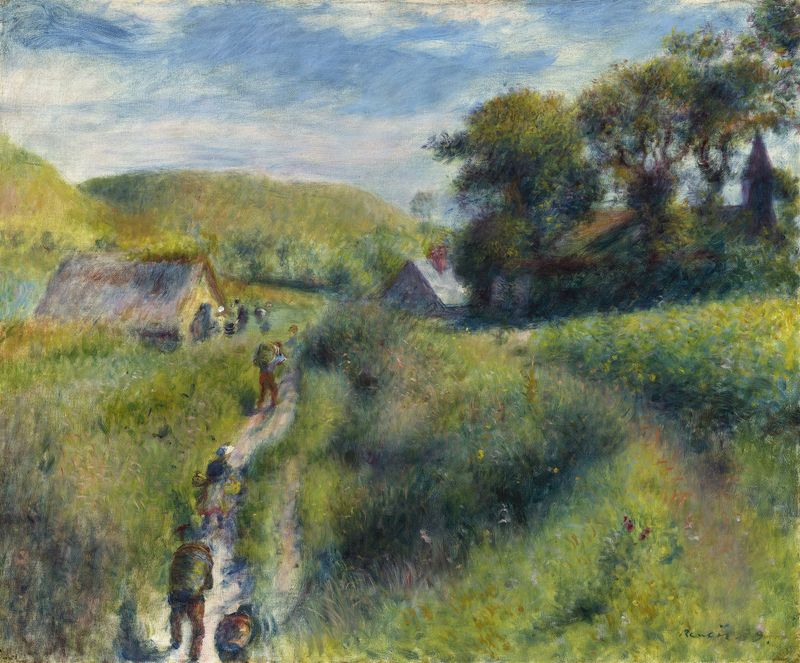
The Mussel Harvest
Pierre-Auguste Renoir

The Seine at Chatou
Pierre-Auguste Renoir
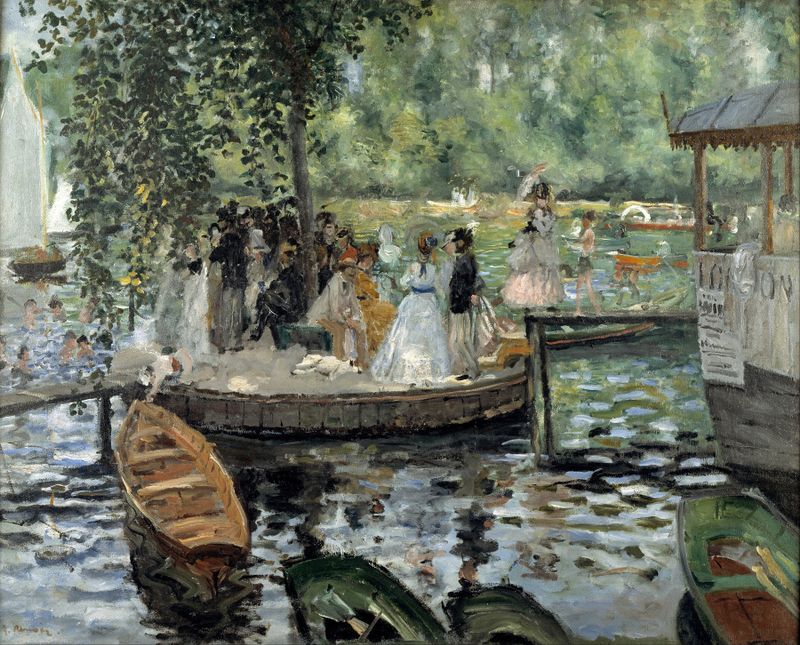
La Grenouillère
Pierre-Auguste Renoir
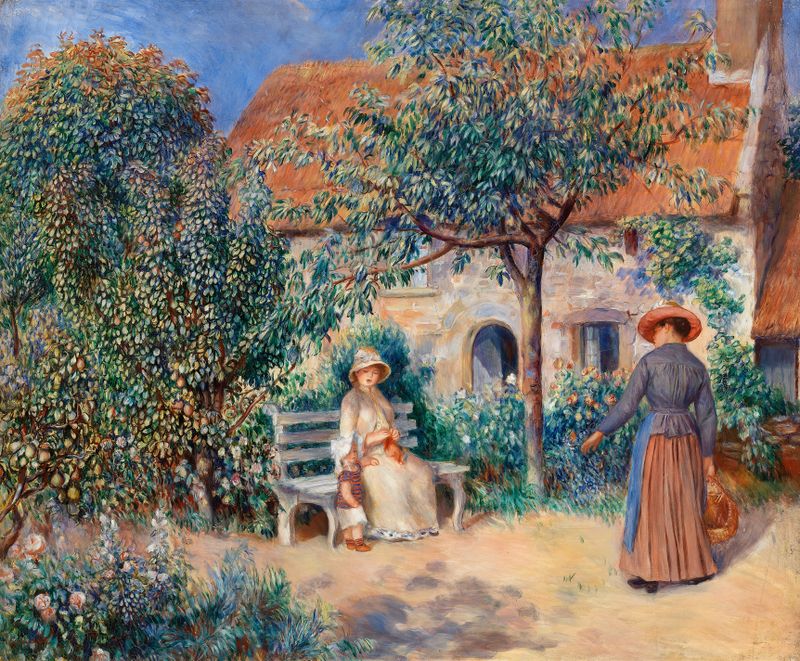
In Brittany (En Bretagne)
Pierre-Auguste Renoir
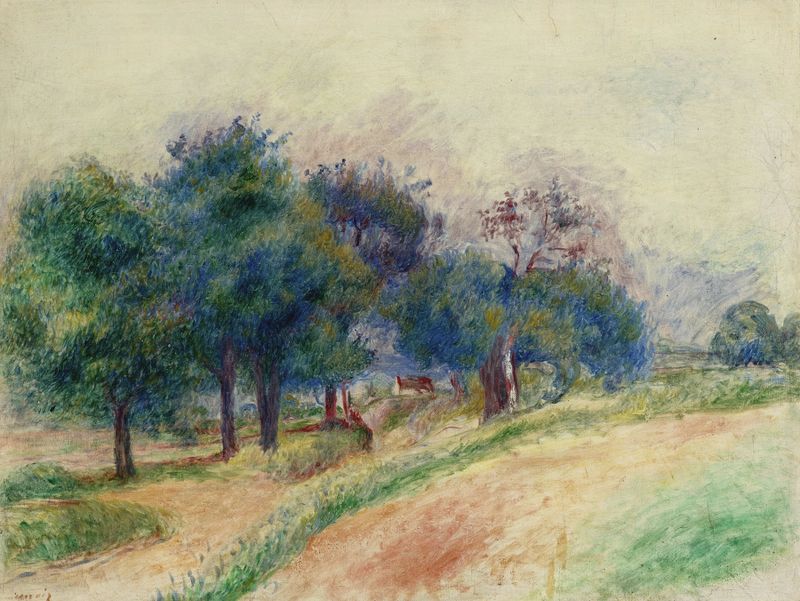
Paysage d’Essoyes
Pierre-Auguste Renoir





