
Lille Pdba lebourg notre dame — History & Facts
The first thing that seizes the eye in Lille Pdba lebourg notre dame is the way Albert Charles Lebourg lets the famous silhouette of Notre-Dame de Paris dissolve into the winter air. The cathedral’s towers and spire loom in a haze, their outlines softened by a palette of frosty blues and mauves, as if the city itself is holding its breath. In the foreground, a row of snow-dusted barrels anchors the composition, their rough, rounded forms pulling the viewer’s gaze across the canvas.
The brushwork is brisk and tactile, suggesting not just the cold, but the restless movement of life continuing beneath the monumental calm of the cathedral. Light here is not a spotlight but a veil, filtering every surface with a chilly glow. Painted in 1891, this work belongs to a moment when French artists were obsessed with atmosphere and fleeting effects, capturing the city as it changed with the weather and the hour. Lebourg was known for his landscapes and urban scenes, often painted en plein air, and here he brings that immediacy to one of Paris’s most iconic monuments.
The painting’s loose, almost abstract handling of form recalls the Impressionists, yet the mood is quieter, more contemplative—closer to the introspective cityscapes of Camille Pissarro than the bustling boulevards of Monet. Little is recorded about the journey of this particular canvas, now housed at the Palais des beaux-arts de Lille, but its wintry hush invites viewers to linger, searching for warmth and life in the thick impasto and the distant, familiar towers.
More Artworks by Albert Charles Lebourg

Le Jardin du Docteur Viau
Albert Charles Lebourg
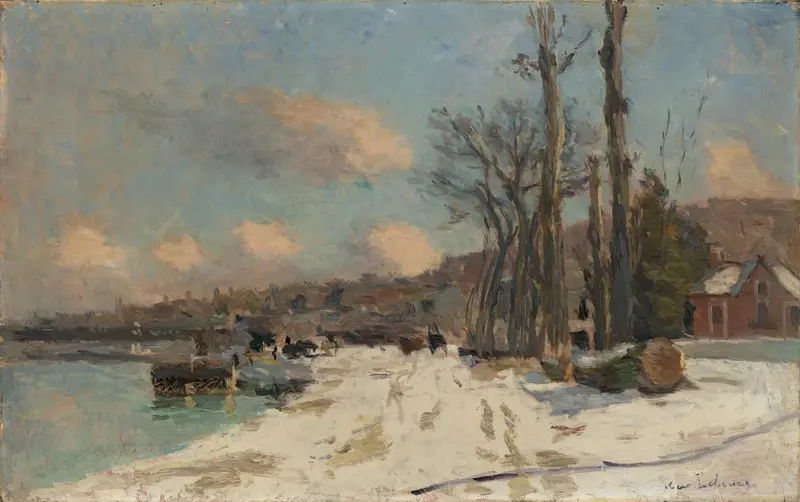
Snow Scene at Bougival
Albert Charles Lebourg
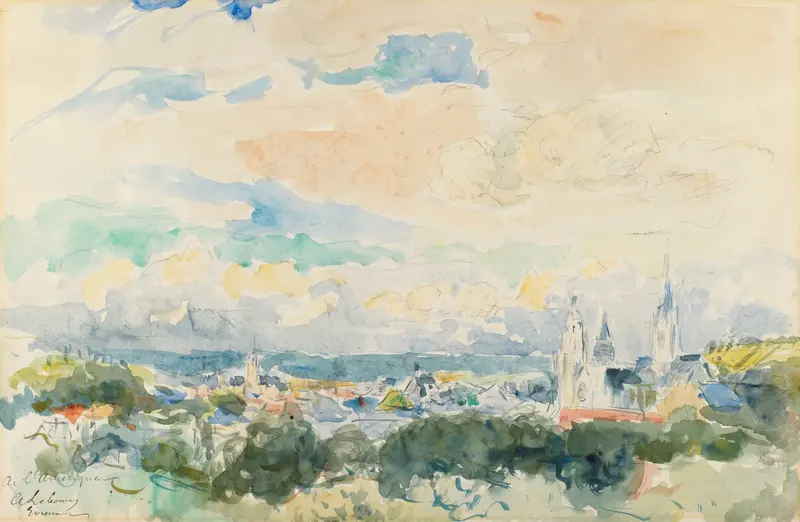
Sketch of a Village
Albert Charles Lebourg
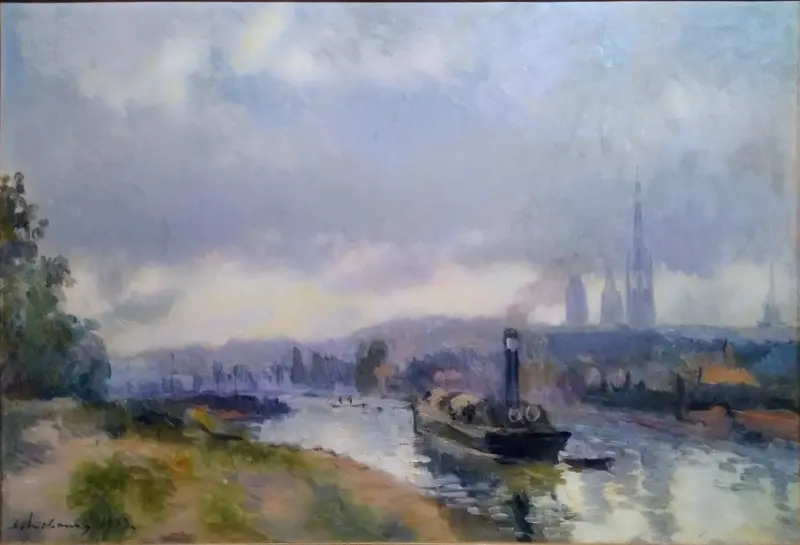
Remorqueurs à Rouen
Albert Charles Lebourg
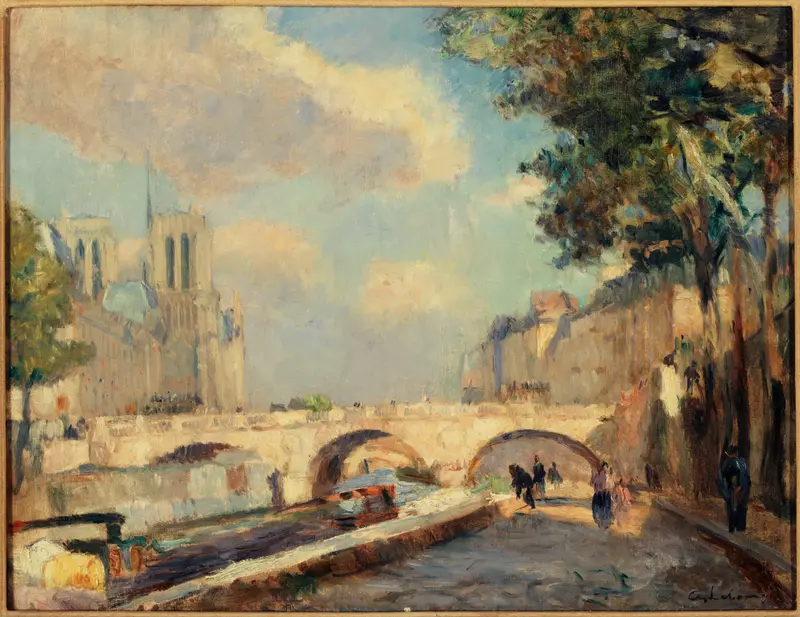
Le pont Saint Michel et Notre Dame, vus du quai des Grands Augustins P459 Musée Carnavalet
Albert Charles Lebourg
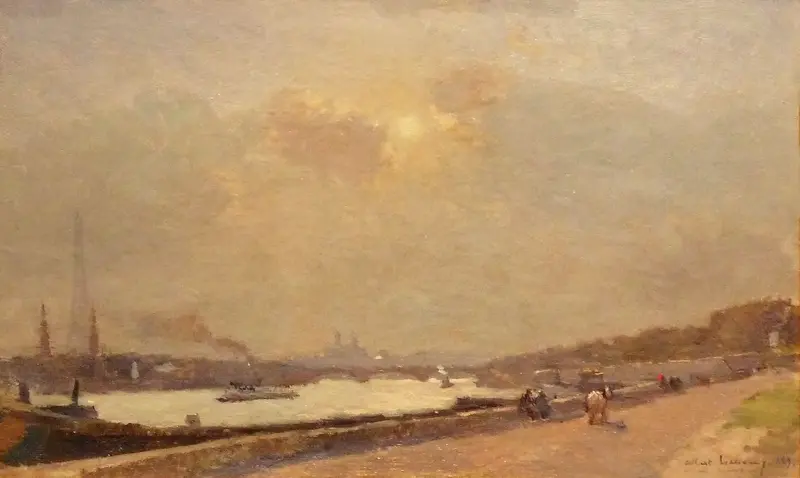
Banks of the Seine, Cours La Reine
Albert Charles Lebourg
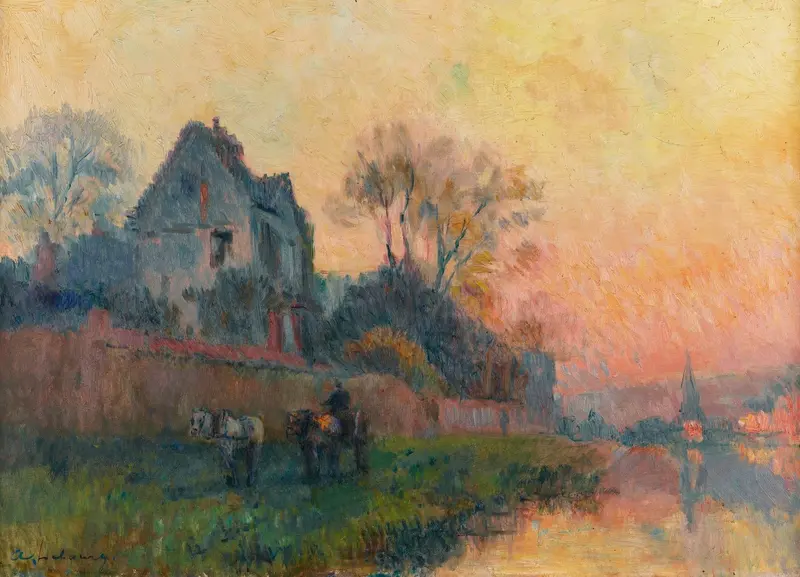
Bords de Seine à Chatou, oil on canvas, 46.4 by 65.1cm, 18.25 by 25.6 in
Albert Charles Lebourg
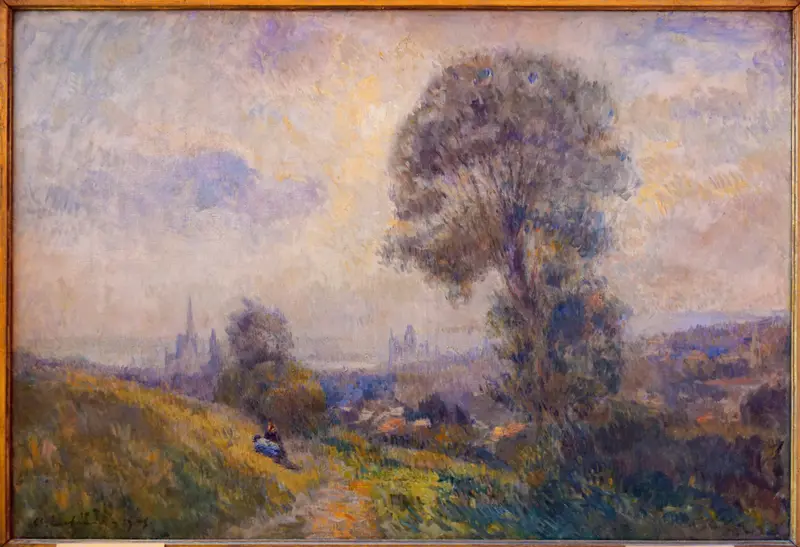
Camaret. The Harbor During a Thunderstorm
Albert Charles Lebourg
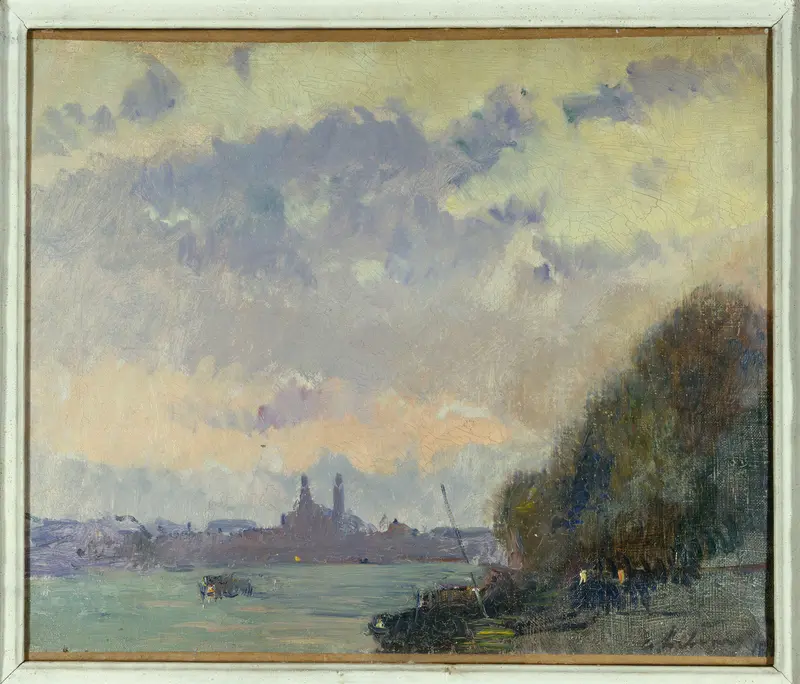
La Seine et l'ancien Trocadéro P2269 Musée Carnavalet
Albert Charles Lebourg
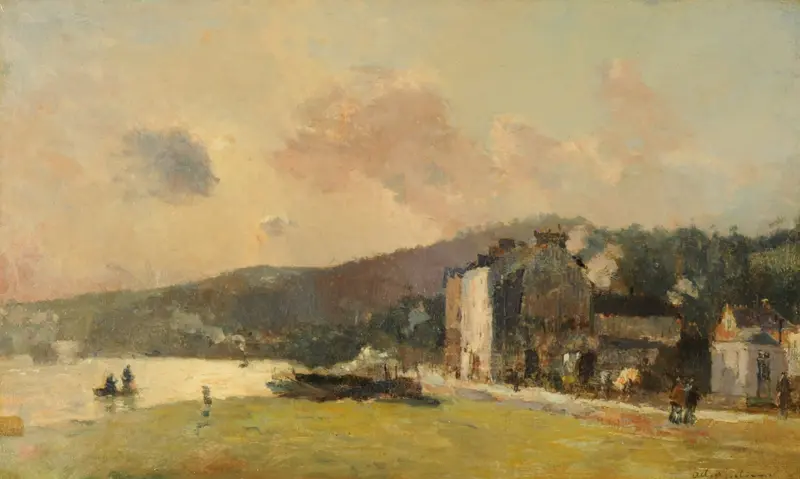
La Seine à Croisset, près de Rouen
Albert Charles Lebourg
More Landscape Art

The Starry Night
Vincent van Gogh

View of Delft
Johannes Vermeer

Water Lilies
Claude Monet

The Grand Canal, Venice, looking north-west from the Ca' Corner to the Ca' Contarini degli Scrigni, with the campanile of Santa Maria della Carità
Canaletto

Windsor Castle
Canaletto

The Grand Canal looking North-East from the Palazzo Dolfin-Manin to the Rialto Bridge
Canaletto