
Little Falls at Luzerne — History & Facts
In the stillness of Little Falls at Luzerne, a moment of decay becomes a powerful testament to nature's transience and resilience. The serene waters flow relentlessly, yet the surrounding foliage whispers secrets of time and change. Look to the left at the cascading waterfall, where the sunlight breaks through the trees, illuminating the vibrant greens and browns of the landscape. Notice how the brushwork captures the gentle movement of the water, contrasting with the rugged rocks below.
The artist's choice of darker hues toward the edges intensifies the focal point, drawing your gaze toward the heart of the scene, where nature’s beauty is momentarily fixed in time. Delve deeper into the contrasts presented: the vibrant life of the water against the crumbling rocks signifies a struggle between growth and decay. The soft reflections in the water beckon contemplation, suggesting tranquility juxtaposed with an underlying tension of what once thrived and now recedes. Each brushstroke encapsulates the passage of time, presenting a world that exists in perpetual flux. During 1821–1822, John Hill crafted this piece while residing in the burgeoning landscape of American Romanticism.
He was influenced by the Hudson River School and sought to depict the majesty and fragility of nature. This period was marked by a growing appreciation for America’s wilderness, as artists celebrated the sublime beauty found within its landscapes, reflecting both their own experiences and the broader cultural shifts of the time.
More Artworks by John Hill
Browse all →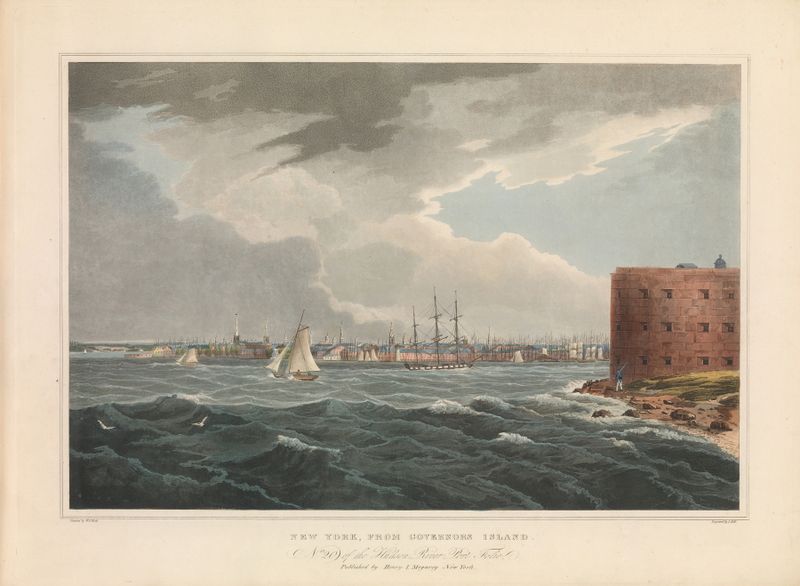
New York from Governor’s Island
John Hill

West Point
John Hill
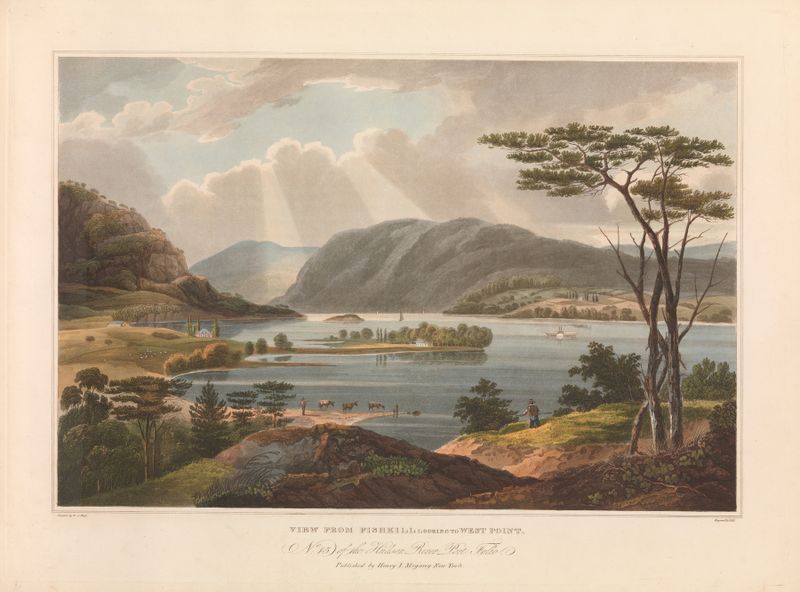
View from Fishkill Looking To West-Point
John Hill

View Near Hudson
John Hill
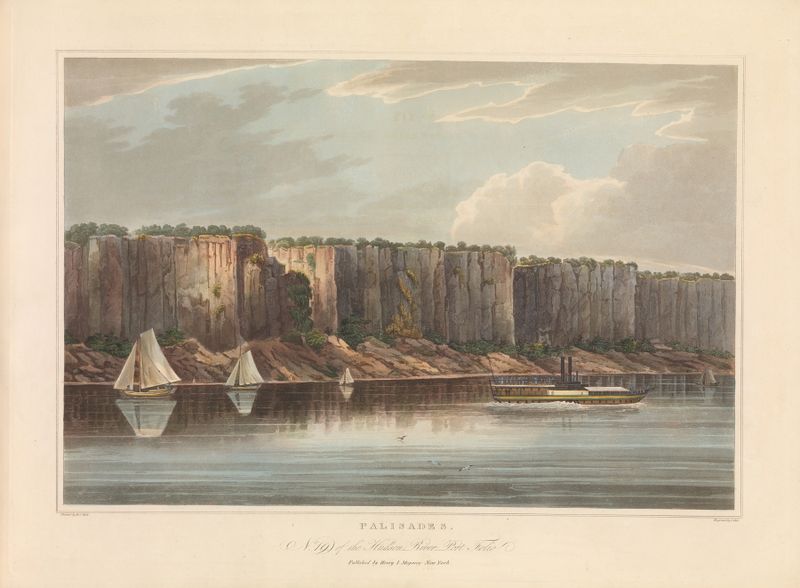
The Palisades
John Hill
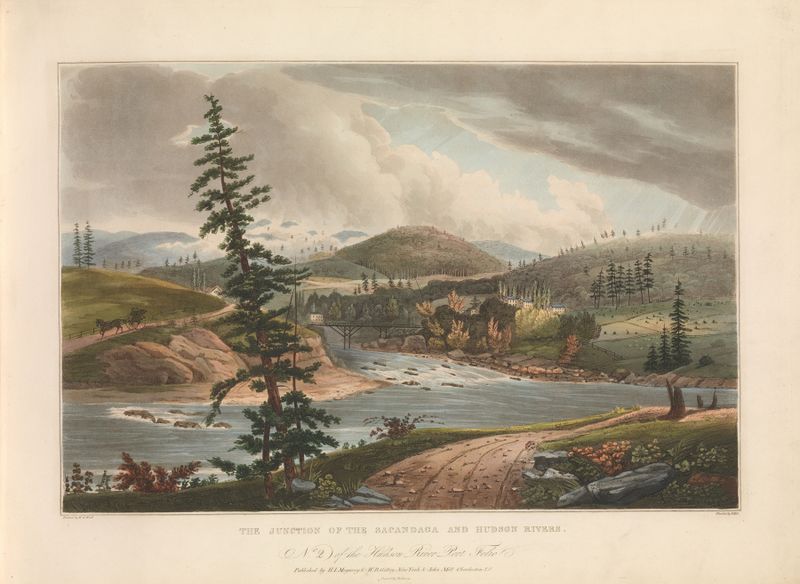
Junction of the Sacandaga and Hudson Rivers
John Hill
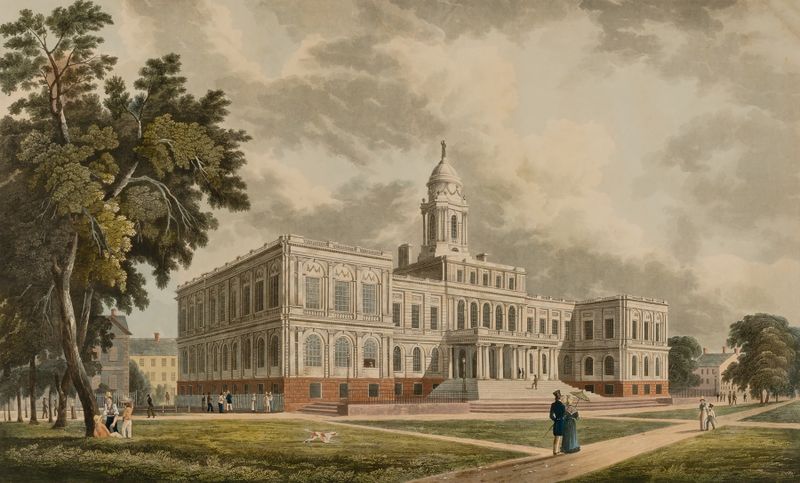
City Hall
John Hill

North-West Front, Cassiobury
John Hill

Glenns Falls
John Hill

His Majesty’s Frigate ‘Endymion’
John Hill





