
Looking up Yosemite Valley — History & Facts
What first seizes the eye in Looking up Yosemite Valley is the sheer scale of nature, rendered with such clarity that the valley seems to breathe. The painter has chosen a moment when the light pours through a break in the clouds, bathing the granite cliffs in a golden haze and drawing the viewer’s gaze deep into the heart of the scene. The drama of the cliffs—El Capitan rising on the left, a waterfall tumbling in the distance—frames a tranquil foreground where a small group of figures and horses pause by the water, dwarfed by the immensity around them.
The careful placement of these tiny travelers is no accident: they anchor the human experience in a world that is vast, ancient, and indifferent, inviting us to imagine ourselves as witnesses to this grandeur. Painted between 1865 and 1867, this work stands firmly within the tradition of American landscape painting at the close of the Civil War, when artists like Albert Bierstadt sought to capture the promise and mystery of the West. Such paintings were often commissioned or eagerly acquired by collectors who had never seen these places, their imaginations fired by tales of exploration and expansion. The Hudson River School and its followers, among them Bierstadt, became known for their panoramic views and luminous skies, using light as both a technical challenge and a symbol of hope.
While history has kept few traces of this particular canvas beyond its listing in PaintingDb (Object 10022), its vision endures: a silent invitation to step into the valley and look up, as if for the first time.
More Artworks by Albert Bierstadt

A Storm in the Rocky Mountains, Mt. Rosalie
Albert Bierstadt
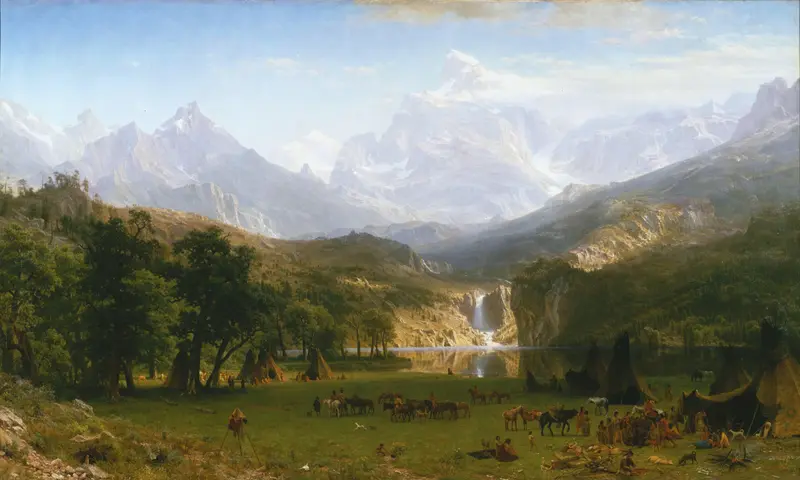
The Rocky Mountains, Lander's Peak
Albert Bierstadt
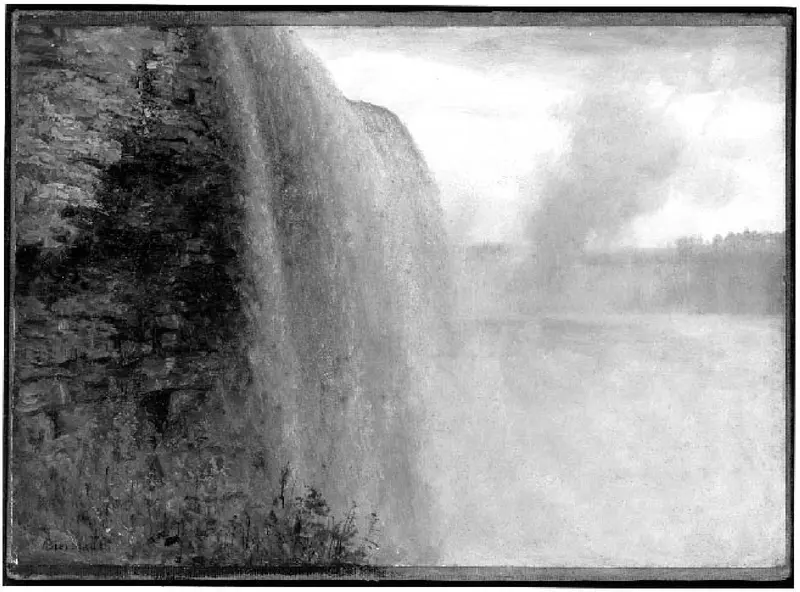
Niagara from the American Side
Albert Bierstadt
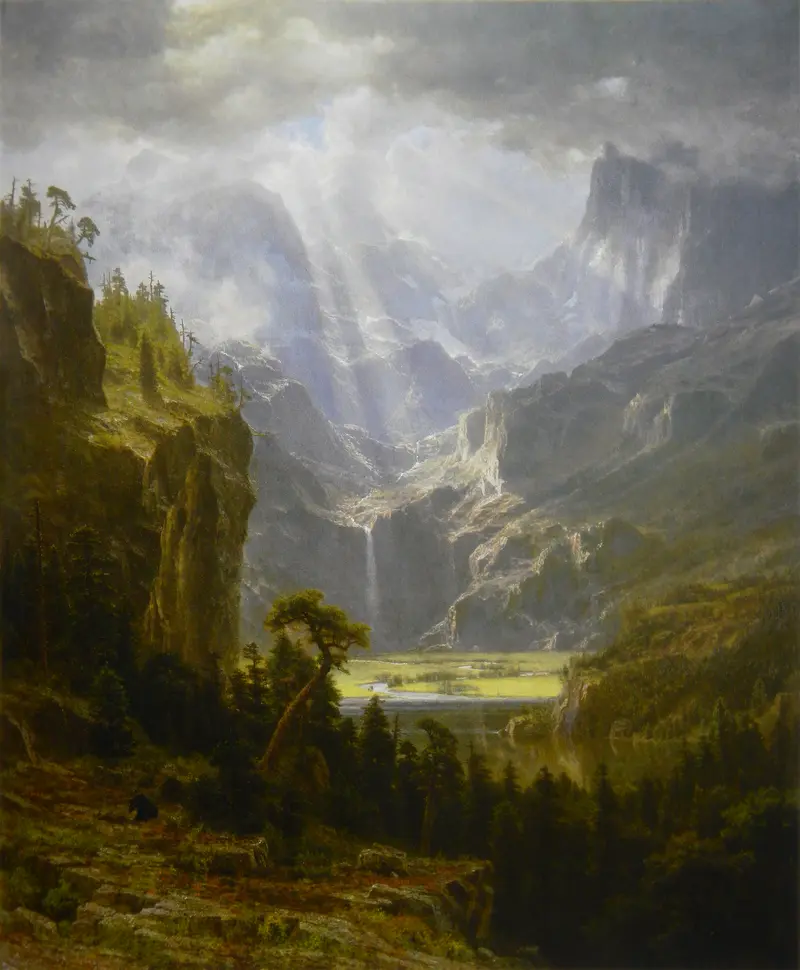
Rocky Mountains, Lander’s Peak
Albert Bierstadt

Valley of the Yosemite
Albert Bierstadt
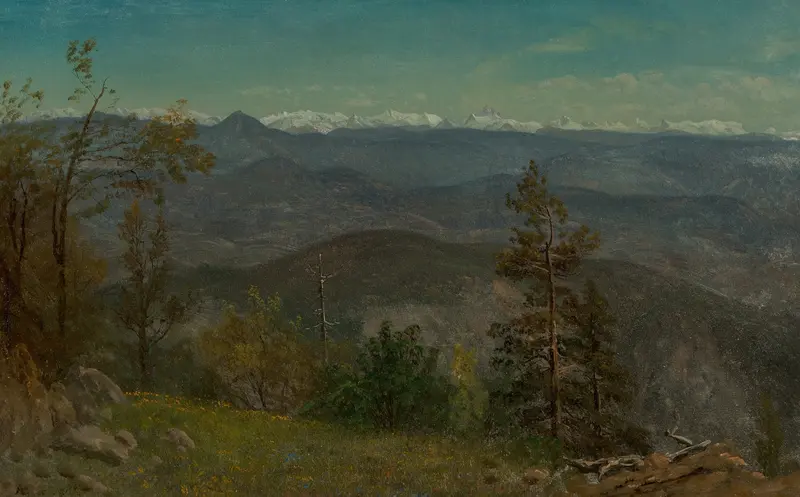
Yosemite Valley, California
Albert Bierstadt
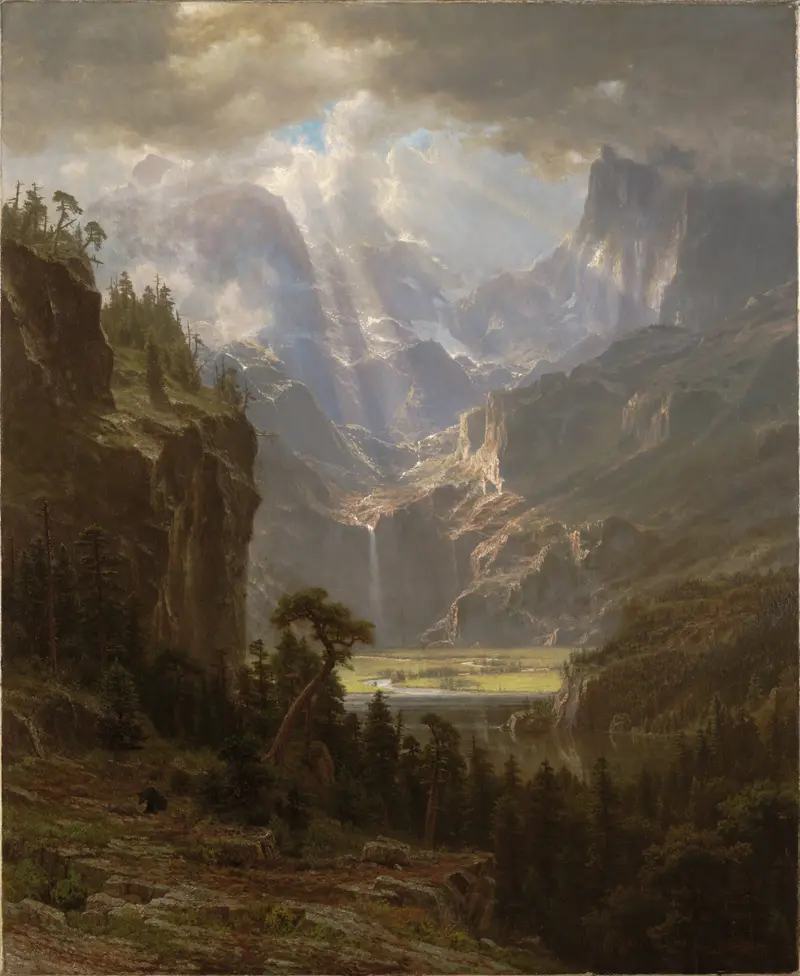
Rocky Mountains, "Lander's Peak"
Albert Bierstadt

Laramie Peak
Albert Bierstadt
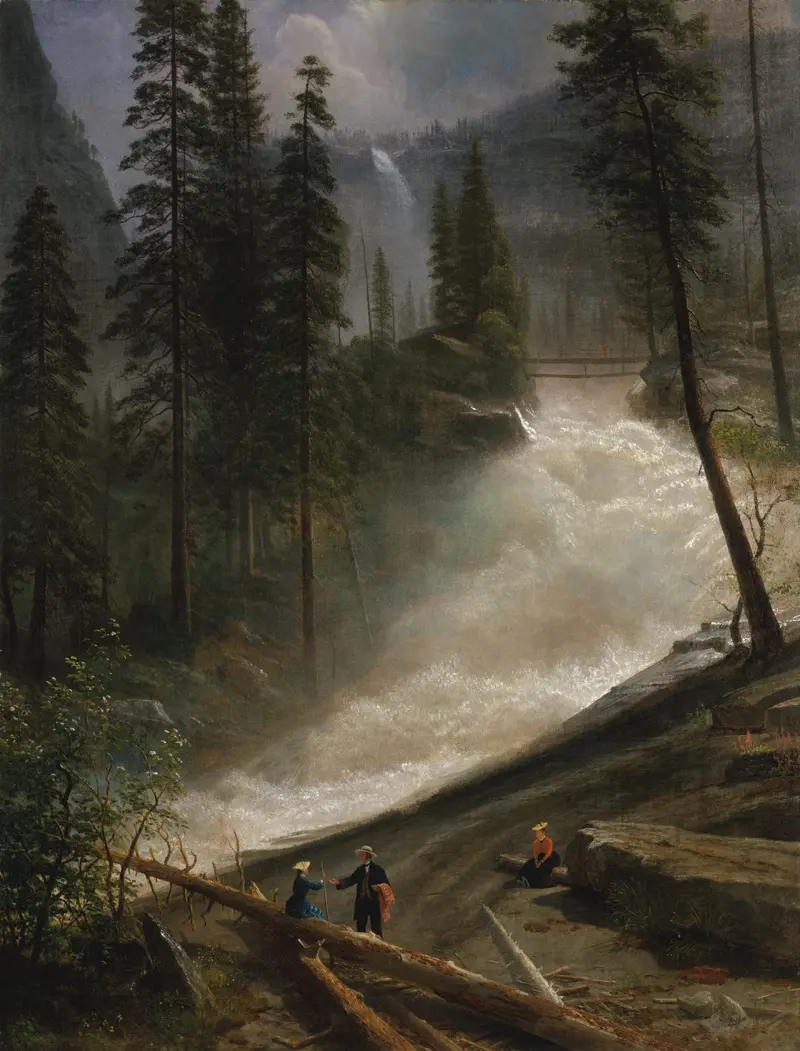
Nevada Falls, Yosemite
Albert Bierstadt
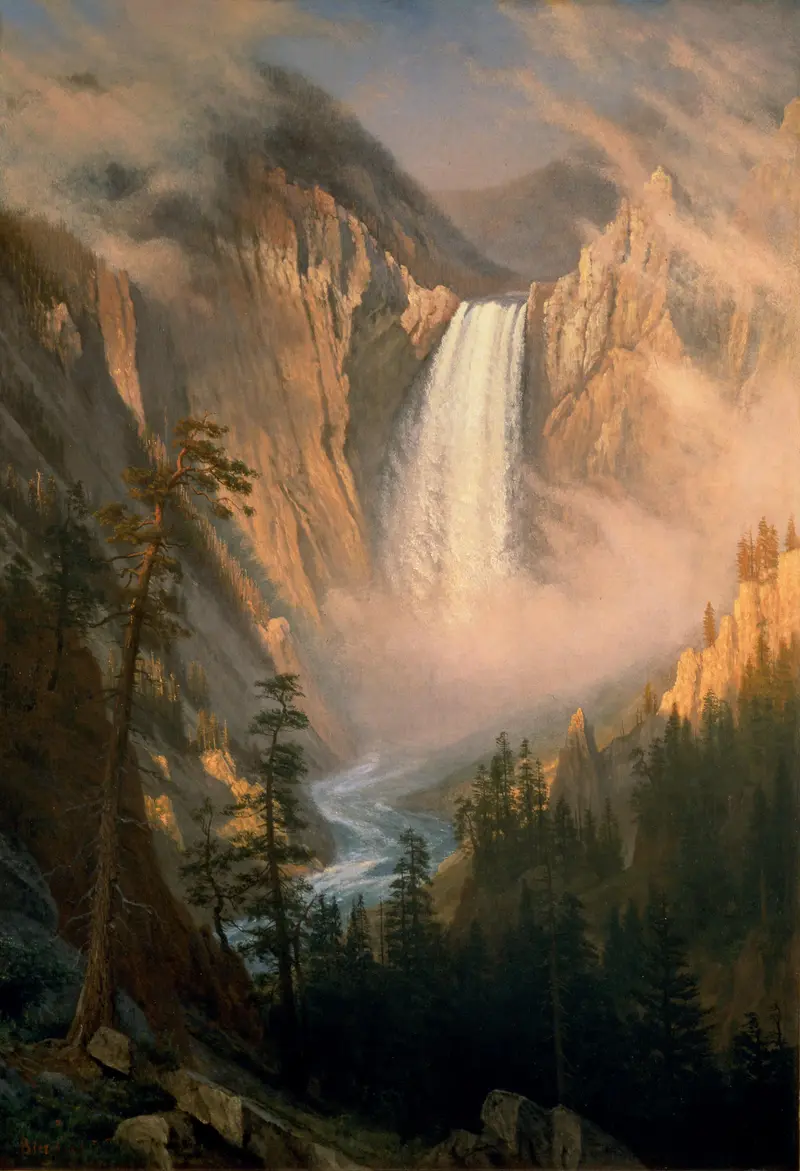
Yellowstone Falls
Albert Bierstadt
More Landscape Art

The Starry Night
Vincent van Gogh

View of Delft
Johannes Vermeer

Water Lilies
Claude Monet

The Grand Canal, Venice, looking north-west from the Ca' Corner to the Ca' Contarini degli Scrigni, with the campanile of Santa Maria della Carità
Canaletto

Windsor Castle
Canaletto

The Grand Canal looking North-East from the Palazzo Dolfin-Manin to the Rialto Bridge
Canaletto