Love Spring — History & Facts
A haze of myth and playfulness hangs over Love Spring by Arnold Böcklin, inviting the viewer into a world where nature and allegory entwine. The eye is drawn first to the luminous figure reclining at the heart of the scene, her form dissolving almost into the very water she pours from an urn—an embodiment of the spring itself. Above her, a ring of cherubic children dances and tumbles across the mossy rocks, their gestures and laughter animating the upper reaches of the canvas.
The palette is gentle and misted, with soft greens and pinks dissolving into one another, giving every figure a dreamlike presence. A youth, half-shaded by flowering branches, watches from the side, his pose open and inviting, as if he too is caught in the enchantment of the season’s renewal. Painted in 1868, this work belongs to a moment when artists across Europe were rediscovering the power of myth and nature to express longing, innocence, and the cycles of life. Böcklin was known for weaving classical themes into landscapes that shimmered with otherworldly light, and here he draws on the tradition of the allegorical spring—an ancient symbol of love’s awakening and the endless return of beauty.
Such paintings were often sought by private collectors eager to bring a touch of Arcadian fantasy into their homes, a respite from the industrial world outside. While little is recorded about the journey of this particular canvas, its presence in a modern collection as of 2016 hints at the enduring appeal of these visions. The longer you look, the more the painting seems to offer: a secret garden where time pauses, and love flows as freely as water from the source.
More Artworks by Arnold Böcklin

Die Toteninsel III
Arnold Böcklin
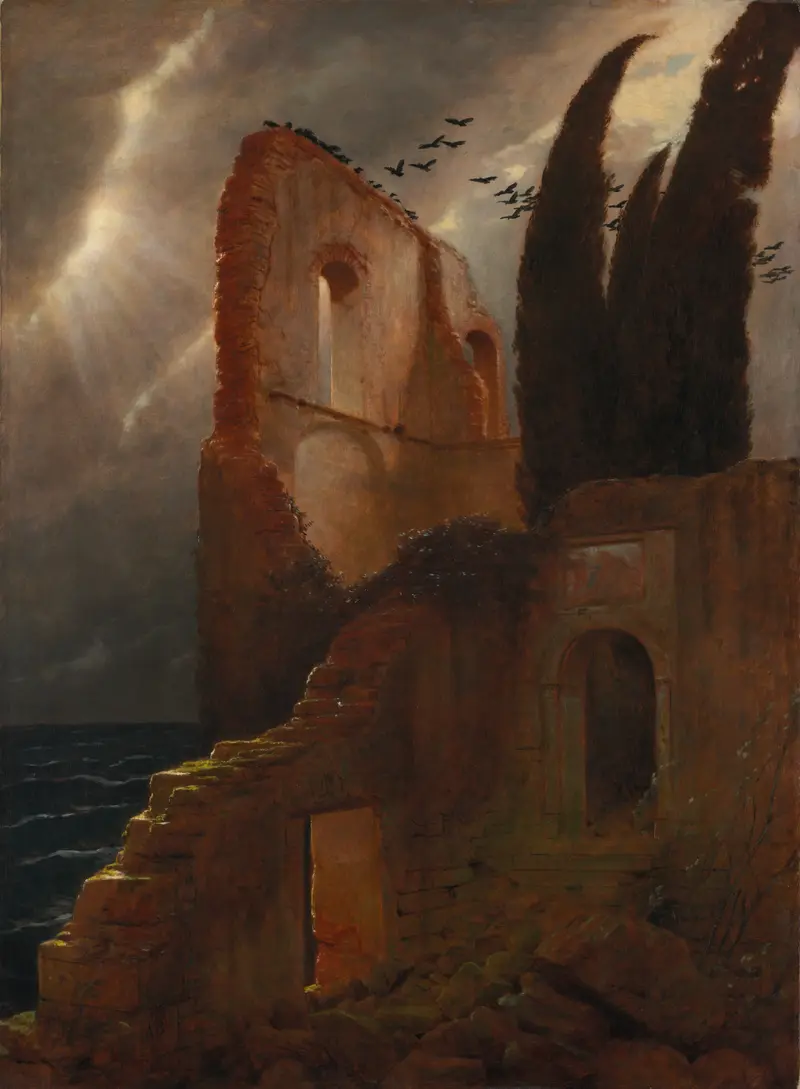
Ruin by the Sea
Arnold Böcklin
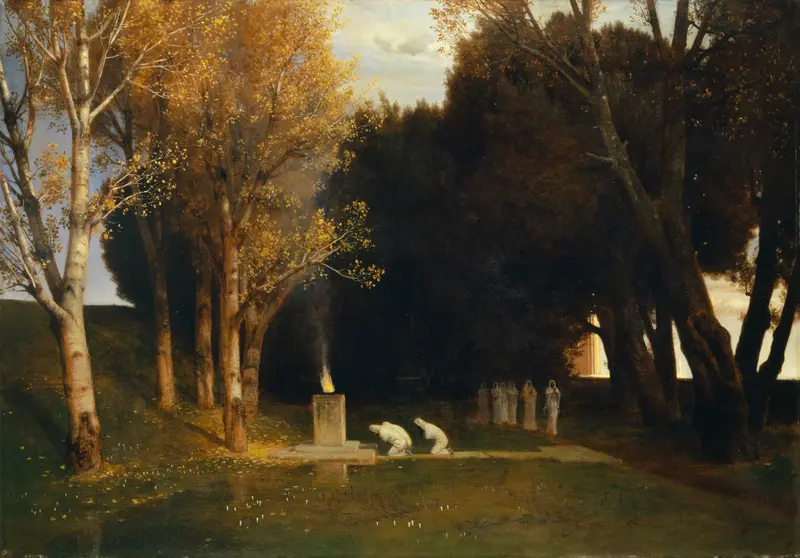
The Sacred Grove
Arnold Böcklin
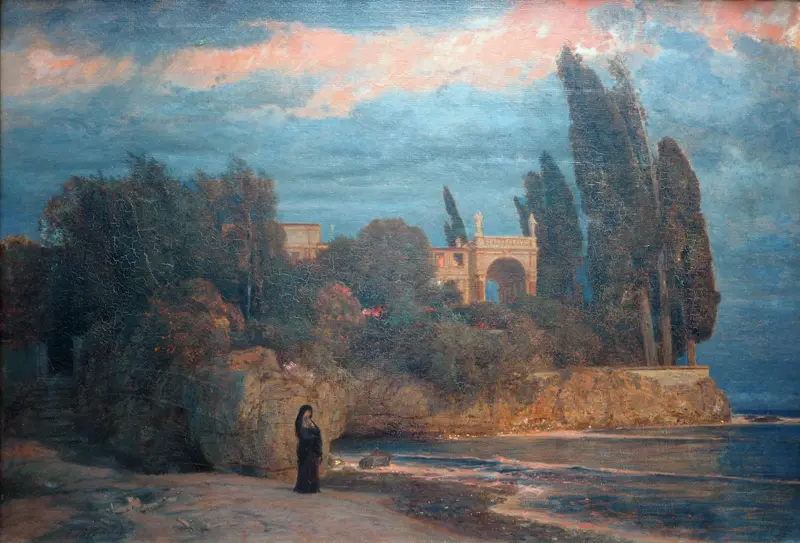
Villa by the Sea
Arnold Böcklin
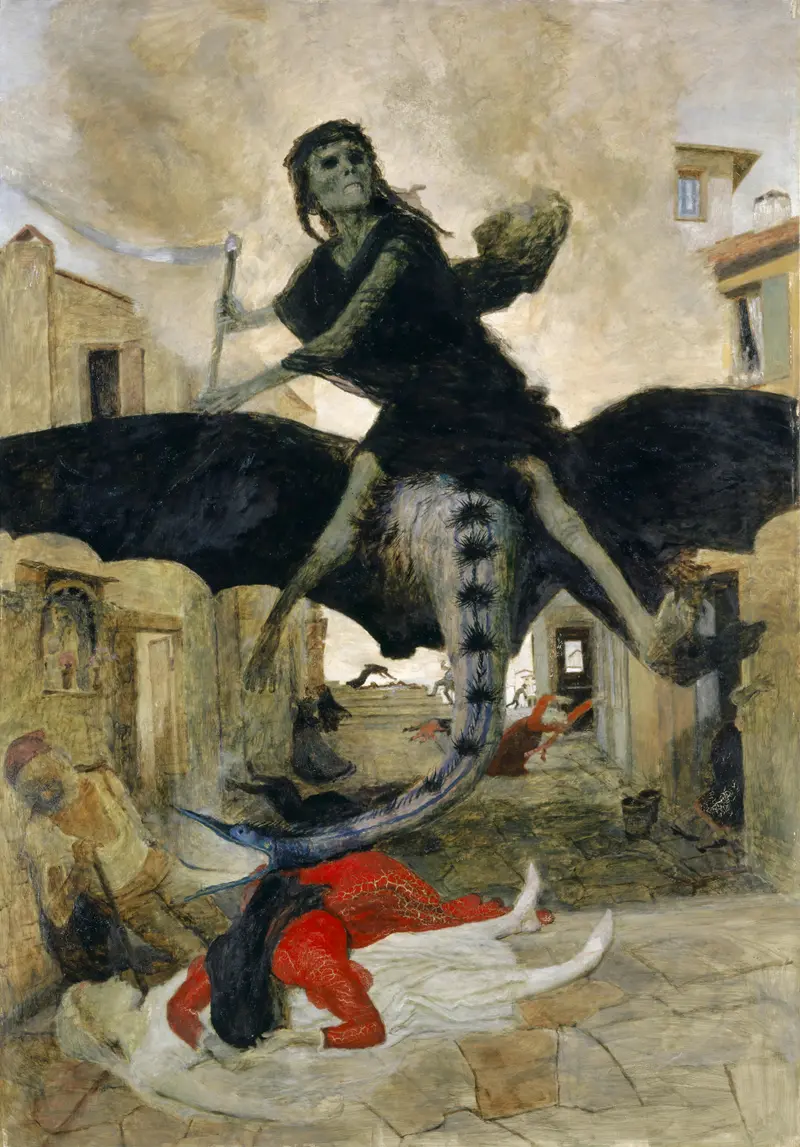
The Plague
Arnold Böcklin
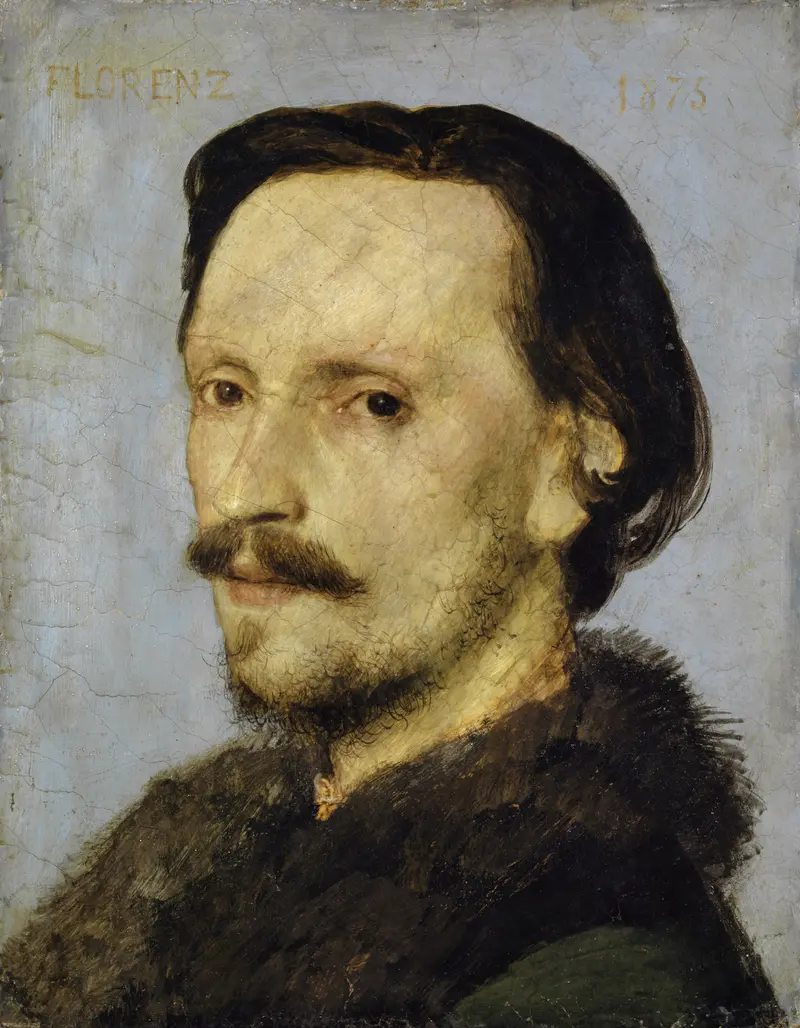
Böcklin Bildnis des Kunsthistorikers Adolph Bayersdorfer, 1875
Arnold Böcklin
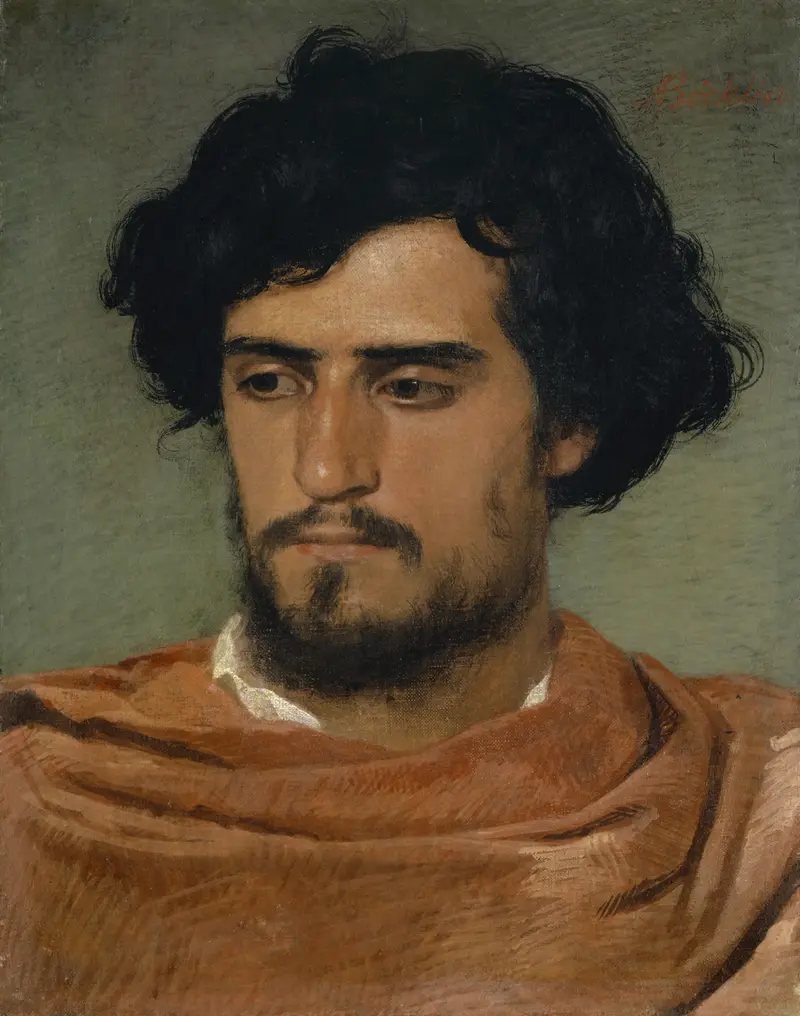
Head of a Roman
Arnold Böcklin
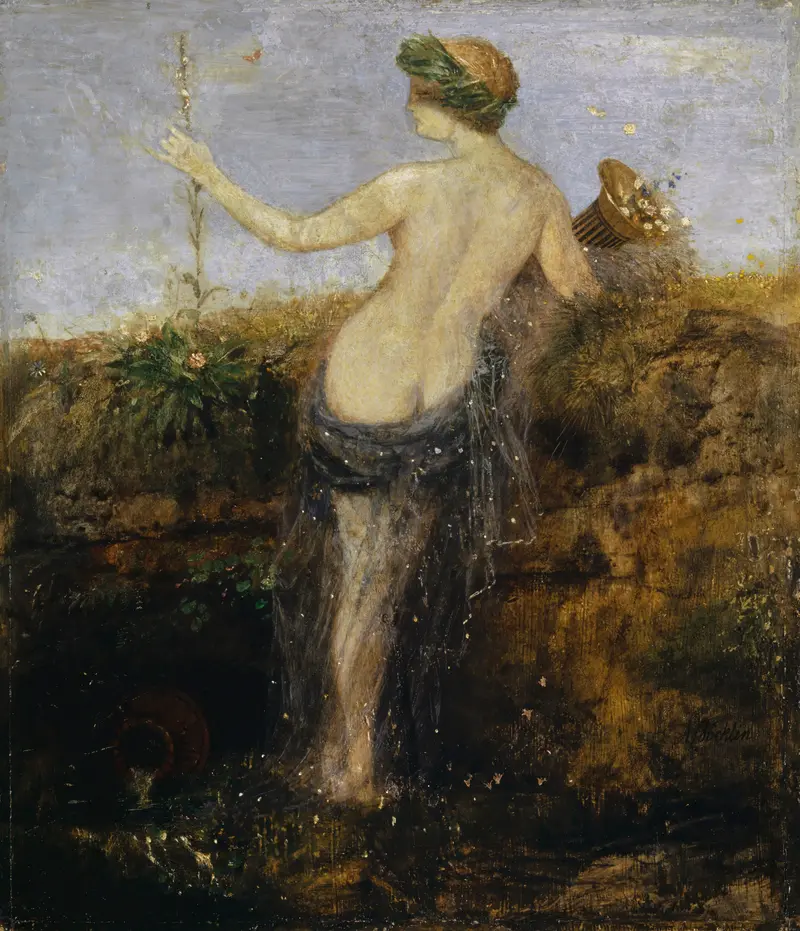
Nymphe with Horn of Plenty
Arnold Böcklin
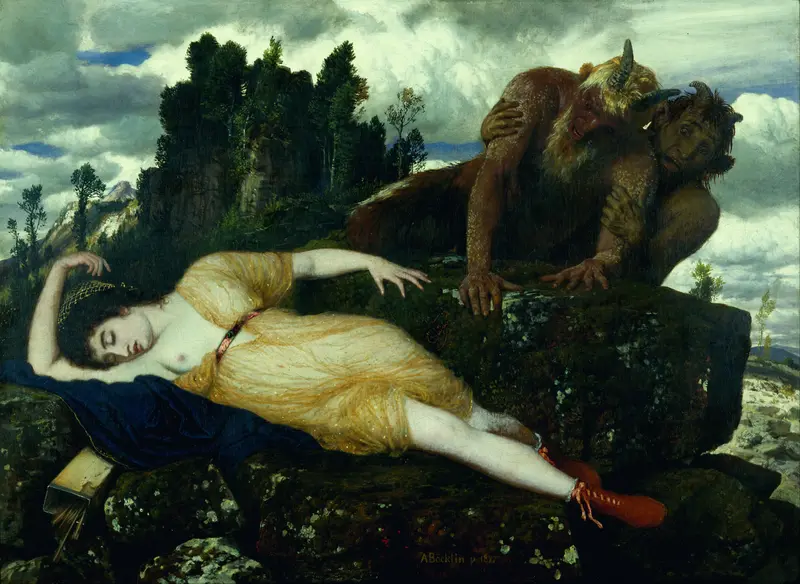
Sleeping Diana Watched by Two Fauns
Arnold Böcklin
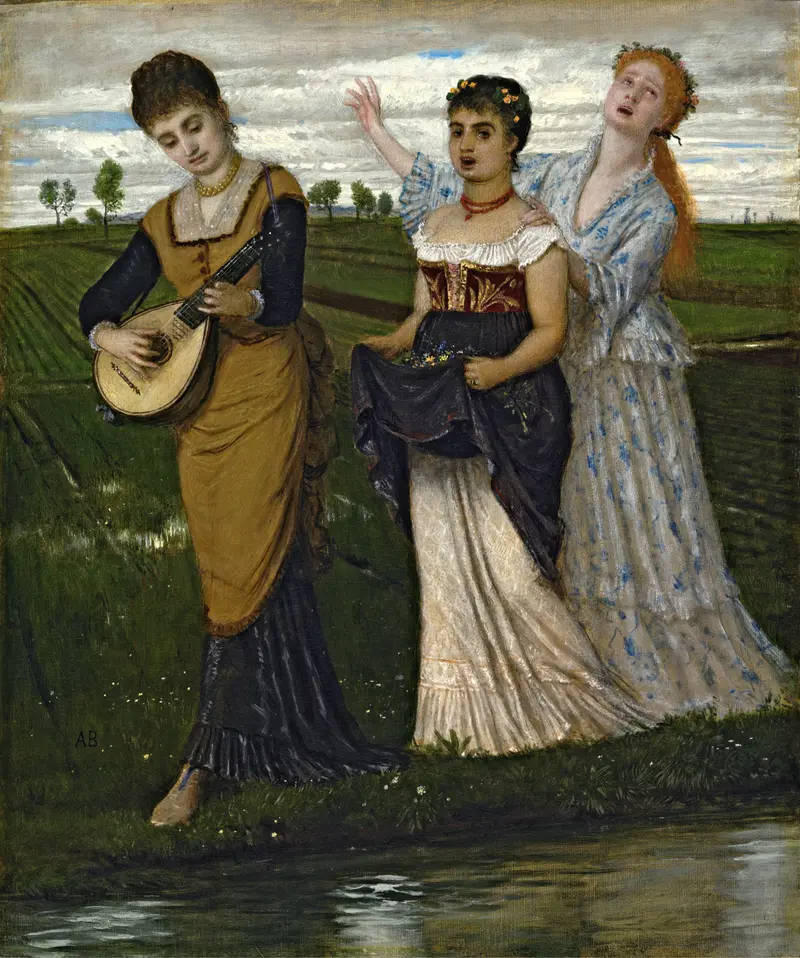
Spring (Songs of Spring)
Arnold Böcklin