Maasik — History & Facts
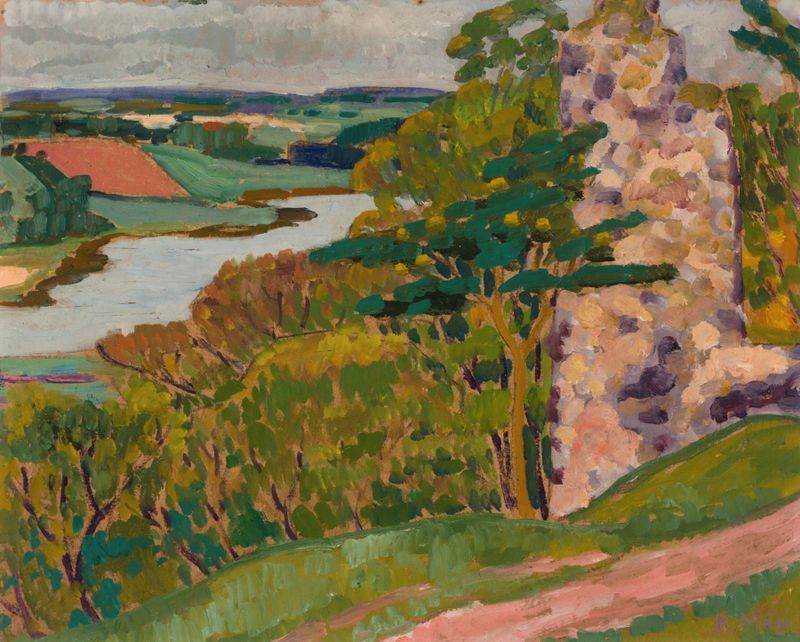
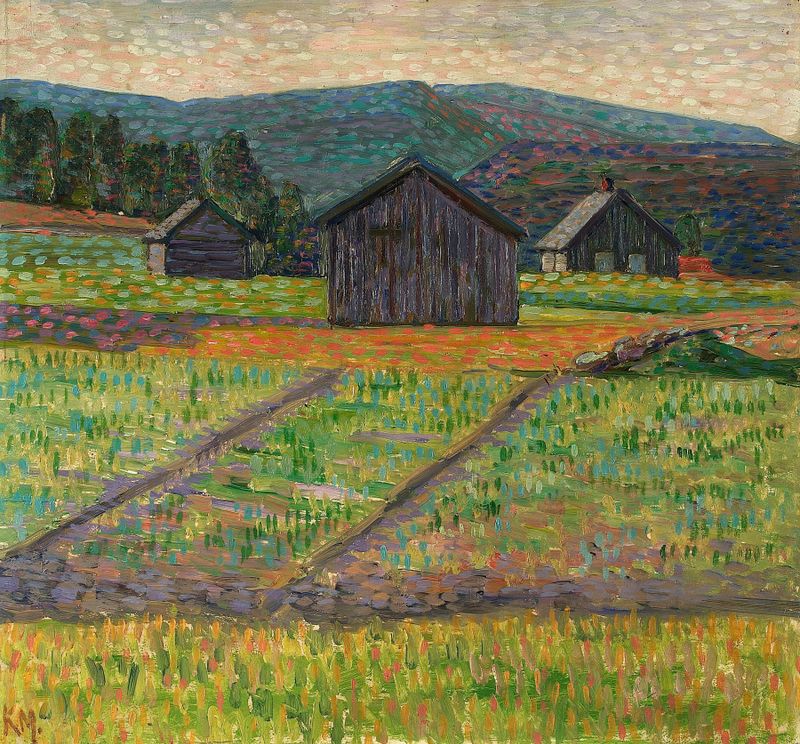
Did the painter know this moment would outlive them? In the midst of a world shifting with the dawn of modernity, some works resonate with an eternal vibrancy, whispering legacies through color and form. Focus on the interplay of hues that draw your eyes across the canvas. Notice how the rich greens and blues meld seamlessly, creating a harmonious landscape that feels both immediate and timeless. The brushstrokes pulse with energy, inviting you to explore the flowing lines and gentle curves of the hills, while the blending of colors evokes the interplay of light filtering through foliage.
Each element feels intentional, guiding the viewer deeper into the essence of nature's spirit. Hidden within this vibrant scene lies a tension between the ephemeral and the everlasting. The artist captures fleeting moments—a soft breeze, a whisper of light—as if they are attempting to grasp the essence of life itself. The subtle contrasts between the serenity of the landscape and the intensity of colors also reflect the duality of existence: the beauty of nature against the march of time.
It speaks to our own desire to hold onto memories and the legacies we leave behind. During the years between 1908 and 1910, the artist painted this work in Estonia, a time when he was deeply influenced by his surroundings and the nascent developments in European art. Emerging from the Symbolist movement and converging towards modernism, he sought to express the spiritual essence of nature, leaving a mark that would resonate long after his time. This period was a pivotal moment for Mägi, as he began to shape his distinctive style and philosophy, firmly embedding his legacy within the narrative of art history.