Maastik — History & Facts
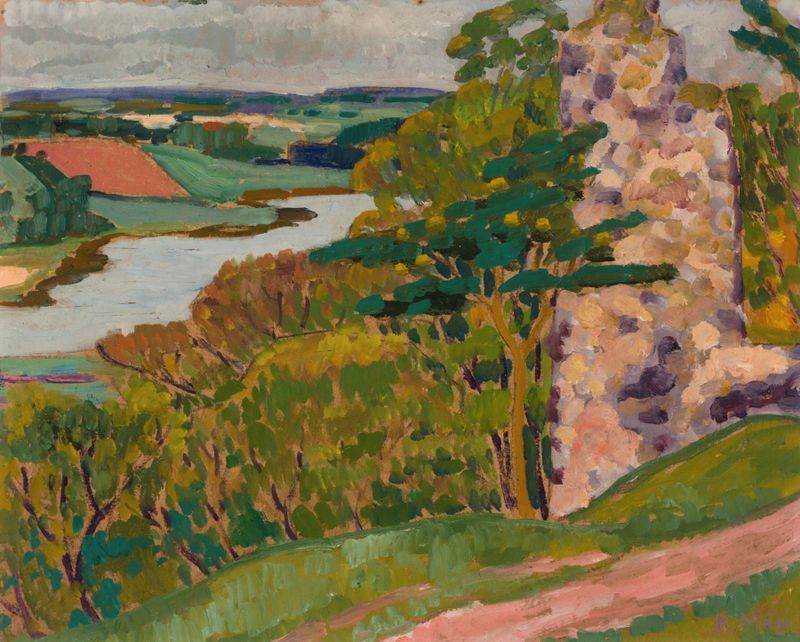
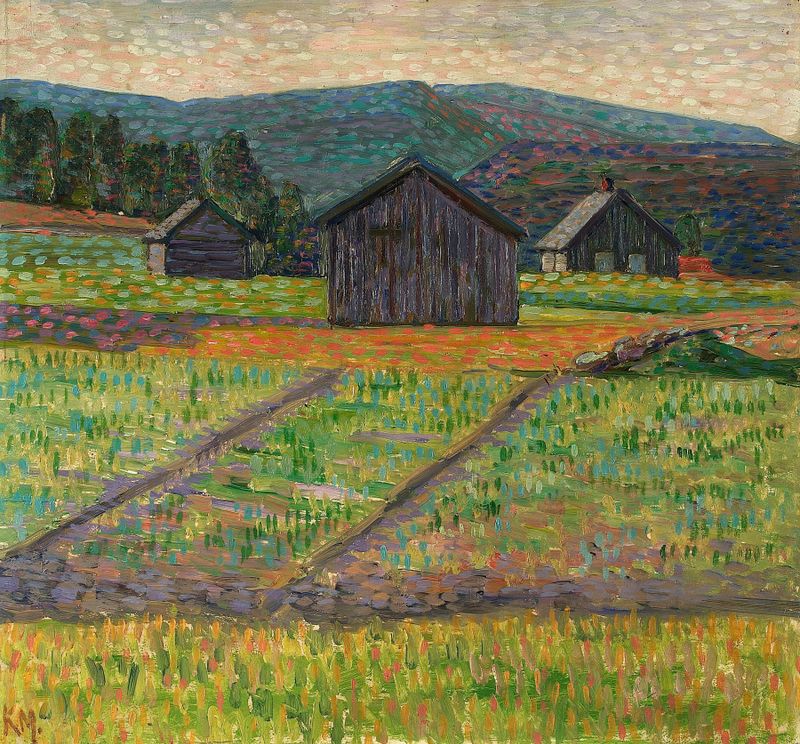
In Maastik, the essence of movement is captured within a landscape that breathes with life, inviting viewers to experience the fleeting beauty of nature. Look to the left at the sinuous lines of the rolling hills, where hues of green and gold dance across the canvas, suggesting a gentle breeze stirring the air. Notice how the light filters through the trees, casting a dappled glow that creates a rhythm within the composition, drawing your gaze deeper into the landscape. The artist’s brushwork, a flurry of strokes, mimics the very wind that seems to weave through the scene, giving it a palpable vitality that feels almost tangible. The interplay between light and shadow reveals a deeper emotional resonance.
The vibrant greens are juxtaposed against the darker, moody tones of the sky, suggesting an underlying tension between the serenity of the landscape and the chaos of the world beyond its borders. Each stroke not only captures the aesthetic beauty of the scene but also hints at the transitory nature of time and life, echoing the movement that is both vibrant and inevitable. During the years this painting was created, between 1908 and 1910, the artist was immersed in the vibrant atmosphere of Estonia, grappling with the influences of modernism while seeking a unique voice amid the tumultuous changes in art movements. It was a time of artistic exploration, and Maastik stands as a testament to this journey, reflecting the artist's desire to harmonize personal memory with the universal flow of nature.