
Madame de La Porte — History & Facts
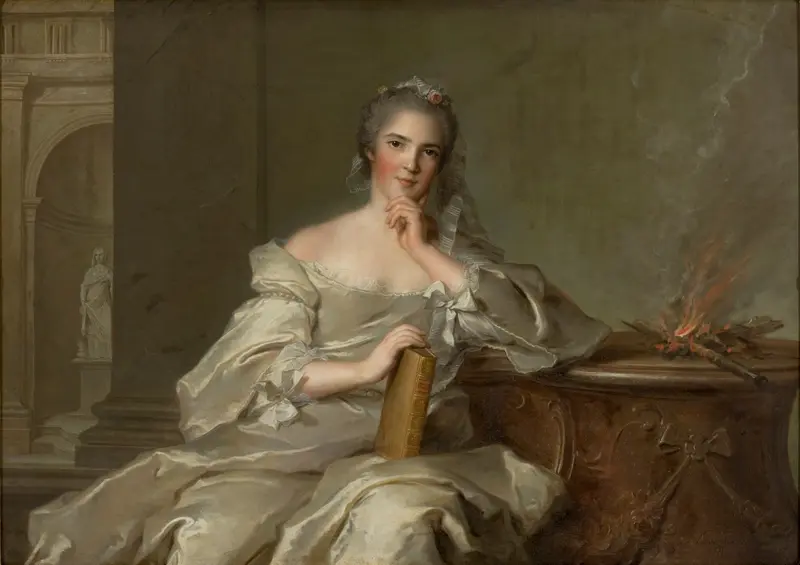
What first draws the eye in Madame de La Porte is the way light seems to rest on her face, as if she has just turned toward us, catching a private moment between sitter and painter. The blue cloak, almost improbably luminous, sweeps across her shoulder in a cascade of silk, its folds painted with a precision that invites the viewer to imagine the rustle of fabric. Gold embroidery glimmers against the white satin of her dress, signaling both wealth and a taste for the delicate artistry of mid-eighteenth-century fashion.
A cluster of tiny flowers, tucked into her hair, softens her composed expression and hints at a personality behind the formal pose. The overall effect is one of poised elegance, yet the directness of her gaze and the subtle flush on her cheeks suggest a sitter very much alive to her own moment. This portrait, created in 1754 by Jean-Marc Nattier, belongs to a world where portraiture was both social currency and private keepsake. In the refined circles of Louis XV’s France, such images were commissioned to mark marriages, alliances, or simply to celebrate beauty and status.
Nattier was renowned for his ability to flatter without losing the individuality of his sitters, and here he balances idealization with a sense of immediacy. While history has kept few traces of Madame de La Porte herself, her portrait survives as a testament to the artistry and aspirations of her time. The longer one looks, the more the painting seems to invite speculation about the life behind the calm surface—an invitation to linger in the world it so carefully conjures.
More Artworks by Jean-Marc Nattier

Madame Crozat de Thiers and Her Daughter
Jean-Marc Nattier
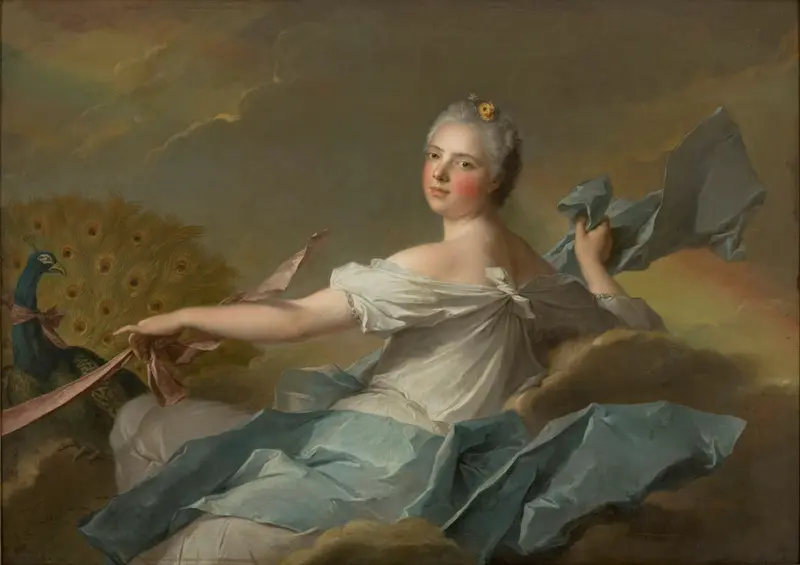
Princess Marie Adélaïde of France - The Air
Jean-Marc Nattier
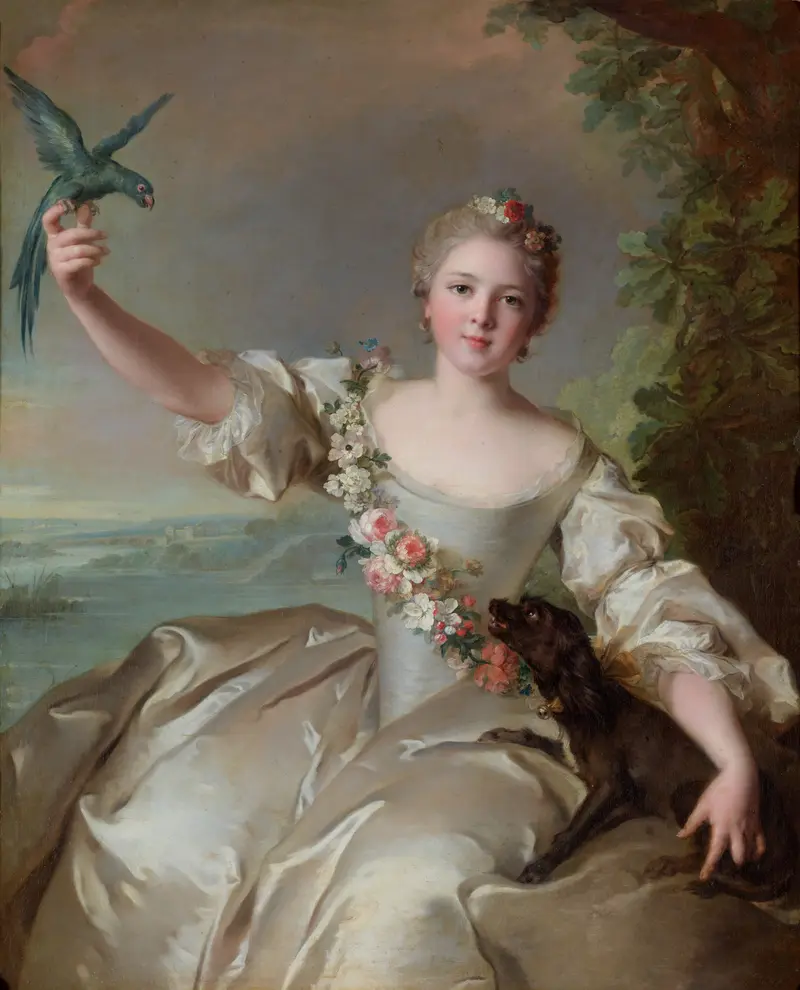
Portrait de Mathilde de Canisy, marquise d'Antin
Jean-Marc Nattier
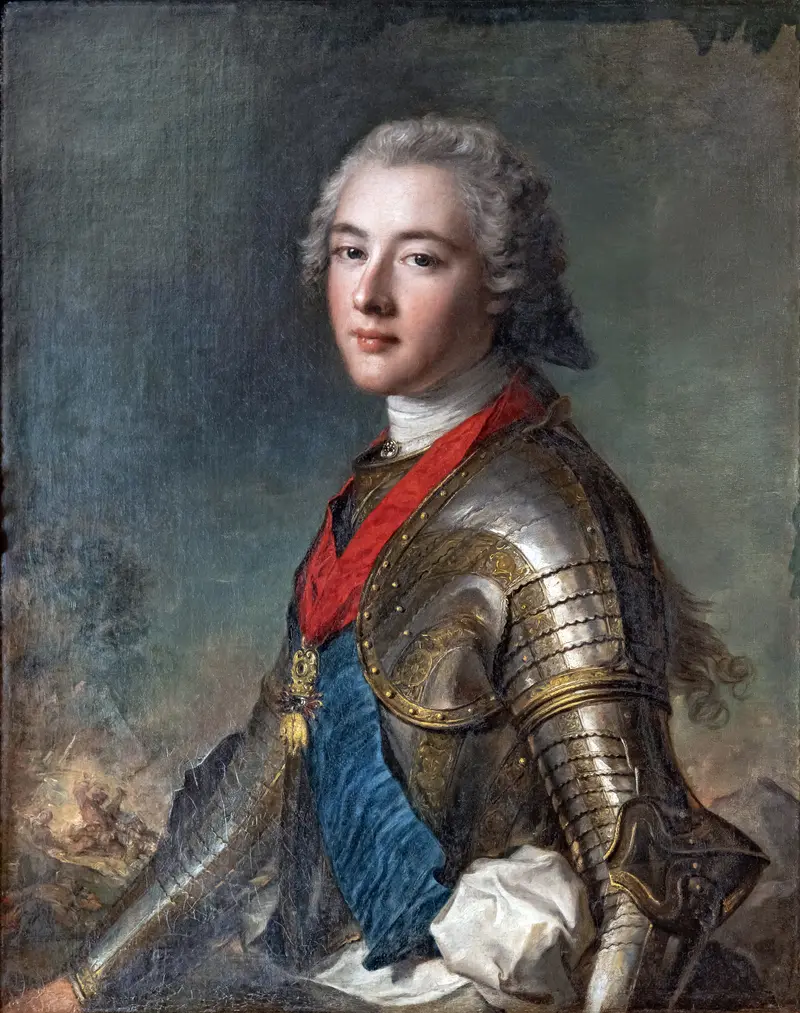
Bemberg Fondation Toulouse - Portrait de Louis Jean Marie de Bourbon, Duc de Penthièvre - Jean Marc Nattier inv.1158 82x65.4
Jean-Marc Nattier
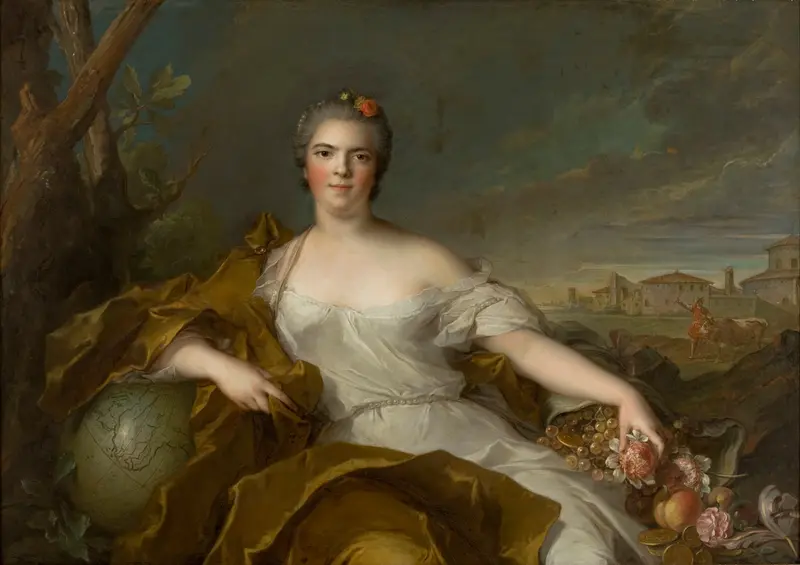
Princess Louise-Élisabeth of France - The Earth
Jean-Marc Nattier
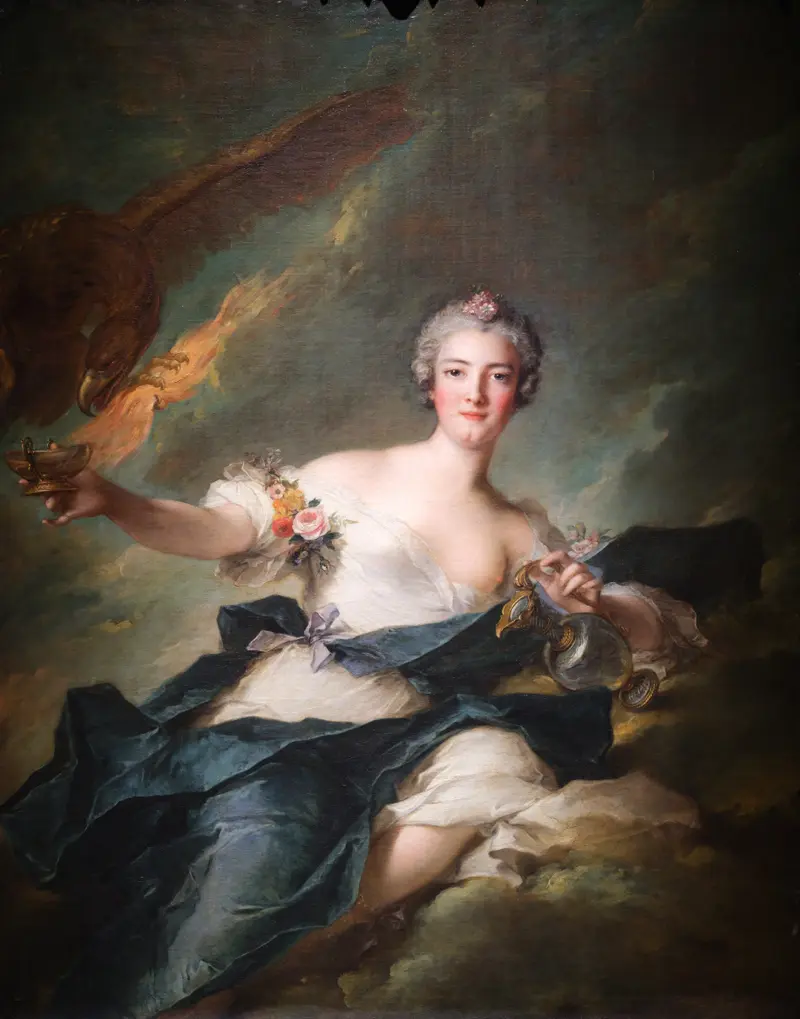
The Duchess of Chaulnes Represented as Hebe
Jean-Marc Nattier
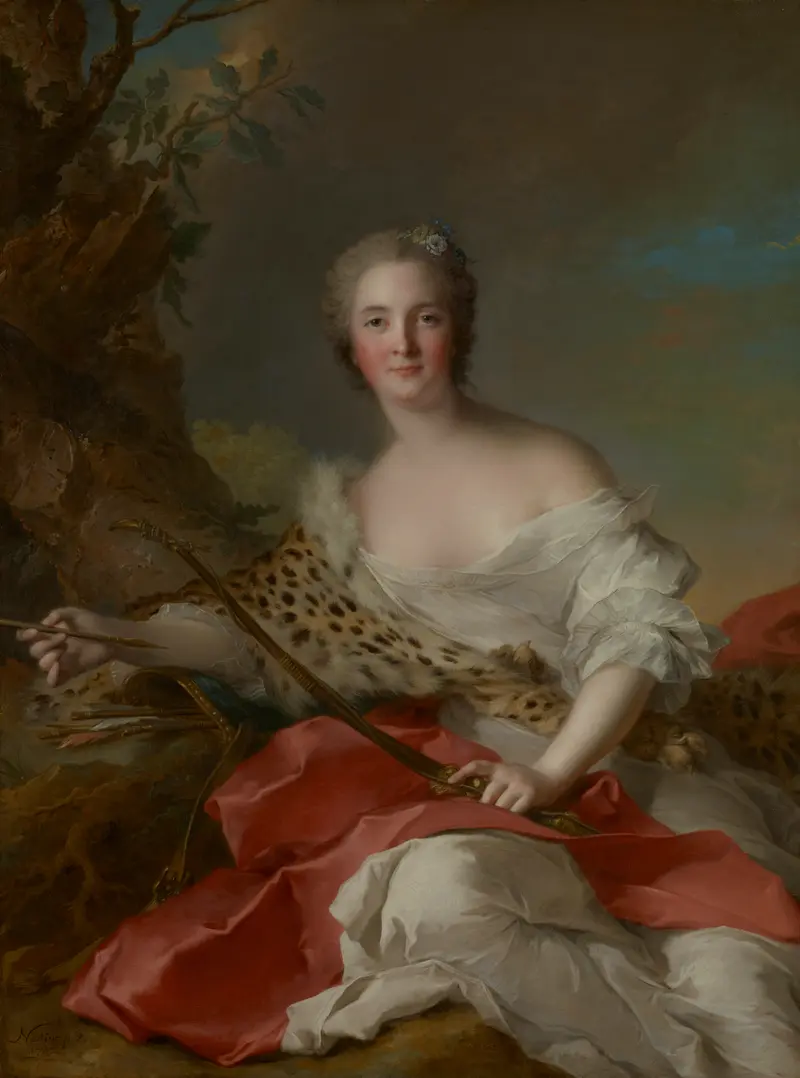
Portrait of Madame Bonnier de la Mosson as Diana (Constance-Gabrielle-Magdeleine du Monciel de Lauraille
Jean-Marc Nattier
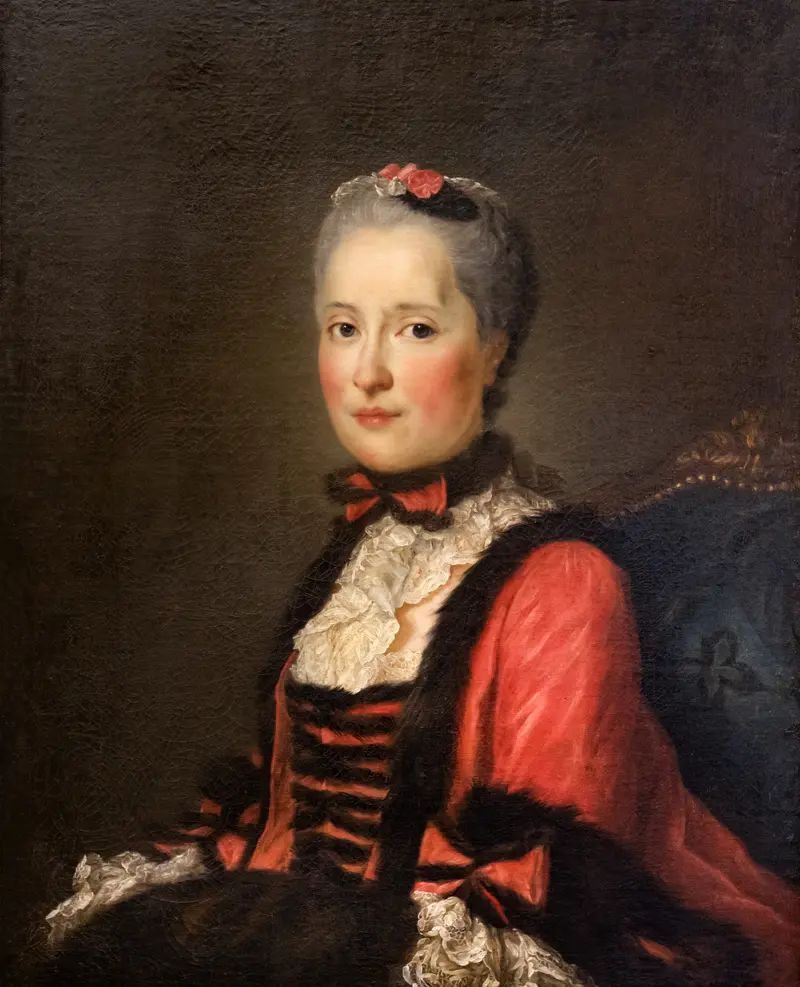
Portrait of Marie-Josephe of Saxony, Dauphine of France
Jean-Marc Nattier
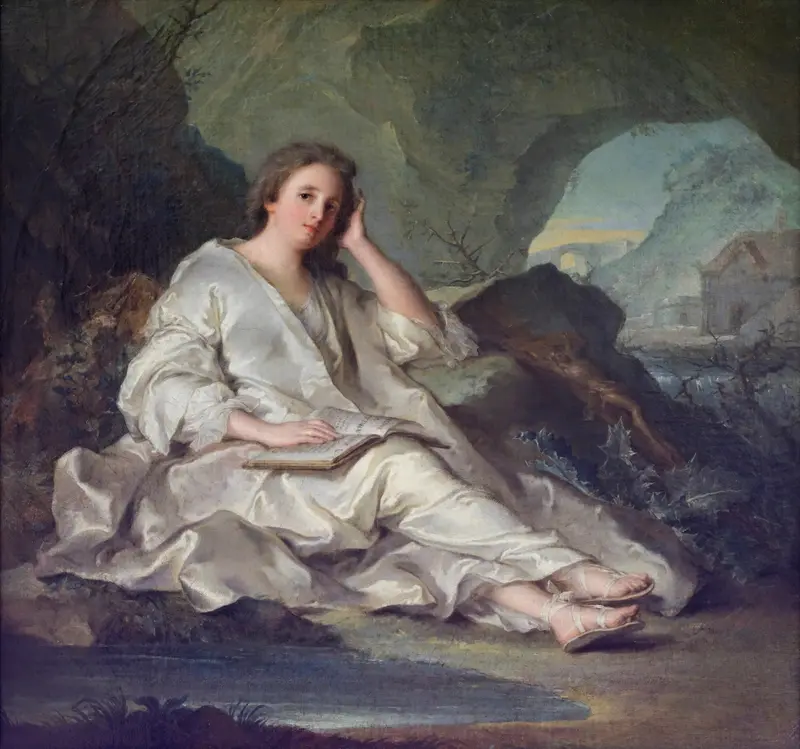
La Madeleine, ou Une Pénitente dans le désert Musée du Louvre Peintures INV 6880 ; MR
Jean-Marc Nattier
Princess Anne-Henriette of France - The Fire
Jean-Marc Nattier





