
Madonna and Child and Two Angels — History & Facts
When Sandro Botticelli painted Madonna and Child and Two Angels around 1460, he was not yet the celebrated master of The Birth of Venus, but a young apprentice in the Florentine workshop of Fra Filippo Lippi. The painting’s authorship has long been debated: for decades, it was attributed to Lippi himself, and only careful study of the figures’ delicate features and the lyrical movement of line convinced scholars that it is one of Botticelli’s earliest independent works. This uncertainty has made the painting a touchstone for understanding the origins of Botticelli’s unique style and the close relationship between master and pupil in the vibrant artistic circles of 15th-century Florence. In the scene, the Virgin Mary sits quietly, her gaze lowered in gentle contemplation as she supports the Christ Child, who twists playfully toward the viewer.
Two angels flank them, one holding the infant with a protective hand, the other offering a look of adoration. The figures are arranged in a tight, intimate group, their halos overlapping—a visual sign of their shared divinity and closeness. Botticelli’s use of soft, almost transparent drapery and the tender interaction between the figures set his work apart from the more formal, iconic Madonnas of earlier painters like Fra Angelico.
Here, the sacred story is rendered with a new warmth and humanity: the moment Botticelli chooses is not one of grand revelation, but of quiet, familial affection. The precise early history of Madonna and Child and Two Angels remains uncertain, as is often the case with devotional works from this period, which were typically commissioned for private chapels or domestic altars. Over the centuries, the painting’s attribution shifted back and forth between Lippi and Botticelli, reflecting changing tastes and scholarly discoveries. Today, it is recognized as a key work in Botticelli’s early career, marking his emergence from Lippi’s shadow and foreshadowing the poetic grace that would define his later masterpieces.
The painting is now held in a major museum collection, where it offers viewers a glimpse of the young artist’s hand at the threshold of greatness.
More Artworks by Sandro Botticelli

Virgin and Child
Sandro Botticelli

Madonna and Child and the Young St John the Baptist
Sandro Botticelli

Madonna and Child with six angels and Saint John the Baptist as Child
Sandro Botticelli

Adoration of the Magi
Sandro Botticelli

Virgin and Child with the Young Saint John the Baptist
Sandro Botticelli
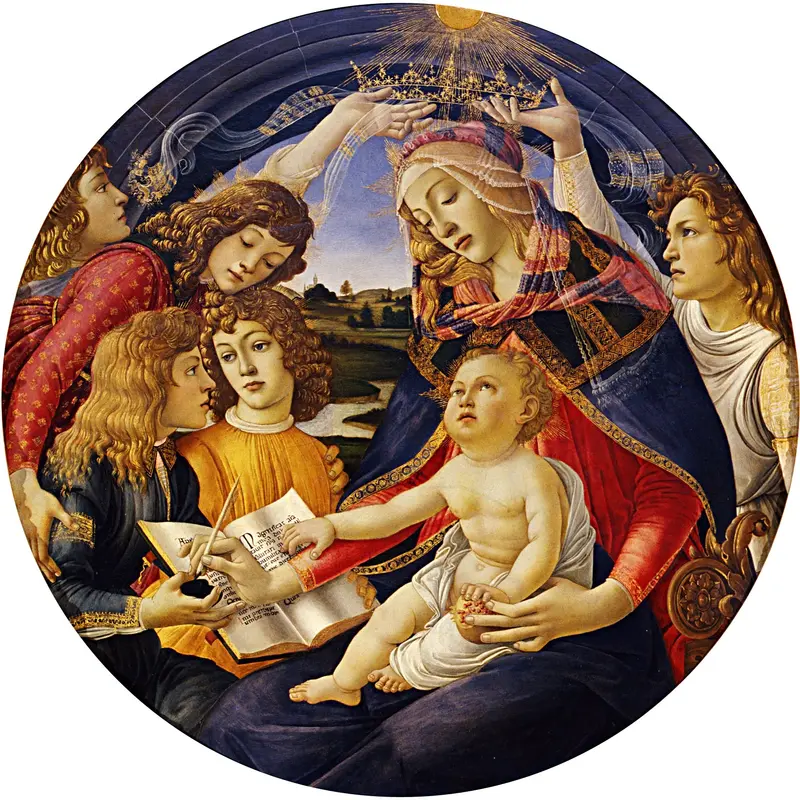
Madonna of the Magnificat
Sandro Botticelli
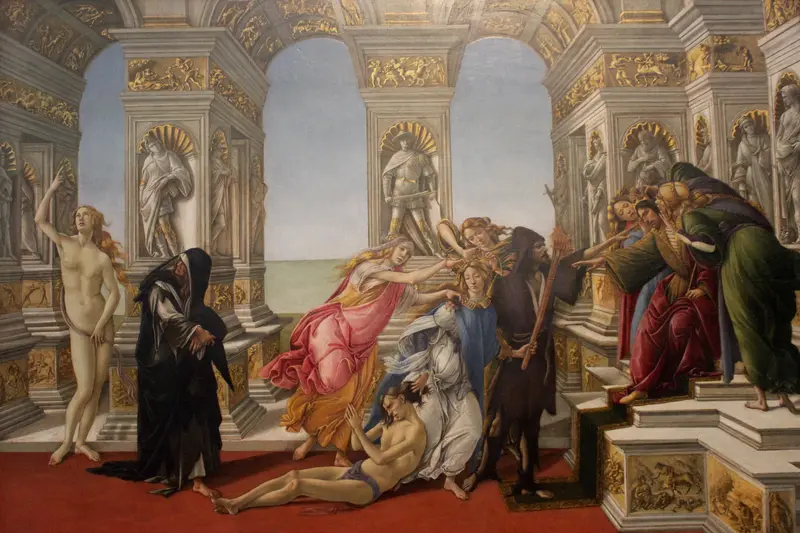
Calumny of Apelles
Sandro Botticelli

Portrait of a young man holding a roundel
Sandro Botticelli

The Trinity with Saint Mary Magdalene and Saint John the Baptist, the Archangel Raphael and Tobias
Sandro Botticelli

Idealized Portrait of a Lady (Portrait of Simonetta Vespucci as Nymph)
Sandro Botticelli





