
Madonna and Child Enthroned with Saints and Donor — History & Facts
When Giovanni Bellini painted Madonna and Child Enthroned with Saints and Donor in 1505, he was at the height of his powers, and the Venetian Republic was in the midst of a flowering of religious art. What sets this altarpiece apart is the presence of the donor himself, kneeling humbly at the Virgin’s feet—a public declaration of faith and status that was both a privilege and a risk. In Venice, including one’s own likeness in such a sacred scene was a mark of devotion, but also a bold statement of personal connection to the divine.
The identity of the donor, however, has been lost to time, leaving viewers to wonder about his story and his relationship to the saints gathered around the Madonna. Bellini chooses a moment of serene communion: the Christ Child, perched on his mother’s lap, offers a gentle blessing, while the saints—each identifiable by their attributes—stand in a harmonious semicircle. Saint Peter, holding his keys, and Saint Catherine, with her spiked wheel, flank the throne, their gazes drawing the viewer toward the central figures. The donor, rendered in smaller scale, kneels in prayer, bridging the earthly and the sacred.
Bellini’s use of soft, golden light suffuses the scene, casting gentle shadows and uniting the figures in a sense of quiet intimacy. Unlike the dramatic tension of Mantegna’s altarpieces, Bellini’s composition radiates calm, inviting contemplation rather than awe. The original commission for Madonna and Child Enthroned with Saints and Donor is undocumented, but altarpieces of this type were typically destined for private chapels or small churches in Venice or its territories. Over centuries, many such works were moved, damaged, or lost during periods of war and upheaval; this painting’s survival is testament to its enduring value.
Today, it is recognized as a fine example of Bellini’s mature style, with its luminous color and balanced composition. The painting’s journey from private devotion to public display mirrors the broader story of Venetian Renaissance art, moving from the intimate to the communal, and securing Bellini’s reputation as the city’s leading painter of the sacred.
More Artworks by Giovanni Bellini
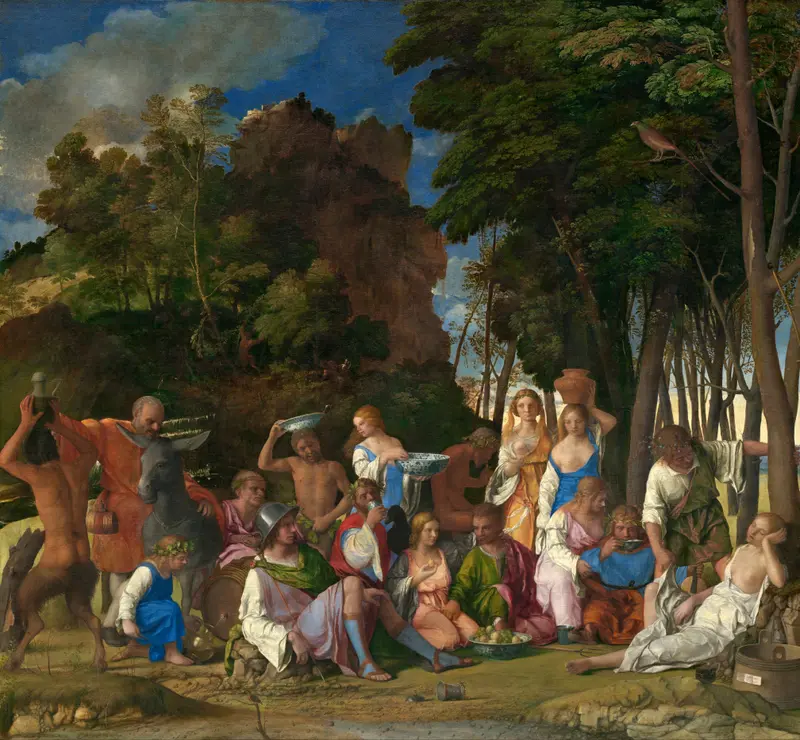
The Feast of the Gods
Giovanni Bellini

Madonna and Child enthroned with Saints and Angels
Giovanni Bellini
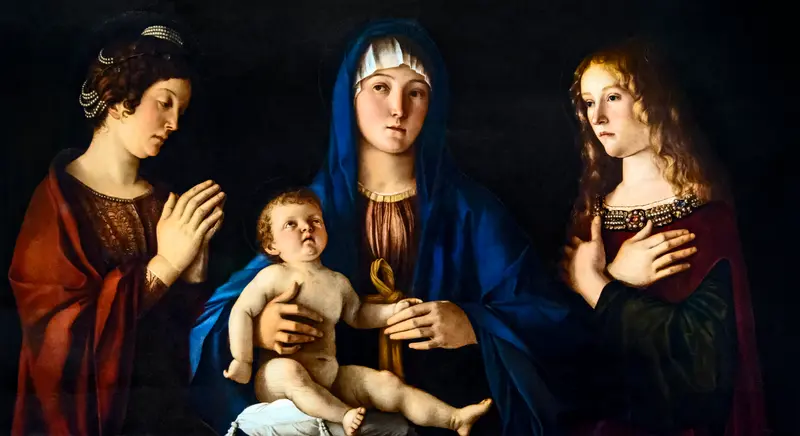
Madonna and Child between Saints Catherine and Mary Magdalene
Giovanni Bellini
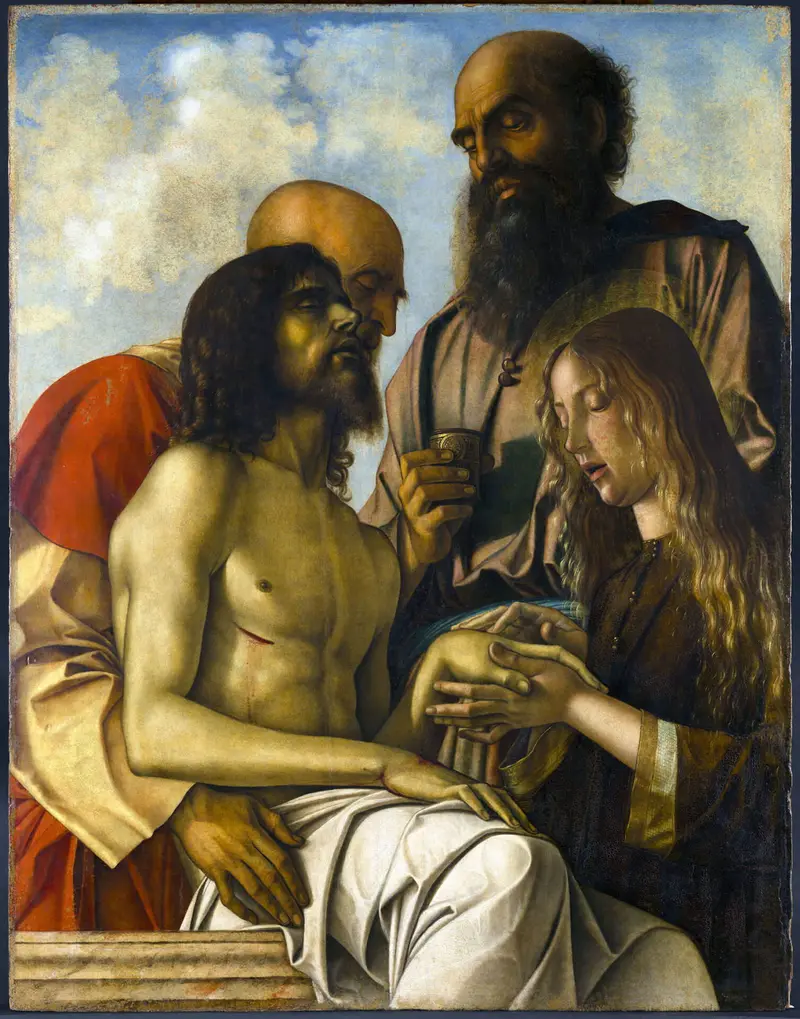
Lamentation over the Dead Christ
Giovanni Bellini
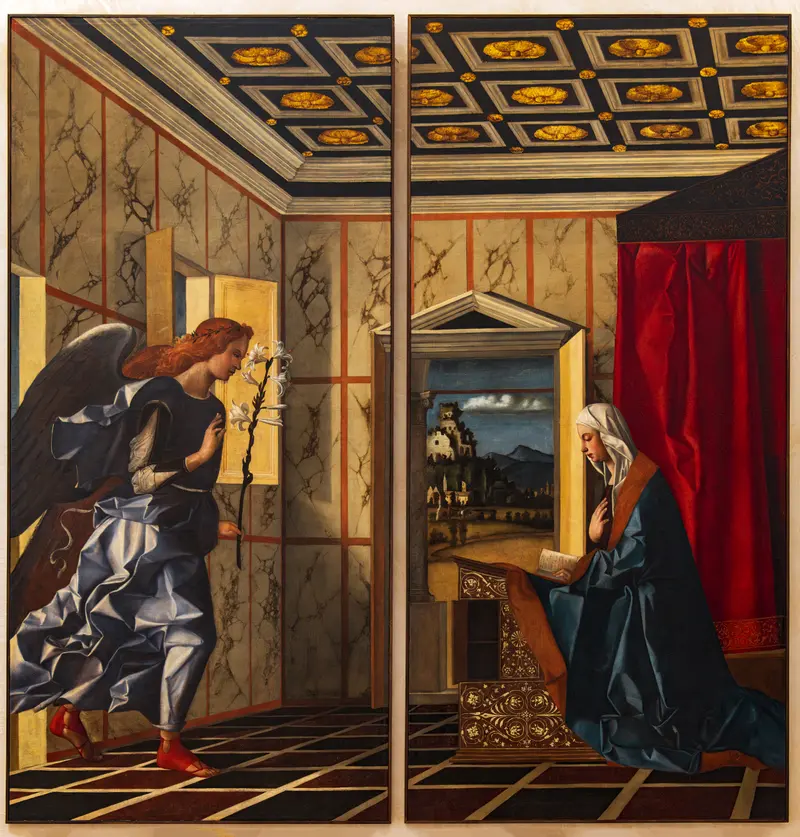
Annunciation
Giovanni Bellini
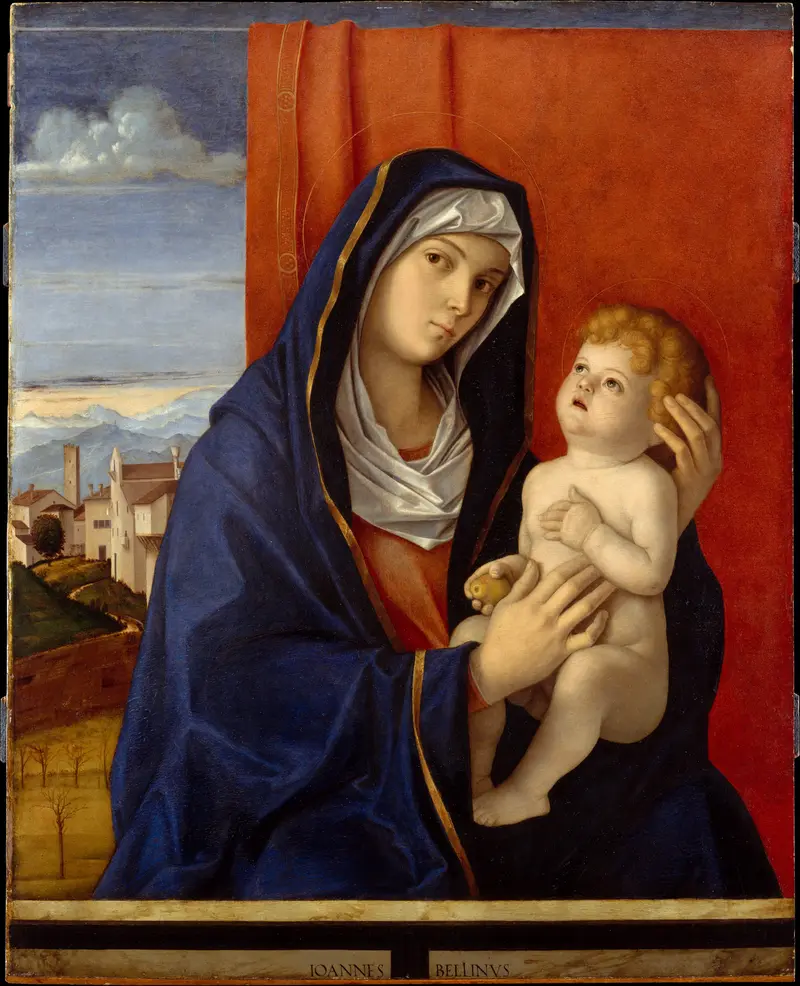
Madonna and Child
Giovanni Bellini
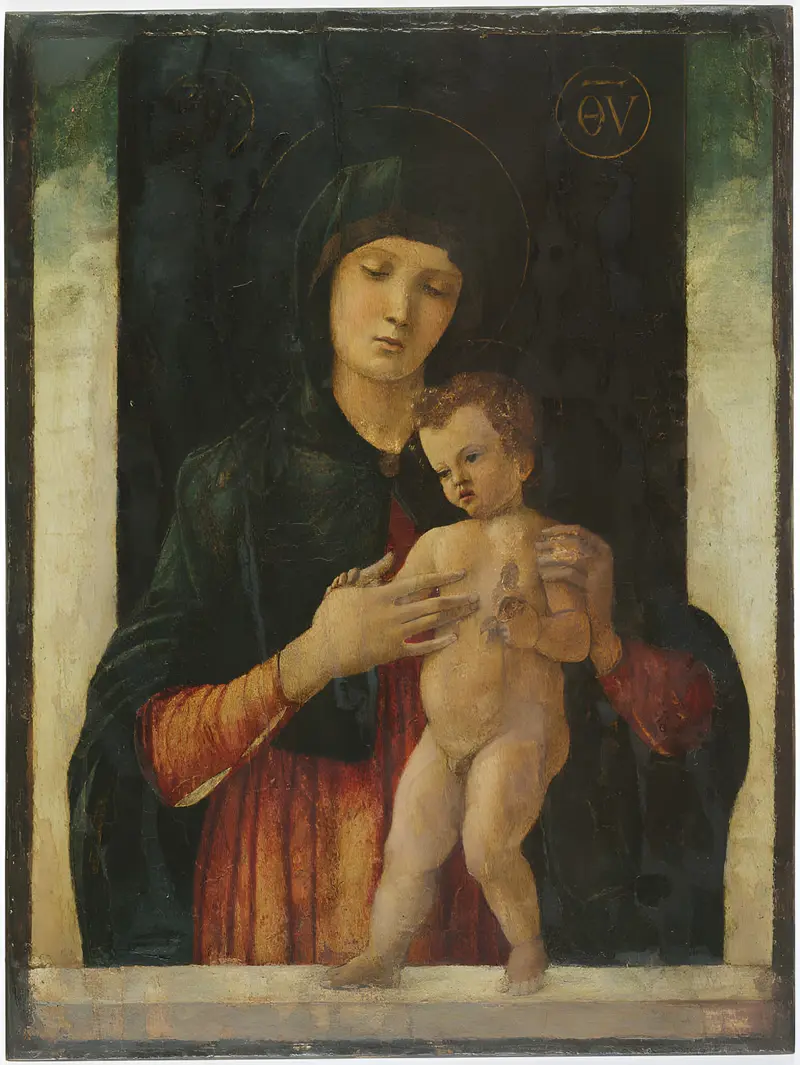
The Virgin and Child
Giovanni Bellini
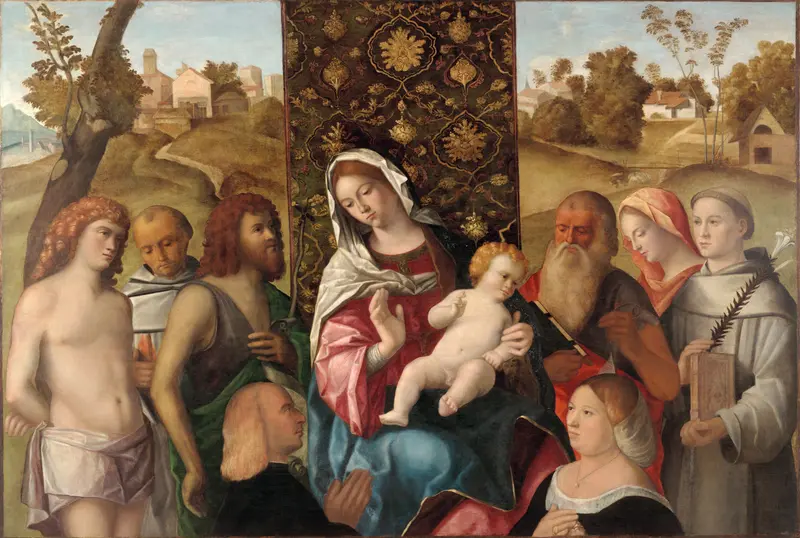
Virgin and Child with Saints Sebastian, Francis, John the Baptist, Jerome, an unidentified female saint, Saint Anthony of Padua and two donors
Giovanni Bellini
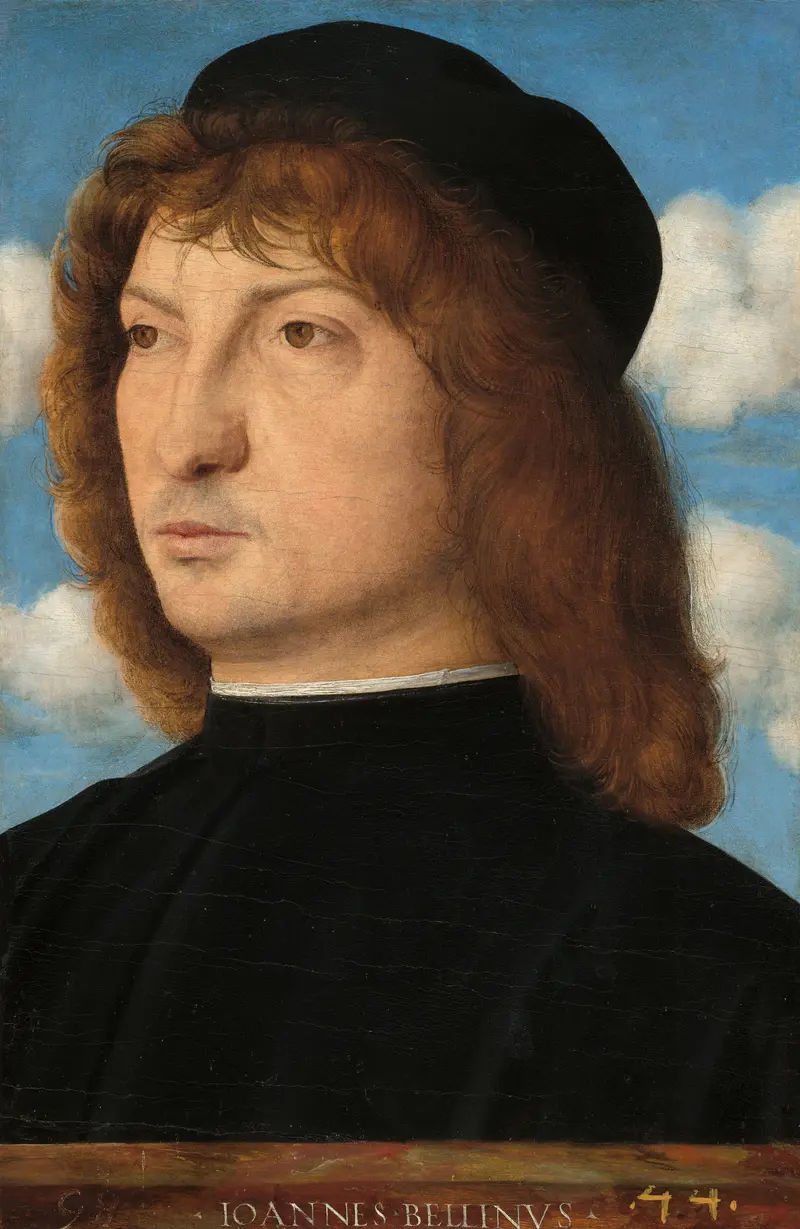
Portrait of a Venetian Gentleman
Giovanni Bellini
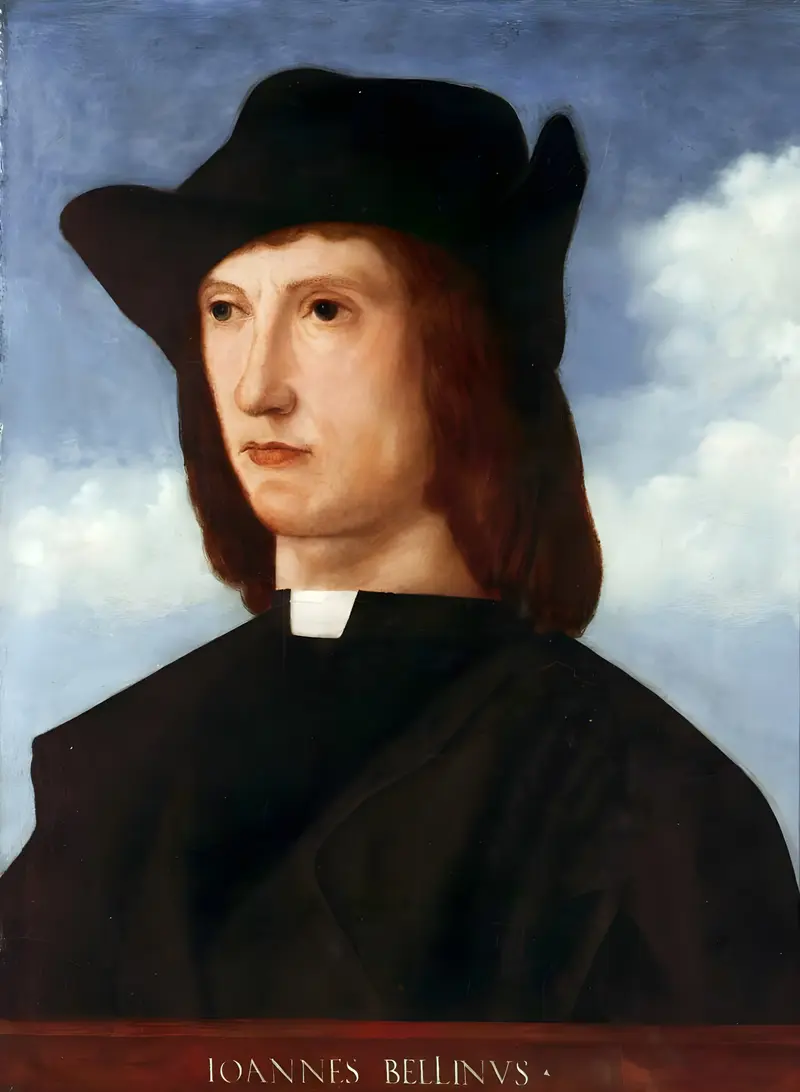
Portrait of a Young Man
Giovanni Bellini





