
Madonna op de maansikkel — History & Facts
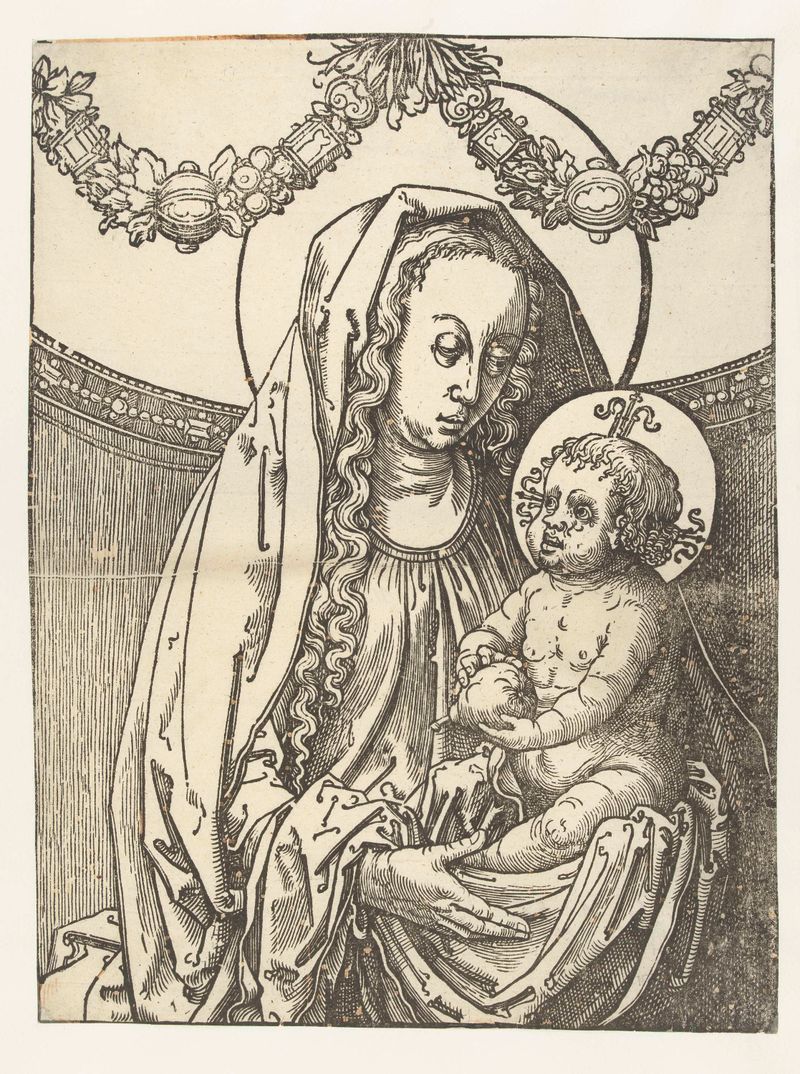
What secret hides in the quiet of the canvas? In Lucas van Leyden's Madonna op de maansikkel, the stillness of the moment invites us to ponder the depths of reflection and devotion. Look to the left, where the Madonna reclines gracefully upon a crescent moon, surrounded by a serene sky that transitions softly from warm golden hues to deep blues. The delicate interplay of light and shadow accentuates her gentle features, drawing your gaze to her tranquil expression. The intricate details of her garments contrast with the smooth surface of the moon, highlighting her divine presence.
Notice how the folds of her cloak seem to ripple with a life of their own, encapsulating the ethereal quality of her figure. Beyond the surface beauty lies a compelling tension between the celestial and the earthly. The moon serves as a metaphor for the transient nature of life, while the Madonna embodies eternal purity and grace. Each element, from the delicate flowers at her side to the soft glow enveloping her, hints at the sacredness of motherhood and the divine connection between heaven and earth.
The simplicity of the composition whispers of deeper truths, reminding us of the quiet strength found in faith. In 1523, van Leyden painted this work during a time of artistic transition in the Netherlands, marked by the influence of both Northern Renaissance and Italian techniques. Emerging as a prominent engraver and painter, he sought to blend meticulous detail with spiritual themes, reflecting the growing humanist ideas of his era. As the world around him grappled with religious changes, this piece stands as a testament to the enduring power of divine symbolism and the artist's profound exploration of belief.
More Artworks by Lucas van Leyden
Browse all →
Het eerste verbod
Lucas van Leyden
Adam en Eva na de verdrijving uit het paradijs
Lucas van Leyden
De kruisiging
Lucas van Leyden
Kruisdraging
Lucas van Leyden
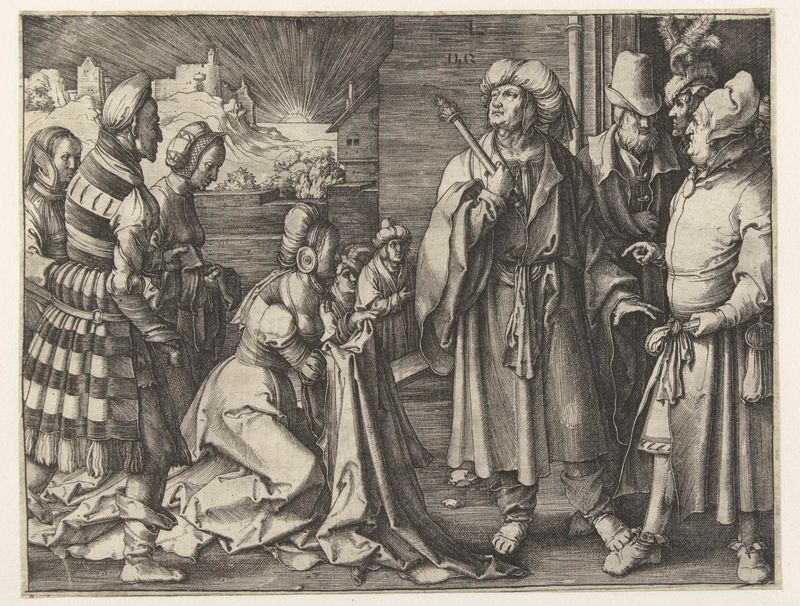
De vrouw van Potifar beschuldigt Jozef
Lucas van Leyden
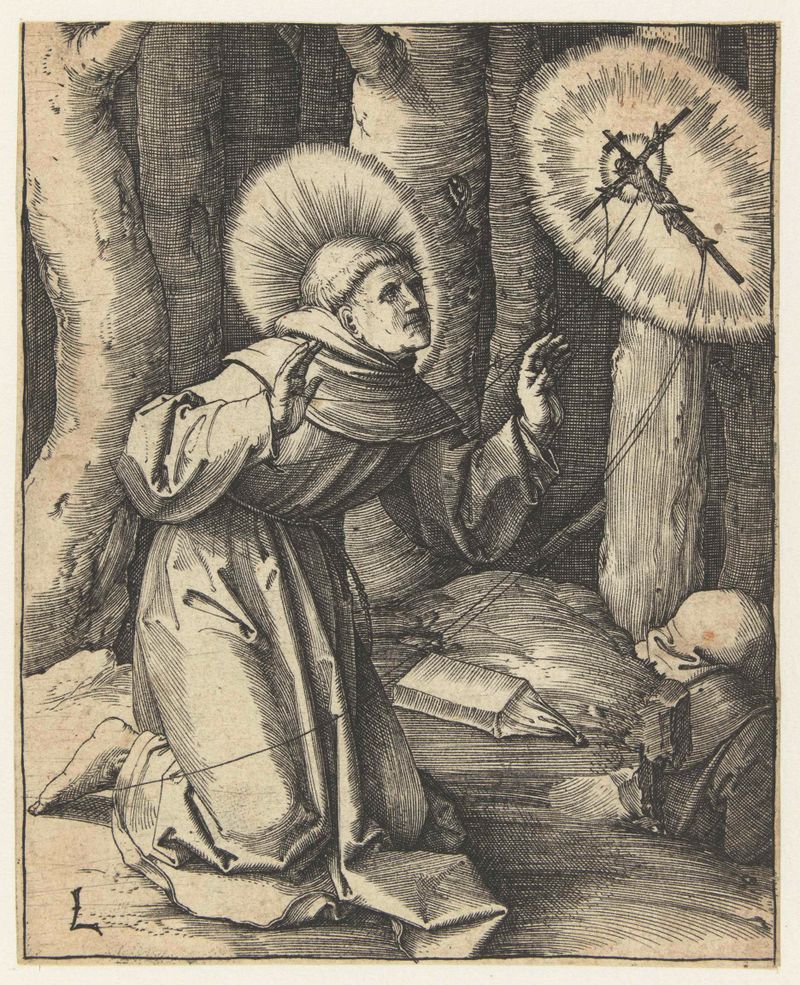
De stigmatisatie van de heilige Franciscus
Lucas van Leyden
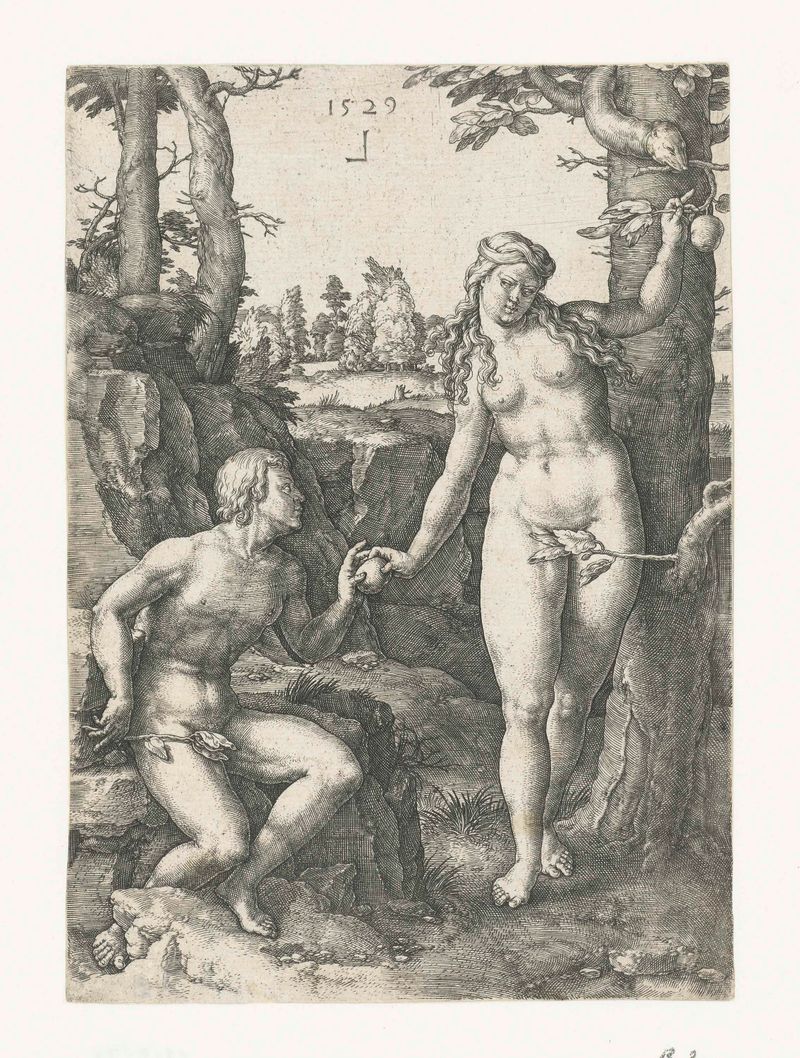
De zondeval
Lucas van Leyden
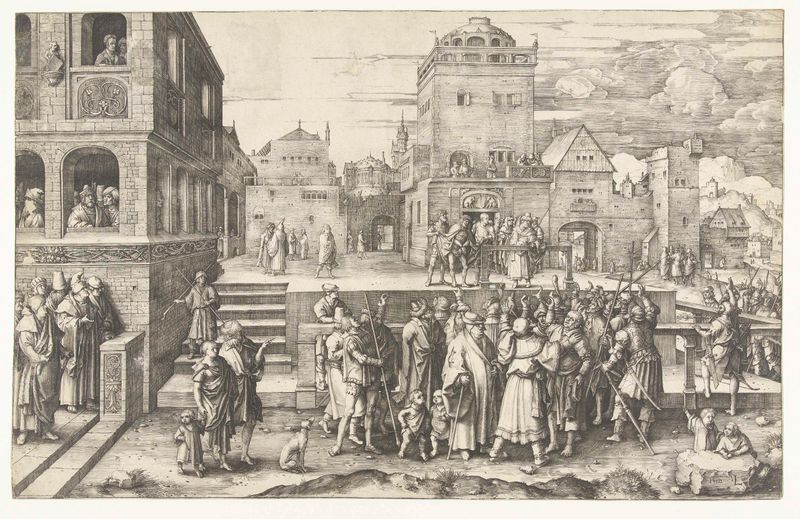
De grote Ecce Homo
Lucas van Leyden
Maria met kind
Lucas van Leyden

Doornenkroning
Lucas van Leyden
More Religious Art
Browse all →
The Return of the Prodigal Son
Rembrandt van Rijn

The Garden of Earthly Delights
El Bosco

Count Orgaz’ funeral
El Greco

The Hundred Guilder Print: the central piece with Christ preaching, the plate arched
Rembrandt van Rijn

The Descent from the Cross
Rogier van der Weyden

The return of the prodigal son
Rembrandt van Rijn