
Maine Coast — History & Facts
When did color learn to lie? A question that echoes in the heart of every viewer, beckoning us to confront the passage of time captured in a moment. Look closely at the rich, deep blues of the ocean, swirling with hints of green and white foam—a vibrant dance of waves crashing against the rugged shoreline. The foreground presents a solitary figure, perhaps a fisherman or a wanderer, silhouetted against the vastness of the sea. Notice how the light catches the edges of the clouds, creating a stark contrast with the shadows of the land; this interplay not only guides the eye but evokes a sense of solitude, as if time itself pauses in reverence of nature. Delve deeper into the painting, and you’ll uncover emotions layered within the contrast of the warm ochres of the sand and the cool tones of the water.
The lone figure, seemingly dwarfed by the expanse of the coast, symbolizes humanity’s fragile relationship with the immense forces of nature. The turbulent waves suggest a moment just before a storm, a reminder of both beauty and danger, encapsulating the duality of existence—serenity intertwined with impending chaos. In 1896, during a prolific period in his life, the artist created this work while residing in Prout's Neck, Maine. Powerful influences of the American Impressionist movement were shaping his approach, emphasizing nature’s immediacy and the ephemeral qualities of light.
This era marked a shift in his focus towards the emotional resonance within landscapes, a testament to his evolving mastery in capturing the essence of time and place.
More Artworks by Winslow Homer
Browse all →
The Gulf Stream
Winslow Homer
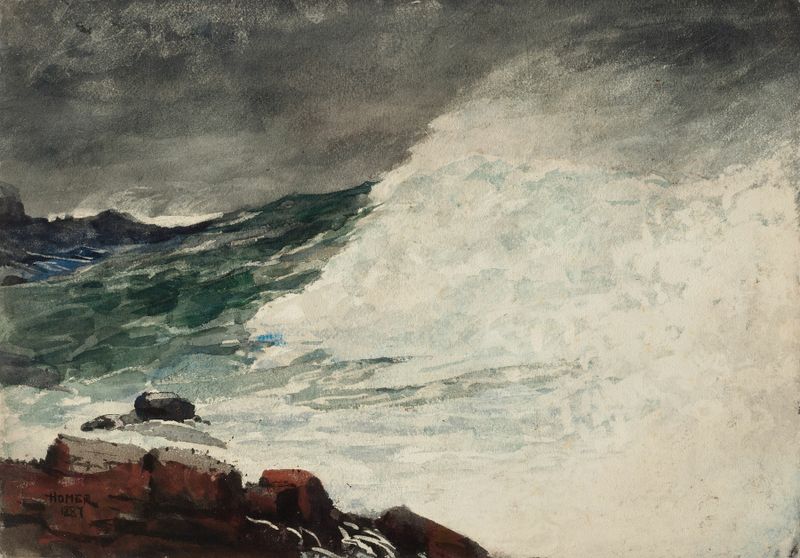
Prout’s Neck, Breaking Wave
Winslow Homer
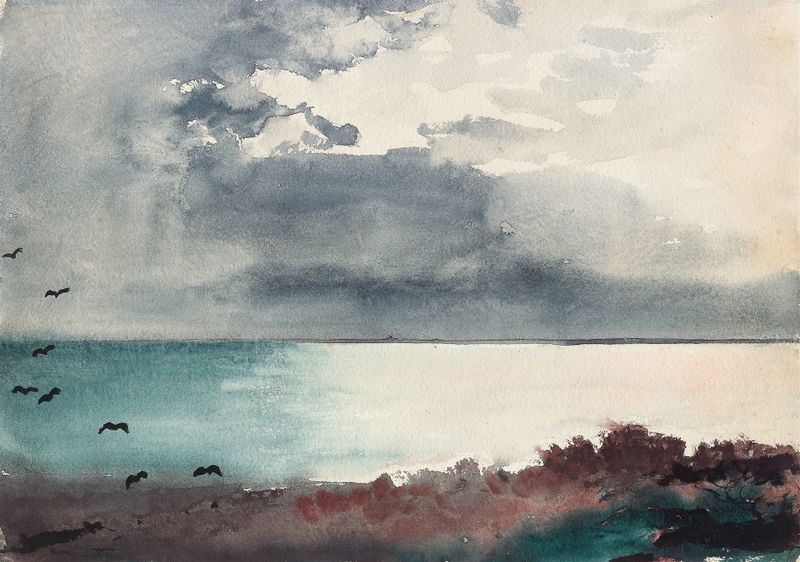
Breaking Storm, Coast of Maine
Winslow Homer
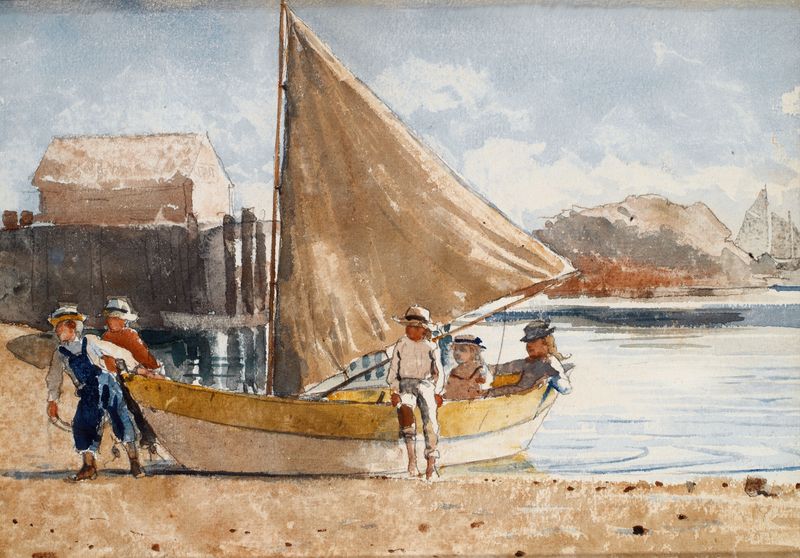
Summertime
Winslow Homer
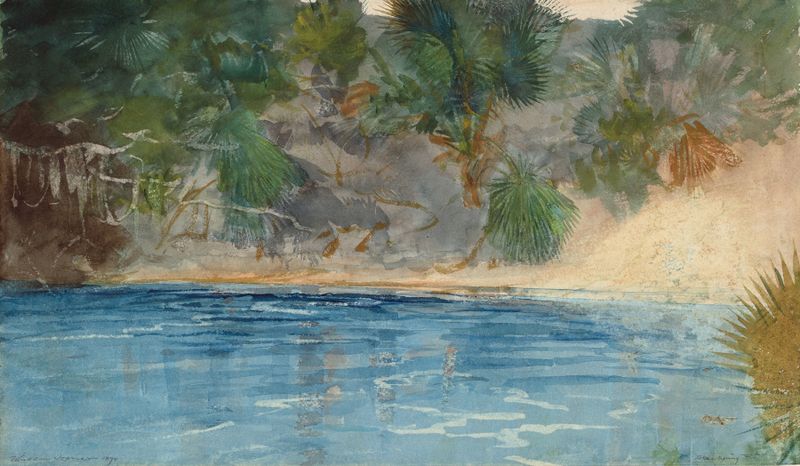
Blue Spring, Florida
Winslow Homer
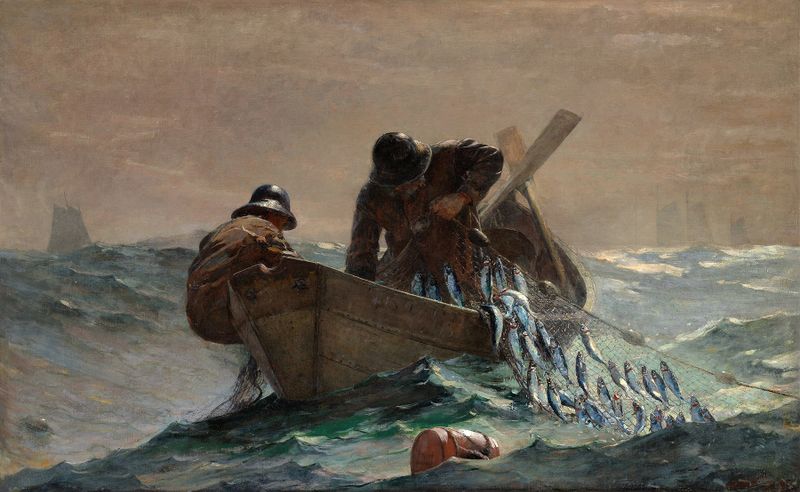
The Herring Net
Winslow Homer
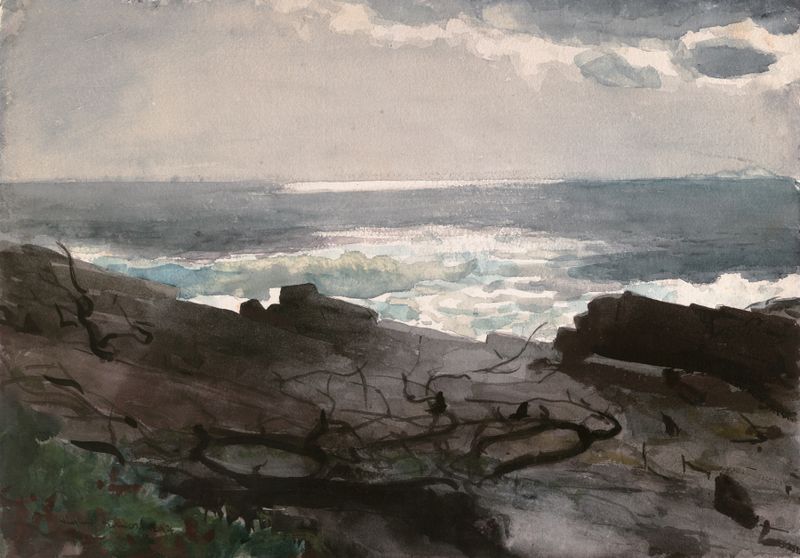
Sunshine and Shadow, Prout’s Neck
Winslow Homer
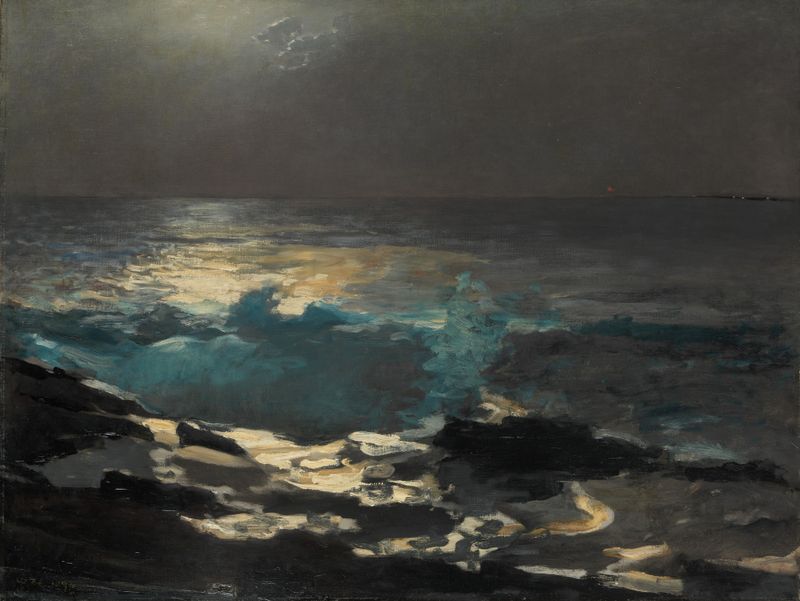
Moonlight, Wood Island Light
Winslow Homer
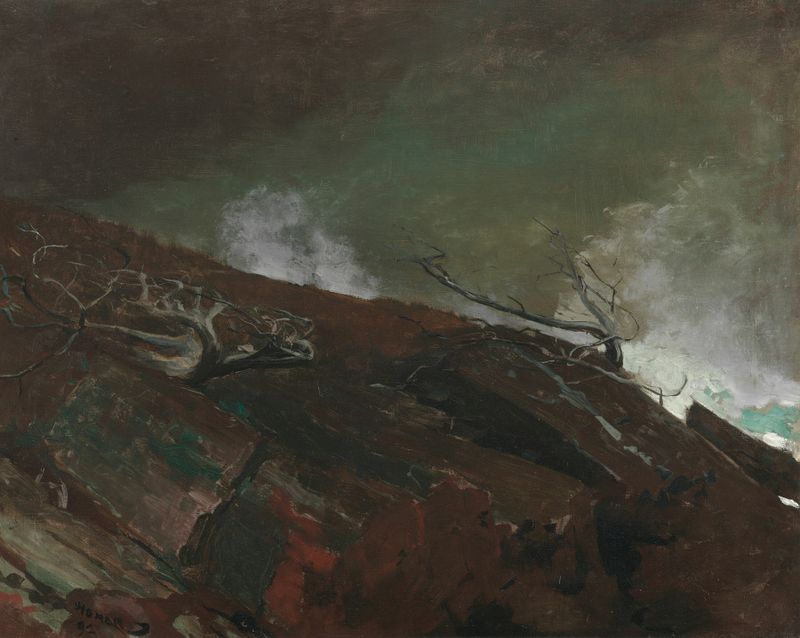
Coast of Maine
Winslow Homer
Bass Fishing – Florida
Winslow Homer




