Man bij open raam — History & Facts
Can paint confess what words never could? In Man bij open raam, the stillness of a moment captures an awakening that transcends the canvas, igniting a silent dialogue between the viewer and the subject. Look to the left at the figure poised by the open window. Dressed in rich, earthy tones, he gazes outward, his attention seemingly caught in the delicate interplay of light filtering through the translucent fabric. Notice how the light falls upon the folds of his garment, rendering them with a soft luminosity that contrasts against the darkened interior.
The stark division between the vibrant outdoors and the muted surroundings invites contemplation; it is as if the window serves as a threshold to another world, beckoning the viewer to partake in this intimate moment. Delve deeper and observe the nuances of expression in the man’s pensive gaze. There lies a subtle tension between his inner world and the vibrant life beyond the pane, suggesting a yearning for connection or understanding. The open window symbolizes opportunity and awakening, yet it also hints at the barriers that can confine us.
In this delicate balance of light and shadow, Bega encapsulates the paradox of desire—how we crave the vastness of the outside while often remaining anchored within the confines of our own space. During the years 1642 to 1664, Cornelis Pietersz. Bega painted in the Netherlands, a period marked by artistic exploration and the rise of genre painting. He was influenced by the prevailing Baroque style, focusing on domestic interiors and intimate scenes that reflect the complexities of daily life.
This artwork emerges from a time when artists began to convey personal narratives through their work, showcasing the interplay of everyday existence and deeper human emotion, aligning perfectly with the themes present in this piece.
More Artworks by Cornelis Pietersz. Bega
Browse all →
Mannen en jonge vrouw in herberg
Cornelis Pietersz. Bega

Twee mannen en vrouw met kind zittend in herberg
Cornelis Pietersz. Bega
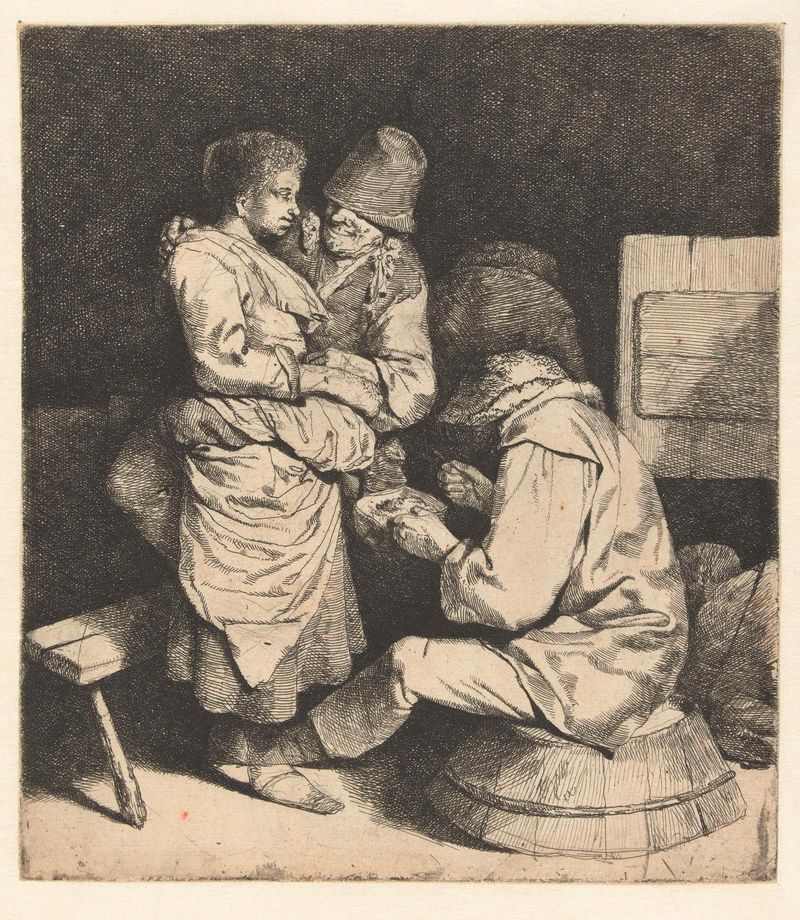
Vrouw vastgepakt door man, andere man zit te eten in herberg
Cornelis Pietersz. Bega

Jonge vrouw zittend met een pijp
Cornelis Pietersz. Bega

Staande vrouw vastgepakt door man, andere man kijkt toe in herberg
Cornelis Pietersz. Bega
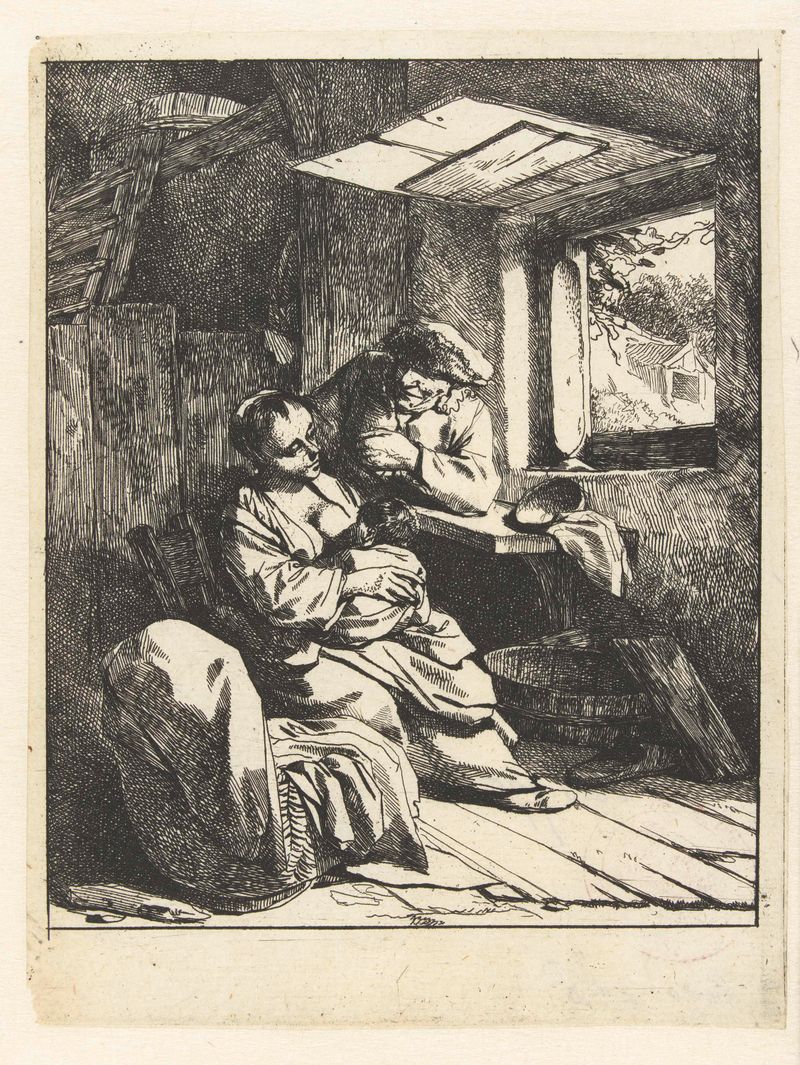
Vrouw met kind en man bij wieg in interieur met open raam
Cornelis Pietersz. Bega
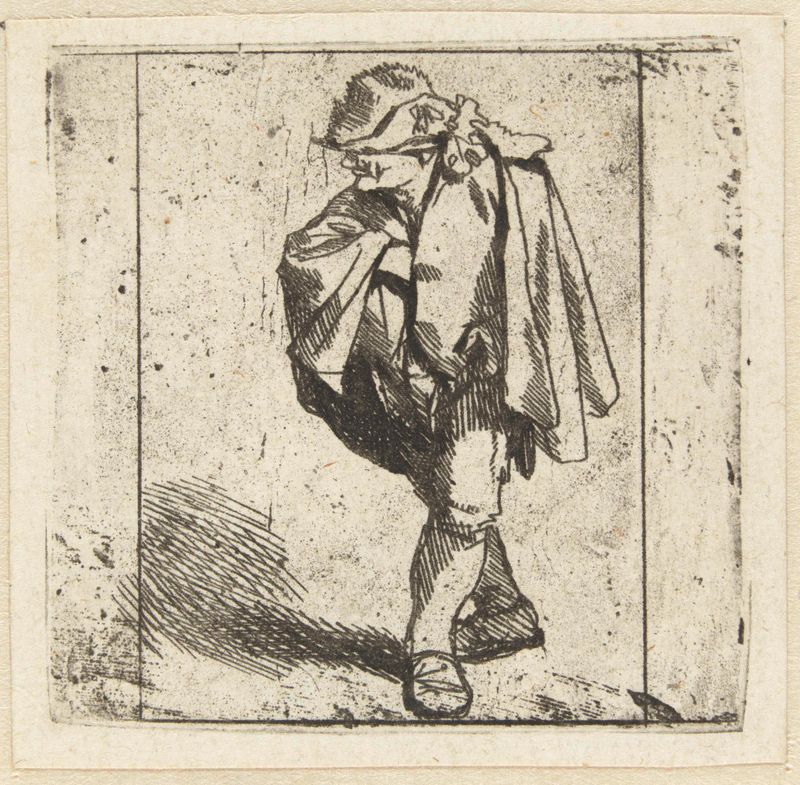
Staande man met de rechterhand op de borst in zijn mantel gestoken
Cornelis Pietersz. Bega
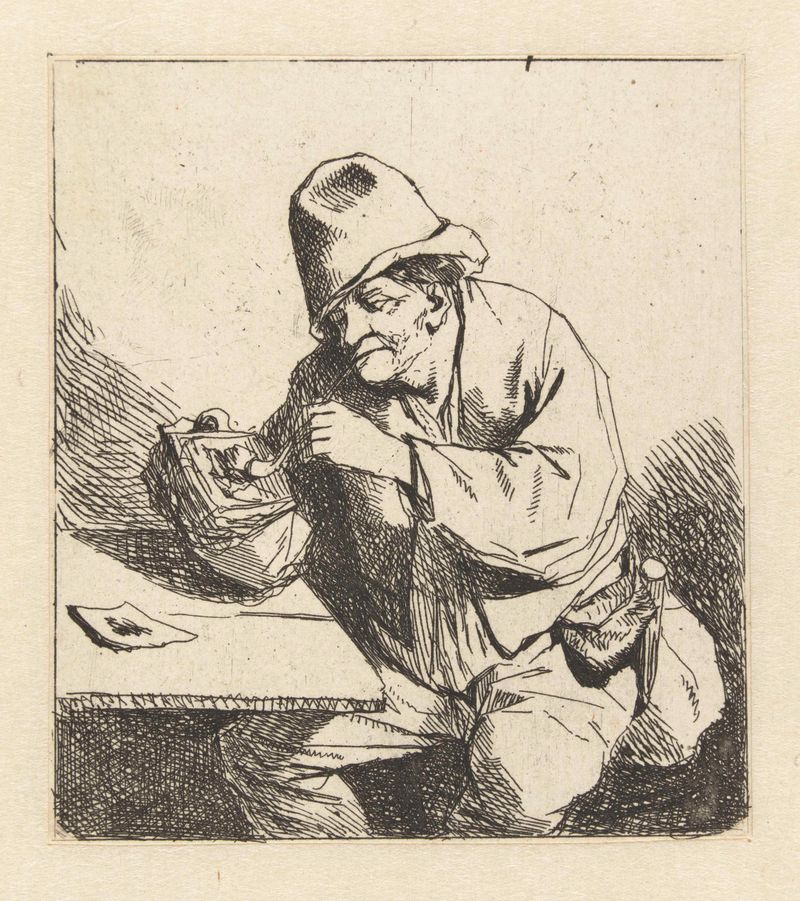
Zittende man steekt pijp aan
Cornelis Pietersz. Bega

Man zittend op ton met kruik in handen
Cornelis Pietersz. Bega

Liefdespaar
Cornelis Pietersz. Bega