
Man of Sorrows — History & Facts
A figure of Christ fills the panel, shown from the waist up against a dark, unadorned background. His head is slightly tilted to the left, and his gaze is directed outward with heavy-lidded eyes and parted lips, suggesting sorrow and resignation. A crown of thorns encircles his long, flowing hair, with sharp thorns pressing into his forehead and small drops of blood visible beneath them.
Behind his head, golden rays form a radiant halo, their pointed shapes fanning outward in regular intervals. Christ’s beard is finely detailed, with individual strands rendered in soft, curving lines that echo the waves of his hair. He wears a richly decorated robe in deep red, edged with intricate gold patterns, and a green mantle draped over his shoulder, also trimmed with gold.
His right hand is raised in a gesture of blessing, with the thumb and two fingers extended and the other fingers curled inward. The left hand crosses the body, displaying the wound in his palm, while a second wound is visible on his right hand. The flesh is painted with subtle gradations of light and shadow, giving the skin a soft, almost translucent quality.
The gold embroidery on the robe and collar is rendered with precise, repeating motifs that catch the light and add a sense of richness to the garment. The background remains uniformly dark, allowing the luminous figure and the gold accents to stand out sharply. Fine brushwork is evident in the delicate rendering of hair, beard, and fabric, while the wounds are painted with short, linear strokes that emphasize their pain. The date of the work is given as between circa 1495 and circa 1500.
Sources: Wikidata Q110714745 · Image source (Wikimedia Commons)
More Artworks by Sandro Botticelli
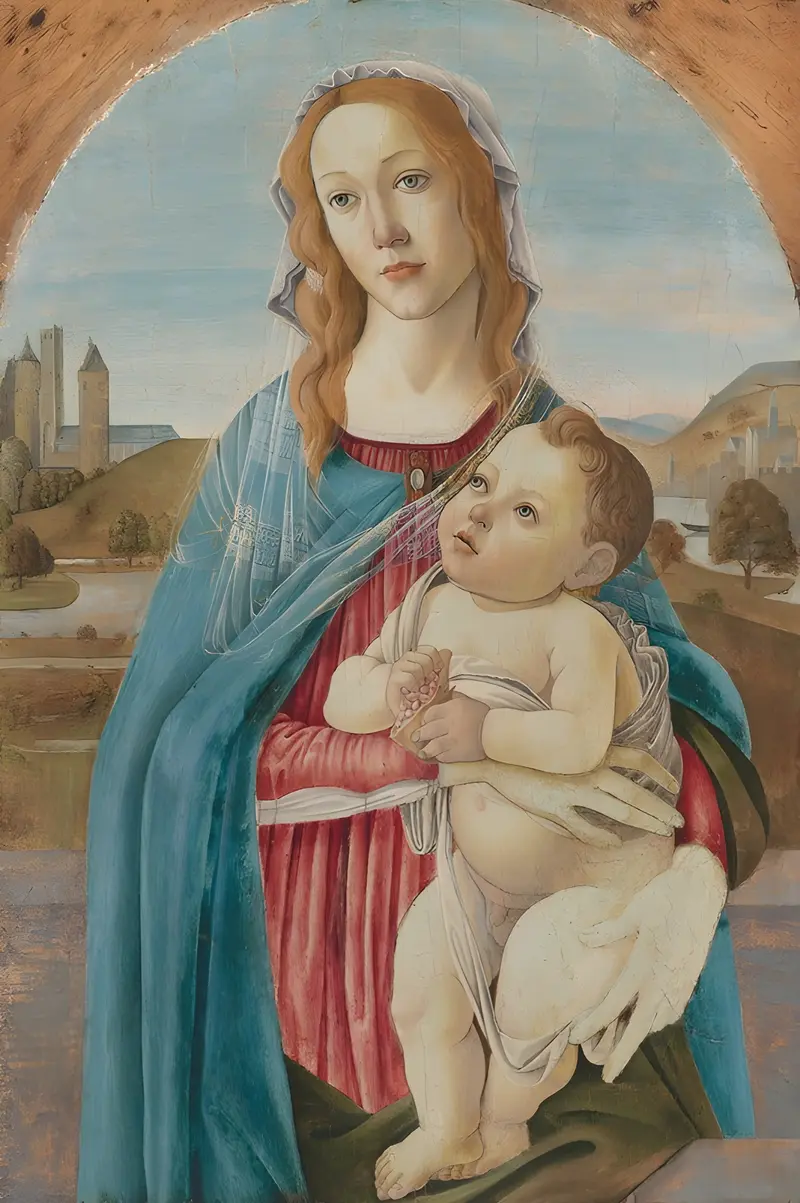
Virgin and Child
Sandro Botticelli
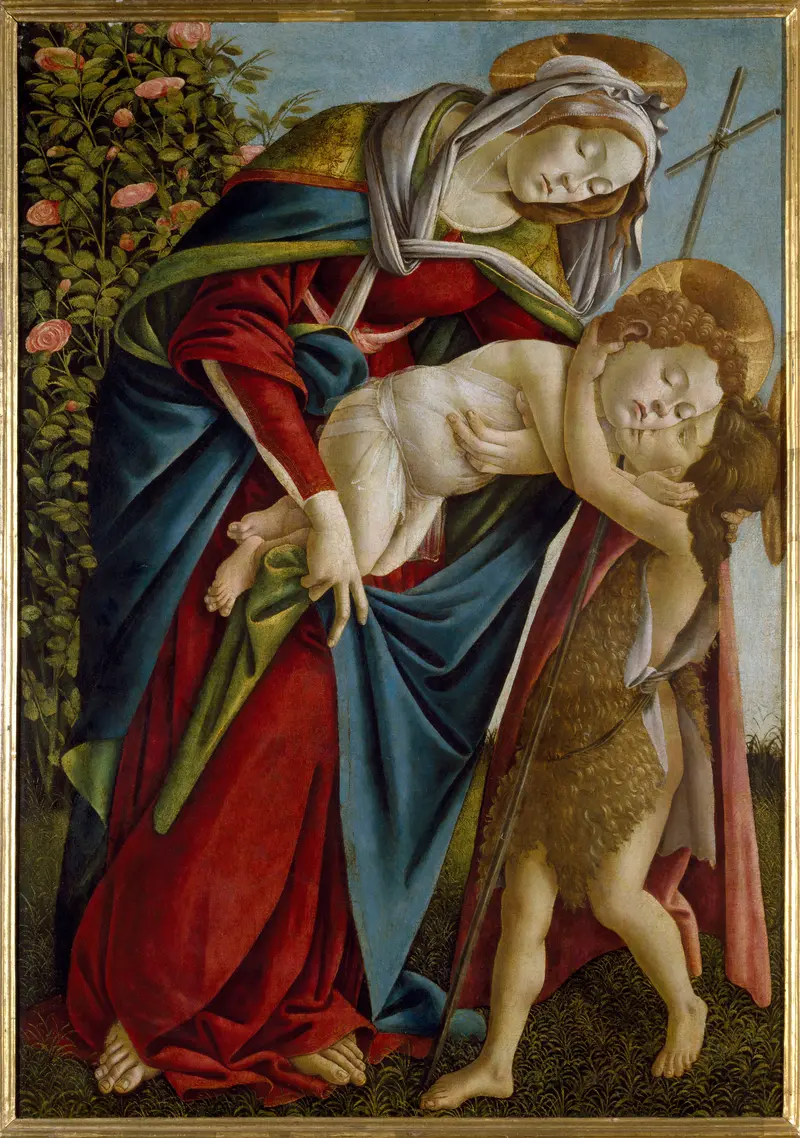
Madonna and Child and the Young St John the Baptist
Sandro Botticelli
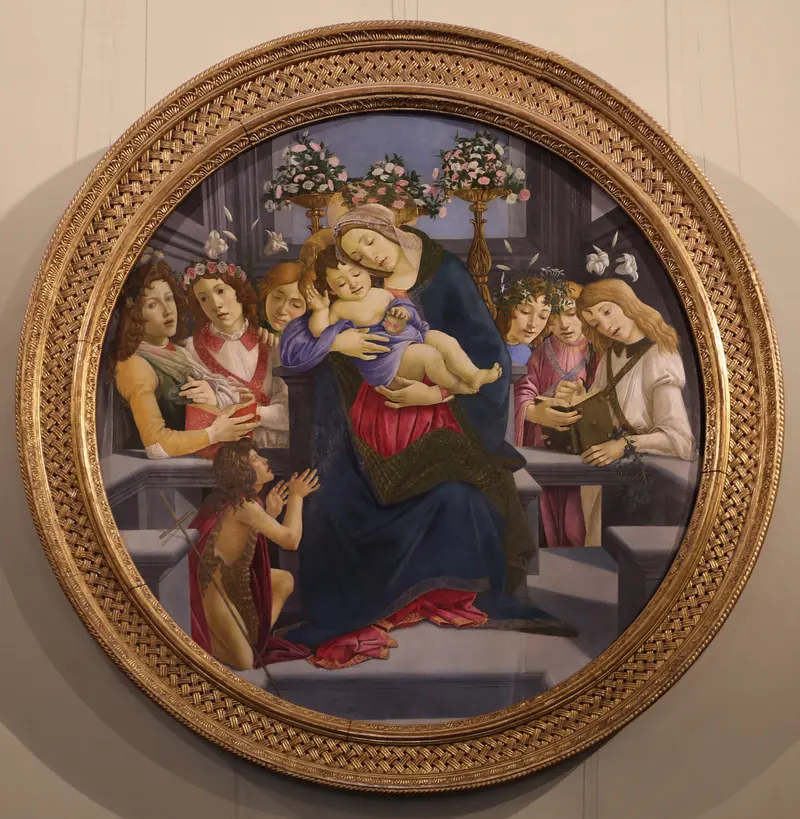
Madonna and Child with six angels and Saint John the Baptist as Child
Sandro Botticelli
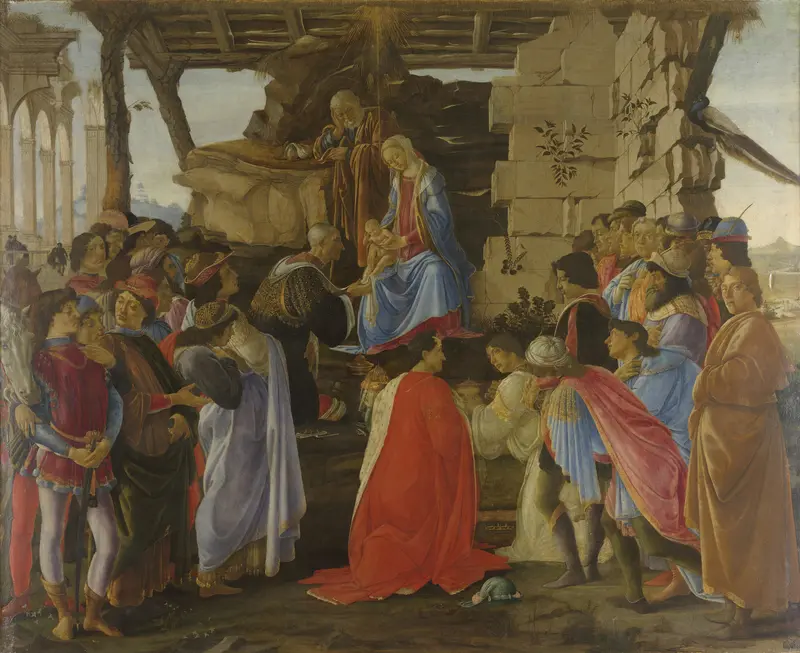
Adoration of the Magi
Sandro Botticelli

Virgin and Child with the Young Saint John the Baptist
Sandro Botticelli
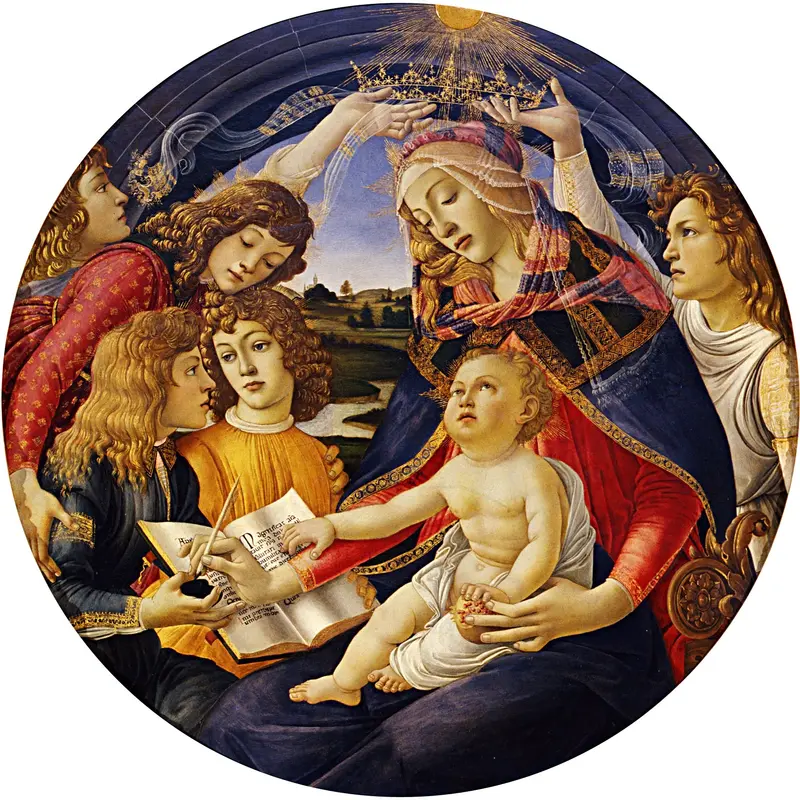
Madonna of the Magnificat
Sandro Botticelli
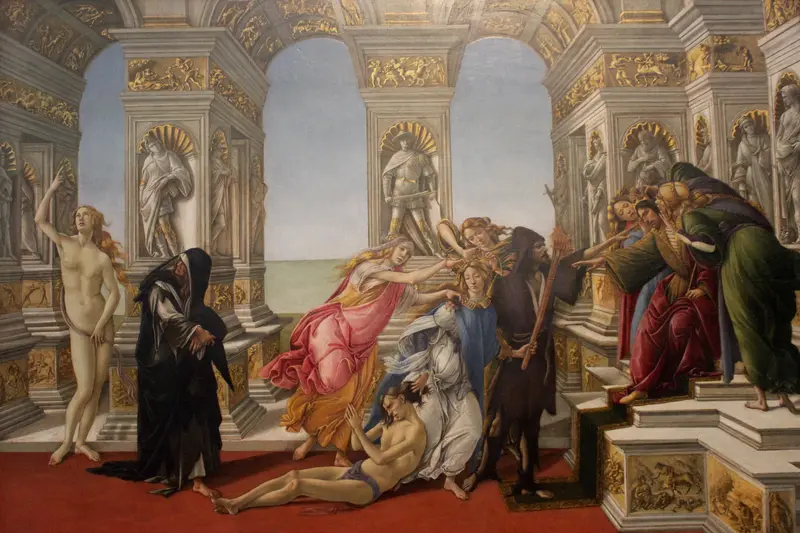
Calumny of Apelles
Sandro Botticelli
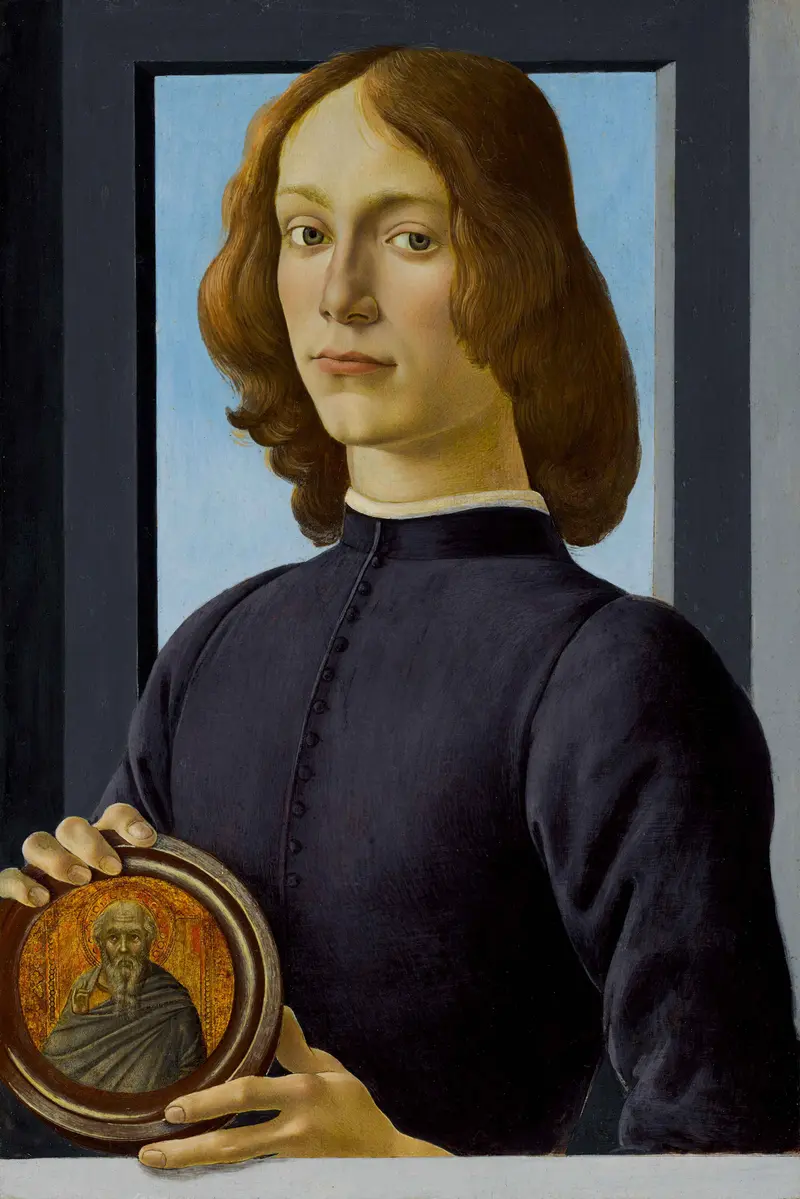
Portrait of a young man holding a roundel
Sandro Botticelli

The Trinity with Saint Mary Magdalene and Saint John the Baptist, the Archangel Raphael and Tobias
Sandro Botticelli
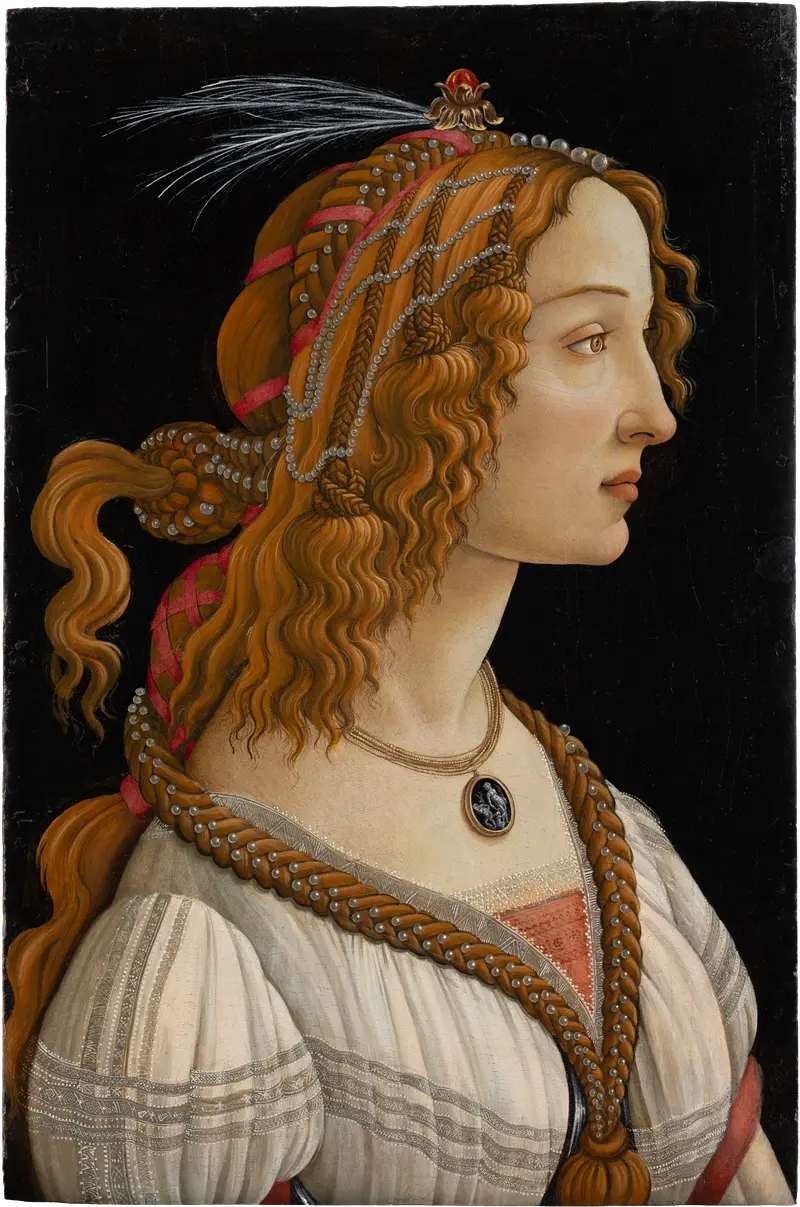
Idealized Portrait of a Lady (Portrait of Simonetta Vespucci as Nymph)
Sandro Botticelli





