
Man with Lance Riding through the Snow — History & Facts
A single rider pushes forward, hunched against the cold, his lance angled like a compass needle through the swirling snow. The horse beneath him is all muscle and motion, its hooves half-lost in the churned white ground. What first seizes the eye is not the detail of uniform or face, but the very sensation of movement through resistance—the blur of the horse’s legs, the rider’s forward lean, the wind that seems to whistle past the canvas itself.
Adolf Schreyer builds the world here from quick, vigorous strokes, letting the snow and sky merge so that the figure emerges as if out of a storm. The palette is all steel blue and dun, the light diffused, with only the faintest hints of color—perhaps a saddle blanket or a glint of brass—breaking through the wintry gloom. Painted in 1880, this work belongs to a world where scenes of military life and travel on horseback fascinated audiences across Europe. Schreyer, known for his dynamic equestrian subjects, often drew on the tumult of Eastern European and Middle Eastern campaigns, though the specifics of this scene remain unrecorded.
Such paintings were collected by those who craved the romance and peril of the frontier, at a time when the boundaries of empires were shifting and the horseman was both a symbol of tradition and of restless change. Now held by the Art Institute of Chicago, Man with Lance Riding through the Snow stands as a testament to the era’s appetite for drama and motion—inviting the viewer to lean in, feel the cold, and follow the rider’s uncertain path into the storm.
More Artworks by Adolf Schreyer
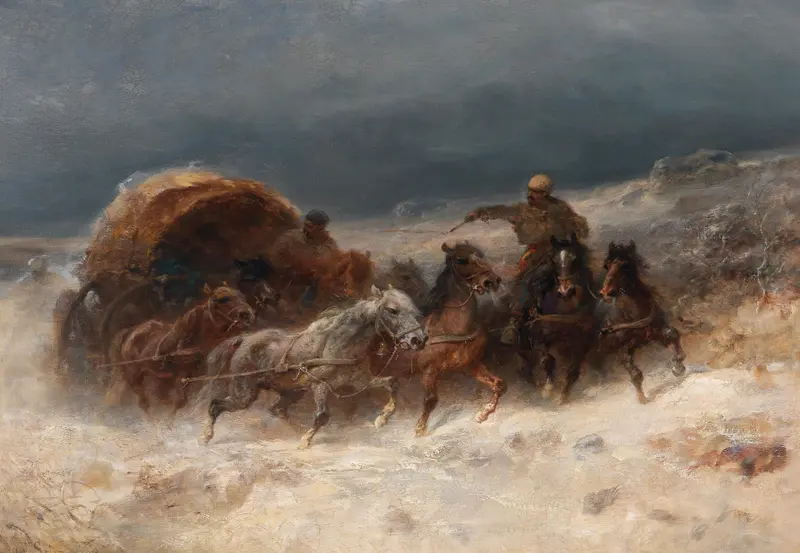
Geldings In A Winter Landscape
Adolf Schreyer
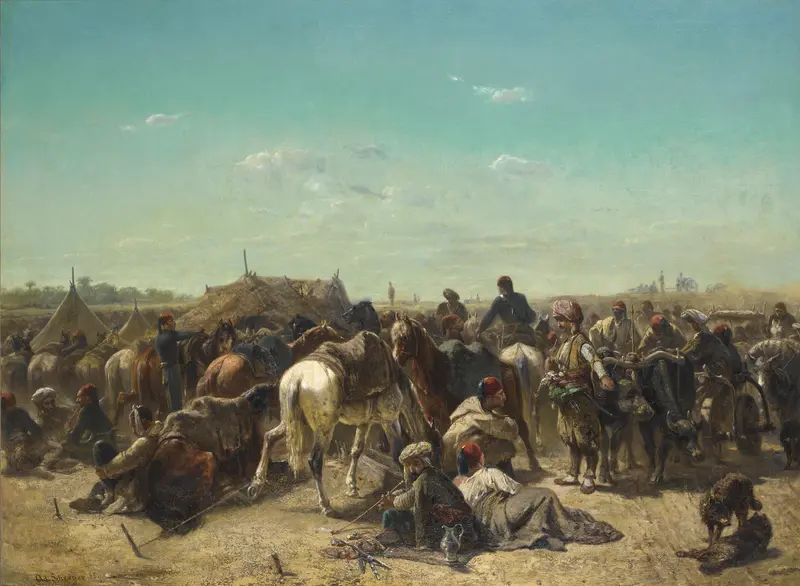
An Ottoman encampment
Adolf Schreyer
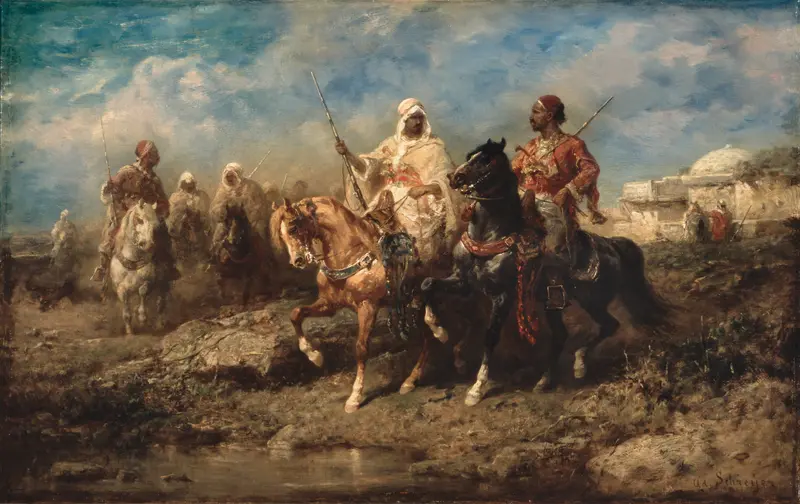
Arabs
Adolf Schreyer
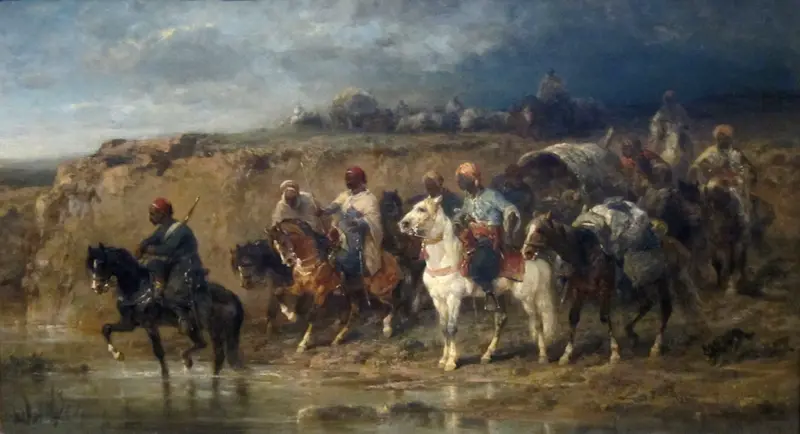
Arab Caravan
Adolf Schreyer
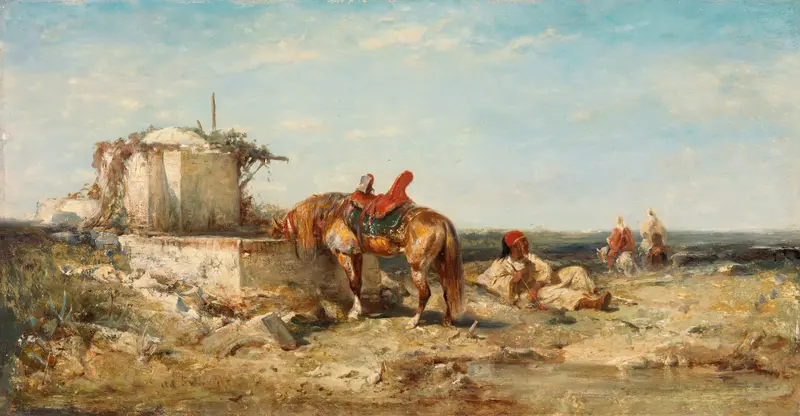
Eastern Soldiers with a Horse Drinking
Adolf Schreyer
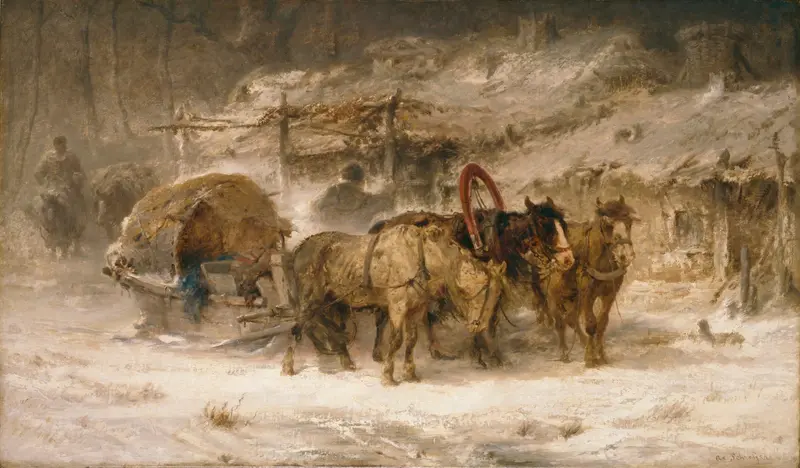
Halt at the Inn
Adolf Schreyer
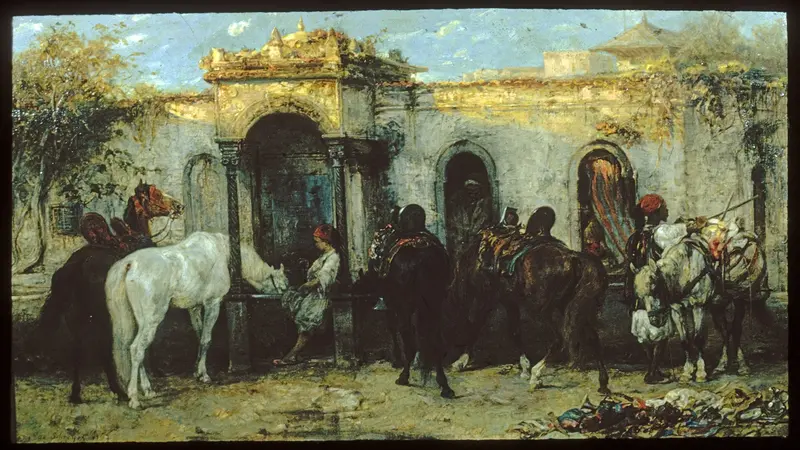
Arabs in Egypt, Sunrise
Adolf Schreyer
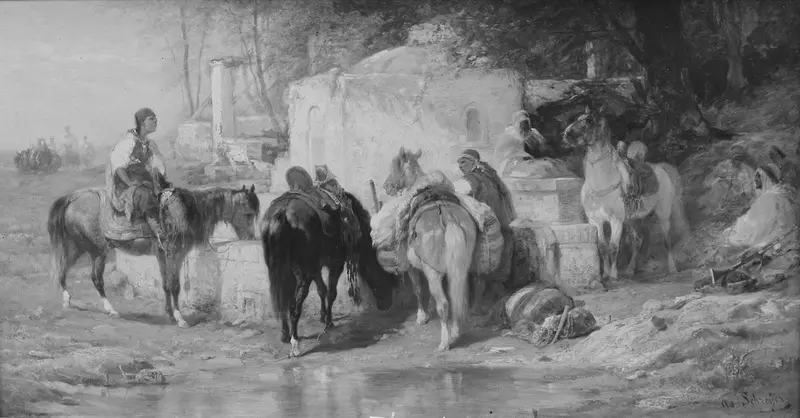
Arab Horsemen Resting at a Fountain
Adolf Schreyer
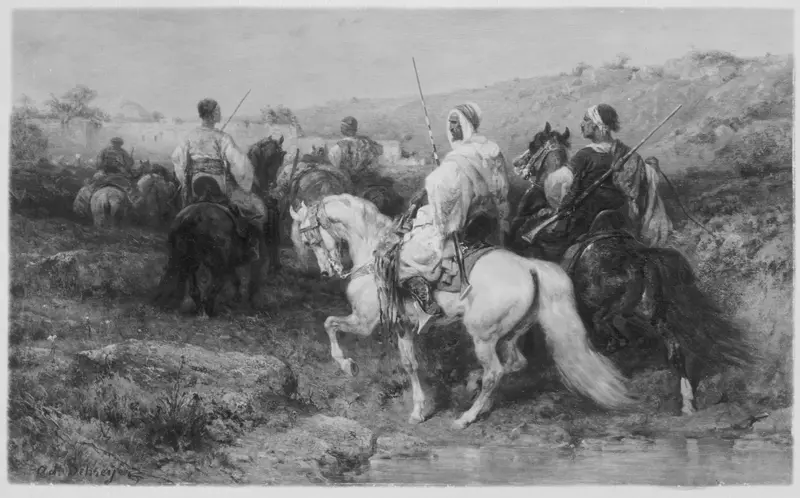
Arabs on the March
Adolf Schreyer
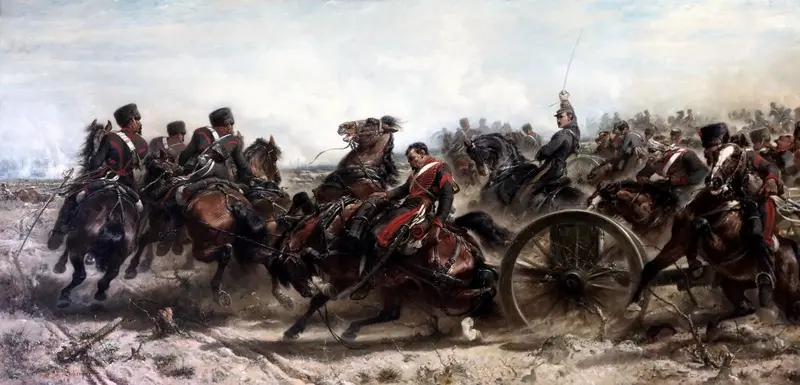
Charge de l'artillerie de la Garde Impériale à Traktir Orsay RF 440
Adolf Schreyer



