
Maria Clara Philippina von Ingelheim — History & Facts
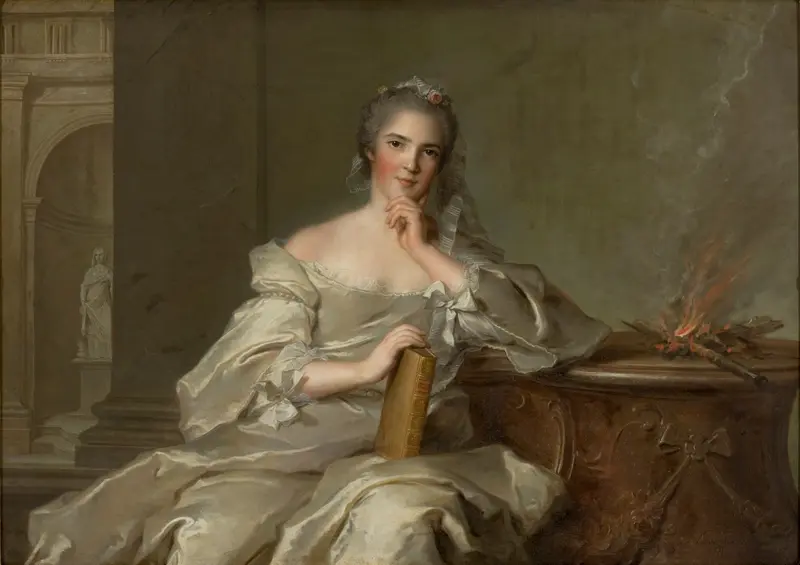
A glimmer of gentle mischief plays across the sitter’s lips, as if she has just been caught mid-thought in the act of weaving her garland of flowers. The eye is drawn first to the luminous oval of her face, framed by powdered hair and the delicate blue flowers that echo the deep blue drapery behind her. The creamy folds of her gown spill across the lower half of the canvas, their shimmer heightened by the artist’s careful handling of light, which pools around her shoulders and hands.
Each blossom she threads seems to invite closer inspection, a coded language of beauty and refinement, while her relaxed pose—one hand resting, the other lightly at work—suggests a world of leisure and cultivated grace. Painted in 1745 by Jean-Marc Nattier, this portrait belongs to the world of the French Rococo, when the portrait was both a record and a performance of status. Such works were often commissioned by aristocratic families eager to display their lineage and taste, and Nattier was celebrated for lending his sitters an air of elegant ease. The painting now resides in the Staatliche Museen zu Berlin, a reminder of how eighteenth-century portraiture could blend flattery with fashion, and how history has kept few traces of the lives behind these poised visages.
The sitter’s direct gaze invites you to imagine the conversation that might have unfolded just before the artist’s brush stilled.
More Artworks by Jean-Marc Nattier

Madame Crozat de Thiers and Her Daughter
Jean-Marc Nattier
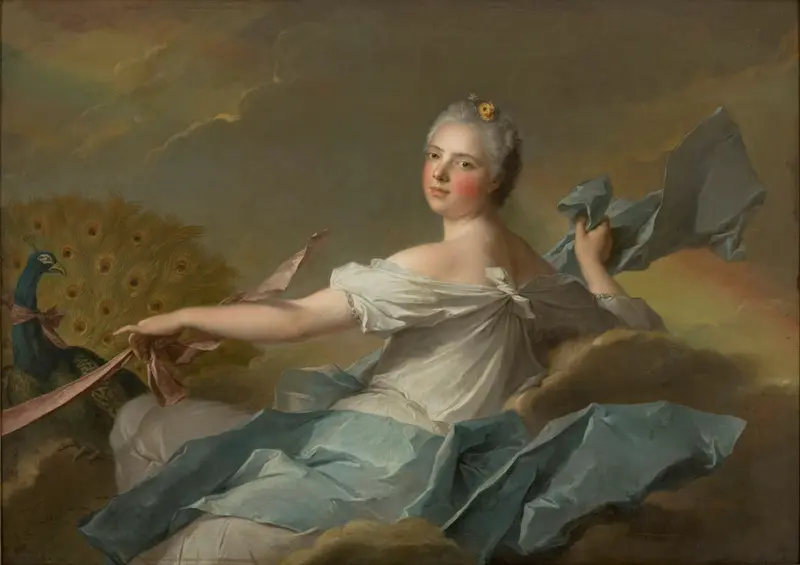
Princess Marie Adélaïde of France - The Air
Jean-Marc Nattier
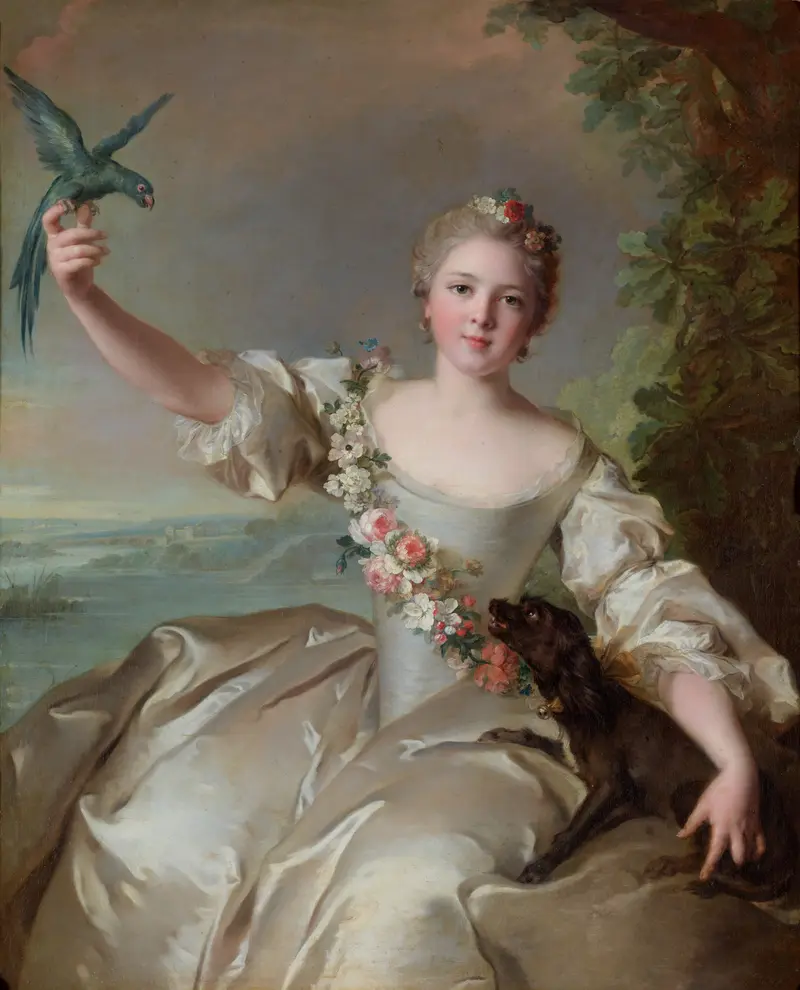
Portrait de Mathilde de Canisy, marquise d'Antin
Jean-Marc Nattier
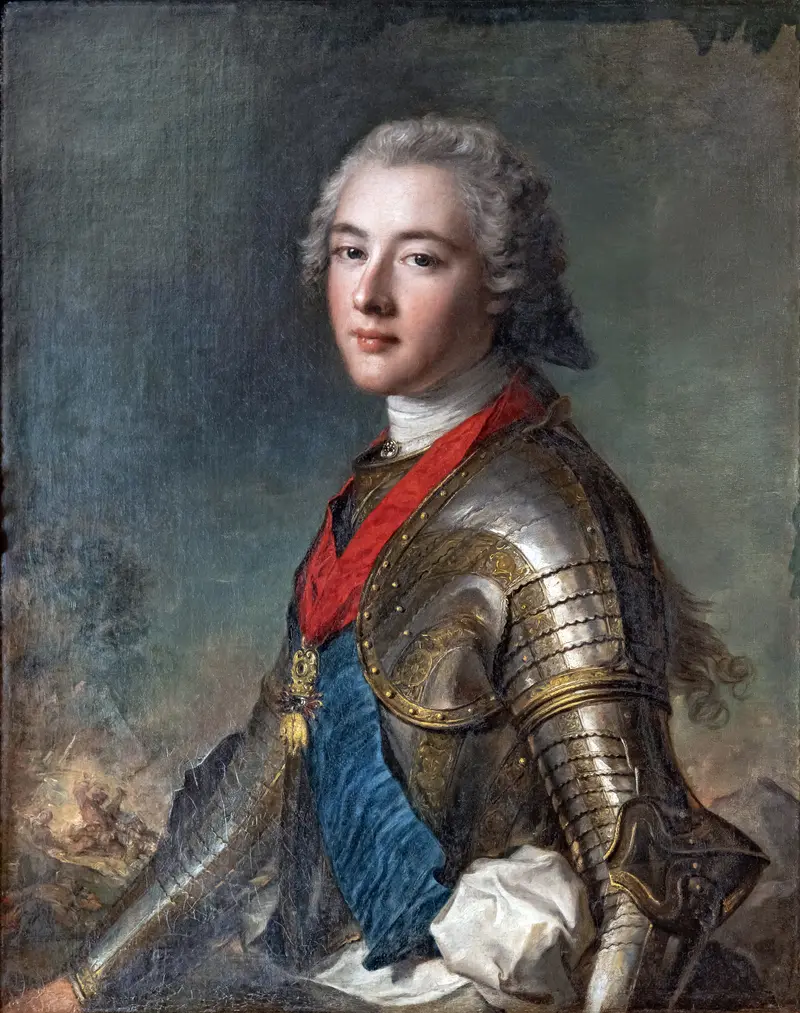
Bemberg Fondation Toulouse - Portrait de Louis Jean Marie de Bourbon, Duc de Penthièvre - Jean Marc Nattier inv.1158 82x65.4
Jean-Marc Nattier
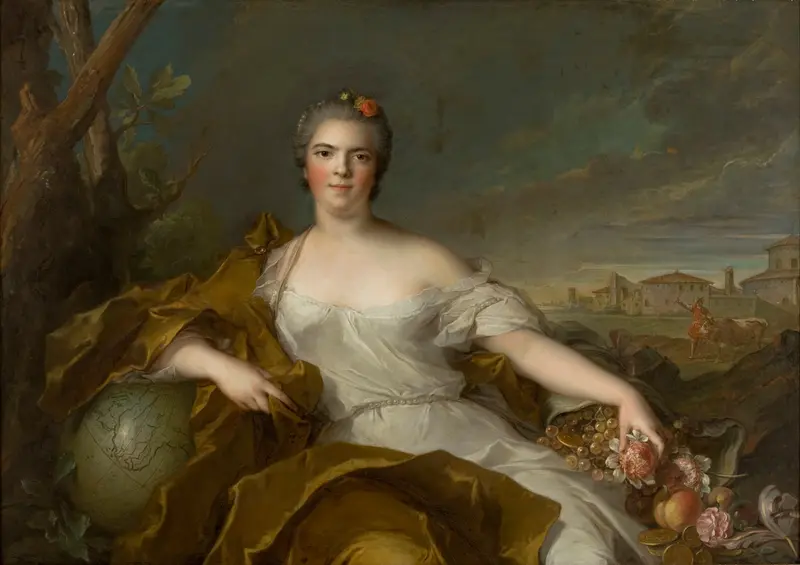
Princess Louise-Élisabeth of France - The Earth
Jean-Marc Nattier
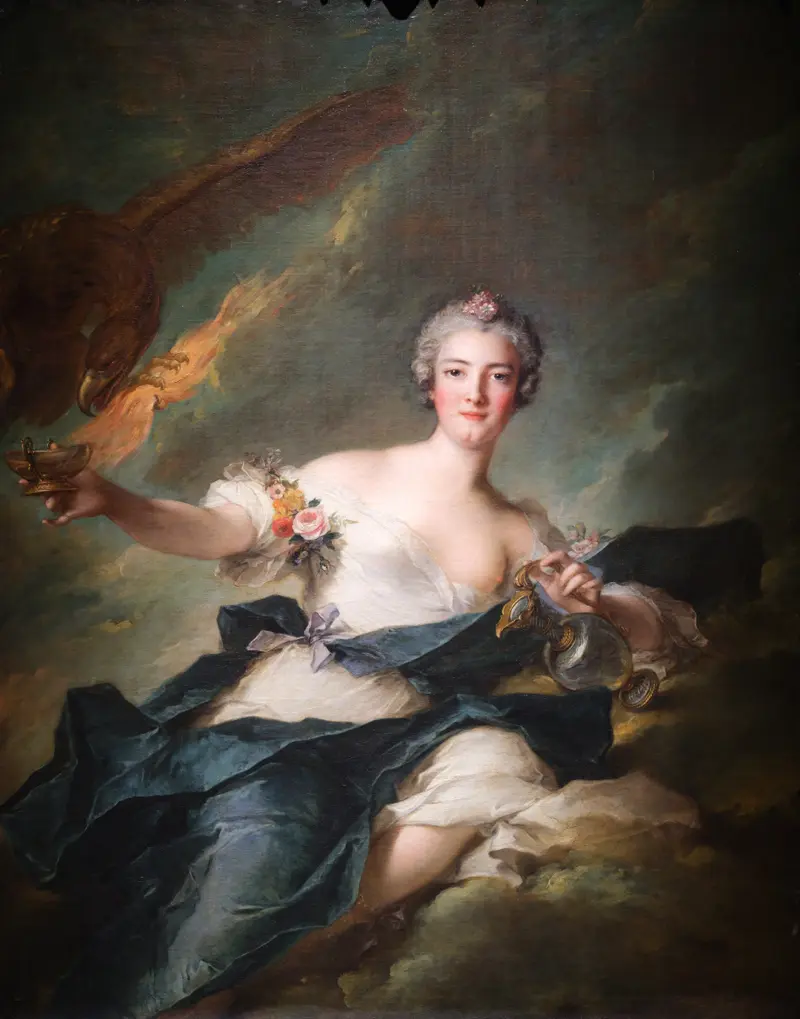
The Duchess of Chaulnes Represented as Hebe
Jean-Marc Nattier
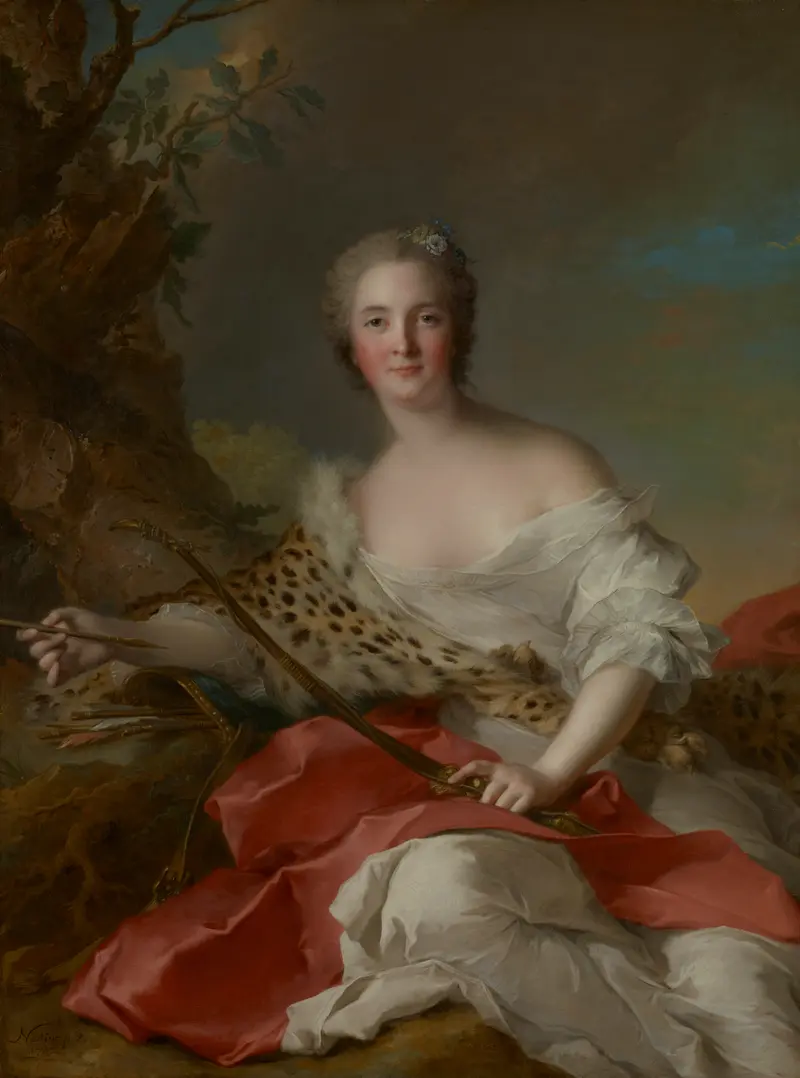
Portrait of Madame Bonnier de la Mosson as Diana (Constance-Gabrielle-Magdeleine du Monciel de Lauraille
Jean-Marc Nattier
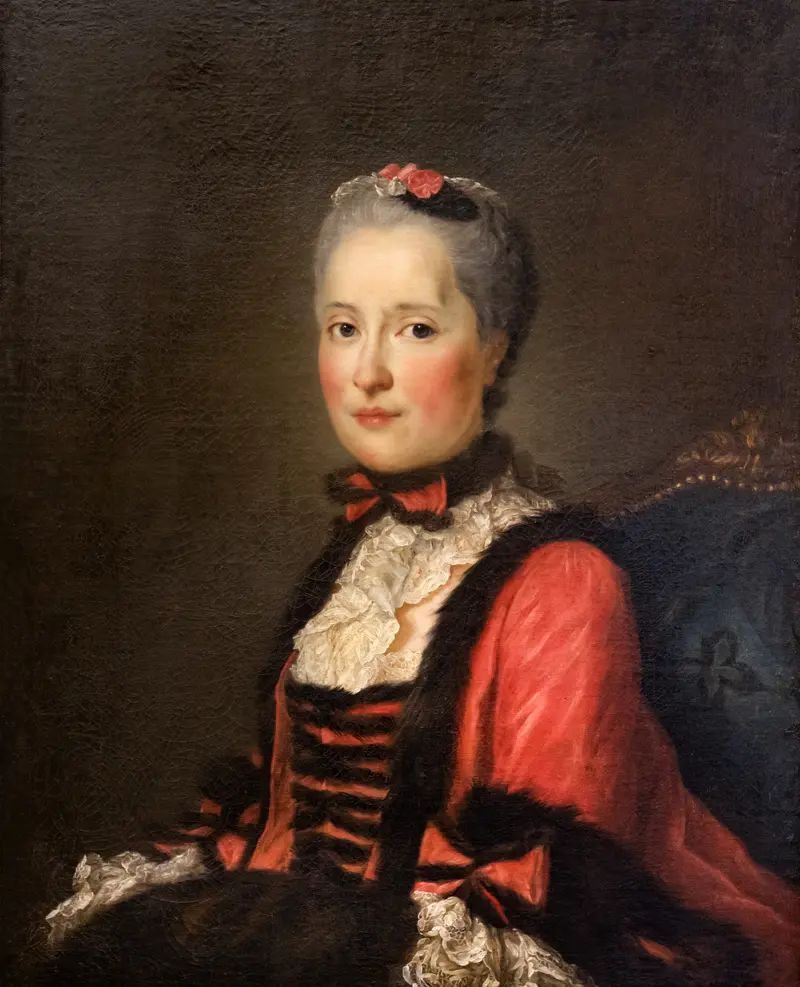
Portrait of Marie-Josephe of Saxony, Dauphine of France
Jean-Marc Nattier
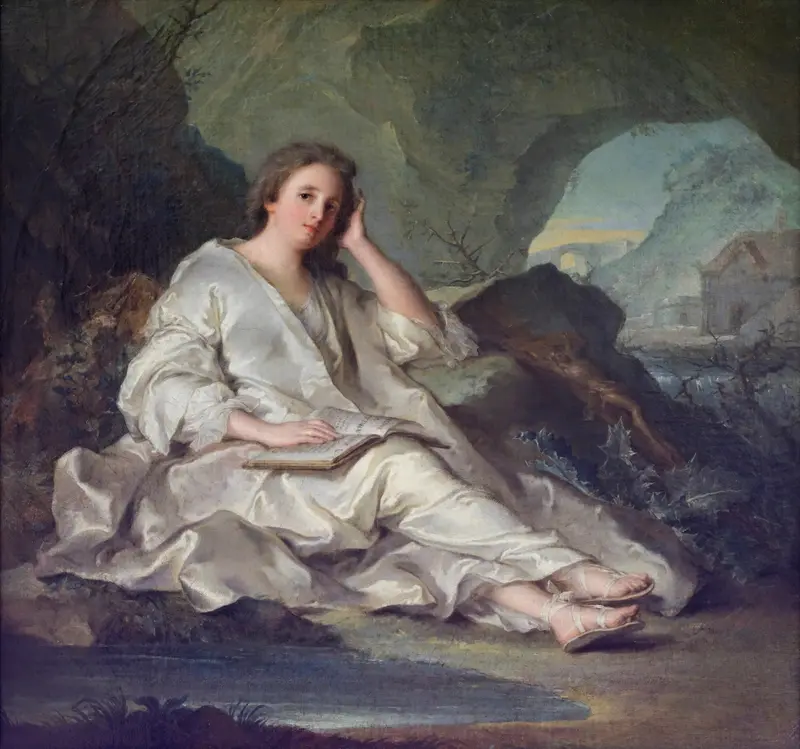
La Madeleine, ou Une Pénitente dans le désert Musée du Louvre Peintures INV 6880 ; MR
Jean-Marc Nattier
Princess Anne-Henriette of France - The Fire
Jean-Marc Nattier





