
Maria met kind en de heilige Anna — History & Facts
What if silence could speak through light? In the stillness of Maria met kind en de heilige Anna, decay intertwines with reverence, suggesting the transient nature of existence. Each element is not merely a representation but a whisper of time, echoing the eternal in the ephemeral. Look to the left at the serene face of Anna, the figures positioned within a harmonious triangular composition that draws the eye inward. Notice how the soft light illuminates the folds of their garments, revealing rich hues of golden ochre and deep umber that contrast with the somber shadows.
The delicate brushwork captures the texture of skin and fabric, creating a lifelike quality that invites contemplation. The background, a subtle gradation of muted tones, enhances the ethereal atmosphere, allowing the central figures to resonate with an almost sacred presence. Delve deeper into the painting's symbolism, where the presence of the child signifies hope and continuity amid the inevitable decay of life. The juxtaposition of Anna’s aged form against the youth of Maria and her child evokes a poignant tension between mortality and innocence.
Furthermore, the careful placement of the figures creates an unspoken connection, as if they are engaged in a dialogue about the passage of time—a narrative in which both decay and rebirth coexist. In 1516, Lucas van Leyden was at a pivotal moment in his career, having already established himself in the Northern Renaissance art scene. Working in a period marked by the shift from medieval traditions to humanist themes, he painted this work in his native Netherlands, a time when artists were exploring both religious subject matter and intricate details. This piece reflects not just personal artistry but also a broader cultural movement towards capturing the complexity of human emotion and experience.
More Artworks by Lucas van Leyden
Browse all →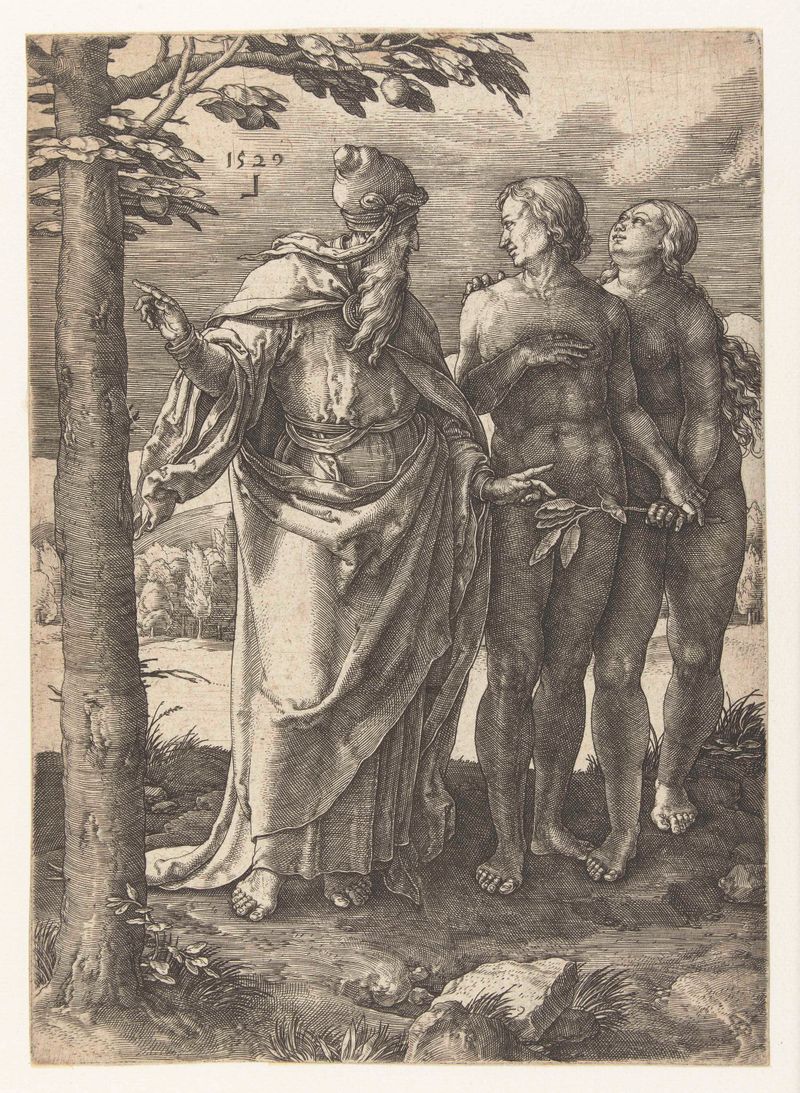
Het eerste verbod
Lucas van Leyden
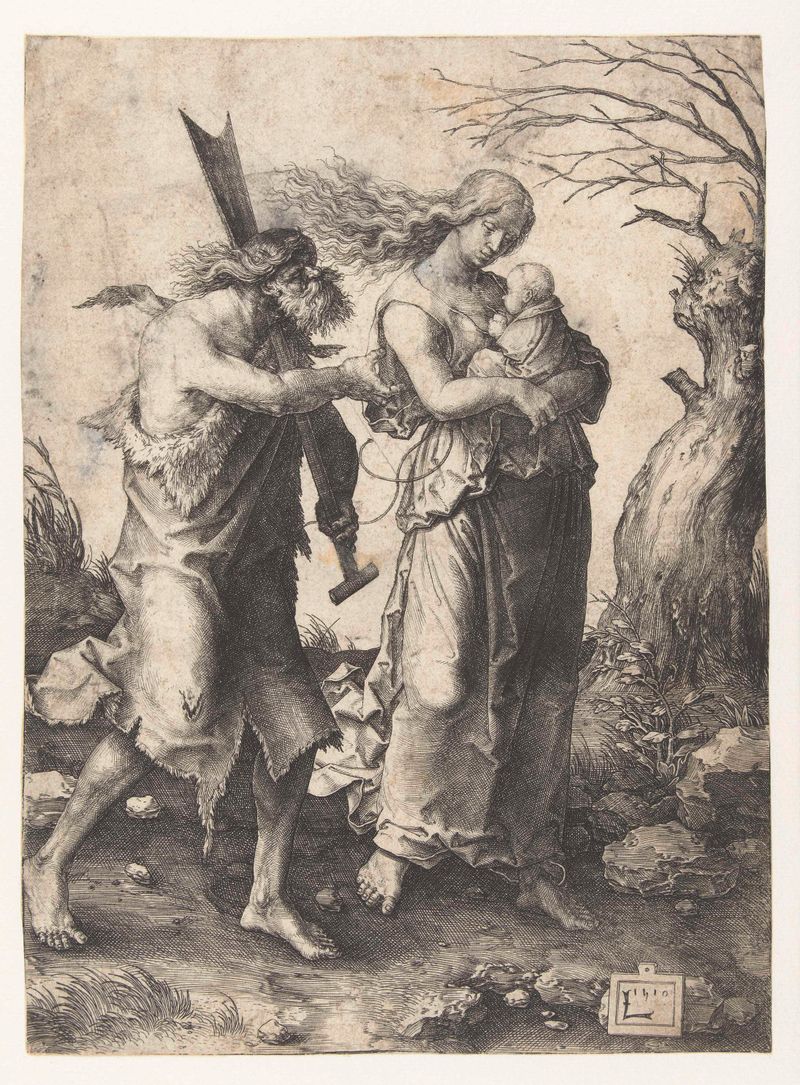
Adam en Eva na de verdrijving uit het paradijs
Lucas van Leyden
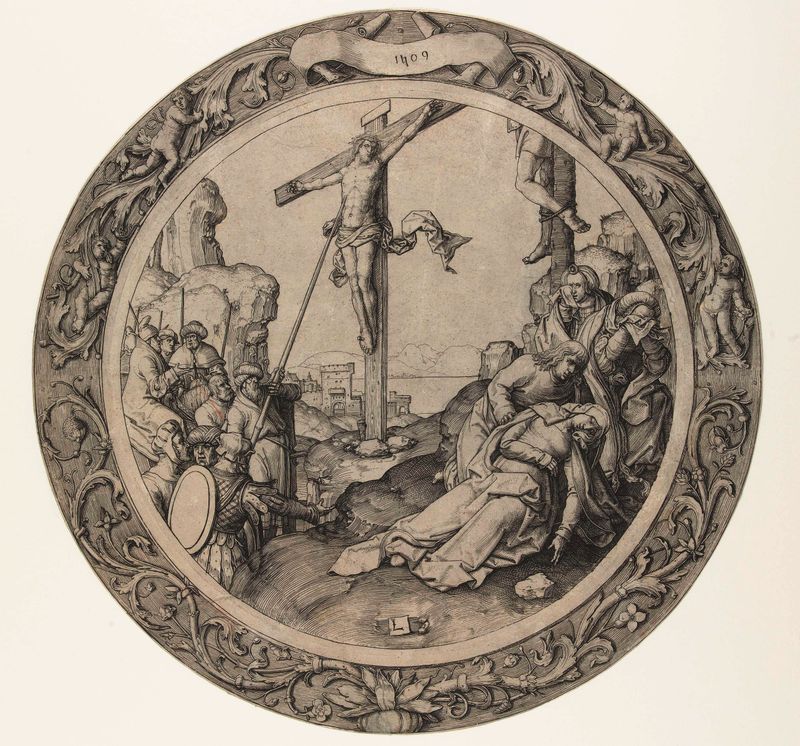
De kruisiging
Lucas van Leyden
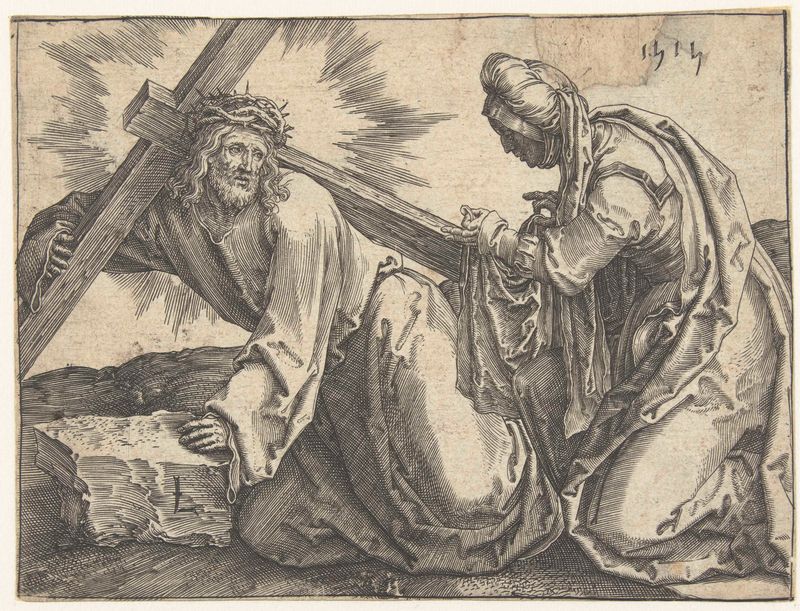
Kruisdraging
Lucas van Leyden
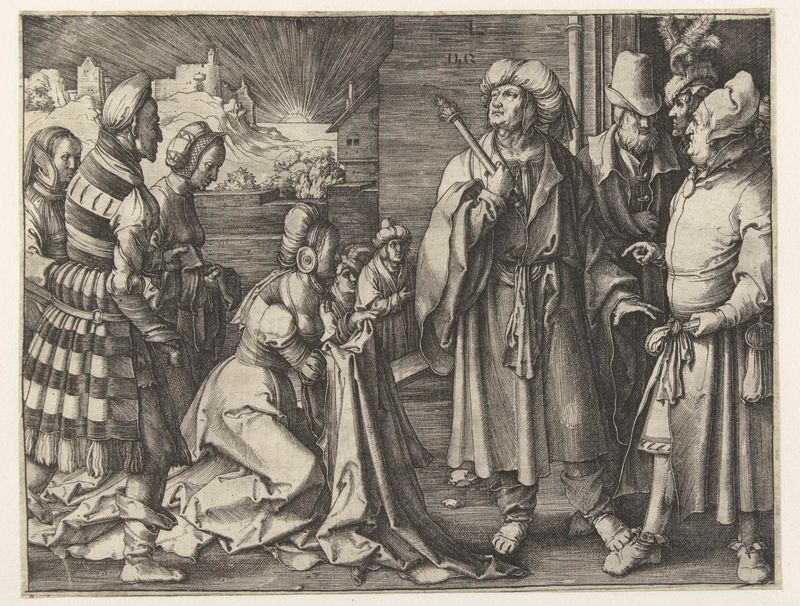
De vrouw van Potifar beschuldigt Jozef
Lucas van Leyden
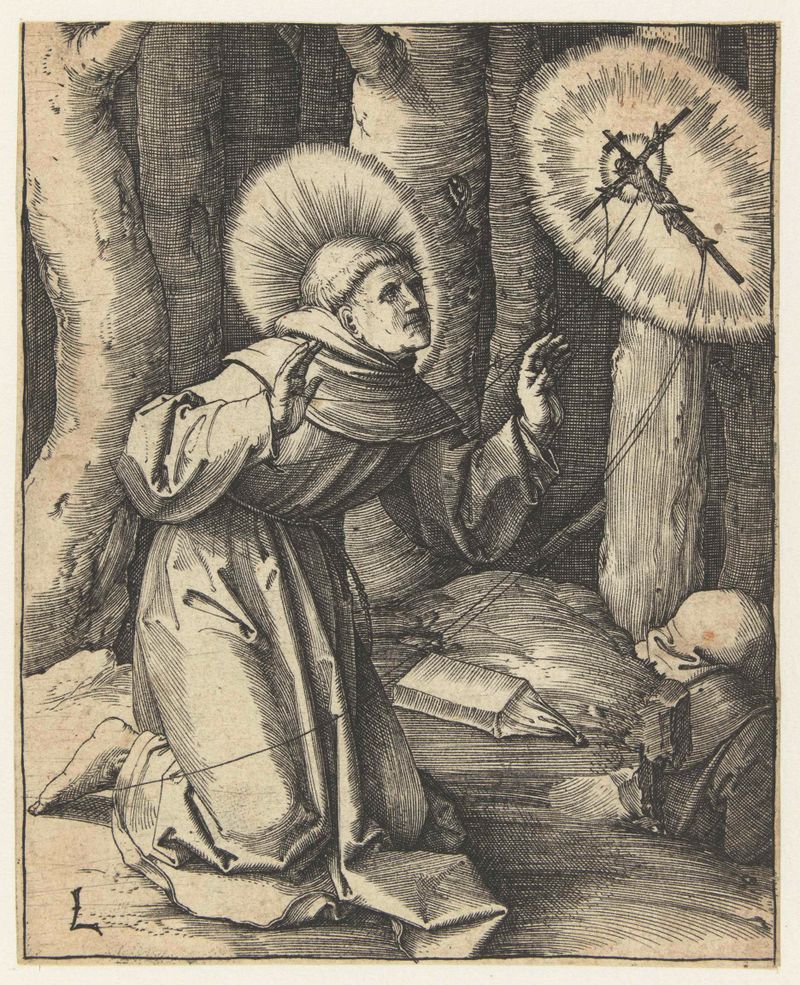
De stigmatisatie van de heilige Franciscus
Lucas van Leyden
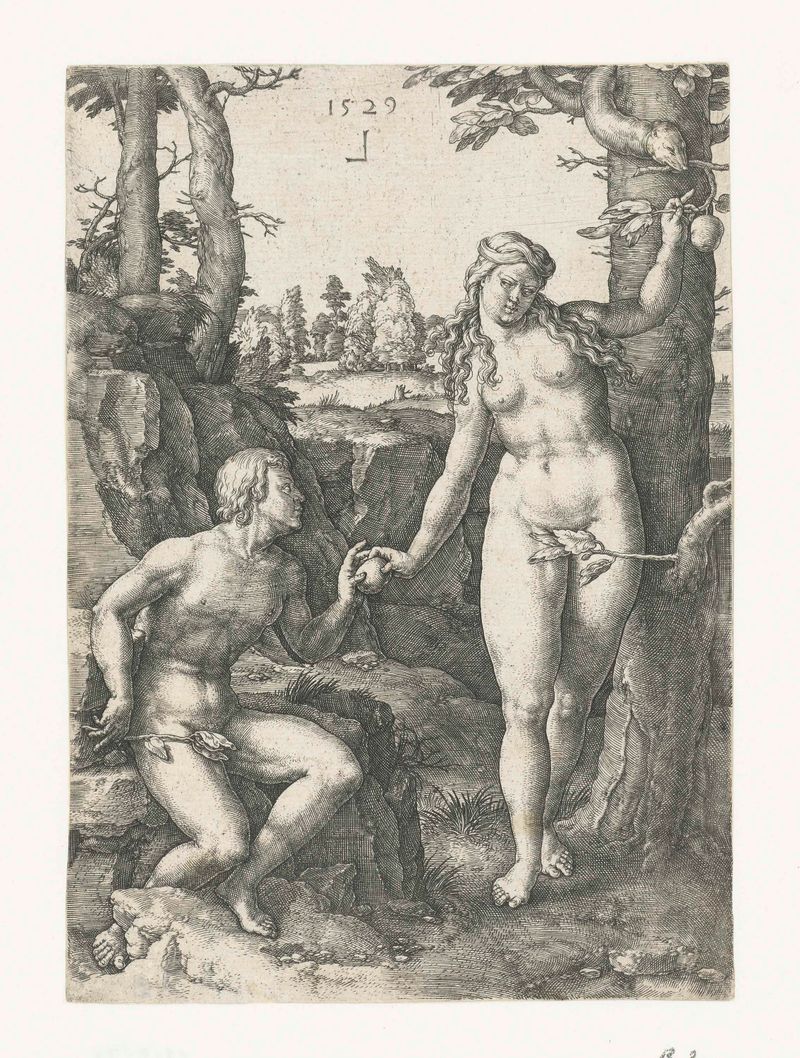
De zondeval
Lucas van Leyden
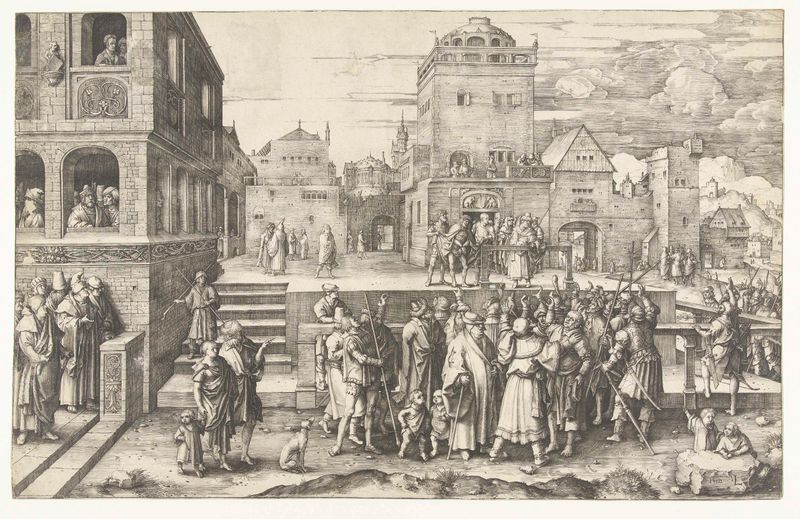
De grote Ecce Homo
Lucas van Leyden
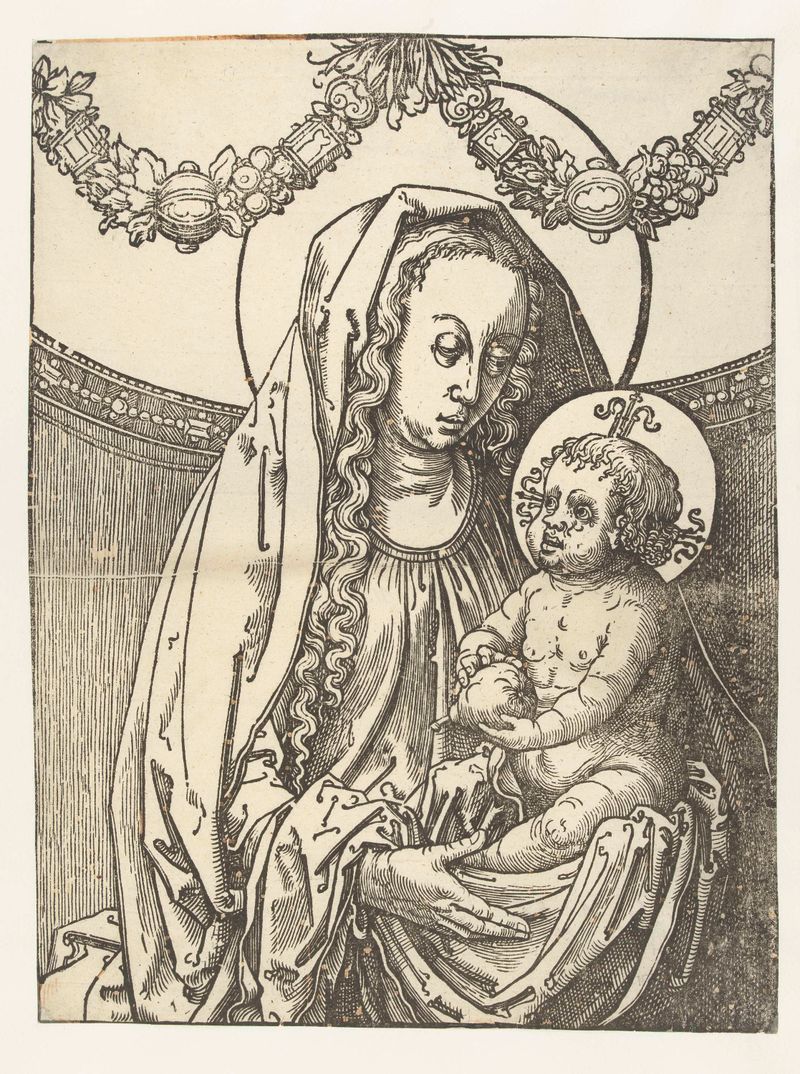
Maria met kind
Lucas van Leyden

Doornenkroning
Lucas van Leyden
More Religious Art
Browse all →
The Return of the Prodigal Son
Rembrandt van Rijn

The Garden of Earthly Delights
El Bosco

Count Orgaz’ funeral
El Greco

The Hundred Guilder Print: the central piece with Christ preaching, the plate arched
Rembrandt van Rijn

The Descent from the Cross
Rogier van der Weyden

The return of the prodigal son
Rembrandt van Rijn